



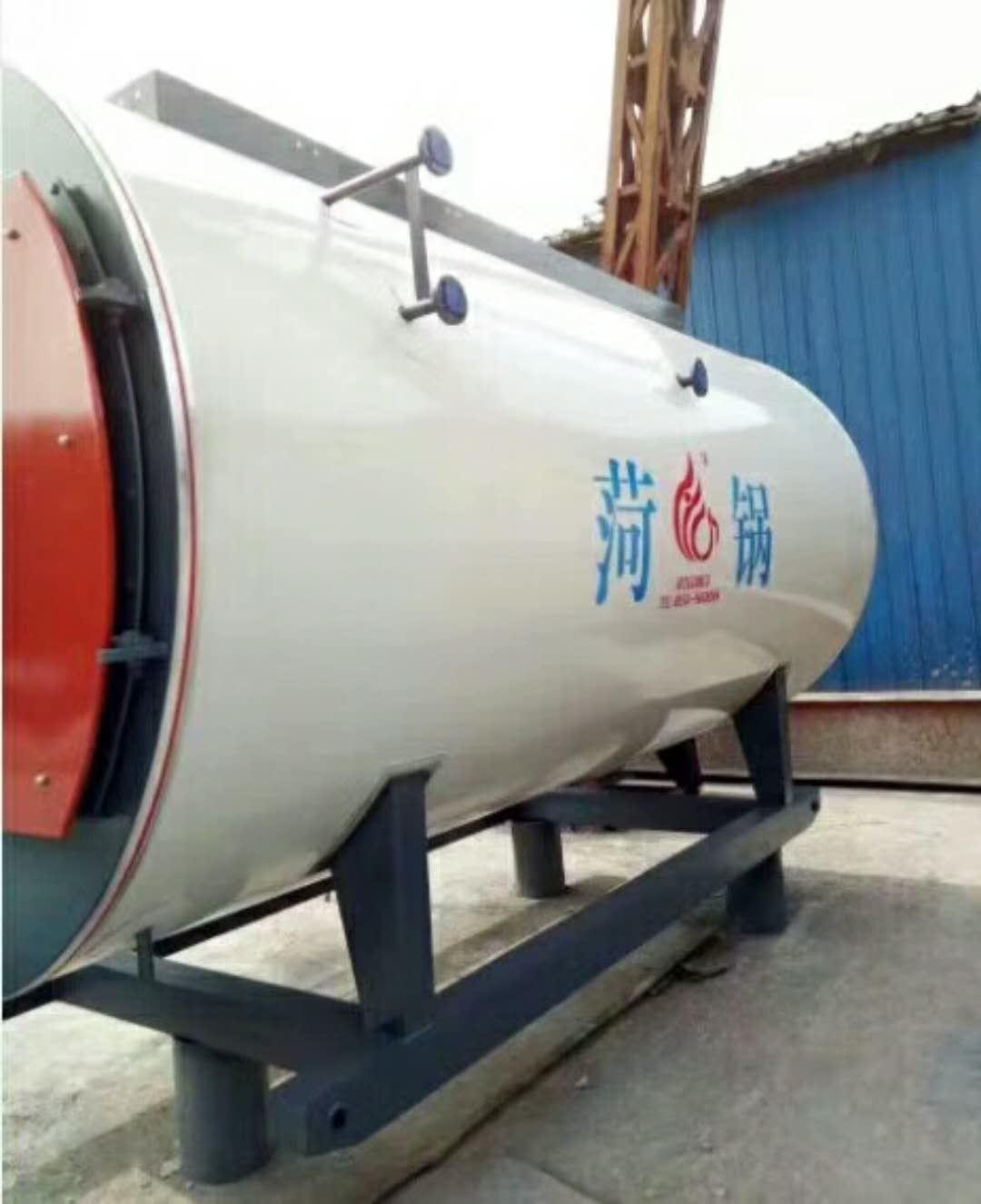


















Shandong Zhongjie Special Equipment Co., Ltd. (formerly Heze Boiler Factory Co., Ltd.) holds an A-grade boiler manufacturing license, an A2-grade pressure vessel manufacturing license, an A2-grade pressure vessel design license, a B-grade boiler installation license, and GB2/Class and GC2/Class pressure pipeline installation licenses, as well as an equipment and machinery installation contracting qualification. It is a member of the China Boiler and Water Treatment Association, the China Chemical Equipment Association, and the council unit of the Shandong Equipment Manufacturing Association. The company has also passed the ISO9001 Quality Management System, ISO14001 Environmental Management System, OHSAS18001 Occupational Health and Safety Management System certifications, and the ASME/U2 certification.
Zhongjie Special Equipment Co., Ltd. is a company specializing in the production of low-temperature liquid storage tanks. They offer a range of low-temperature liquid storage tanks in various specifications and capacities, including liquid nitrogen tanks, liquid oxygen tanks, liquid argon tanks, and more.
The medium-temperature liquid storage tank from Zhongjie is made of high-quality materials and utilizes advanced manufacturing techniques, ensuring the tank's strength and seal integrity. The interior features special insulation materials and structural design, effectively reducing liquid evaporation losses.
The低温液体储罐 from Zhongjie Special Equipment boasts the following features:
High safety: The tank is made of materials with excellent pressure resistance and sealing performance, capable of safely storing low-temperature liquids.
Low evaporation loss: Insulation materials and structural design inside the tank effectively reduce liquid evaporation loss, enhancing the tank's economic efficiency.
A variety of specifications and capacities available: Zhongjie offers a range of low-temperature liquid storage tanks in different specifications and capacities to meet diverse customer needs.
Customized Design: According to specific customer requirements, Zhongjie can offer customized design and manufacturing services to cater to various application scenarios.
Quantity Manufacturing Process: Zhongjie's state-of-the-art manufacturing equipment and technical team ensure the quality and performance of the storage tanks.
In summary, ZheJie's cryogenic liquid storage tanks are characterized by high safety, low evaporation loss, and a wide range of specifications, making them ideal for storing and transporting cryogenic liquids.
The leak treatment methods for liquid argon storage tanks mainly include the following steps:
Identified Air Leaks: Detected through odors, gas detection equipment, or abnormal pressure in liquid argon storage tanks, air leaks in the liquid argon storage tanks are identified.
Confirm Air Leaks: Use gas detection equipment or foam leak detection agents, etc., to locate the specific air leak. Check tank interfaces, valves, pipe connections, and other areas to find the air leak points.
Cease air leaks: Take appropriate measures based on the location of the air leaks to stop the source. For instance, for leaks at interfaces, inspect and adjust sealing washers or tighten bolts; for valve air leaks, check and replace sealing components.
Isolate Air Leaks: During the process of dealing with air leaks, it is necessary to isolate the leaky areas to ensure personnel safety. Set up warning signs, restrict access to the area, and take necessary protective measures, such as wearing protective masks and gloves.
Evacuate liquid argon: If air leakage cannot be repaired immediately or the leakage volume is significant, consider evacuating the liquid argon. By gradually reducing the pressure of liquid argon within the storage tank, convert it into a gas, and minimize the risk of air leakage.
Ventilation Treatment: During the air leakage treatment, ensure good ventilation and promptly expel the gases produced by the evaporation of liquid argon. Natural ventilation or the use of ventilation equipment can be employed to exhaust the evaporated gases of liquid argon outdoors.
Safety Assessment and Repair: After completing the air leakage treatment, conduct a safety assessment to ensure the tank's safety. Based on the assessment results, perform necessary repairs and maintenance to prevent a recurrence of air leakage.
Note that liquid argon is a low-temperature liquid with a low boiling and freezing point. Caution is required when dealing with air leaks to prevent contact with liquid argon and cold exposure. When handling air leaks in liquid argon storage tanks, operations should be performed by personnel and in accordance with relevant safety operating procedures and standards.
Several reasons have contributed to the peak popularity of low-temperature liquid storage tanks in recent years:
Rising Demand: With the development of industries such as manufacturing and scientific research, the demand for low-temperature liquids is continuously increasing. Low-temperature liquid storage tanks can effectively store and supply liquefied oxygen, nitrogen, and other low-temperature liquids, meeting the needs of various fields.
Technical Advancements: In recent years, the manufacturing and material technologies for low-temperature liquid storage tanks have continuously improved and innovated. The application of new insulating materials, advanced refrigeration systems, and safety control devices has enhanced the performance and safety of the tanks, making them more reliable and secure.
Environmental Awareness Enhancement: Low-temperature liquid storage tanks enable effective storage and utilization of low-temperature liquids, reducing energy waste and environmental pollution. Against the backdrop of enhanced environmental awareness, low-temperature liquid storage tanks, as an environmentally friendly and energy-saving device, have garnered more attention and application.
Emerging Application Fields: There is an increasing demand for cryogenic liquid storage tanks in emerging application fields. For instance, the application of liquid nitrogen in frozen food, biopharmaceuticals, and semiconductor manufacturing is becoming more widespread, which has driven the development of cryogenic liquid storage tanks.
Policy Support: The government has provided support and encouragement for the development of low-temperature liquid storage tanks. Through policy guidance and financial support, the industry has been promoted and expanded.
In summary, the peak popularity of low-temperature liquid storage tanks in recent years can be attributed mainly to increasing demand, technological advancements, heightened environmental awareness, the development of new application areas, and policy support. These factors collectively have spurred the rapid growth of the low-temperature liquid storage tank industry.
Liquid oxygen tanks are used for storing and supplying liquid oxygen as fuel and an oxidizer, playing a crucial role in launch propulsion systems and more. Industrial Production: Liquid oxygen is used as an oxidizer in industrial production for processes such as combustion, oxidation, and oxygen supply. Liquid oxygen tanks are employed to store and supply liquid oxygen to meet the demands of industrial applications like metal cutting, welding, and chemical reactions. Equipment: Liquid oxygen tanks are utilized in equipment to supply oxygen, such as oxygen therapy, oxygen inhalation, and operating rooms. These tanks provide high-purity oxygen while maintaining low temperatures to meet the equipment's oxygen requirements. Laboratory Research: Liquid oxygen tanks are used in scientific research and laboratories to provide liquid oxygen as experimental materials and reagents. The low temperature and high purity of liquid oxygen make it widely applicable in laboratories for fields such as materials science, chemical reactions, and biomedical research. In summary, liquid oxygen tanks are crucial in various fields including industrial production, equipment, and laboratory research, providing storage and supply functions for liquid oxygen at the application sites.
Our company places great emphasis on technological innovation and research and development. We have one municipal-level enterprise technology center in Heze City, equipped with testing facilities for non-destructive testing, physical and chemical testing, welding testing, hydrostatic testing, etc. We have over 600 various instruments and equipment, including CNC machine tools, X-ray flaw detectors, digital ultrasonic flaw detectors, mechanical property testing machines, chemical analyzers, spectrometers, tensile testing machines, plasma welding machines, and more. The key products and technologies we have developed, such as welding for temperature and pressure vessels, emissions reduction in biomass boilers, and waste heat utilization, have successively been included in multiple Shandong Provincial Department of Industry and Information Technology science and technology innovation projects, Shandong key projects, and Heze City innovation and excellence projects. We have accumulated a total of 27 authorized utility models, 16 authorized inventions, participated in drafting 2 standards, 2 industry standards, and registered 15 trademarks. The technical team of our company, in collaboration with Professor Yajiang Li of Shandong University, has jointly developed deep cryogenic container processing technology, utilizing the international plasma arc + wire filling tungsten inert gas arc welding (PAW-GTAW) technology. After the provincial-level scientific and technological achievement evaluation, the technical level has reached an international standard in the field of deep cryogenic container manufacturing. Choose Zhongjie Special Equipment, let's join hands to create brilliance!
WeChat Official Account

Scan to follow Official Account



















