


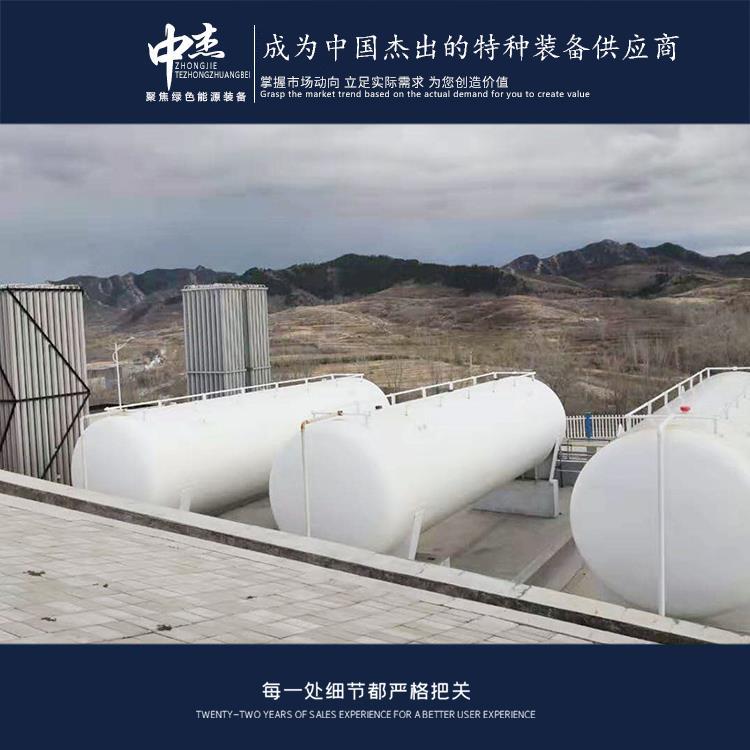

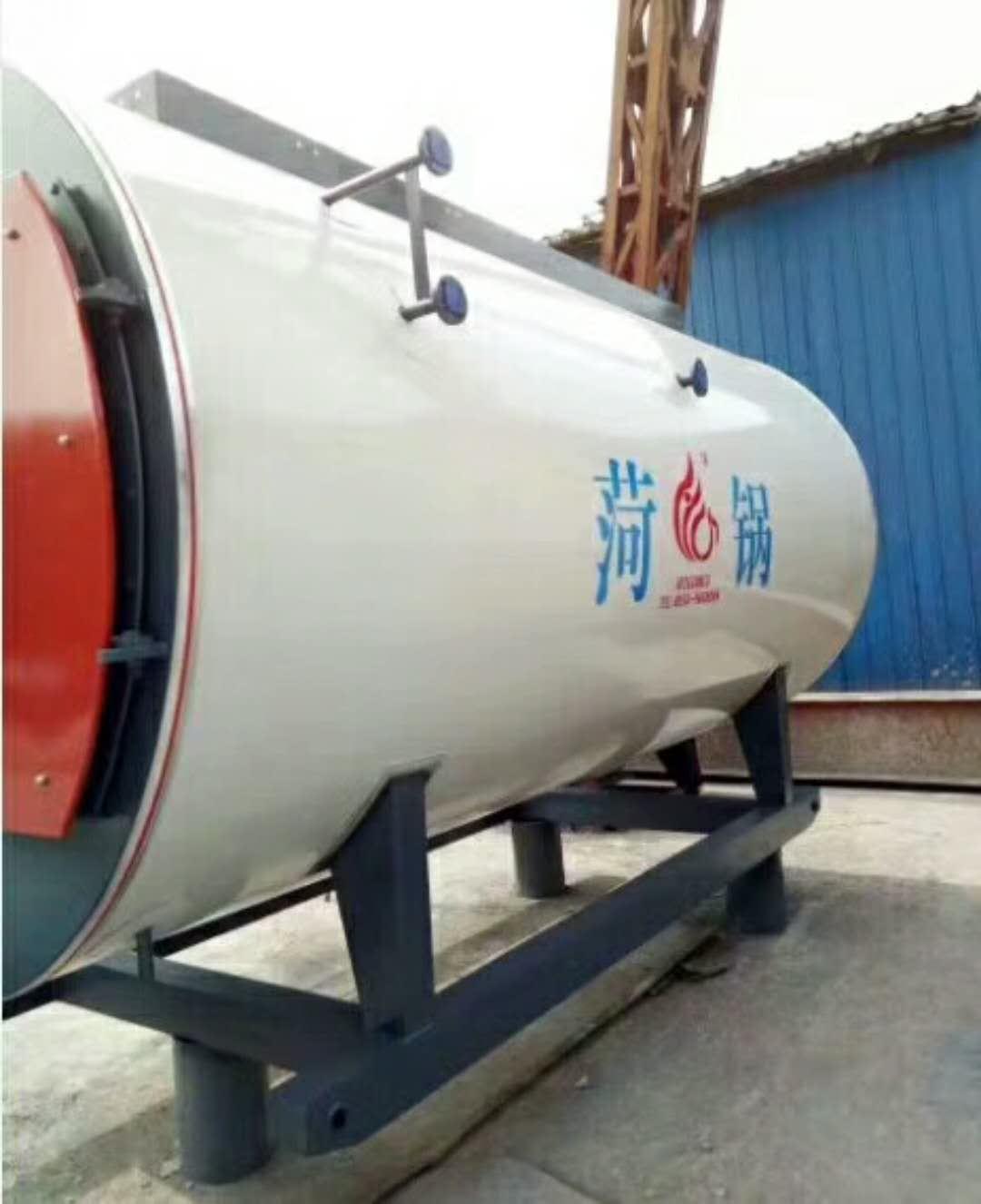
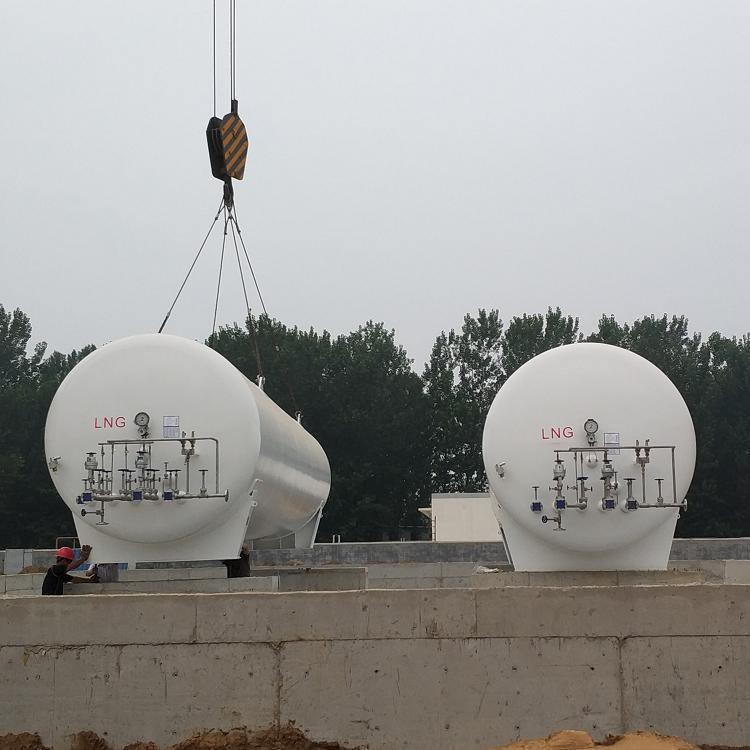


















Shandong Zhongjie Special Equipment Co., Ltd. (formerly Heze Boiler Factory Co., Ltd.) holds an A-grade boiler manufacturing license, an A2-grade pressure vessel manufacturing license, an A2-grade pressure vessel design license, a B-grade boiler installation license, and GB2/GB3-grade pressure pipeline installation licenses, as well as a mechanical and electrical equipment installation contracting qualification. It is a member of the China Boiler and Water Treatment Association, the China Chemical Equipment Association, and the council member of the Shandong Equipment Manufacturing Association. The company has also passed certifications for the ISO9001 Quality Management System, ISO14001 Environmental Management System, OHSAS18001 Occupational Health and Safety Management System, and the American ASME/U2 certification.
Carbon dioxide storage tanks feature the following characteristics and advantages:
- High storage density: Carbon dioxide storage tanks can compress the gas into a liquid state, significantly increasing the storage density. Compared to gas storage, liquid carbon dioxide can hold more carbon dioxide in a smaller tank, saving space and costs.
- Multiple application areas: Carbon dioxide storage tanks are widely used in various fields, including food and beverage industry, industrial, fire suppression, and gas supply. Carbon dioxide can be used as a preservative, beverage carbonating agent, gas, and fire extinguisher, with a wide range of applications and market demand.
- Environmental friendly and renewable: Carbon dioxide is an environmentally friendly gas, and its increase in atmospheric concentration can lead to warming and climate change. By storing and utilizing carbon dioxide, we can reduce its emissions into the atmosphere, achieving environmental protection and sustainable development.
- Safe and reliable: In the design and manufacturing process, carbon dioxide storage tanks typically use high-strength materials (such as carbon steel or stainless steel), with good pressure resistance and safety. The tanks are usually equipped with safety valves, pressure gauges, level indicators, and other accessories to ensure safe operation. Additionally, carbon dioxide is a non-flammable and non-explosive gas, making it relatively safe.
- Supply: Carbon dioxide storage tanks provide a stable supply of carbon dioxide. Through tank design and control systems, precise measurement and supply of carbon dioxide can be achieved, meeting the needs of various industries and applications.
In summary, carbon dioxide storage tanks offer high storage density, multiple application areas, environmental friendliness, renewability, safety, reliability, and supply. This makes them an important storage and supply equipment, widely used in various industries. However, it is still necessary to follow relevant safety operating regulations when using carbon dioxide storage tanks.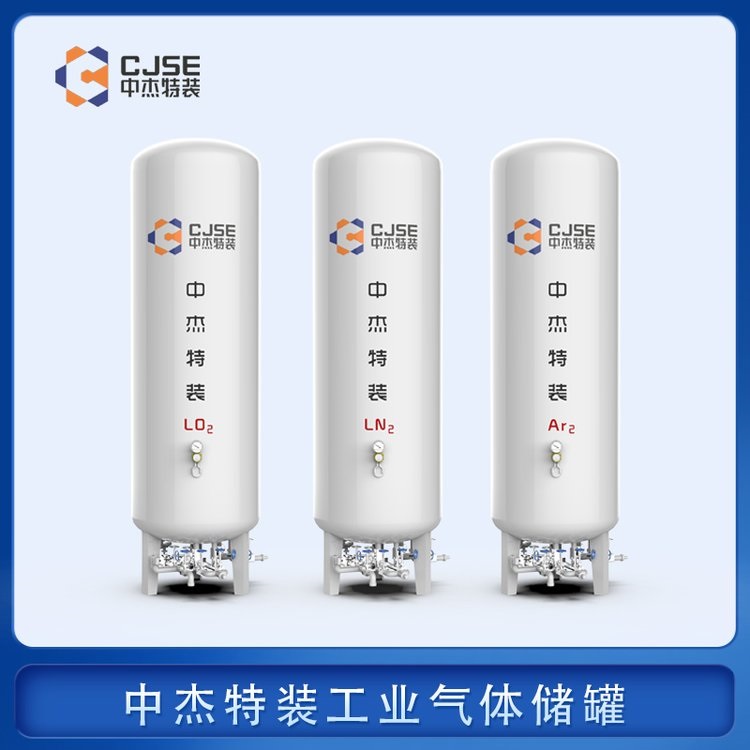
Carbon dioxide tanks are widely used in many different industries. Here are some common application sectors:
Food and Beverage Industry: Carbon dioxide tanks are used in the production of carbonated beverages, beer, soda, and more in the food and beverage industry. Carbon dioxide is infused into the drinks to enhance their fizz and taste.
Industry: Carbon dioxide tanks are employed in applications such as anesthesia, respiratory care, and emergency medical services. Liquid carbon dioxide can be used to create refrigerants for freezing and preserving biological samples and tissues.
Fire Suppression: Carbon dioxide tanks are utilized in fire suppression systems in the fire service. Carbon dioxide is released into the fire scene to extinguish flames by suppressing oxygen supply.
Gas Supply: Carbon dioxide tanks are also used to supply carbon dioxide gas in industrial and commercial settings. These gases can be used for welding, gas shielding, semiconductor manufacturing, water treatment, and more.
Climate Control: Carbon dioxide tanks are used in greenhouses and indoor horticulture to control and increase the concentration of carbon dioxide for plant growth.
Additionally, carbon dioxide tanks can be used in other industries, such as the automotive industry (for airbag systems), and other industries (for propellants and gas supply) among others.
It is important to note that the requirements and applications for carbon dioxide tanks may vary by industry. When using carbon dioxide tanks, it is essential to adhere to relevant regulations and standards, and ensure that the design, manufacture, and use of the tanks meet the appropriate requirements.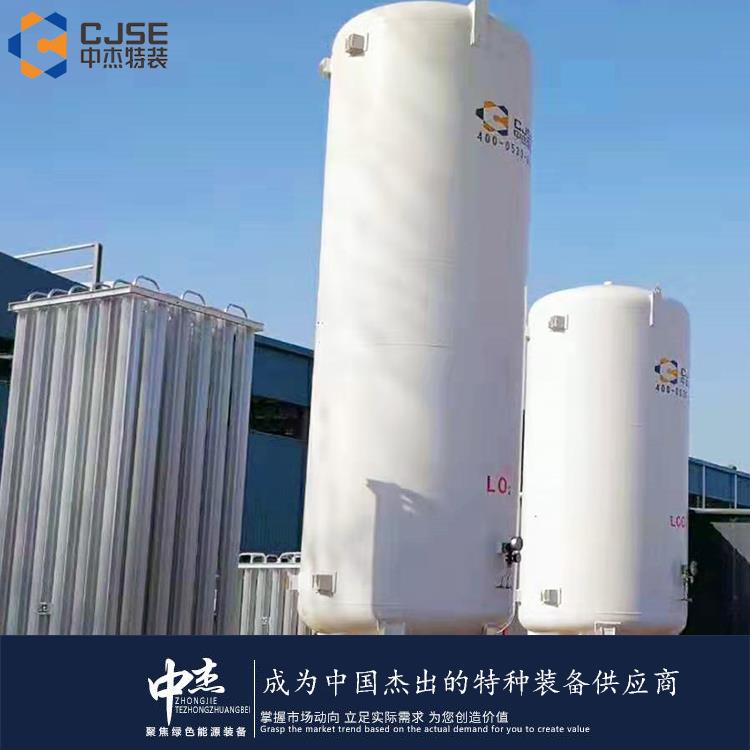
The installation of a carbon dioxide storage tank safety valve is a crucial measure to ensure the tank can safely release pressure in the event of overpressure. The following are general installation steps:
1. Selecting the Appropriate Safety Valve: Choose a suitable safety valve based on the tank's design pressure and flow requirements. Ensure the safety valve's rated pressure and flow meet the tank's specifications.
2. Installation Location: Select an appropriate location for the safety valve, typically on the top or side of the tank. Ensure the valve can release pressure smoothly and is not obstructed by other equipment or structures.
3. Preparations: Clean the tank surface at the installation location, ensuring no debris or dirt. Check the tightness of the safety valve and connecting piping, ensuring there are no damages or leaks.
4. Installing the Safety Valve: Connect the safety valve to the tank using appropriate fasteners and sealing materials. Follow the safety valve's installation instructions to ensure a secure and reliable connection to the tank.
5. Adjustment and Testing: Adjust and test the safety valve according to its specifications and requirements. Ensure the valve operates normally within the set pressure range and can release pressure in a timely manner.
6. Labeling and Documentation: Label relevant information on the safety valve and tank, such as the rated pressure and flow, installation date, etc. Record the installation process and test results for future reference and maintenance.
Please note that the installation of carbon dioxide storage tank safety valves must adhere to relevant safety operating procedures and standards. If you do not have the necessary knowledge and experience, it is recommended to consult personnel or manufacturers for installation.
Urea synthesis from carbon dioxide is a significant chemical reaction with several applications: Urea Production: Urea is a vital nitrogen fertilizer and chemical, widely used in both agricultural and industrial sectors. Carbon dioxide synthesis is one of the commonly used methods for urea production. In this process, carbon dioxide reacts under high temperature and pressure to form urea. This method utilizes carbon dioxide resources, reducing dependence on fossil fuels used in traditional urea production. Urea Fuel: Urea can also serve as a urea fuel for internal combustion engines and combustion equipment. By heating and decomposing urea, energy is released, which then reacts with oxygen in the air to produce combustion heat. This combustion process only yields water vapor and nitrogen as by-products, minimizing environmental pollution. Chemical Synthesis: Urea is an essential raw material for the synthesis of many chemicals. The carbon dioxide synthesis of urea provides a sustainable supply for the chemical industry, used in the production of other chemicals such as plastics, resins, paints, etc. Energy Storage: Urea can also act as a medium for energy storage. By synthesizing urea from carbon dioxide, energy can be stored in the form of chemical bonds. When energy is needed, it can be released by decomposing urea, which then reacts with oxygen in the air to produce combustion heat and release the stored energy. The development of carbon dioxide synthesis urea technology aims to reduce dependence on fossil fuels used in traditional urea production methods, lower greenhouse gas emissions, and promote the development of sustainable agriculture and the chemical industry. However, this technology is still in continuous development and research, requiring further technological breakthroughs and practical verification to achieve large-scale application.
Chongjie Special Equipment upholds the grand vision of "realizing employee dreams, creating customer value, and striving for the prosperity and strength of our motherland," wholeheartedly committing to the development of the green energy equipment industry, and devoting high-quality products and services to society with competitive prices!
WeChat Official Account

Scan to follow Official Account



















