


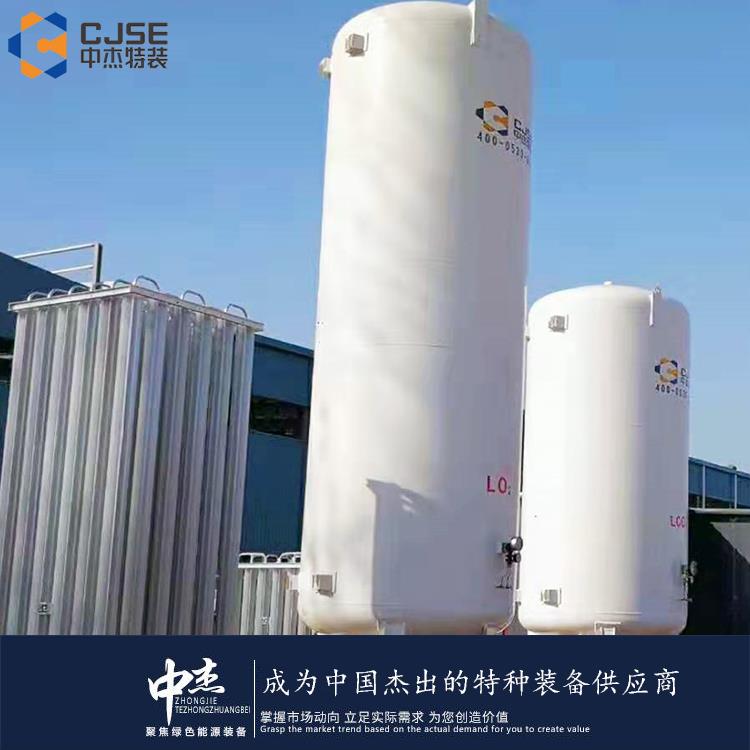

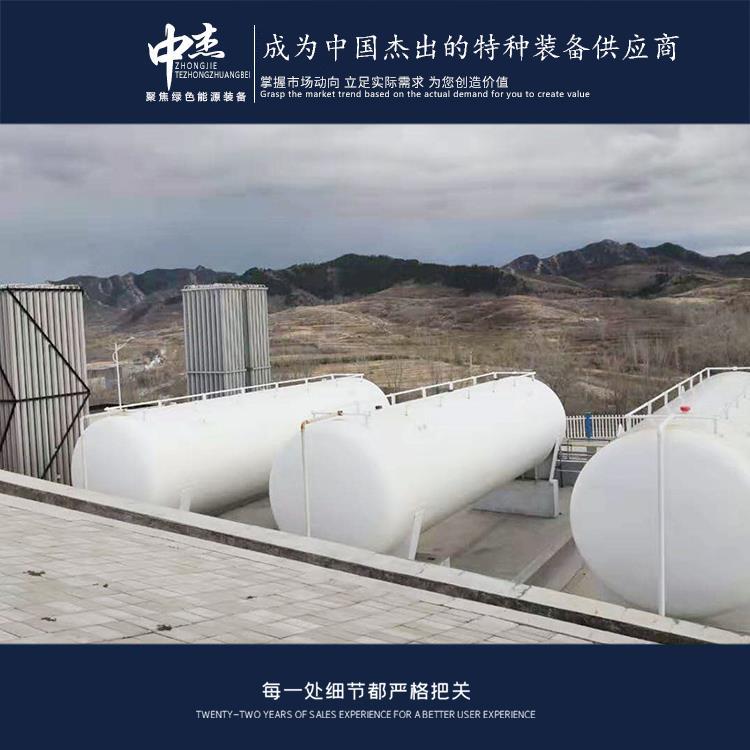


















Shandong Zhongjie Special Equipment Co., Ltd. specializes in the following products: fuel (gas) boilers, organic heat carrier boilers, biomass boilers, waste heat recovery boilers, and other boiler products; vacuum insulation cryogenic pressure vessels such as LNG tanks, oxygen/nitrogen/argon tanks, and CO2 tanks; pressure vessel products including denitrification engineering equipment, heat storage and energy storage equipment, and complete chemical equipment sets; central air conditioning and HVAC equipment such as ground (water) source heat pumps, air source units, water-cooled screw units, and air-cooled modular units. Planned products include large-scale energy centers, LNG transport vehicles, LNG tank containers, and other green energy equipment.
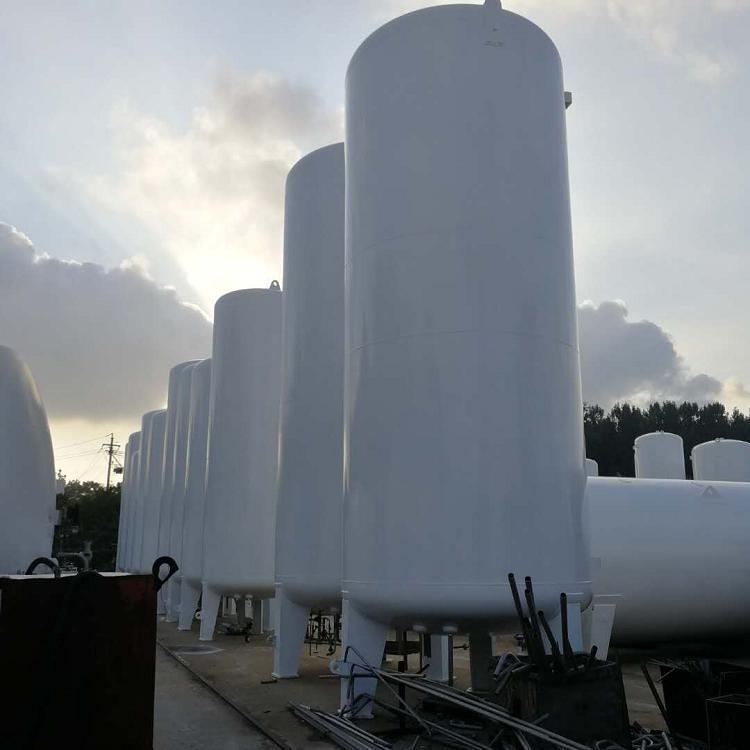
To safely utilize liquid oxygen tanks, attention should be given to the following aspects:
Training: Operators of liquid oxygen tanks must undergo training to understand the properties of liquid oxygen, safety operating procedures, and emergency response measures. Only trained personnel are authorized to operate liquid oxygen tanks.
Safety Operating Procedures: Establish and adhere to the safety operating procedures for liquid oxygen tanks, including proper operational procedures, protective measures, and emergency response plans. Ensure operators follow the procedures to minimize accident risks.
Equipment Inspection and Maintenance: Regularly inspect the status of liquid oxygen tanks and related equipment, including valves, pipelines, pressure gauges, etc. Ensure that the equipment is in perfect condition and promptly repair or replace any damaged parts.
Leakage Control: Equipped with leak detection and alarm systems to promptly identify and control any leaks in liquid oxygen storage tanks. Upon detection of a leak, immediate measures should be taken to contain the source of the leak and proceed with repairs.
Fire Prevention Measures: Liquid oxygen contains a high oxygen content, which is prone to causing fires. Measures such as setting up fire barriers around liquid oxygen storage tanks and using fire-retardant coatings are taken to prevent fires from occurring and spreading.
Static Protection: The accumulation of static electricity in liquid oxygen tanks may cause sparks, increasing the risk of fire. Measures such as using static-conductive materials and anti-static equipment should be taken to reduce the accumulation and release of static electricity.
Ventilation Requirements: Ensure adequate ventilation within the enclosed space of the liquid oxygen storage tank to expel gases produced by the evaporation of liquid oxygen. Avoid excessive oxygen concentrations and minimize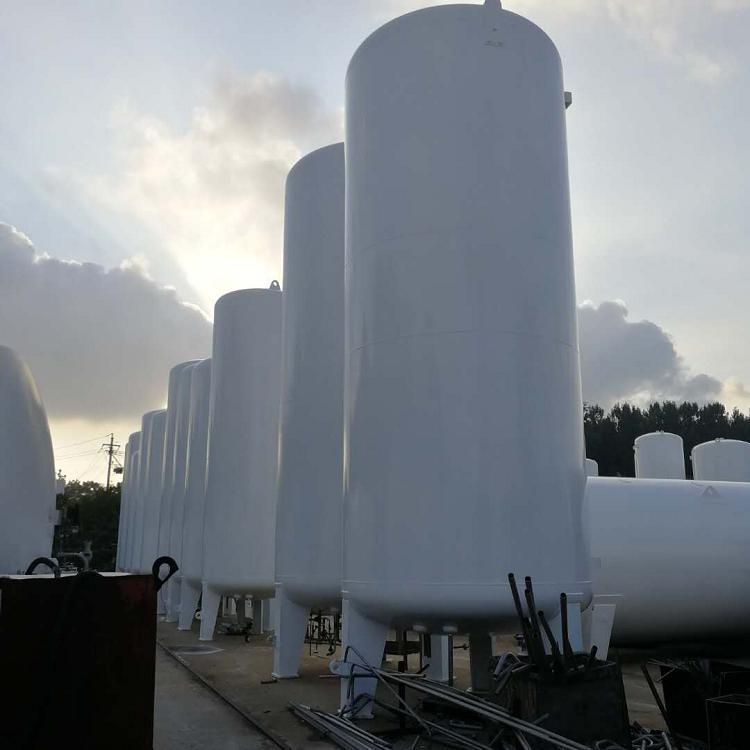
During the operation of low-temperature storage tanks, it is indeed necessary to avoid the occurrence of wrinkling. Wrinkling refers to the phenomenon where the tank walls develop creases or deformations, which may lead to a decrease in the structural strength of the tank and even cause leaks or ruptures.
Here are some precautions to avoid tank squeezing in low-temperature storage:
Tank Design: Select an appropriate tank design that can withstand the pressure and weight of low-temperature liquids. The tank's wall thickness, support structure, etc., should comply with relevant standards and regulations.
Material Selection: Choose materials suitable for low-temperature environments with adequate strength and low-temperature resistance. Common materials include low-temperature steel, stainless steel, etc.
Insulation Layer for Storage Tank: The design and construction of the insulation layer must meet requirements to ensure effective reduction of heat conduction and temperature variations. The materials and thickness of the insulation layer should be selected based on specific conditions.
Tank Operation: Avoid rapid or excessive liquid flow during the loading and unloading process to minimize impact and stress concentration on the tank walls.
Tank Maintenance: Regularly inspect and maintain the structure and insulation of tanks to ensure they remain undamaged. Any abnormalities or damages should be repaired or replaced promptly.
Temperature Control: During the operation of low-temperature liquid storage tanks, it is crucial to strictly control the temperature difference between the inside and outside of the tank to avoid excessive temperature changes and thermal stress.
In summary, preventing deformation in low-temperature storage tanks hinges on proper design, material selection, the installation and maintenance of the insulation layer, and strict control over temperature variations. Regular inspections and maintenance are crucial measures for ensuring the safe operation of storage tanks.
Liquid Oxygen Storage Tanks are specialized equipment that require careful attention to safety and an understanding of their characteristics. Below are the safety precautions and features of using liquid oxygen storage tanks:
**Safety Precautions:**
- **Operation:** The operation of liquid oxygen storage tanks should be performed by trained and experienced personnel. Operators should be familiar with the tank's structure, performance, and operating procedures, and should operate strictly according to the operation manual and safety regulations.
- **Fire Prevention Measures:** Liquid oxygen is highly oxidizing and can easily cause fires and explosions. Open flames and sparks should be prohibited around the storage tanks, and precautions should be taken to prevent contact with high-temperature objects. Fire prevention facilities and fire-fighting equipment should be established and regularly inspected and maintained.
- **Leakage Control:** In the event of a leakage, immediate measures should be taken to control the leakage. Leaks can lead to the evaporation of liquid oxygen and an increase in oxygen concentration, which increases the risk of fire and explosion. A leak detection system should be established, and leakage control devices and personal protective equipment should be provided.
- **Insulation Protection:** Liquid oxygen storage tanks should have good insulation protection to reduce evaporation and maintain low temperatures. The insulation layer should be inspected and maintained regularly to ensure its integrity and insulating properties.
- **Safety Distance:** A certain safety distance should be maintained around the storage tanks to prevent the spread of fires, explosions, and leaks. The specific requirements for safety distance should be assessed and determined according to local regulations and standards.
**Features:**
- **High Oxidizing Property:** Liquid oxygen has a high oxidizing property and can support combustion and cause more intense burning. Therefore, fire and explosion prevention measures should be paid special attention to when using liquid oxygen storage tanks.
- **High-Pressure Storage:** Liquid oxygen storage tanks typically store high-pressure oxygen, with pressures generally around 2-5 bar. Therefore, when operating and maintaining liquid oxygen storage tanks, attention should be given to pressure control and the safety of pressure relief devices.
- **Low-Temperature Storage:** The liquid oxygen in the storage tanks is at a low temperature, usually around -183°C. Therefore, when contacting liquid oxygen storage tanks, appropriate protective measures should be taken.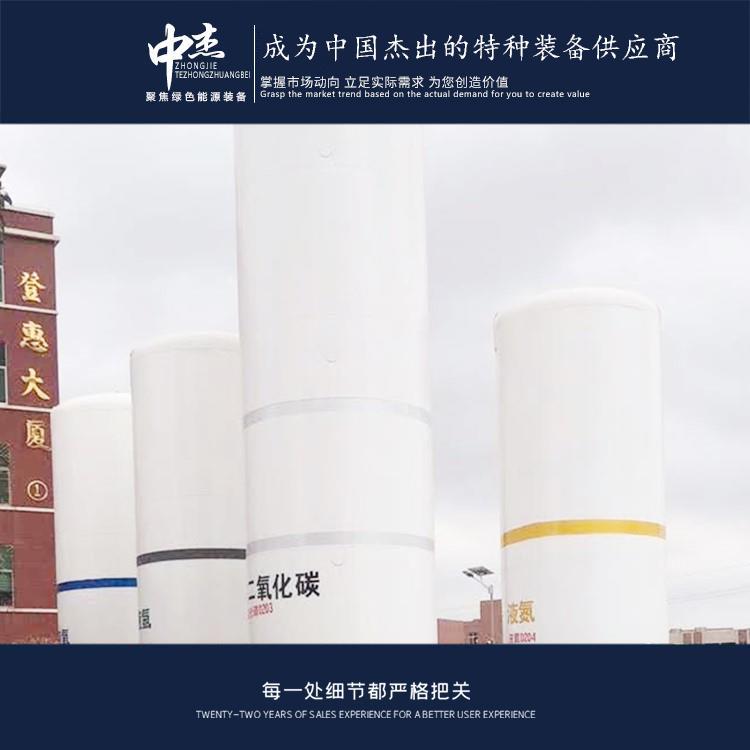
The use of liquid nitrogen storage tanks in rapid freezing technology offers several advantages:
Rapid Freezing Speed: The temperature of liquid nitrogen is low, approximately -196 degrees Celsius. Using a liquid nitrogen tank for quick freezing can rapidly lower the surface temperature of food, achieving fast freezing. Compared to traditional freezing methods, liquid nitrogen quick freezing can significantly reduce freezing time while preserving the quality and texture of the food.
Uniformly Frozen Effect: The liquid nitrogen quick-freezing technique achieves rapid and even freezing of food. Liquid nitrogen is喷射 onto the food surface in a gaseous form, rapidly absorbing heat and turning into a liquid, thereby ensuring even freezing of the food and preventing crystallization and lumping during the freezing process.
Maintain Food Quality: Liquid nitrogen rapid freezing quickly chills food, reducing crystallization and caking during the freezing process, thereby preserving the quality and texture of the food. During the rapid freezing process, liquid nitrogen rapidly lowers the surface temperature of the food, forming tiny frozen structures, effectively retaining the food's moisture and nutritional content.
Flexibility and Adaptability: Liquid nitrogen tanks can be adjusted and controlled according to different food types and freezing requirements. The injection speed and angle of liquid nitrogen can be adjusted based on the size, shape, and freezing needs of the food to achieve optimal freezing results.
Environmental Protection and Energy Efficiency: Liquid nitrogen rapid freezing technology is more energy and resource-saving compared to traditional freezing methods. Liquid nitrogen evaporates quickly during the freezing process, causing environmental pollution and generating waste water and gas.
It is important to note that when using liquid nitrogen tanks for flash freezing, it is essential to adhere to the relevant safety operation procedures and guidelines. Ensure that the operators possess the necessary safety awareness and operational skills to prevent any accidents. Additionally, consult
Shandong Zhongjie Special Equipment, welcome customers to visit our factory for business discussions.
WeChat Official Account

Scan to follow Official Account



















