


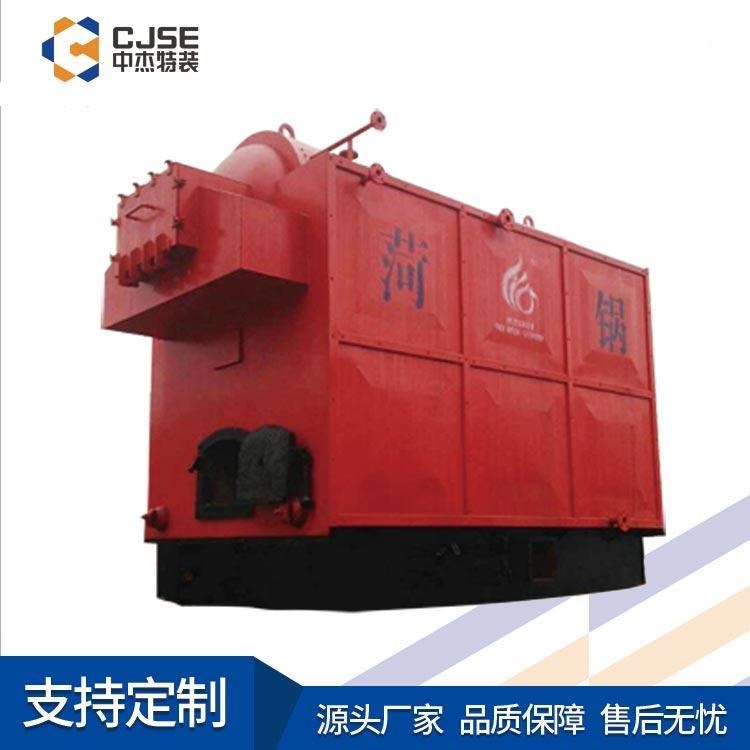


















Shandong Zhongjie Special Equipment's main products include: fuel (gas) boilers, organic heat carrier boilers, biomass boilers, waste heat boilers, and other boiler products; vacuum insulation cryogenic pressure vessels such as LNG tanks, oxygen/nitrogen/argon tanks, and CO2 tanks; pressure vessel products such as denitrification engineering equipment, heat storage and energy storage equipment, and complete chemical equipment; central air conditioning and ventilation equipment such as ground (water) source heat pumps, air source units, water-cooled screw units, and air-cooled modular units. Planned products include large-scale energy centers, LNG transport vehicles, LNG tank containers, and other green energy equipment.
Biomass fuel boilers may encounter the following issues during operation:
Unstable fuel quality: The quality of biomass fuel is affected by factors such as raw material source, processing methods, and storage conditions, leading to inconsistent fuel quality. Inconsistent fuel quality may impact combustion efficiency and the stable operation of the boiler.
Ash handling issue: Biomass fuel generates a substantial amount of ash during combustion, including waste, ash content, and unburned materials. The handling and disposal of ash may lead to environmental pollution and processing costs.
High-Temperature Corrosion: Ash and elements like chlorine in biomass fuel are prone to cause corrosion at high temperatures, damaging the metal components of boilers. Measures must be taken to protect and treat against high-temperature corrosion issues.
Low combustion efficiency: Biomass fuel has different combustion characteristics from traditional fossil fuels, which may result in lower combustion efficiency. It is necessary to optimize the combustion system and control strategies to enhance combustion efficiency and reduce energy waste.
Gas emissions from combustion: The combustion of biomass fuel produces certain gas emissions, such as carbon dioxide, nitrogen oxides, and particulates. These emissions have an impact on the environment and air quality, necessitating appropriate control measures.
Transport and Storage Costs: The transportation and storage costs for biomass fuels are higher, particularly for areas far from the source of supply. This may increase the operating costs for biomass fuel boilers.
In summary, biomass fuel boilers face issues such as unstable fuel quality, ash and slag disposal, and high temperatures.
Biomass boilers and coal-fired boilers differ in fuel, environmental performance, and sustainability aspects.
Fuel Type: Biomass boilers utilize renewable biomass fuels such as wood chips and straw, whereas coal-fired boilers use fossil fuels like coal. Biomass fuels are renewable and low-carbon, while coal is a finite resource and its combustion produces a large amount of carbon dioxide and other pollutants.
Environmental Performance: Biomass boiler combustion emits relatively fewer pollutants, such as carbon dioxide, nitrogen oxides, and particulates. In contrast, coal-fired boilers emit more pollutants, including nitrogen oxides, particulates, and heavy metals, which have a significant impact on atmospheric environment and human health.
Sustainability: Biomass fuel is a renewable resource that can be cultivated and recycled through regenerative cycles, offering good sustainability. Coal, on the other hand, is a finite resource, and mining and burning it can cause environmental damage.
Combustion Efficiency: The combustion efficiency of biomass boilers is relatively low due to the complex chemical and physical properties of biomass fuel, which tend to produce more ash and carbon deposits during combustion. In contrast, coal-fired boilers have a higher combustion efficiency, as the chemical properties of coal fuel are more stable, leading to a more complete combustion process.
Technical Requirements: Biomass boilers compared to coal-fired boilers
Biomass boilers offer the following environmental benefits:
Renewable Energy: The fuel used in biomass boilers is renewable, such as wood chips, straw, waste, etc. Compared to fossil fuels, the use of biomass fuel can reduce dependence on limited resources and lower energy consumption.
Low carbon emissions: The amount of carbon dioxide released during the combustion of biomass fuel is roughly equivalent to the amount absorbed during its growth, creating a closed carbon cycle. Compared to the combustion of fossil fuels, biomass boilers emit less carbon, contributing significantly to the reduction of greenhouse gas emissions.
Reduced Pollutant Emissions: The combustion of biomass fuel results in relatively lower emissions of pollutants. Compared to coal combustion, biomass boilers emit fewer nitrogen oxides, sulfur oxides, and particulate matter, causing less pollution to the atmosphere.
Waste Utilization: Biomass boilers can use waste materials as fuel, such as crop straw and wood waste. If these wastes are not utilized, they may impact the environment. By utilizing biomass boilers, we can achieve the resourceful use of waste, reducing the issues of waste stacking and disposal.
Reclaimed Heat Energy: Biomass boiler flue gas contains a large amount of heat energy, which can be reclaimed and utilized through a flue gas waste heat recovery unit. Utilizing the remaining heat in the flue gas for heating, hot water, etc., enhances energy utilization efficiency and reduces energy waste.
Sustainable Development: High sustainability of biomass fuel
Biomass boilers are prone to corrosion at high temperatures, mainly due to the following reasons:
Fuel Composition: Biomass fuel contains certain amounts of ash and elements like chlorine, which, during combustion, form corrosive substances under high temperatures such as chlorides and salts. These substances react with the metal surface, leading to metal corrosion.
Combustion Conditions: Factors such as combustion temperature, oxygen content, and combustion rate during biomass combustion affect the occurrence of corrosion. High temperatures, excessive oxygen, and rapid combustion rates can accelerate corrosion.
Smoke Composition: The smoke produced by biomass combustion contains certain acidic substances, such as sulfuric acid and nitric acid. These acidic substances can react with metal surfaces, causing corrosion.
Flue Gas Condensation: During the flue gas condensation process of biomass boilers, water vapor in the flue gas condenses into liquid water, forming acidic condensate. This acidic condensate comes into contact with the metal surface, causing corrosion.
Metal Material Selection: The material choice in biomass boilers affects their resistance to corrosion. Different metals exhibit varying corrosion resistance to different corrosive mediums.
In summary, the causes of high-temperature corrosion in biomass boilers primarily include fuel composition, combustion conditions, flue gas composition, flue gas condensation, and the selection of metal materials. To alleviate corrosion issues,
Our company attaches great importance to technological innovation and R&D design. We have one municipal-level enterprise technology center in Heze City, equipped with testing facilities for non-destructive testing, physical and chemical testing, welding testing, hydrostatic testing, etc. We have over 600 types of equipment, including CNC machine tools, X-ray flaw detectors, digital ultrasonic flaw detectors, mechanical property testing machines, chemical analyzers, spectrometers, tensile testing machines, plasma welding machines, and more. Our key products, such as temperature and pressure vessel welding, biomass boiler emissions reduction, and waste heat utilization, have successively been selected for multiple Shandong Provincial Department of Industry and Information Technology scientific and technological innovation projects, key projects of Shandong Province, and Heze City innovative and excellent projects. We have accumulated 27 authorized utility models, 16 authorized inventions, participated in drafting 2 standards, 2 industry standards, and registered 15 trademarks. Our technical team, in collaboration with Professor Li Yajiang of Shandong University, has developed deep cryogenic container processing technology, utilizing the international plasma arc + wire-fed tungsten inert gas (PAW-GTAW) welding technology. The provincial-level scientific and technological achievement identification has confirmed that our technology level in deep cryogenic container manufacturing has reached international standards. Choose Zhongjie Special Equipment, and let's create brilliance together!
WeChat Official Account

Scan to follow Official Account



















