


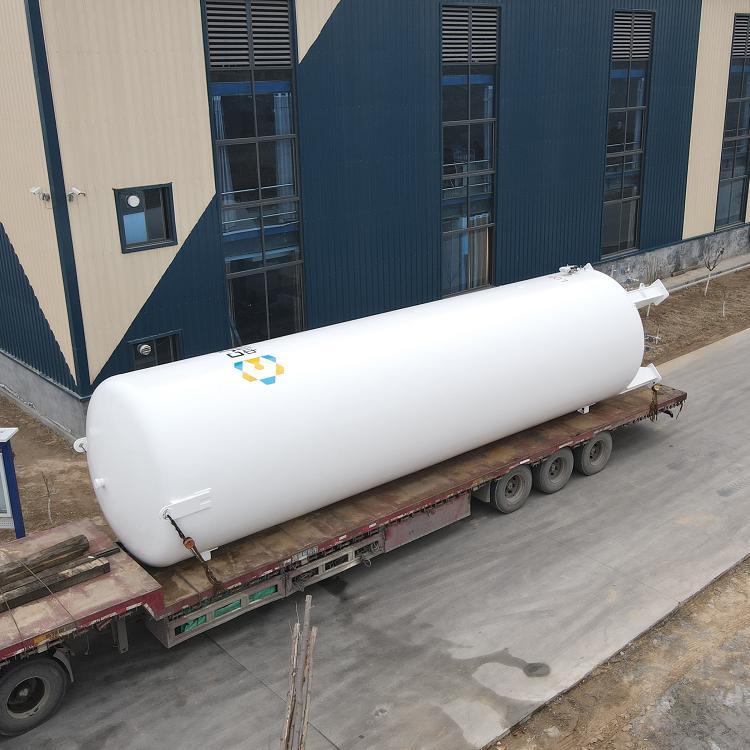

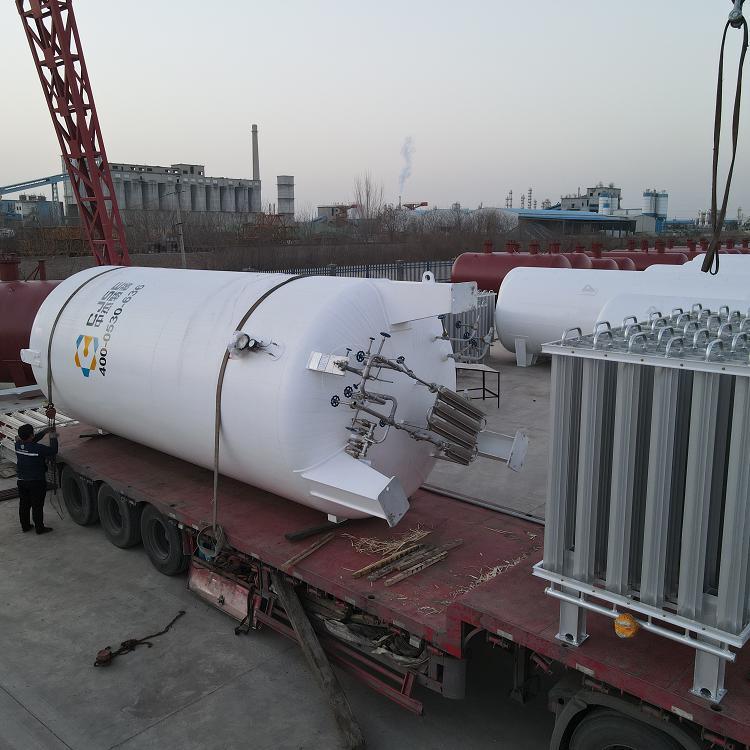


















Shandong Zhongjie Special Equipment (formerly Heze Boiler Factory Co., Ltd.) was established in 2001, located at No. 2218 Jinnan Road, Development Zone, Heze City, with a registered capital of 50 million yuan and total assets of 500 million yuan. The company has 7 business centers: boiler, deep-freeze containers, pressure vessels, central air conditioning, engineering installation, international trade, and Internet of Things. It operates three factory sites at Jinnan Road, East Changjiang Road, and Bohai Road, covering a total area of 200,000 square meters, with the main workshop spanning 83,000 square meters. It currently employs 710 staff, including 247 engineers and technicians, and 82 intermediate-level technical personnel. In December 2016, it was recognized as a "High-tech Enterprise" by the Science and Technology Department. In June 2021, it was identified as a "Specialized and New Enterprise in Shandong Province" by the Ministry of Industry and Information Technology. In June 2022, it was recognized as a "Gazelle Enterprise in Shandong Province" and in August 2022, it was identified as a "Specialized and New Small Giant Enterprise" by the Ministry of Industry and Information Technology.
The normal pressure range for liquid oxygen tanks typically falls between 2-5 bar. This range refers to the oxygen pressure inside the tank, which is necessary to maintain the liquid state of the oxygen. The design and manufacture of liquid oxygen tanks should comply with relevant standards and specifications to ensure the tank can safely withstand this pressure range under normal operating conditions. It should be noted that the pressure in liquid oxygen tanks can be affected by various factors, such as the temperature of the liquid oxygen, the tank's design, and materials. In actual use, the normal pressure range of the tank should be determined based on specific tank design and usage requirements, and operations and maintenance should adhere to relevant regulations and standards. Additionally, liquid oxygen tanks should be equipped with pressure control devices, such as pressure valves or relief devices, to ensure the internal pressure remains within a safe range. These devices can automatically release gas when pressure exceeds the set value, ensuring the tank's safety. Regular inspection and maintenance of these pressure control devices should be conducted when using liquid oxygen tanks to ensure they function properly.
A water pressure test for liquid nitrogen tanks is a common testing method used to check the tank's sealing and pressure resistance. Below are the general steps for a water pressure test on liquid nitrogen tanks:
Preparation: Ensure the tank interior is clean and all gases and liquids are drained from the tank. Check the tank's seal integrity and that safety devices are functioning properly.
Fill Water: Fill the internal tank with water, ensuring the water level is above the low water mark. Use a pump or other appropriate methods for filling.
Apply Pressure: Gradually increase the water pressure using a pressure pump or other pressure source until the predetermined test pressure is reached. The test pressure is typically 1.1 times the design working pressure of the tank.
Pressure Maintenance: After reaching the test pressure, maintain it for a period (usually 30 minutes to 1 hour), and observe for any abnormal conditions such as leaks or deformation in the tank.
Pressure Relief: Gradually release pressure to drain water from the tank until the tank is completely empty.
Inspection and Evaluation: Check for leaks, deformations, or other damage on the surface and inside of the tank. Evaluate the test results to ensure the tank meets design requirements and safety standards.
需要注意的是,液氮储罐水压试验需要由人员进行操作,并遵循相关的安全操作规程。在进行测试前,应仔细阅读和遵守储罐制造商提供的操作指南和安全注意事项。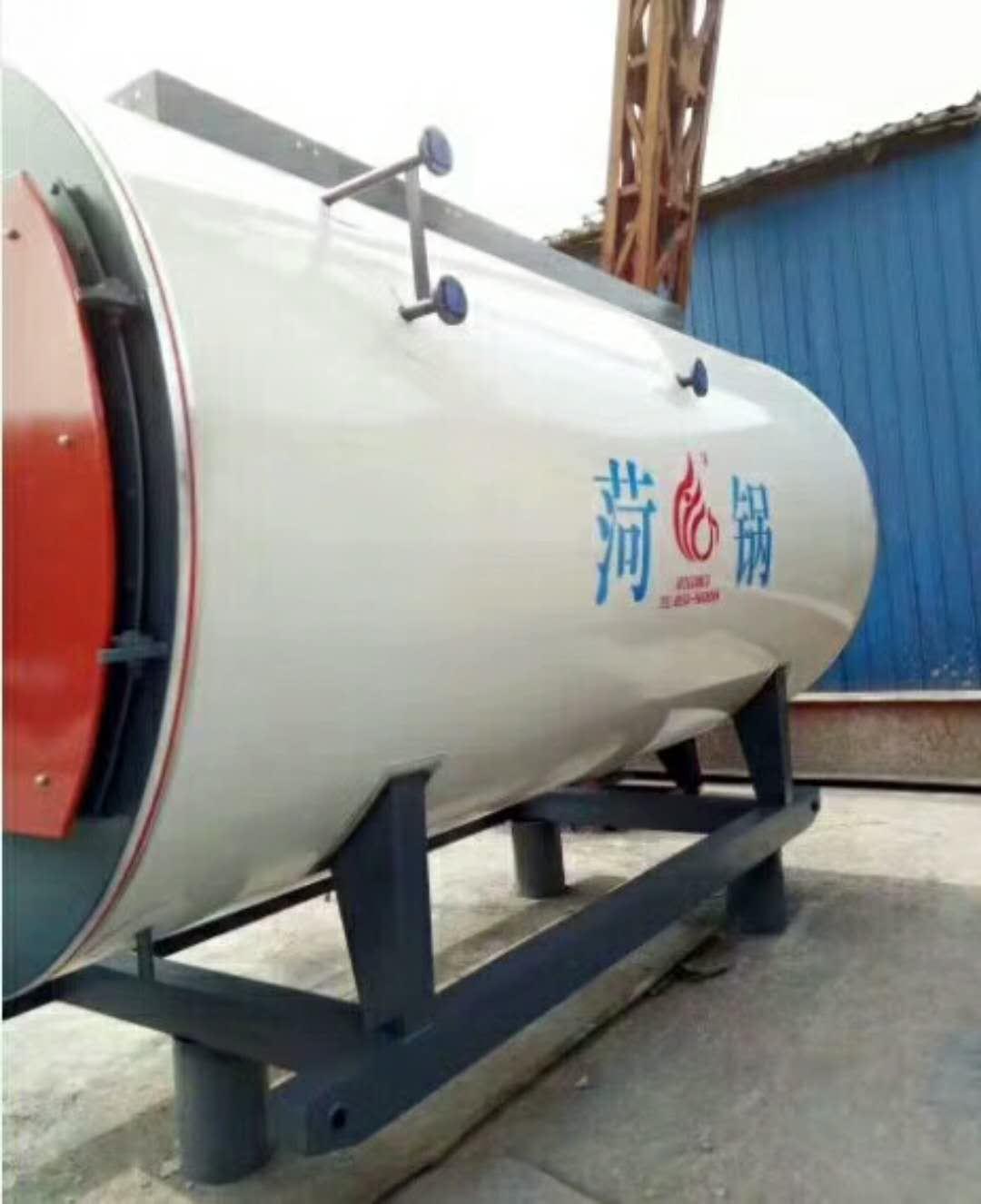
Liquid Oxygen Tanks are used for storing and supplying liquid oxygen as fuel and an oxidizer, playing a crucial role in launch propulsion systems and similar applications. Industrial Production: Liquid oxygen is used as an oxidizer in industrial manufacturing for processes such as combustion, oxidation, and oxygen supply. Liquid oxygen tanks are utilized to store and supply liquid oxygen to meet the demands of industrial activities like metal cutting, welding, and chemical reactions. Equipment: Liquid oxygen tanks are employed in equipment to supply oxygen for uses such as oxygen therapy, oxygen inhalation, and operating rooms. These tanks provide high-purity oxygen while maintaining low temperatures to satisfy equipment oxygen requirements. Laboratory Research: In scientific research and laboratories, liquid oxygen tanks are used to provide liquid oxygen as experimental materials and reagents. The low temperature and high purity of liquid oxygen make it widely applicable in laboratories for fields such as materials science, chemical reactions, and biomedical research. In summary, liquid oxygen tanks are important in various applications including industrial production, equipment, and laboratory research, providing storage and supply functions for liquid oxygen at the sites of use.
The medical oxygen steel cylinder filling plant, in addition to the liquid oxygen storage tank, includes the following components:
Oxygen Compressor: Oxygen compressors are used to compress gaseous oxygen into high-pressure oxygen. These compressors are typically made of special materials and designed to ensure safe handling and compression of oxygen.
Oxygen Purification System: The oxygen purification system is designed to remove impurities and contaminants from oxygen, ensuring the purity and quality of the supplied oxygen. The system typically includes filters, adsorbents, and molecular sieves.
Oxygen Storage System: In addition to liquid oxygen tanks, an oxygen filling area may also include a gaseous oxygen storage system for temporary storage and supply of gaseous oxygen. The gaseous oxygen storage system typically includes high-pressure oxygen cylinders or gas storage tanks.
Filling Equipment: Filling equipment is used to fill oxygen from liquid oxygen storage tanks or gaseous oxygen storage systems into medical oxygen steel cylinders. The filling equipment typically includes filling machines, filling pipelines, and filling control systems, etc.
Oxygen Quality Monitoring System: The oxygen quality monitoring system is used to monitor the quality and purity of the oxygen being filled. Quality inspections and supervision of the filled oxygen are conducted through an oxygen analyzer or other detection equipment.
Safety Facilities: The filling area should be equipped with corresponding safety facilities, such as fire alarm systems, oxygen leak detection systems, and ventilation systems, to ensure the safety and protective measures during the filling process.
It is important to note that the design and equipment configuration of the medical oxygen cylinder filling area must comply with relevant regulations, standards, and specifications. During the filling process, strict adherence to operational procedures and safety requirements is essential to ensure the safe supply of oxygen.
Our company attaches great importance to technological innovation and R&D design, boasting one city-level enterprise technology center in Heze City. We have established testing facilities for non-destructive testing, physical and chemical testing, welding testing, hydrostatic testing, etc., and are equipped with over 600 various instruments and equipment, including CNC machine tools, X-ray flaw detectors, digital ultrasonic flaw detectors, mechanical property testing machines, chemical analyzers, spectrometers, tensile testing machines, plasma welding machines, and more. The key products we have developed, such as temperature and pressure vessel welding, biomass boiler emissions reduction, and waste heat utilization, have successively been shortlisted for multiple Shandong Provincial Department of Industry and Information Technology science and technology innovation projects, key projects in Shandong Province, and Heze City innovation and excellence projects, etc. We have cumulatively obtained 27 authorized utility model patents, 16 authorized invention patents, participated in drafting 2 standards, 2 industry standards, and registered 15 trademarks. Our technical team, in collaboration with Professor Li Yajiang of Shandong University, has developed deep cryogenic container processing technology using the internationally recognized plasma arc + wire filling tungsten inert gas arc welding (PAW-GTAW) technique, which has been appraised as internationally competitive at the provincial level for scientific and technological achievements. Choose Zhongjie Special Equipment, let's create brilliance together!
WeChat Official Account

Scan to follow Official Account



















