



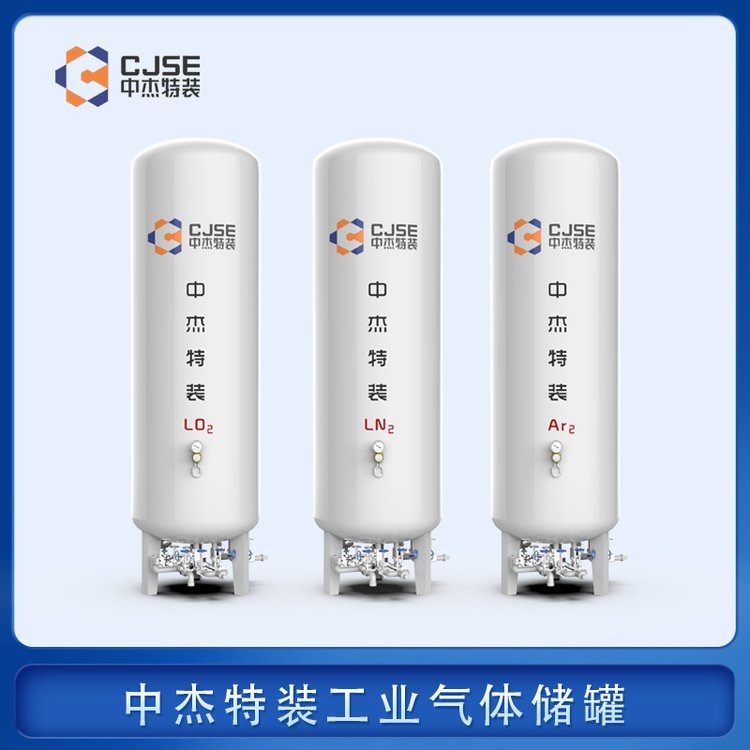
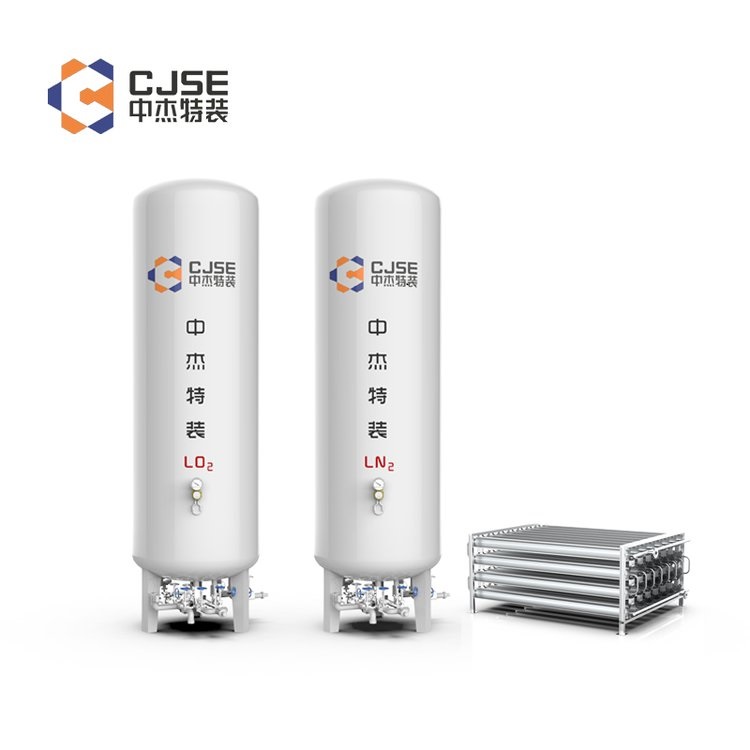


















Shandong Zhongjie Special Equipment (formerly Heze Boiler Factory Co., Ltd.) holds an A-grade boiler manufacturing license, an A2-grade pressure vessel manufacturing license, an A2-grade pressure vessel design license, B-grade boiler installation, and GB2 and GC2 pressure pipeline installation licenses, as well as equipment and machinery installation contracting qualifications. It is a member of the China Boiler and Water Treatment Association, the China Chemical Equipment Association, and the director unit of the Shandong Equipment Manufacturing Association. The company has also passed the ISO9001 Quality Management System, ISO14001 Environmental Management System, OHSAS18001 Occupational Health and Safety Management System certifications, and the American ASME/U2 certification.
Low-temperature liquid storage tanks (such as liquid nitrogen, liquid oxygen, liquid argon, etc.) offer several advantages:
High-Density Storage: Low-temperature liquid storage tanks can convert gases into liquids, significantly increasing storage density. Compared to gas storage, liquid storage can hold more material in a smaller space, enhancing storage efficiency.
Low-Temperature Retention: The low-temperature liquid storage tank has excellent insulation properties, effectively maintaining the low temperature of the liquid. The design and construction of the insulation layer reduce heat conduction and heat loss, keeping the liquid at a low temperature and minimizing evaporation and loss.
Supply: Low-temperature liquid storage tanks provide a stable liquid supply. Through internal pressure control and pipeline system design, precise liquid supply is achievable, catering to industrial production and experimental needs.
Safety: Low-temperature liquid storage tanks offer high safety. Liquid storage, compared to gas storage, reduces the risk of gas leakage and explosion. Tanks are typically equipped with safety devices such as pressure relief valves and level alarms to ensure timely action can be taken in abnormal situations, safeguarding the tank's safety.
Multi-functional Applications: Low-temperature liquid storage tanks are widely used in various fields, such as industrial production and scientific research. Liquids like liquid nitrogen and liquid oxygen can be utilized for freezing, refrigeration, gas supply, and more, catering to diverse industrial needs.
Overall, low-temperature liquid storage tanks offer advantages such as high-density storage, temperature retention, supply, safety, and versatility, providing reliable liquid storage and supply solutions for various industries.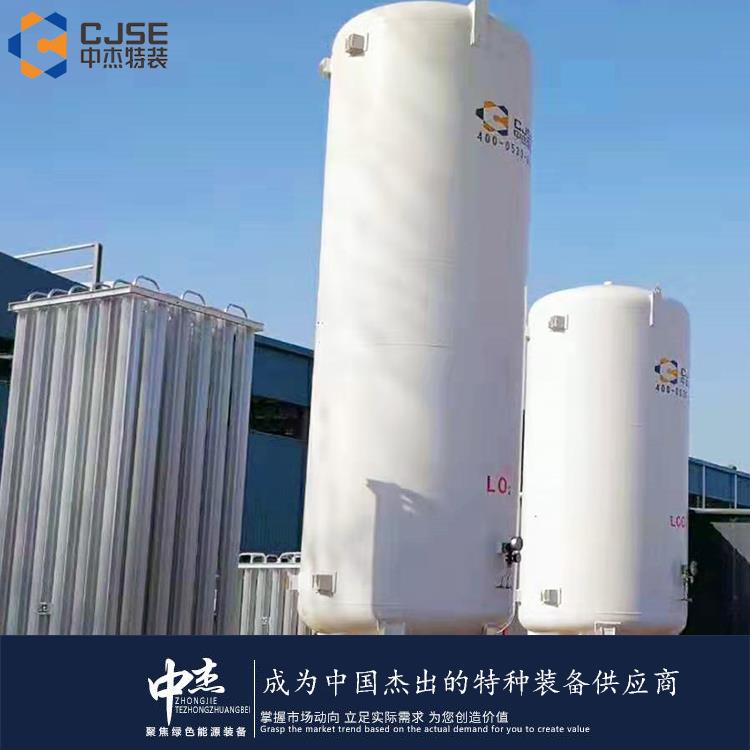
The spacing requirements between liquid oxygen tanks are typically governed by relevant safety standards and regulations to ensure safe distances and fire separations between the tanks. Below is a reference to general spacing rules for liquid oxygen tanks:
Horizontal spacing between tanks: The horizontal spacing between liquid oxygen tanks is typically required to maintain a certain distance to prevent heat transfer and mutual influence between tanks. The specific spacing should be determined based on factors such as tank capacity, pressure, and arrangement, with a general recommendation to maintain a safe distance to ensure safe operation and maintenance between tanks.
Tank and building separation: The distance between the liquid oxygen tank and buildings or other facilities must also comply with relevant safety requirements. This is to prevent the tank from causing danger to surrounding buildings or facilities in case of leakage or accidents. Specific separation requirements will be determined based on factors such as the tank's capacity, pressure, and surrounding environment, generally recommending maintaining a certain safety distance.
Fire protection spacing: It is crucial to have adequate fire protection spacing between liquid oxygen tanks and between tanks and buildings. Liquid oxygen has a high oxygen content and is flammable, which may cause fires in case of leaks or accidents. Therefore, liquid oxygen tanks must maintain a certain fire protection spacing from other facilities to ensure that fires do not spread or pose a danger to the surrounding environment.
Note that specific liquid oxygen tank spacing regulations may vary by region or industry. When designing, arranging, and operating liquid oxygen tanks, adhere to local safety standards and regulations, and consult with experts for accurate guidance.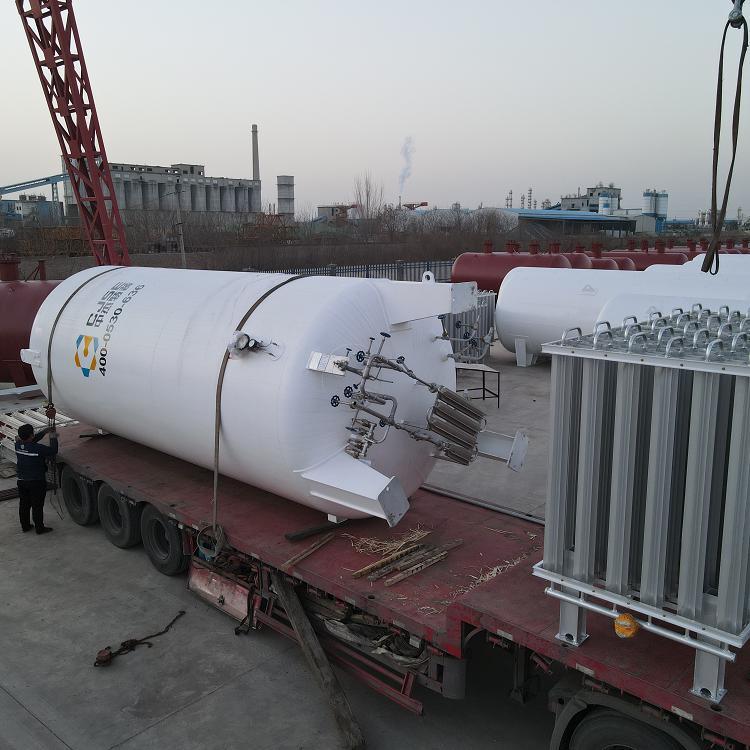
Liquid oxygen storage tanks may deform during use. The following are common deformation defects found in liquid oxygen storage tanks:
Elastic deformation: Liquid oxygen tanks may undergo elastic deformation when subjected to external pressure or temperature changes. This deformation is typically reversible, meaning the tank will return to its original shape after the external pressure is removed or the temperature returns to normal.
Plastic Deformation: When a liquid oxygen tank is subjected to significant external force or pressure, it may experience plastic deformation. This deformation is irreversible, and the tank cannot return to its original shape. Plastic deformation can cause changes in the tank's shape, such as dents or warping.
Hot Deformation: Liquid oxygen tanks may experience thermal deformation when subjected to high temperatures or temperature changes. Thermal deformation can cause the tank to change shape, expand, or contract.
Cold Deformation: Liquid oxygen tanks may experience cold deformation when subjected to low temperatures or temperature changes. Cold deformation can lead to changes in the tank's shape, shrinkage, or cracking.
These deformation defects may affect the structural integrity and safety of the liquid oxygen storage tank. Therefore, it is important to regularly inspect and evaluate the deformation of the liquid oxygen storage tank to ensure normal operation and safe use. If deformation defects are found in the tank, timely repair or replacement measures should be taken to avoid further damage and safety risks.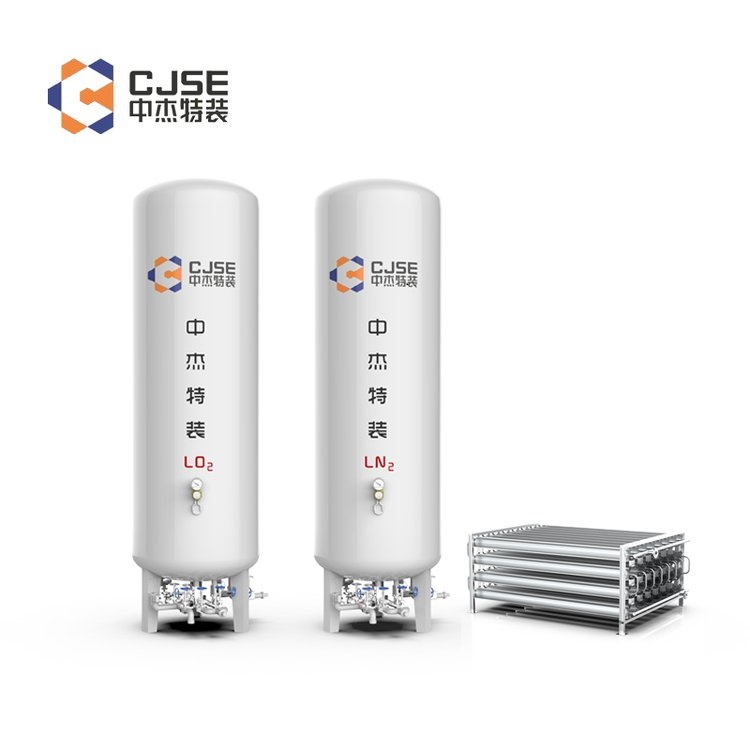
Consider the following aspects to differentiate between the advantages and disadvantages of liquid nitrogen tanks:
Material: Liquid nitrogen storage tanks typically use high-strength, corrosion-resistant materials such as stainless steel or aluminum alloy. These materials offer excellent corrosion resistance and mechanical strength, ensuring the tank operates stably over a long period.
Sealing: The liquid nitrogen storage tank should have excellent sealing performance, effectively preventing any leakage of liquid nitrogen. The valves, pipeline connections, and other parts of the tank should be designed rationally to ensure reliable sealing.
Insulation: The liquid nitrogen tank should have excellent insulation properties to minimize evaporation losses. The insulation layer of the tank should use materials such as polyethylene foam to reduce heat conduction and evaporation losses.
Safety: The liquid nitrogen tank should have excellent safety performance, including equipped with safety valves, pressure gauges, and other safety devices, as well as fire and explosion-proof functions. The design and manufacturing of the tank should comply with relevant safety standards and regulations.
Service Life: Liquid nitrogen tanks typically have a long service life, capable of withstanding prolonged use and transportation. The manufacturer and reputation are also significant factors in assessing service life.
Price and After-Sales Service: The price of liquid nitrogen tanks should be reasonable, and excellent after-sales service is provided. Choosing manufacturers or suppliers with a good reputation and reliable after-sales service ensures access to high-quality products and technical support.
Considering these factors, one can distinguish the quality of liquid nitrogen tanks. When selecting a liquid nitrogen tank, it is recommended to choose one that meets the requirements based on actual needs and usage environment, to ensure safe and reliable storage of liquid nitrogen.
Shandong Zhongjie Special Equipment, welcome customers to our factory for business discussions.
WeChat Official Account

Scan to follow Official Account



















