


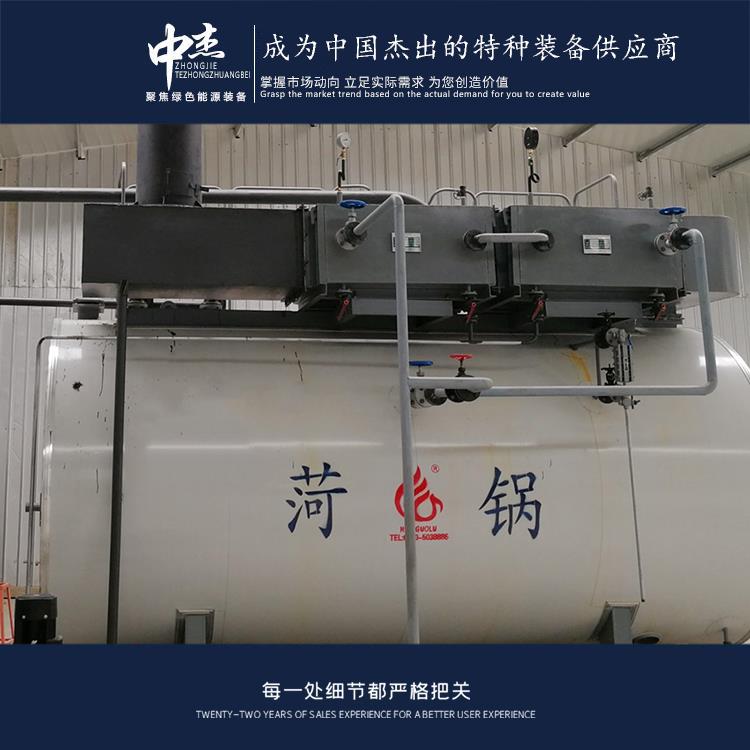

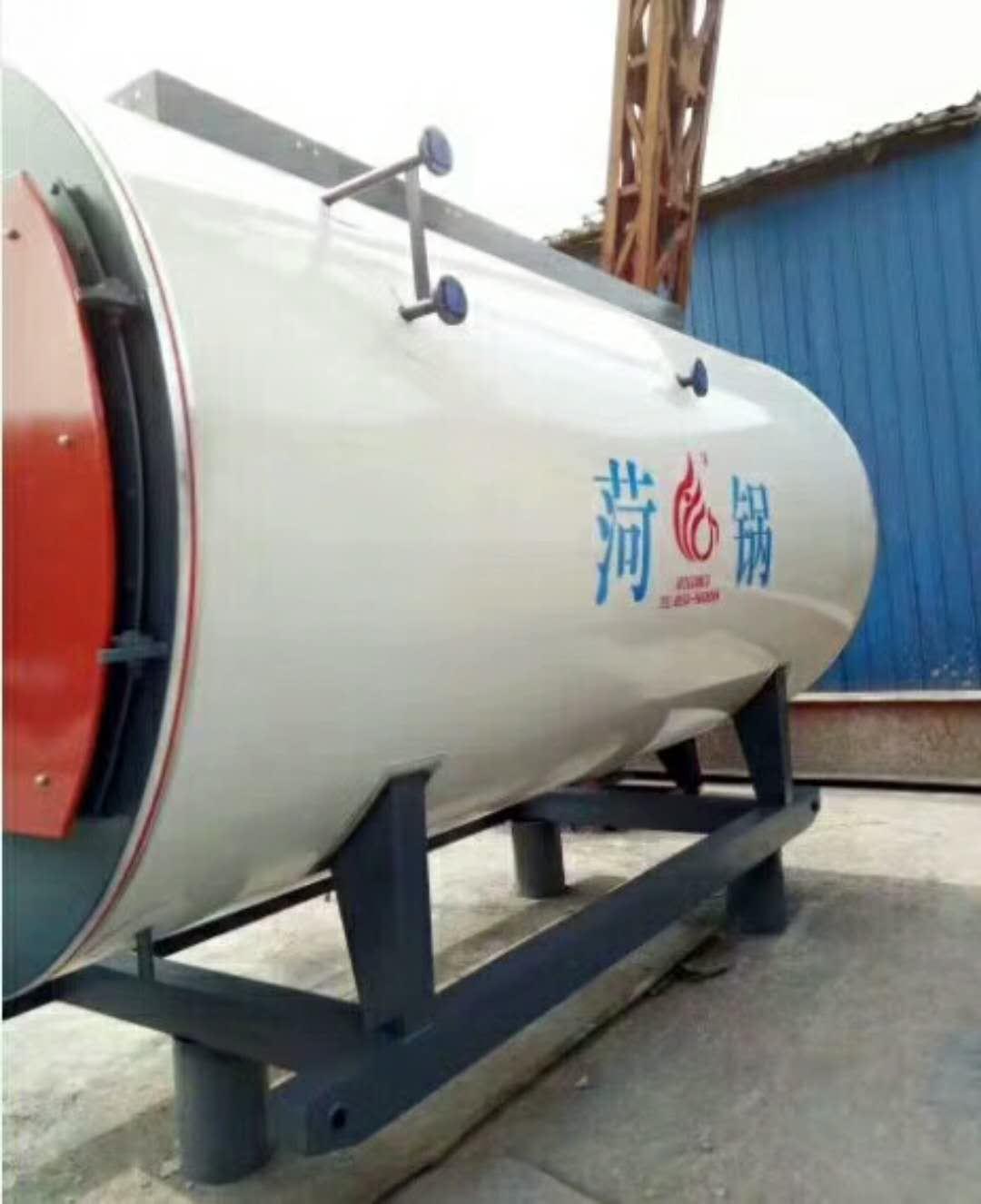
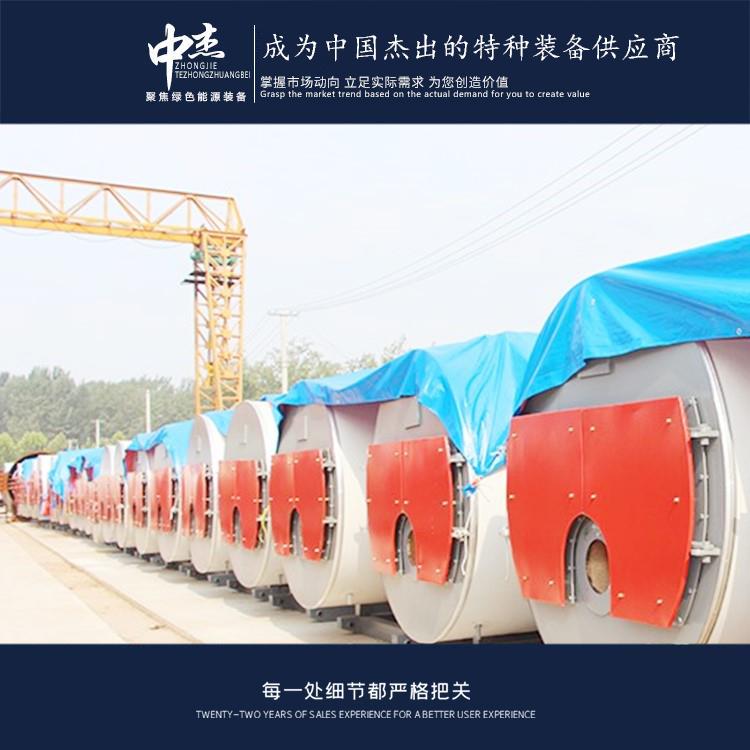


















Shandong Zhongjie Special Equipment (formerly Heze Boiler Factory Co., Ltd.) was established in 2001, located at No. 2218 Jinnan Road, Economic and Technological Development Zone, Heze City. With a registered capital of 50 million yuan and total assets of 500 million yuan, the company has 7 business centers: boilers, deep-freeze containers, pressure vessels, central air conditioning, engineering installation, international trade, and Internet of Things. It has three factory sites on Jinnan Road, East Changjiang Road, and Bohai Road, covering a total of 200,000 square meters. The main workshop spans 83,000 square meters. The company currently employs 710 people, including 247 engineering and technical staff and 82 intermediate-level technicians. In December 2016, it was recognized as a "High-Tech Enterprise" by the Science and Technology Department. In June 2021, it was identified as a "Specialized and New Enterprise in Shandong Province" by the Department of Industry and Information Technology. In June 2022, it was recognized as a "Gazelle Enterprise in Shandong Province" and in August 2022, it was identified as a "Specialized and New Small Giant Enterprise" by the Ministry of Industry and Information Technology.
When selecting a suitable gas steam boiler, consider the following factors:
Steam Demand: First, determine your steam requirements, including steam pressure and evaporation capacity. Choose a boiler with a rated evaporation capacity and steam pressure that align with your actual needs, ensuring it meets your production or heating requirements.
Fuel Type: Gas steam boilers use gas as fuel, with common types including natural gas, LPG, etc. Select a suitable gas type based on available resources and cost considerations.
Boiler Efficiency: Boiler efficiency directly impacts energy utilization and operating costs. Opt for a high-efficiency gas steam boiler to reduce energy consumption and operating costs. Pay attention to the boiler's thermal and combustion efficiency.
Boiler and Manufacturer Quality: Choose a gas steam boiler from a reputable manufacturer to ensure product quality and reliability. Understand the manufacturer's production capacity, after-sales service, and technical support, and select a reliable supplier.
Safety and Environmental Protection: Focus on the safety and environmental performance of the boiler. Ensure the boiler has necessary safety protection devices and monitoring systems, as well as a combustion system that meets environmental standards to minimize environmental impact.
Economic Viability: Consider not only the purchase cost but also the operating and maintenance costs of the boiler. Overall, take into account the boiler's energy consumption and cost-effectiveness.
During the production welding of thermal oil boilers, the following points should be noted:
- Welder Qualification: Ensure that the welders involved in the welding work have the appropriate qualifications and experience, and are familiar with welding processes and operation procedures.
- Welding Material Selection: Choose welding materials suitable for thermal oil boilers, ensuring their compatibility with the thermal oil and high-temperature resistance.
- Welding Process Control: Select an appropriate welding process, such as manual arc welding or gas shielded welding, based on the material and design requirements of the thermal oil boiler. Control welding parameters like current, voltage, and welding speed to ensure the quality and strength of the weld.
- Welding Area Protection: During the welding process, the welding area needs to be protected to prevent contamination from the thermal oil and welding materials. Use welding barriers, welding shields, and other equipment to ensure the cleanliness and safety of the welding area.
- Post-Welding Treatment: After welding, post-treatment of the weld is required, such as slag removal, sanding, and cleaning, to ensure the flatness and surface quality of the weld.
- Welding Quality Inspection: Conduct welding quality inspections, including visual examination of the weld, dimension measurements, and non-destructive testing, to ensure the welding quality meets requirements.
- Safety Measures: Pay attention to safety measures during welding, such as wearing protective glasses, gloves, and fire-resistant clothing, to ensure the safety of welding operations.
- It is important to follow relevant standards and specifications during the welding process to ensure welding quality and safety. If unsure about how to proceed with welding or if there are potential safety hazards, seek the advice of a welding engineer or consult relevant agencies.
When designing a fuel-gas boiler room, pay attention to the following aspects:
Safety considerations: Ensure the design of the boiler room complies with relevant safety standards and regulations. Consider fire risks and set up appropriate firewalls, fire doors, and fire isolation facilities. Ensure good ventilation in the boiler room, and install suitable ventilation equipment and flue systems to expel harmful gases produced by combustion.
Space and layout: Plan the space and layout of the boiler room based on the number and size of the boilers. Ensure there is sufficient space for operation, maintenance, and cleaning. Arrange the boilers, fuel storage equipment, flue systems, and pipeline layouts in an orderly manner for easy operation and maintenance.
Fuel supply and storage: Consider the needs for fuel supply and storage. Ensure the safety and reliability of fuel supply pipelines and equipment to prevent leaks and contamination. Reasonably plan the capacity and location of fuel storage equipment to ensure an adequate fuel supply and compliance with relevant safety requirements.
Emission and exhaust gas treatment: Consider the exhaust gas emissions and treatment resulting from combustion. Set up appropriate flue systems and flue gas treatment equipment to minimize the impact of exhaust emissions on the environment. Ensure the design and layout of the flue system are reasonable and can effectively expel flue gases and exhaust.
Control and monitoring systems: Design appropriate control and monitoring systems to ensure the safety and operation of the boiler. This includes monitoring and control equipment for parameters such as temperature, pressure, and flow, as well as alarm and automatic shutdown devices. Ensure operators can promptly understand the operating status of the boiler and take appropriate actions.
Industrial boilers, during their long-term operation, can accumulate scale and sediments, affecting heat exchange efficiency and the normal operation of the boiler. Here are some effective descaling methods:
1. Mechanical Cleaning: This involves using cleaning equipment and tools to wash away scale and sediments inside the boiler with high-pressure water or mechanical brushes. This method is suitable for lighter scale and sediments.
2. Chemical Cleaning: Utilizing chemical cleaning agents, scale and sediments are dissolved through chemical reactions. Select an appropriate cleaning agent based on the composition and nature of the scale, and follow the instructions for use. Chemical cleaning requires safe operation to avoid damage to equipment and the environment.
3. Acid Cleaning: Acid cleaning is a common descaling method suitable for certain types of scale and sediments that are difficult to dissolve. Common acid cleaning agents include, etc., and the appropriate cleaning agent and concentration should be selected based on the specific situation. Acid cleaning requires safe operation to avoid harm to equipment and personnel.
4. Alkaline Cleaning: Alkaline cleaning is a descaling method for specific types of scale, suitable for alkaline scale. Common alkaline cleaning agents include, etc., and the appropriate cleaning agent and concentration should be selected based on the specific situation. Alkaline cleaning requires safe operation to avoid harm to equipment and personnel.
5. Physical Descaling: Physical descaling methods include ultrasonic cleaning and electro-dissolution, etc. Ultrasonic cleaning uses the vibration effect of ultrasound to shake the scale to pieces. Electro-dissolution utilizes the principle of electrolysis to dissolve scale through the action of electricity. These physical descaling methods are suitable for certain special situations and types of scale.
When selecting a descaling method, it is necessary to consider the specific conditions of the boiler.
Shandong Zhongjie Special Equipment, welcome customers to our factory for business discussions.
WeChat Official Account

Scan to follow Official Account



















