


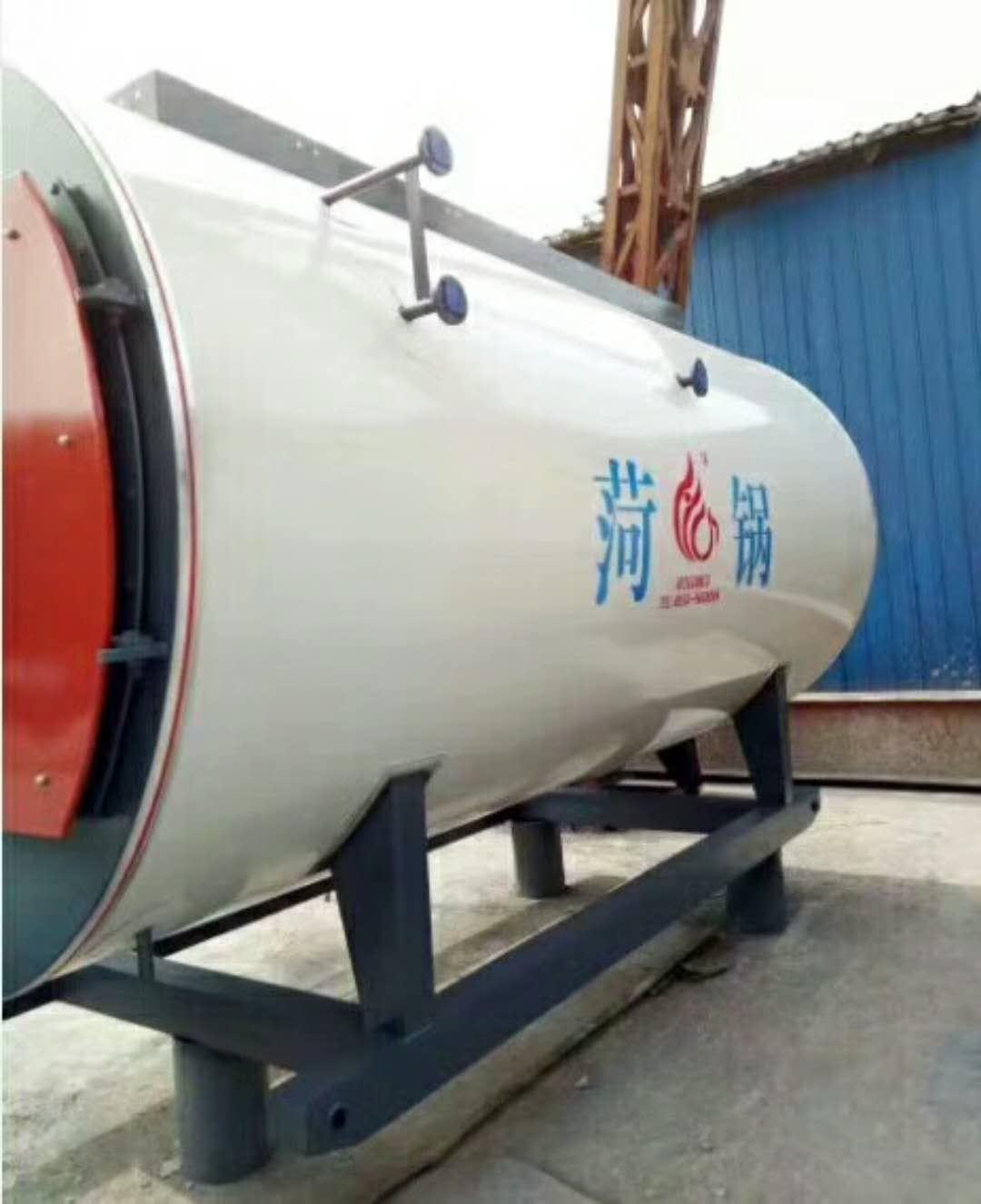

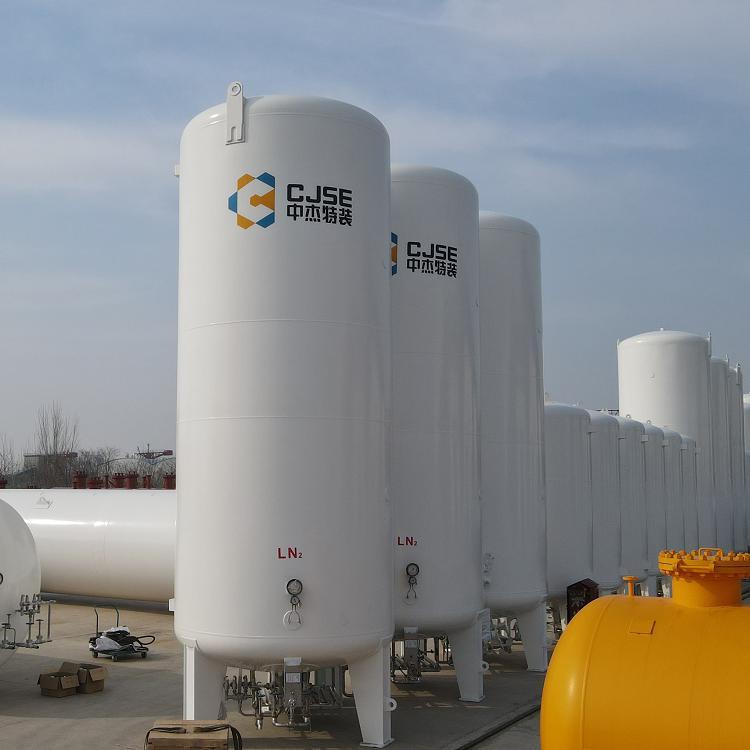
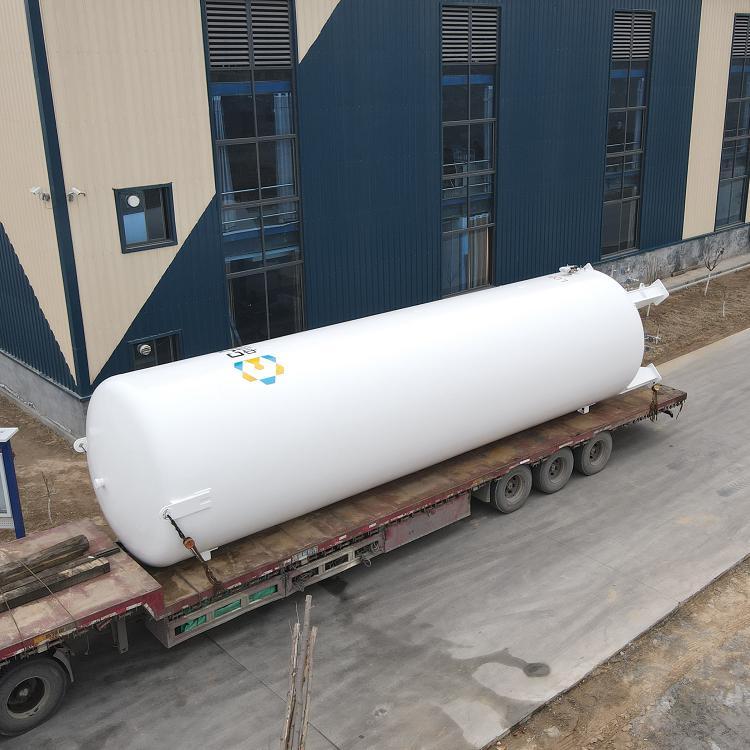


















Shandong Zhongjie Special Equipment (formerly Heze Boiler Factory Co., Ltd.) holds an A-grade boiler manufacturing license, an A2-grade pressure vessel manufacturing license, an A2-grade pressure vessel design license, B-grade boiler installation and GB2, GC2 class pressure pipeline installation licenses, as well as a qualification for electromechanical equipment installation contracting. It is a member of the China Boiler and Water Treatment Association, the China Chemical Equipment Association, and the council member of the Shandong Equipment Manufacturing Association. The company has also passed certifications for the ISO9001 Quality Management System, ISO14001 Environmental Management System, OHSAS18001 Occupational Health and Safety Management System, and the U.S. ASME/U2 certification.
For maintenance of CO2 storage tanks, here are some recommended methods:
- Regular Inspections: Conduct periodic checks of the tank's exterior and interior, including for corrosion, cracks, and leaks. Non-destructive testing methods, such as ultrasonic testing, can be used to assess the tank's integrity.
- Cleaning and Corrosion Protection: Regularly clean the tank's outer surface to remove dirt and debris. For tanks coated with corrosion-resistant paint, inspect the coating regularly and repair or recoat as needed to prevent corrosion.
- Leak Detection: Perform regular leak detection to ensure there are no leaks. Use gas detectors or leak detectors, or conduct pressure tests to evaluate the tank's sealing performance.
- Safety Valve Inspection: Regularly check and test the operation of safety valves to ensure they function properly under overpressure conditions. Adjust and test according to the specifications and requirements of the safety valves.
- Pipeline and Valve Maintenance: Regularly inspect and maintain the pipelines and valves connected to the tank to ensure proper operation and sealing performance. Clean and lubricate valves, and check for leaks at pipeline connections.
- Record and Documentation: Keep records of maintenance dates, contents, and results to establish a maintenance history for the tank. Retain related documents and reports for future reference and review.
Please note that for the maintenance of CO2 storage tanks, it is recommended to follow relevant safety operating procedures and standards. If you do not possess the necessary knowledge and experience, it is advisable to consult with personnel or manufacturers for maintenance work.
Daily inspections and maintenance of CO2 storage tanks can be conducted following these steps:
- **Visual Inspection**: Check for any visible damage, corrosion, or oil leakage on the tank's exterior. Pay attention to any abnormalities in the tank shell, valves, and pipe connections.
- **Internal Inspection**: If access to the interior is permitted, perform an internal check. Look for corrosion, scaling, or blockages in the lining, valves, and pipes.
- **Valve and Pipe Inspection**: Verify that the tank's inlet and outlet valves and pipe connections are functioning properly and for any leaks or loose fittings. Ensure valves operate smoothly and reliably.
- **Pressure Relief Device Inspection**: Check that the tank's pressure relief devices (such as safety valves) are functioning correctly. Confirm that the set pressure of the relief devices meets requirements.
- **Measurement and Control System Inspection**: Ensure the tank's level, pressure, and temperature measurement and control systems are operating properly. Calibrate and test the accuracy of measuring equipment.
- **Cleaning and Drainage**: Regularly clean the interior of the tank, removing accumulated impurities and sediments. Also, periodically drain the tank to remove liquid and gas impurities.
- **Maintenance and Repair**: Perform necessary maintenance and repair work based on inspection results. Repair damaged components, replace worn seals, etc., to ensure the tank operates normally.
- **Documentation and Reporting**: Document the inspection and maintenance process, including the inspection date, contents, identified issues, and actions taken. Submit inspection reports to relevant departments or management as needed.
- The above are general steps for daily inspections and maintenance of CO2 storage tanks. Specific procedures should be tailored to the tank's characteristics and requirements. When conducting inspections and maintenance, follow relevant safety operating procedures and have personnel handle operations.
Low Temperature Carbon Dioxide Storage Tank Knowledge
1. Structure of Low Temperature Carbon Dioxide Storage Tank
The low temperature carbon dioxide storage tank typically features a double-layered cylindrical structure. The inner cylinder is made of 6MnDR alloy steel, while the outer cylinder is constructed from Q245R or Q345R pressure vessel steel plate. The piping is made of austenitic stainless steel, and the insulation layer is filled with high-vacuum sintered sand or wrapped in multiple layers for thermal insulation. The storage tank is equipped with valves for operation, which are arranged for ease of use. Pressure gauges and level indicators are also installed to monitor the internal pressure and liquid level of the tank.
2. Key Features of Low Temperature Carbon Dioxide Storage Tank
(1) The storage tank is fitted with a liquid filling connection for tanker trucks, allowing supply to vaporizers, tanker trucks, and pumps.
(2) Both the inner and outer cylinders of the storage tank are equipped with safety devices to ensure safe operation for the user.
(3) The insulation material of the storage tank has been specially treated to provide a longer vacuum life. Additionally, the tank is equipped with a vacuum gauge for measuring the vacuum level of the insulation layer as needed.
3. Transportation of Low Temperature Carbon Dioxide Storage Tank
(1) During road transportation, the storage tank should be securely fastened to the vehicle and travel at moderate speeds. It is prohibited to collide the storage tank with other objects.
(2) After the storage tank arrives, the unloading crew should work together with the equipment supervisor to develop a scientific and reasonable unloading plan.
4. Installation of Low Temperature Carbon Dioxide Storage Tank
(1) Once the storage tank arrives at the installation site, it can be positioned when installation conditions are met. During the installation process, avoid impacts and strikes, and pay special attention to the explosion-proof equipment on the outer cylinder and the vacuum valve, which should not be touched.
(2) Perform a gas-tightness test on the inner cylinder system of the storage tank using nitrogen to the working pressure. After confirming that valves, pipes, flanges, etc., have no leaks, the installation is complete.
(3) The installation dimensions of the storage tank are specified in the supply materials. When considering liquid loading and unloading with tanker trucks, account for the vehicle's travel path.
Urea synthesis from carbon dioxide is a significant chemical reaction with several applications:
- Urea Production: Urea is a vital nitrogen fertilizer and chemical, widely used in both agricultural and industrial sectors. Carbon dioxide synthesis is one of the commonly used methods for urea production. In this process, carbon dioxide reacts under high temperature and pressure to form urea. This method utilizes carbon dioxide resources, reducing dependence on fossil fuels used in traditional urea production.
- Urea Fuel: Urea can also serve as a urea fuel for internal combustion engines and combustion equipment. By heating and decomposing urea, it releases nitrogen monoxide, which then reacts with oxygen in the air to produce combustion heat. This combustion process yields only water vapor and nitrogen as by-products, minimizing environmental pollution.
- Chemical Synthesis: Urea is an essential raw material for the synthesis of many chemicals. Carbon dioxide synthesis of urea provides a sustainable supply for the chemical industry, used to synthesize other chemicals such as plastics, resins, paints, etc.
- Energy Storage: Urea can also act as an energy storage medium. By synthesizing urea from carbon dioxide, energy can be stored in the form of chemical bonds. When energy is needed, the stored energy can be released by decomposing urea, which then reacts with oxygen in the air to produce combustion heat and release the stored energy.
The development of carbon dioxide synthesis technology for urea aims to reduce dependence on fossil fuels used in traditional urea production methods, lower greenhouse gas emissions, and promote the development of sustainable agriculture and the chemical industry. However, this technology is still under development and research, requiring further technological breakthroughs and practical verification to achieve large-scale application.
Zhong Jie Special Equipment upholds the great vision of "realizing the dreams of our employees, creating value for our customers, and striving for the prosperity and strength of our motherland," and is dedicated to the development of the green energy equipment industry. We offer products and services with high performance and cost-effectiveness to contribute to society!
WeChat Official Account

Scan to follow Official Account



















