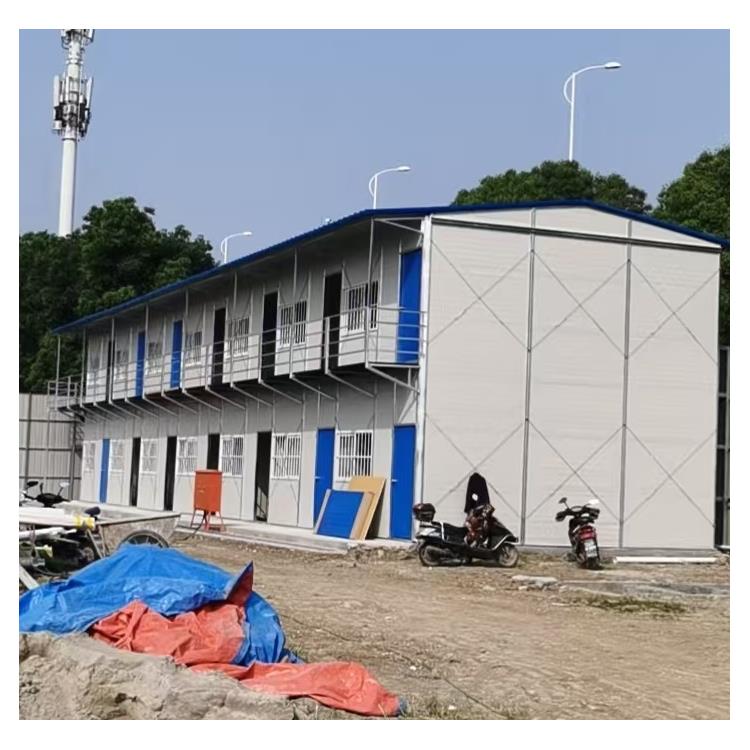

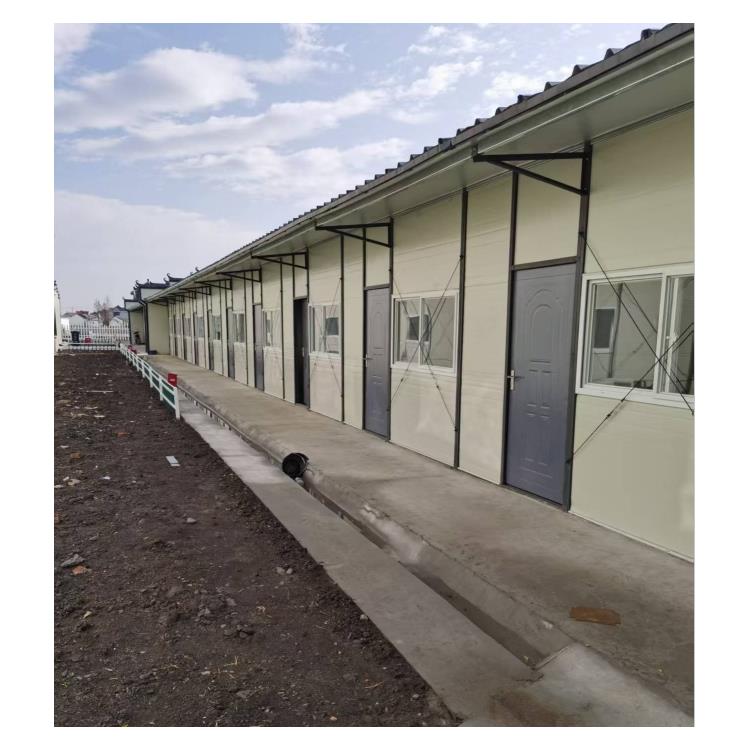
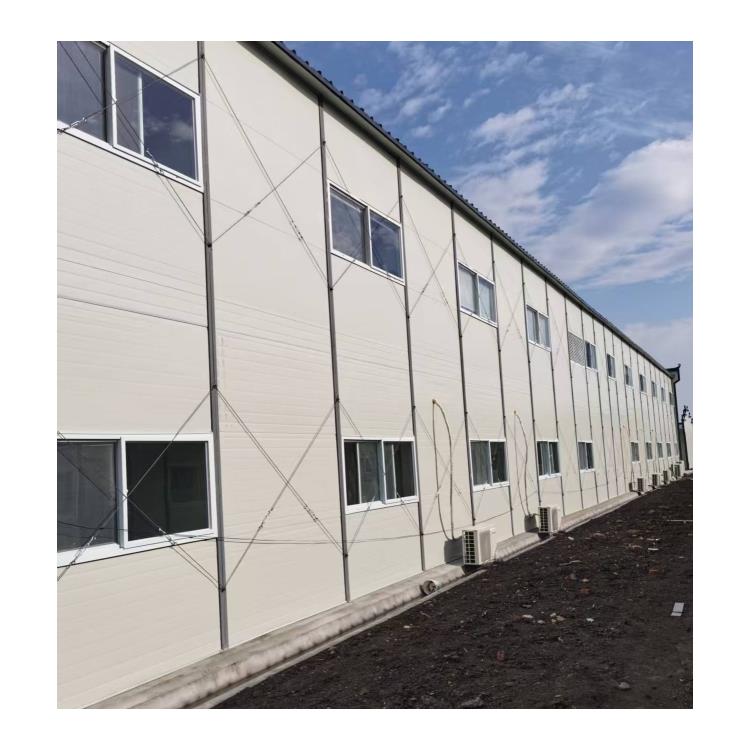








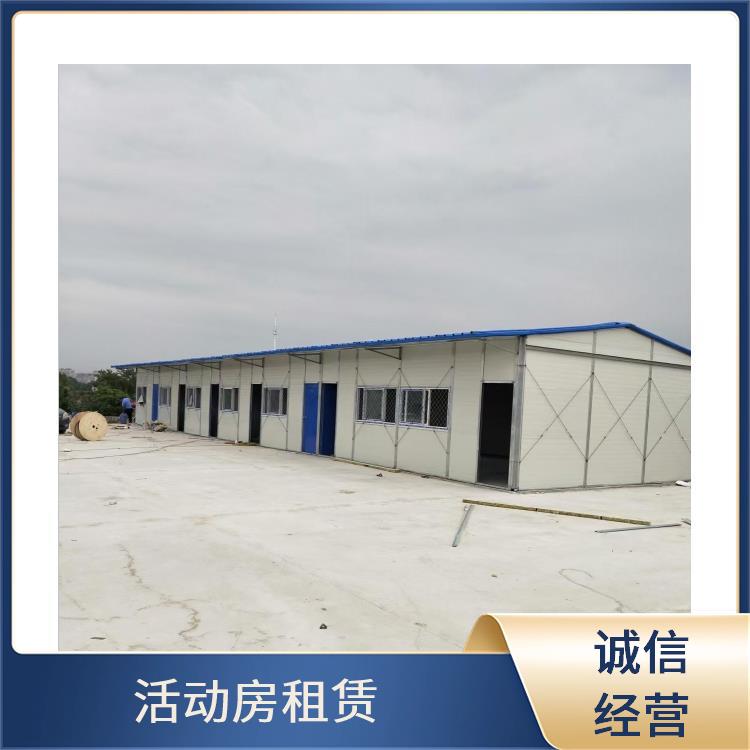
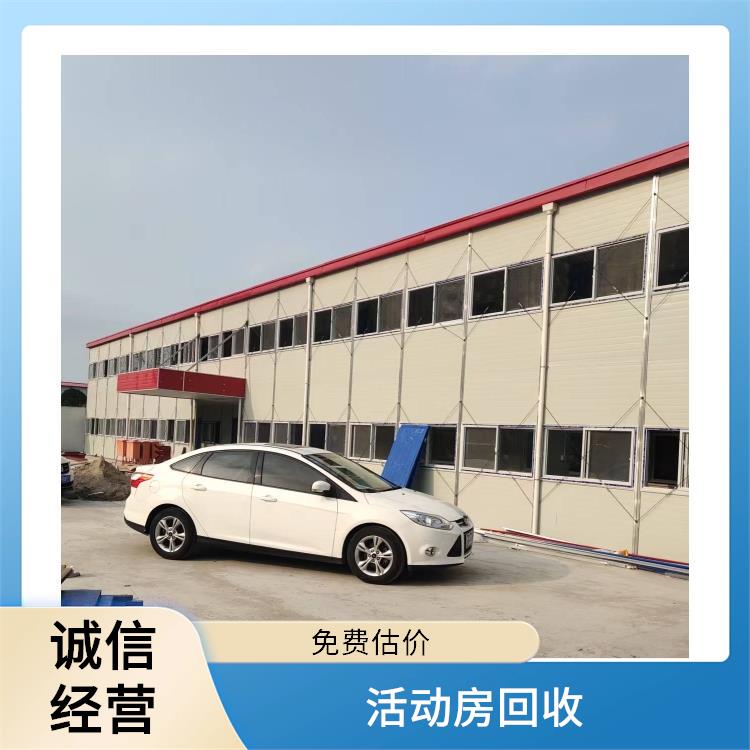
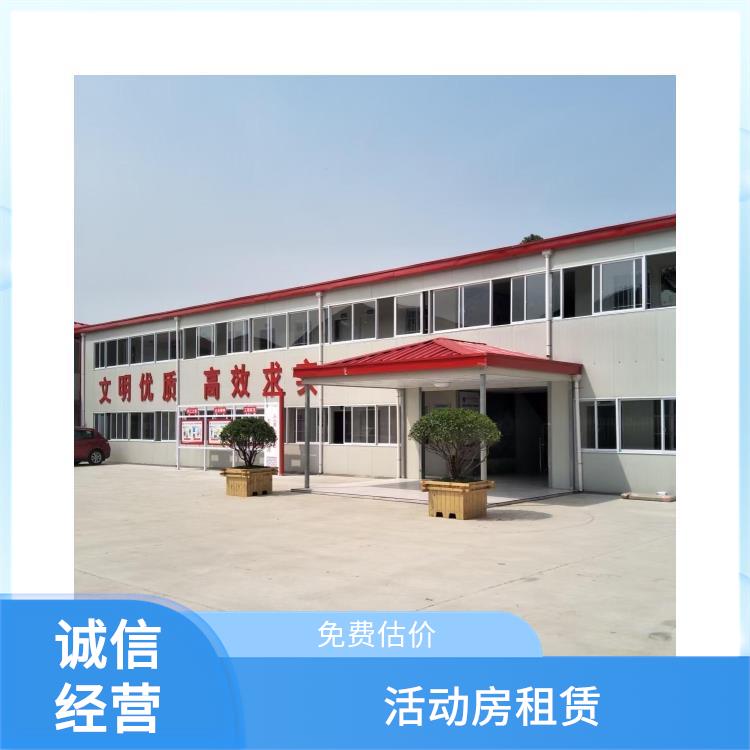
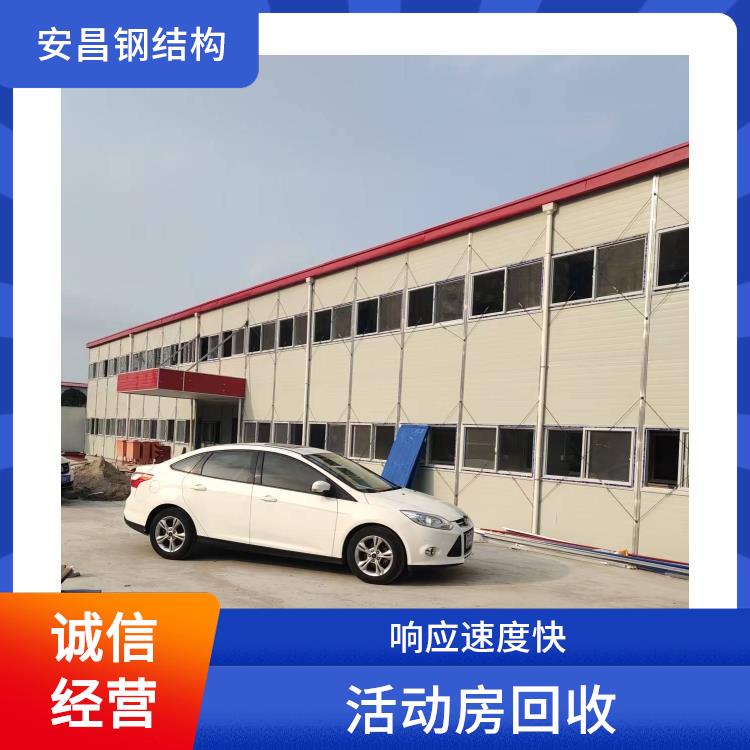
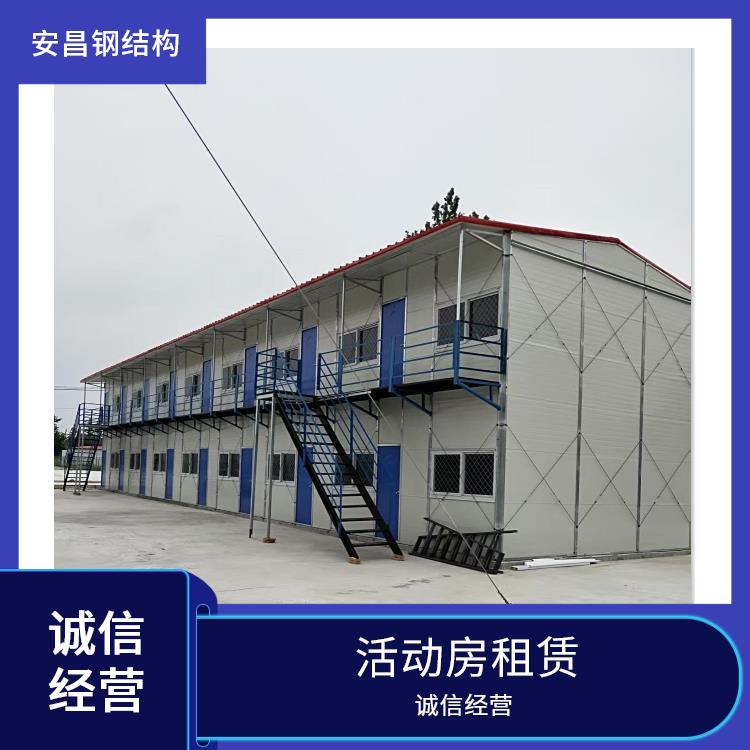
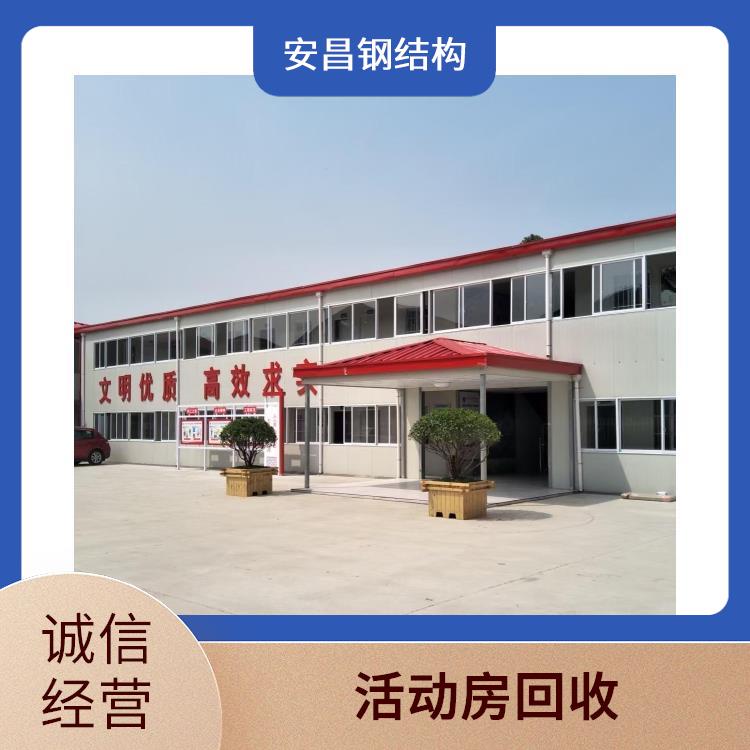
Container mobile houses are so named because of their appearance resembling a container. They come in two types: welded fixed and dismountable. The welded fixed type is easy to install and dismantle, and offers strong stability, excellent wind and earthquake resistance. Among those produced domestically, the dismountable container mobile houses represent an improvement over traditional modular houses. The roof, four walls, and floor can all be disassembled into separate components and reassembled as needed.
The main material of the portable cabin is 8# C-shaped steel, the stairs are made of 16# C open steel, the angle iron width is 40*40 mm (both with a thickness of 3 mm, and the patterned steel plate is also 3 mm thick). The aluminum windows use 76-type aluminum alloy with a thickness of 0.9 mm, a height of 950 mm, and a length of 1740 mm. The 30*30 square tube has a thickness of 1.0 mm, and the floor is constructed with multi-layer wood plywood, 15 mm thick.
The prefabricated steel sheet houses should generally not exceed two stories. Assembly on-site is required, and installation must align with the wall foundation axis, with no deviations allowed. Additionally, the height of the foundation wall must not exceed 10 millimeters. Layout should be based on the design drawings, and all materials must be delivered to the site. Check the steel structure dimensions and ensure proper welding.
Mobile homes have evolved to a point where their quality and safety have been rigorously tested, leaving no concerns at all; mobile homes are essentially a type of prefabricated housing supported by lightweight steel and enclosed with composite panels. The main structure is still steel, ensuring stability and durability, much like building a standard residential home. This involves first laying the foundation and then filling it with reinforced concrete before installing beams and the overall house frame. These foundational steps ensure the structural integrity of the mobile homes.
The steel structure mobile houses utilize an energy-saving system with a breathing function, allowing for adjustable indoor air humidity and dryness. The roof features ventilation capabilities, creating a circulating air space above the interior, ensuring adequate ventilation and heat dissipation within the roof.
Mobile Cabin Usage Notice:
Do not disassemble or attempt to dismantle any screw or component.
2. Indoor floor must be elevated 50mm above the outdoor level; ensure proper drainage ditches are constructed outdoors.
3. Unauthorized personnel shall not alter the structure of the prefab house.
4. The load-bearing value per square meter of the floor shall not exceed the static load and load factor values specified in the contract.
5. Do not use open flame cooking appliances indoors.
6. Do not jump or run on the upper floors.
7. Please gently push and close doors and windows.
8. Regular maintenance such as rust removal, painting, and renovation should be conducted for steel components prone to corrosion.
9. We do not recommend setting up a kitchen inside a portable cabin outdoors. If it is necessary to do so, please install an exhaust hood and ensure the flame source is at least 50 cm away from the walls.
10. We do not recommend setting up a bathroom inside a portable cabin. If it is necessary to do so within the cabin, please ensure proper anti-corrosion and waterproofing measures are taken.
WeChat Official Account

Scan to follow Official Account