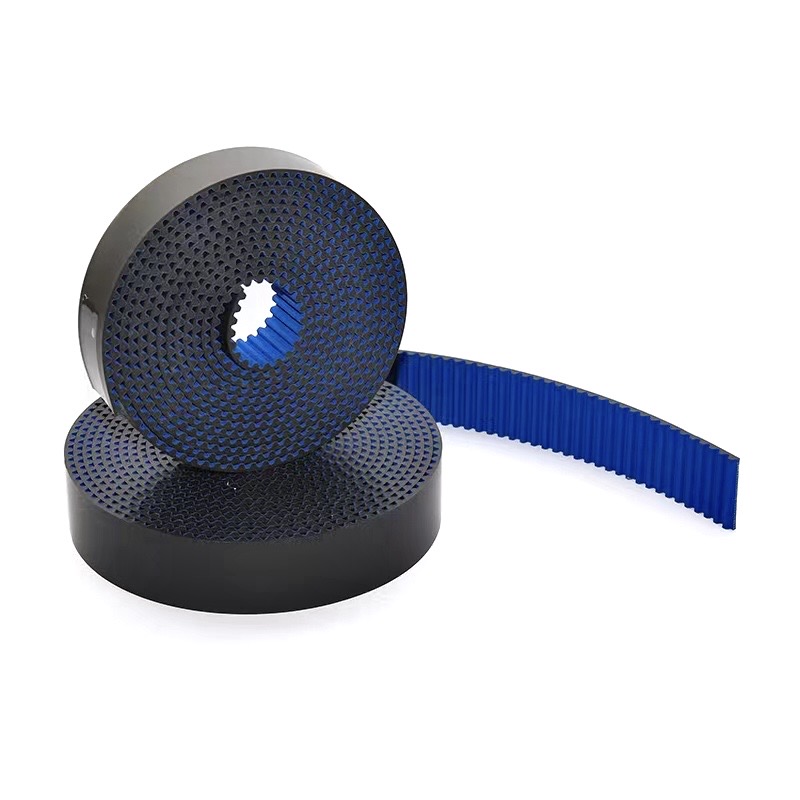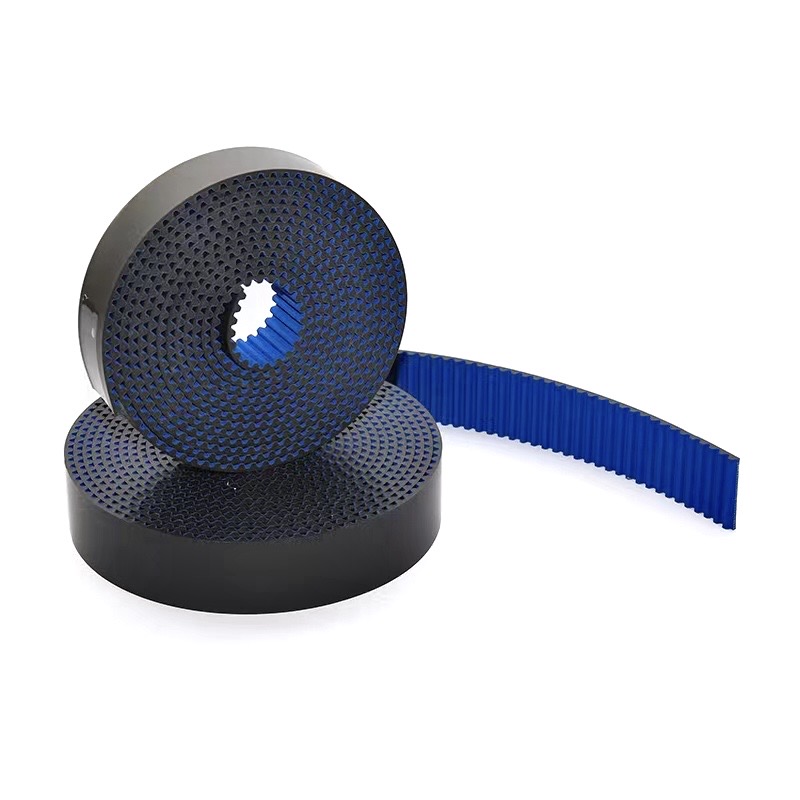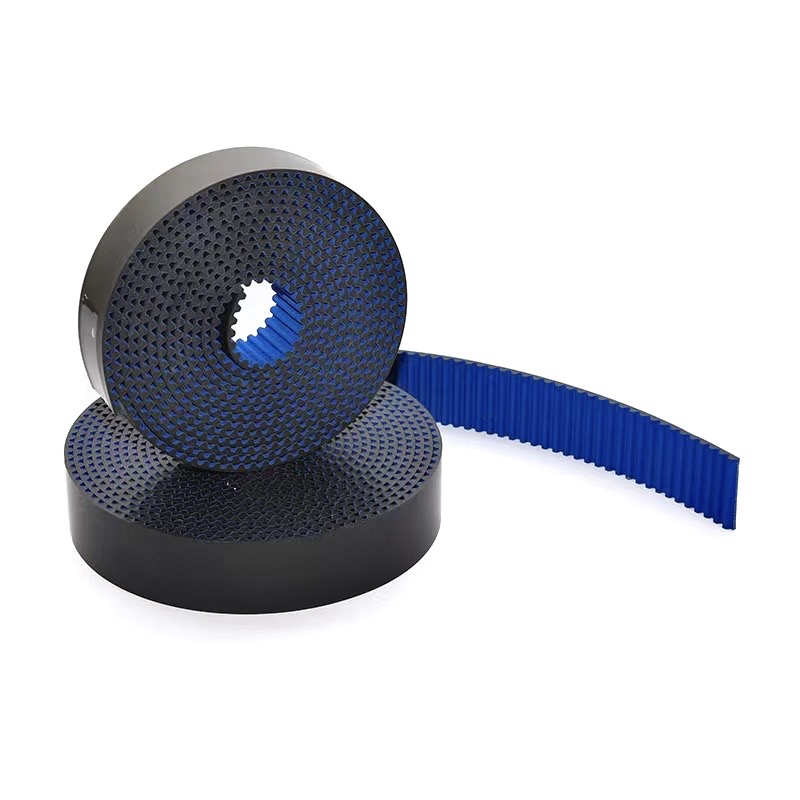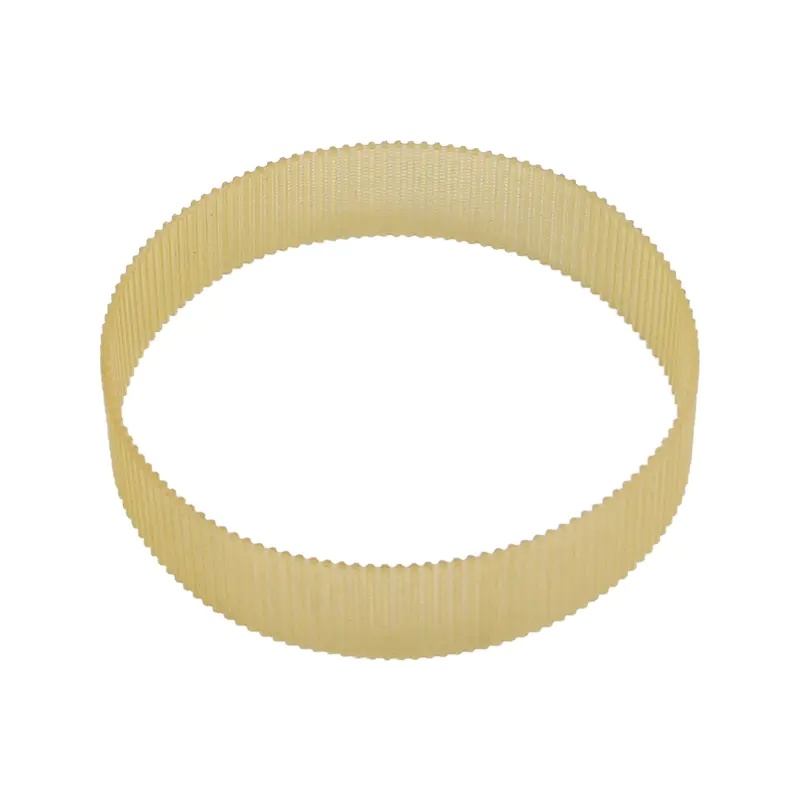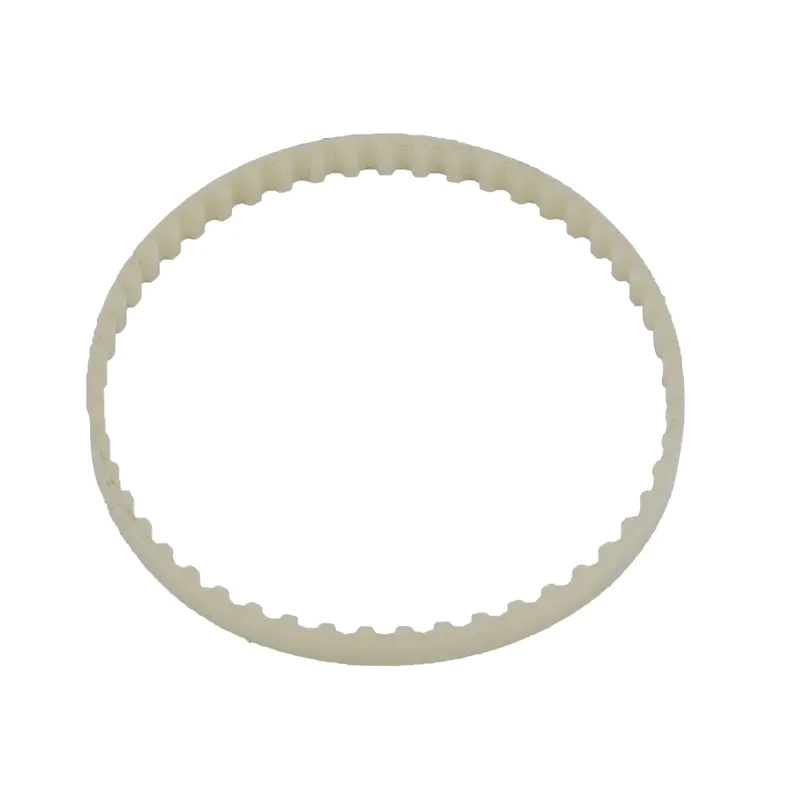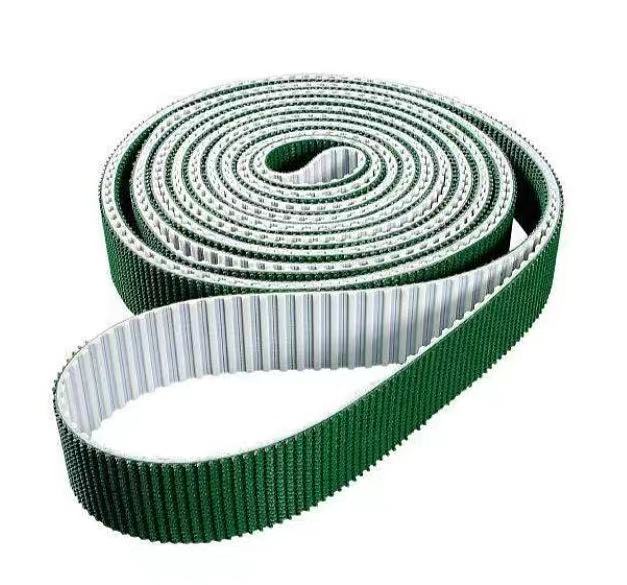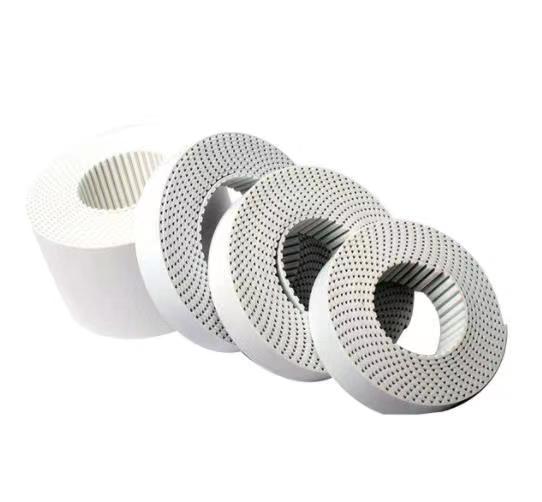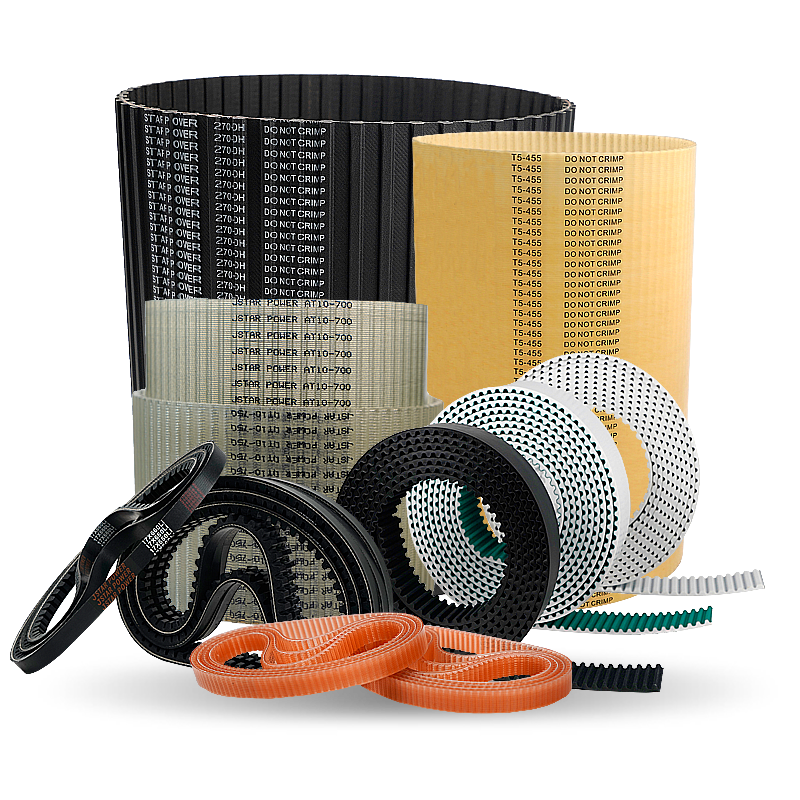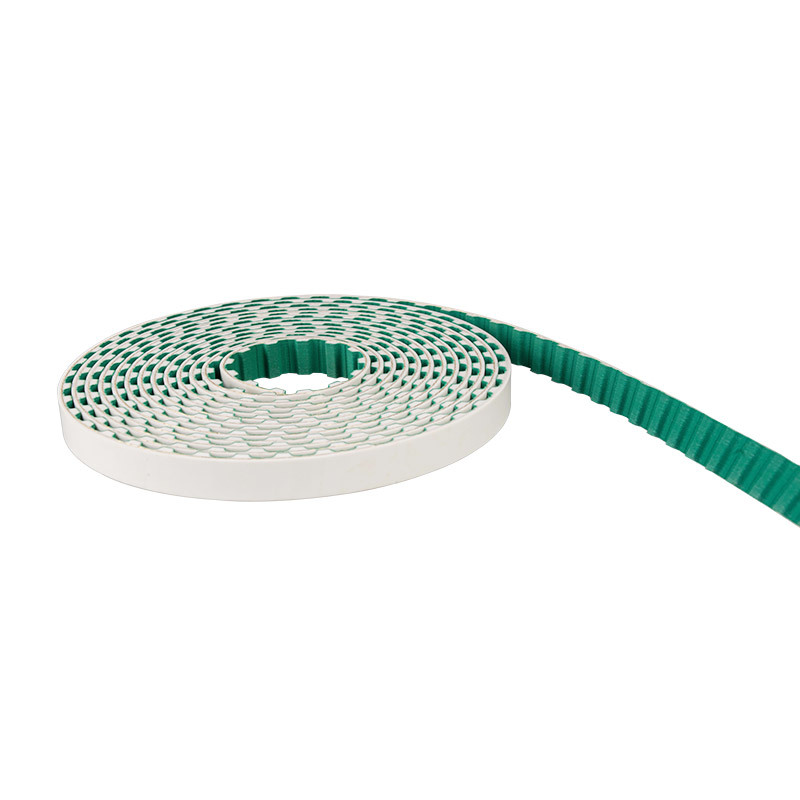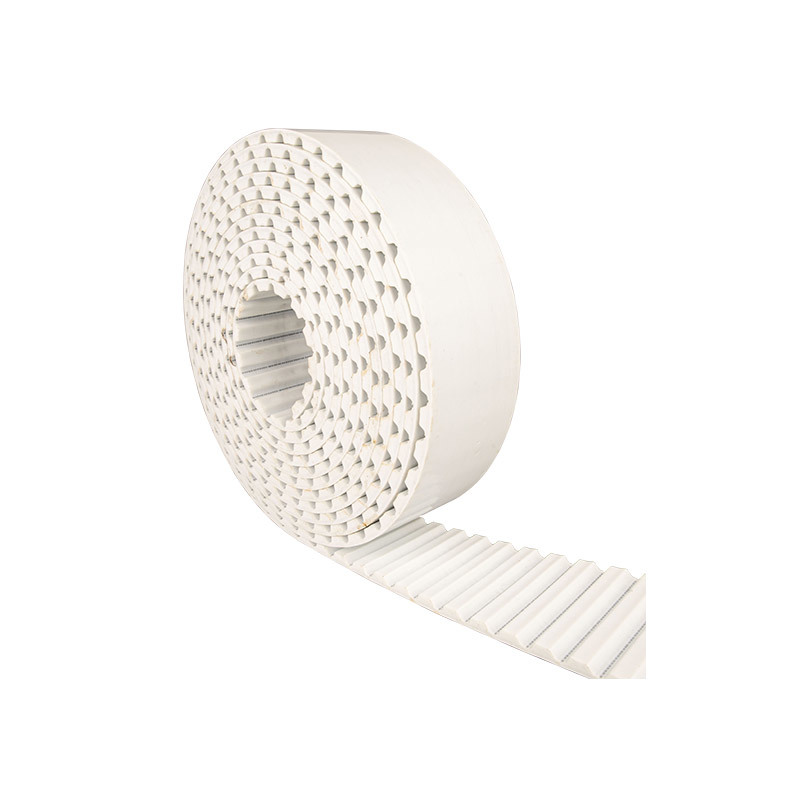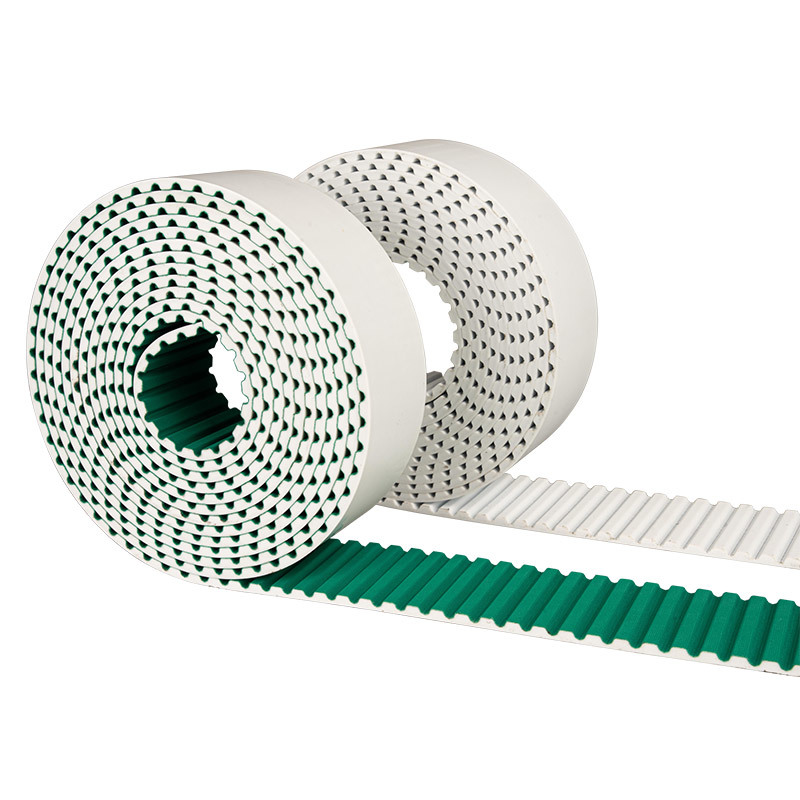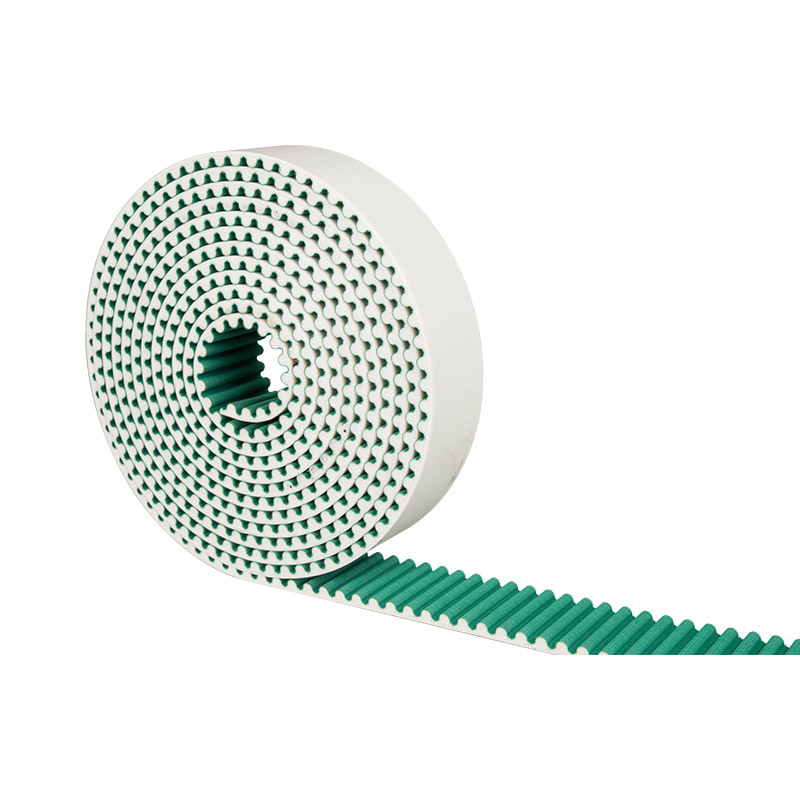

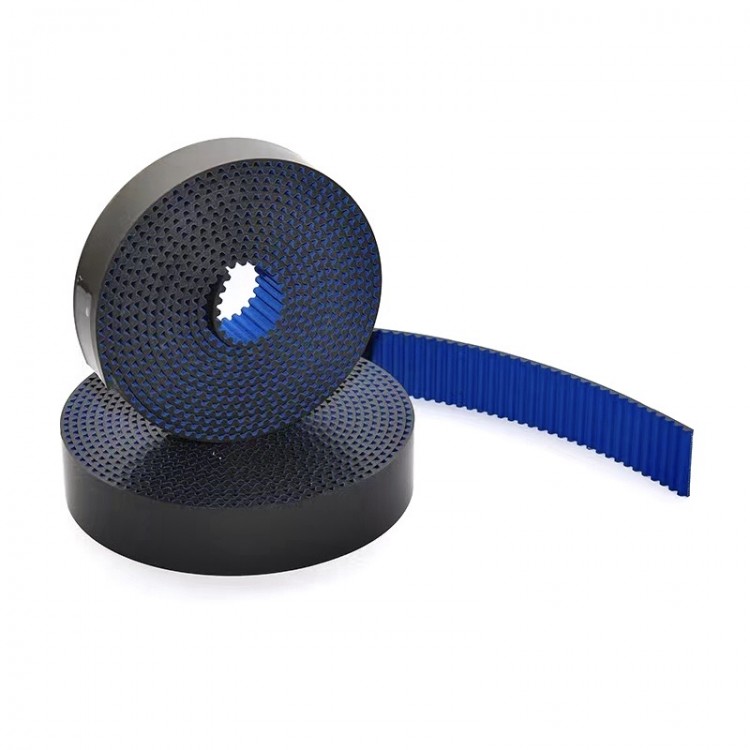

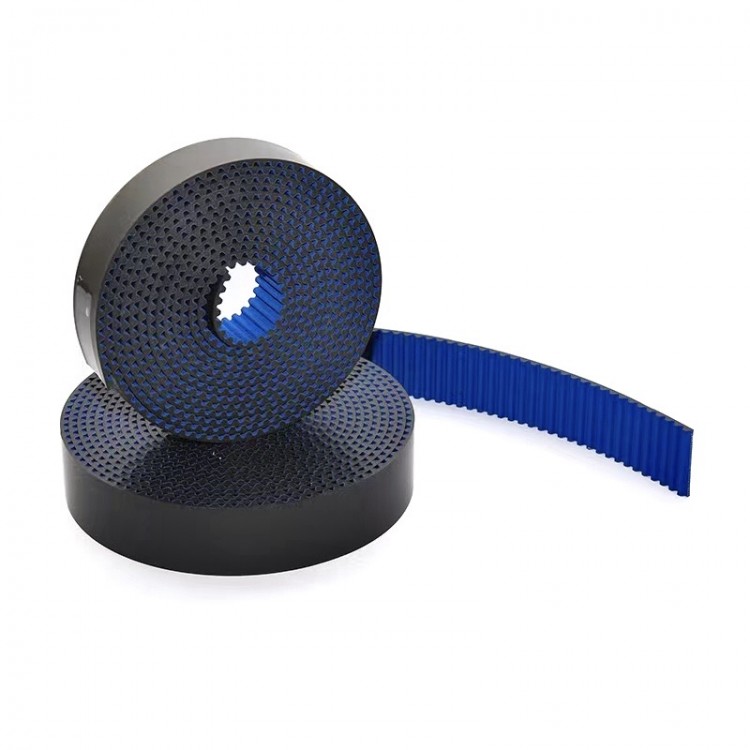
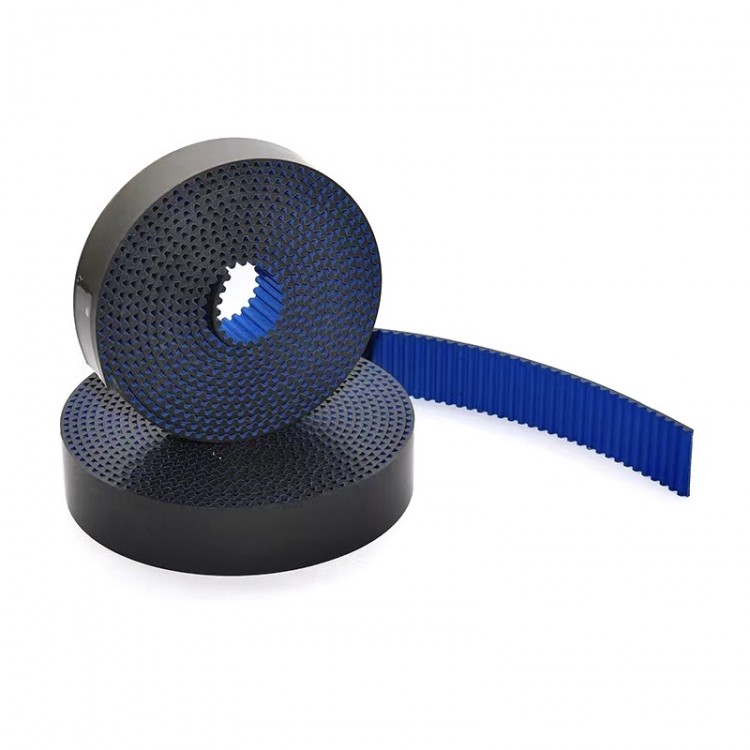
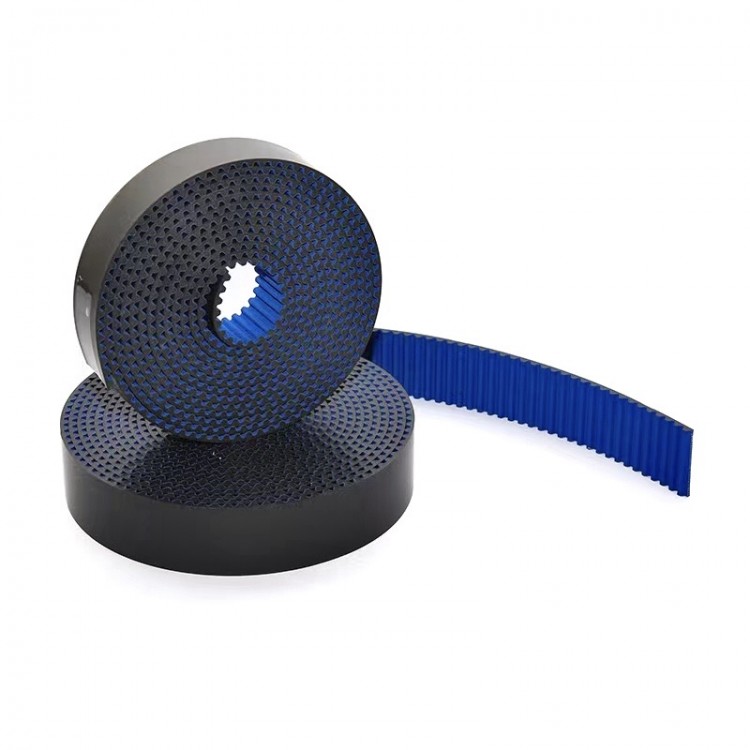


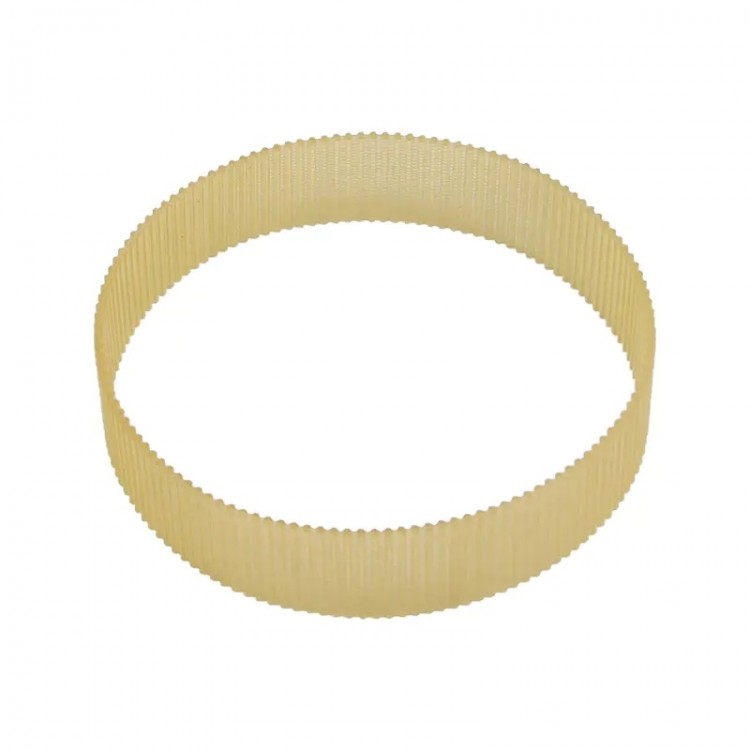
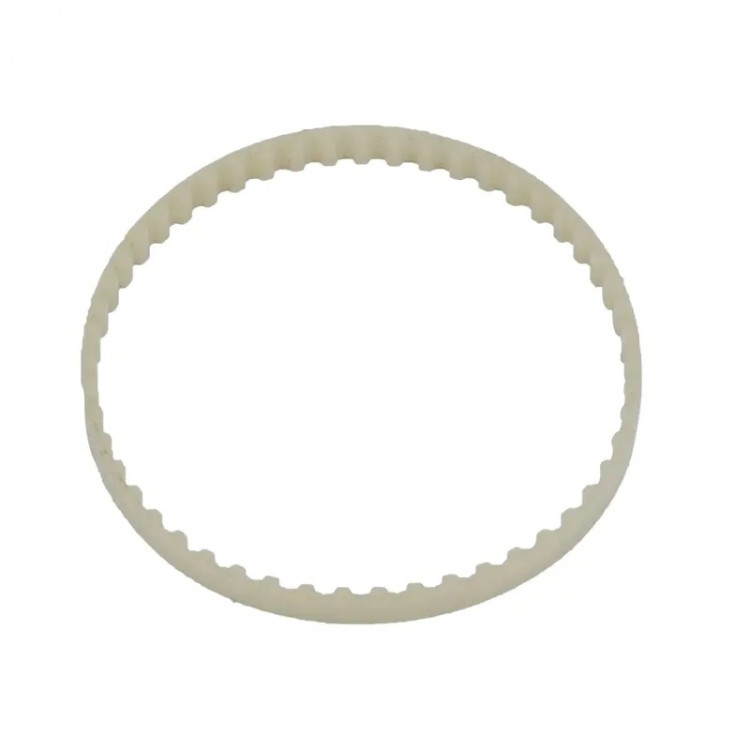
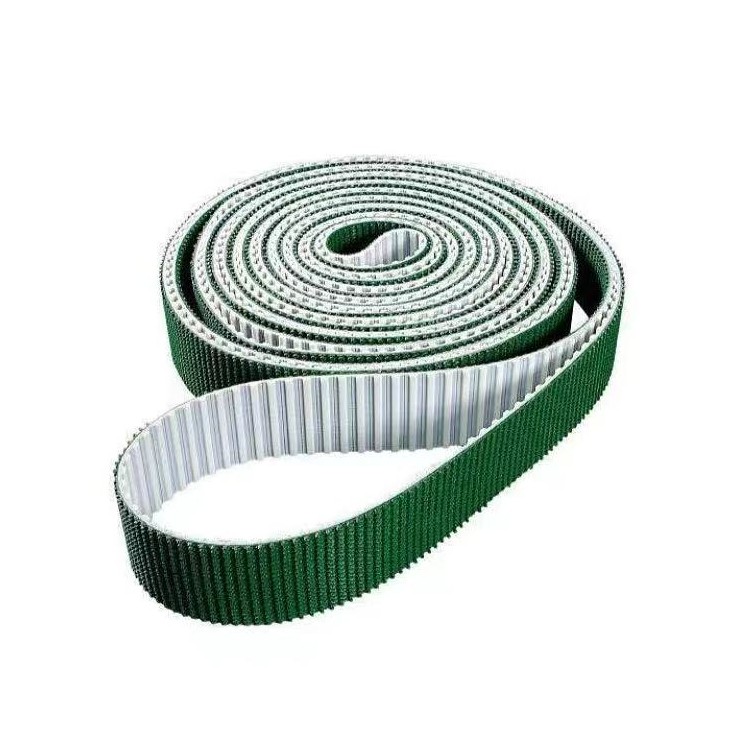
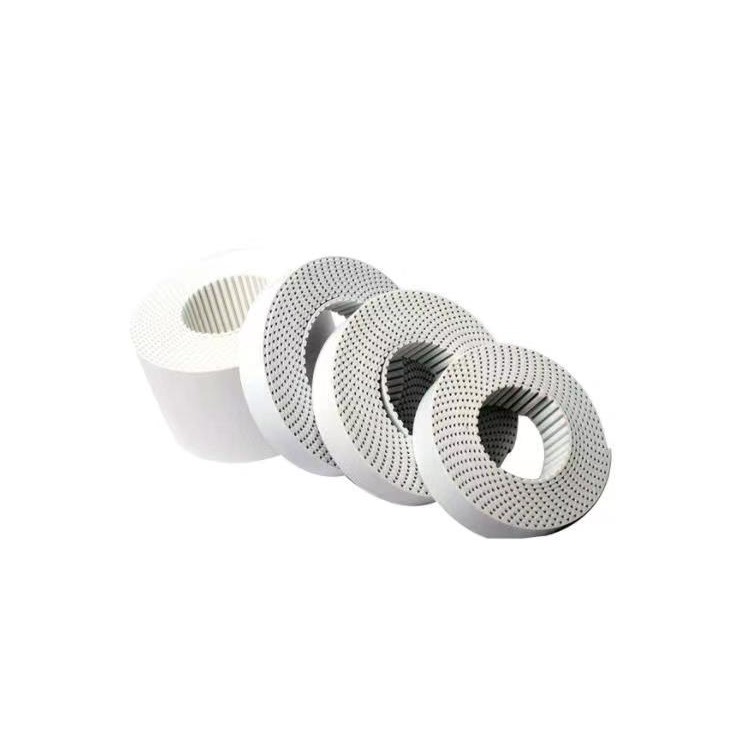





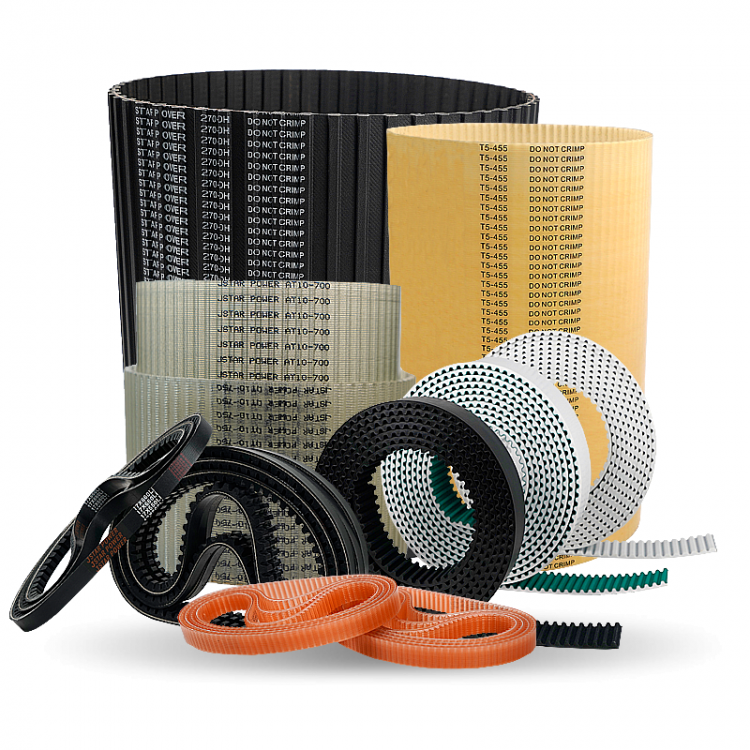
PU synchronous belts are made of thermoplastic polyurethane material, with steel wire or aramid fibers used for the frame, ensuring excellent performance, accurate transmission, and smooth operation during power transmission, serving both transmission and conveying functions.
Characteristics of PU Open End Synchronous Belts:
(1) Accurate transmission, free of slippage during operation, featuring a constant transmission ratio.
(2) Smooth transmission with shock absorption and vibration reduction capabilities; low noise.
(3) High transmission efficiency up to 0.98, with significant energy-saving effects.
(4) Easy maintenance and no lubrication required, with low maintenance costs.
(5) Wide gear ratio range, typically up to 10, with line speeds reaching 50m/s, offering a broad power transmission spectrum from a few watts to several hundred kilowatts.
(6) Suitable for long-distance transmission, with a center distance of over 10 meters.
Conveyor belts, also known as transmission belts, are the transmission medium in the belt drive system. The belt drive system is a type of transmission system that includes two or more pulleys, each with a belt. These pulleys can rotate the belt infinitely. One or more pulleys provide power to the drive belt and bear the material driven on the drive belt. The power-driven pulley is called the drive pulley, while the others are called idler pulleys.
Conveyor beltConveyor belt, also known as a transport belt, is a composite rubber, fiber, and metal product, or a plastic and fabric composite, used for carrying and transporting materials in belt conveyors. Conveyor belts are widely used in short-distance and low-volume conveying applications in industries such as cement, coking, metallurgy, chemical, and steel.