







Offer SIL Certification, SIL Grading, and other consulting services - Shenzhen ZN Testing Technology Co., Ltd.
SIL Functional Safety Certification applies to all equipment used for implementing process control safety functions, mainly divided into electrical components and safety systems categories.
1. Electrical Components: Actuators, solenoid valves, field sensors, pressure transmitters, temperature transmitters, level transmitters, level switches, programmable controllers, logic solvers, field safety actuators (pneumatic/liquid/pneumatic), safety switches, safety valves, gate valves, solenoid valves, safety interlocks, etc.
2. Safety Systems: SIS (Safety Instrumented System), ESD (Emergency Shutdown System), Instrument Protection System (IPS), Burner Management System (BMS), F&G (Fire and Gas Protection System), HIPPS (High Integrity Pressure Protection System), PSD (Process Shutdown System).
3. Other: Electronics/Electrical/Programmable electronic products with safety requirements.
What two aspects does the SIL certification primarily assess?
The product itself, as well as the conformity of the hardware and software functions of the intended certified product, to the requirements of IEC61508 or more detailed industry-specific functional safety standards, such as hardware failure rates and failure modes.
Another key focus of our evaluation is the quality management system utilized during the development process, as well as the qualifications of the R&D personnel and the organizational structure, ensuring that the methods used and the document system followed throughout the product development meet the relevant standard requirements.
Through these two aspects of examination, we can say that from the entire company to the research and development process and finally to the formation of specific certified products, a complete closed loop has been established, ensuring the reliable and safe realization of the product's safety functions.
What is the failure rate of SIL certification?
During the SIL certification process, a concept we often refer to is the equipment failure rate, which is a core term in SIL certification. It can be said that without determining the failure rate, the SIL certification is incomplete and inadequate. So, what exactly is the concept of the failure rate?
Firstly, to understand failure rate, we must comprehend what is meant by "failure." According to GB/T 20438.4 and also the definition in IEC 61508, failure is "the termination of the ability of a functional unit to perform a required function, or the operation of the functional unit in a non-required manner." A more intuitive understanding would be: normally, y = f(x), but upon failure, it becomes y ≠ f(x), where f() represents the pre-set function, and y denotes our safety expectations. This also explains why "function" is the same word used for both functions and functions in English.
This statement might be too formal and not easily understood by the general public. So, speaking in layman's terms, let's compare it to a lighting system. If the lighting system doesn't light up or doesn't light up as per our set requirements, it's considered to be malfunctioning.
So said, you might know that a product is considered defective when it doesn't function according to our specified requirements. Then, what's the probability of this happening? That's the failure rate.
Understood what failure is, one can then classify the types of failure. In the context of functional safety, failures can be divided into two main categories based on their generation cause: systematic failure and random hardware failure. Among them, random hardware failure is quantifiable. The calculation process of PFDavg is based on a probabilistic analysis of random hardware failure.
In the SIL certification process, we analyze the theoretical product model and utilize empirical data from the product's market sales to determine its failure rate. This information is then integrated with other parts of the SIL certification to form a comprehensive system, ensuring the reliable and safe execution of safety functions.
As industrial accidents and their societal impact gain widespread recognition, more and more companies are realizing the importance of safety.
In modern process industries, due to the complexity of the processes and the multitude of equipment, a failure can have severe consequences for employees, the public, the equipment, or the environment.
The SIL certification process involves helping companies fully utilize their excellent engineering practices and safety technologies (IEC61508 and IEC61511) to prevent the recurrence of industrial accidents. This is because these experiences and technologies are based on extensive practical experience and lessons learned.
With the issuance of the IEC 61508 and IEC 61511 series standards, a systematic functional safety assessment and testing process can effectively address this issue.
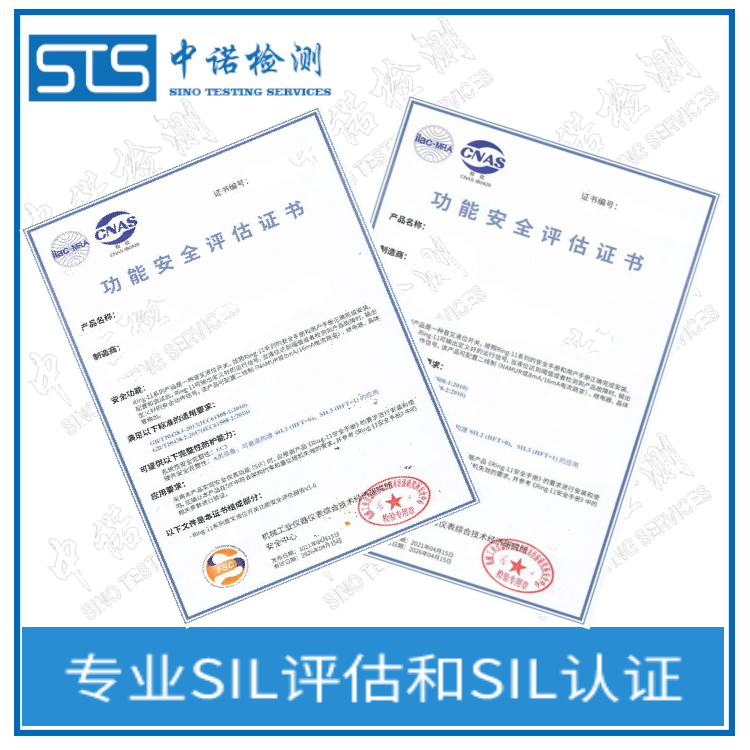
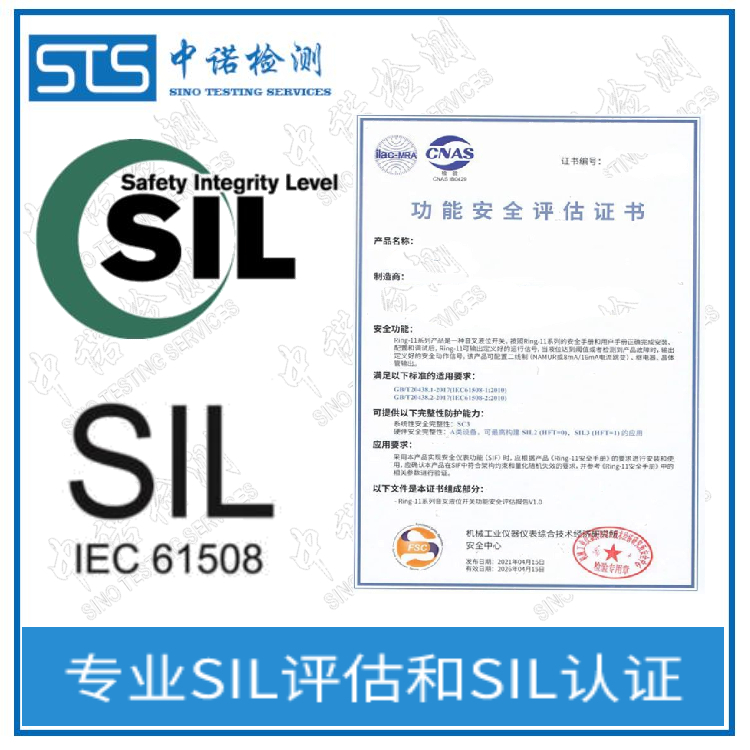
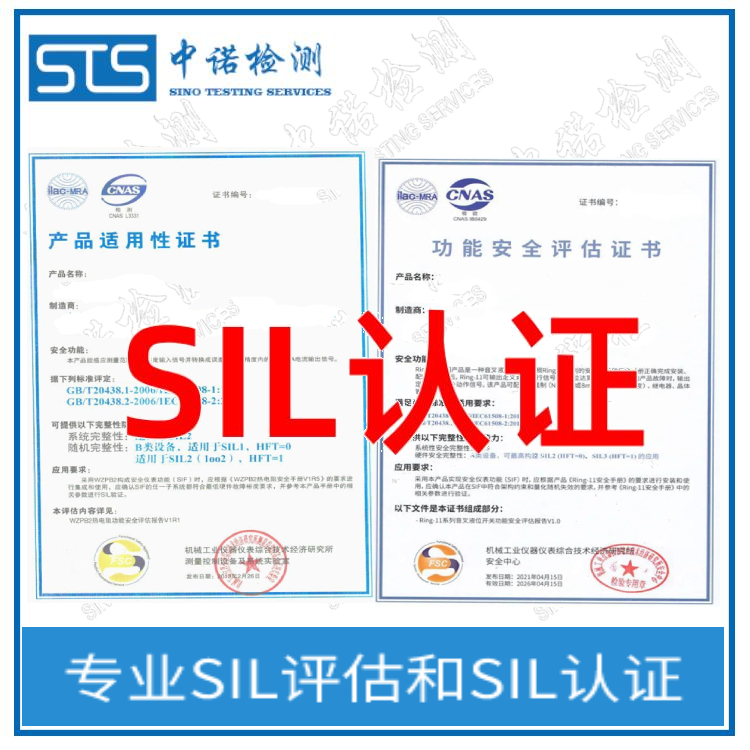
SIL Certification is a third-party evaluation, verification, and certification process based on standards such as IEC 61508 (GB/T 20438), IEC 61511 (GB/T 21109), IEC 61513, IEC 13849-1, IEC 62061, and IEC 61800-5-2, assessing and confirming the Safety Integrity Level (SIL) or Performance Level (PL) of safety equipment. Functional Safety Certification primarily involves document management (FSM) assessments for the development process of safety equipment, hardware reliability calculations and evaluations, software evaluations, environmental testing, and EMC electromagnetic compatibility testing. SIL Certification is divided into four levels: SIL1, SIL2, SIL3, and SIL4, encompassing both product and system levels, with SIL4 having the highest requirements.
WeChat Official Account

Scan to follow Official Account