






I. Brief Introduction:
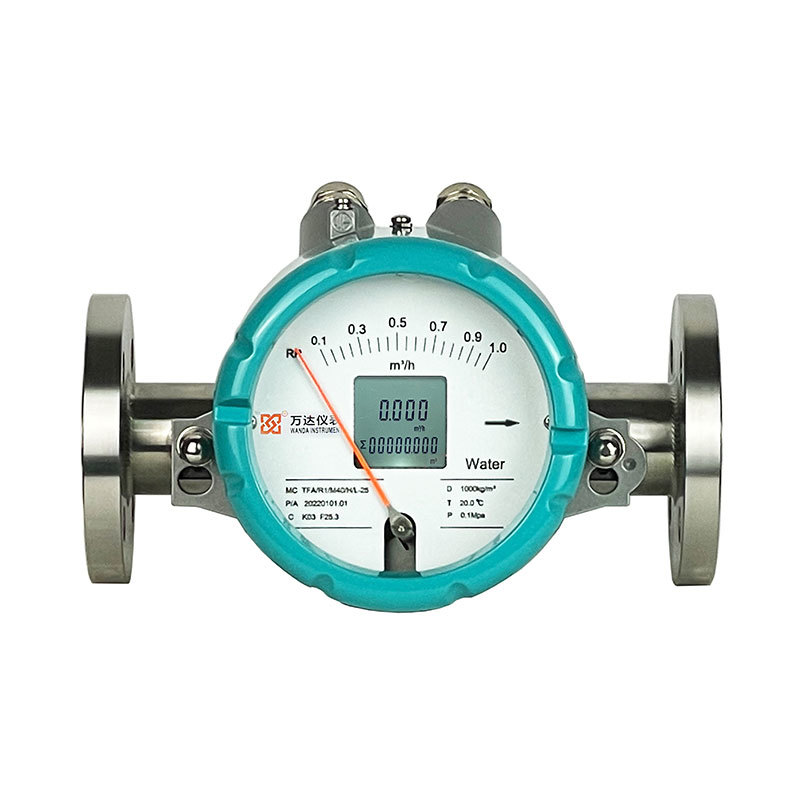
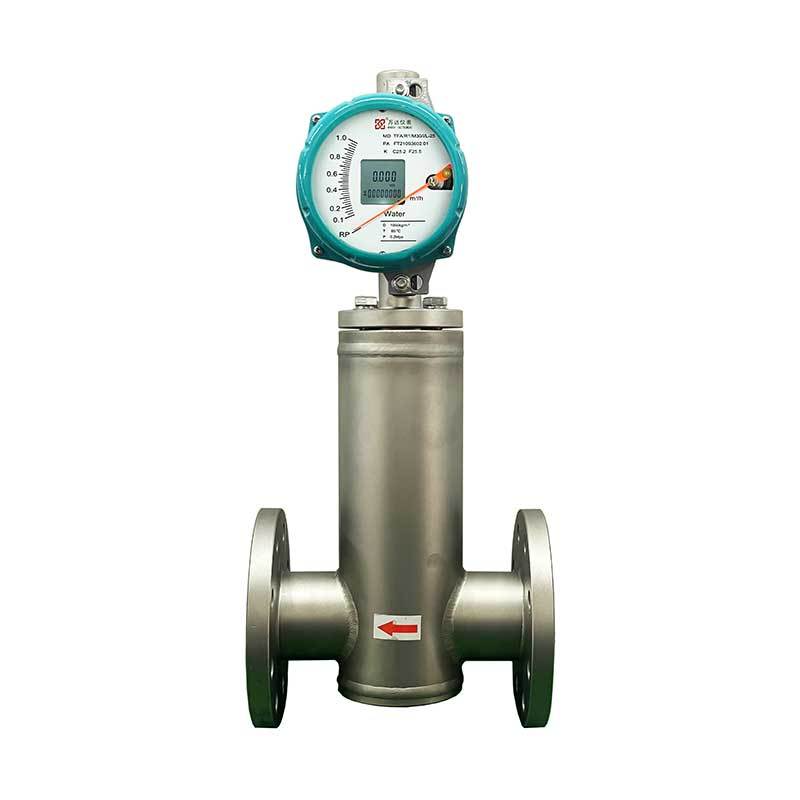
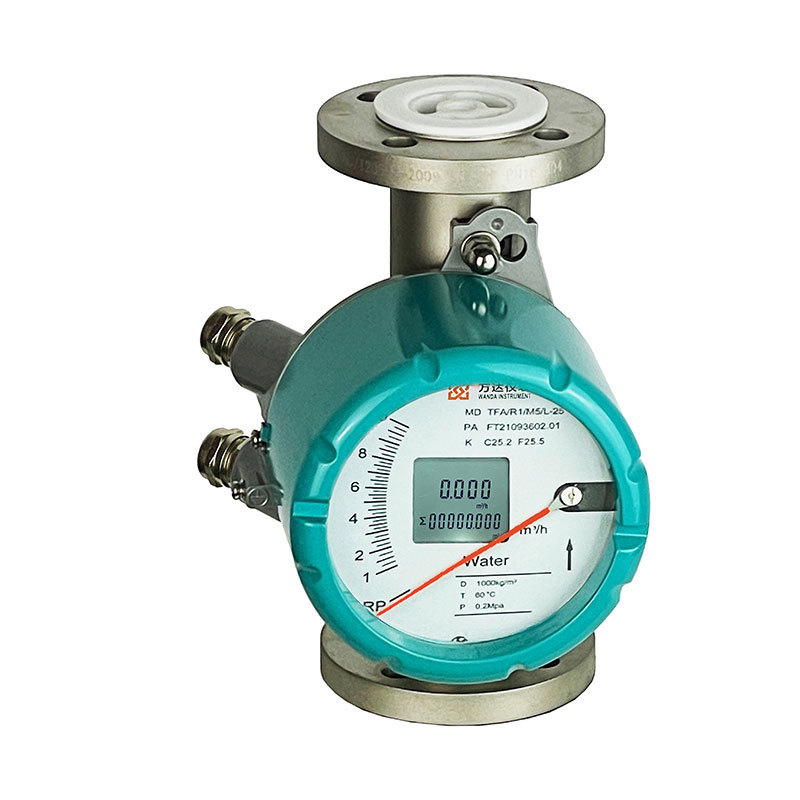
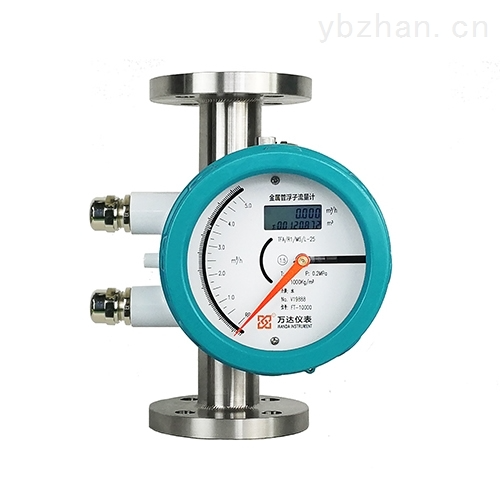
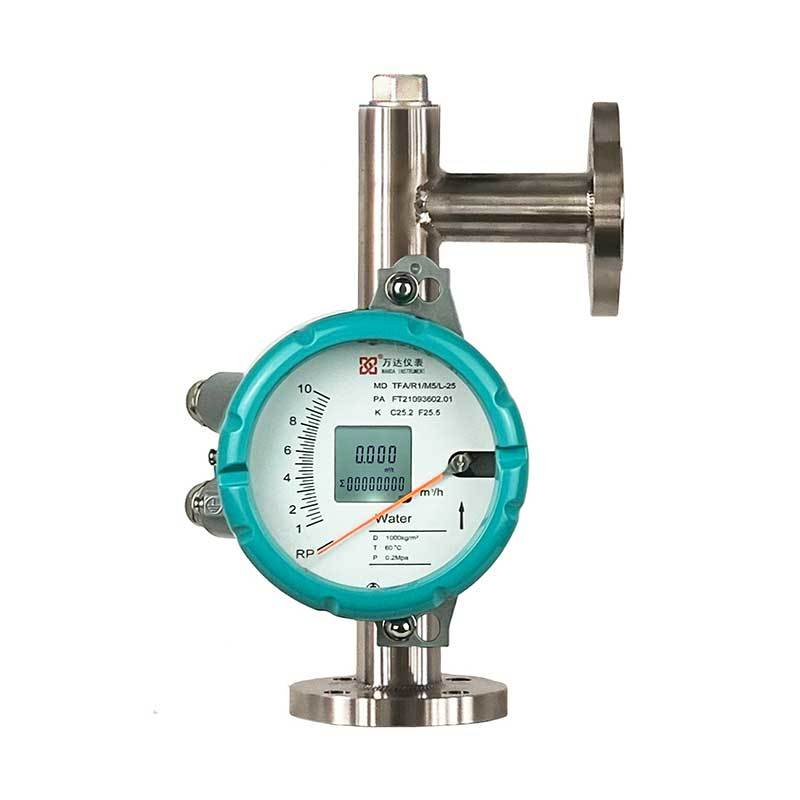
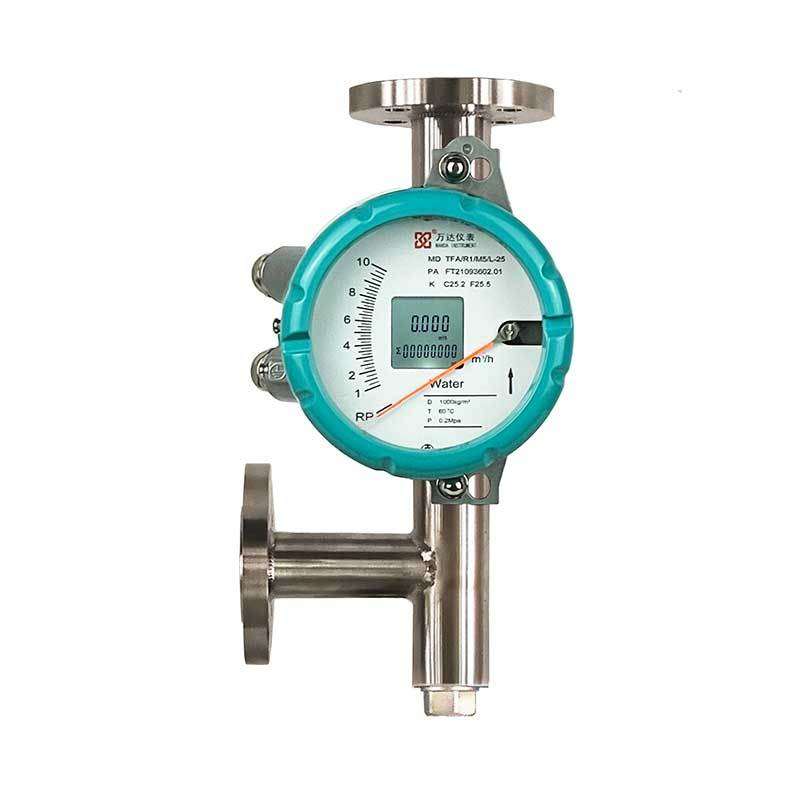
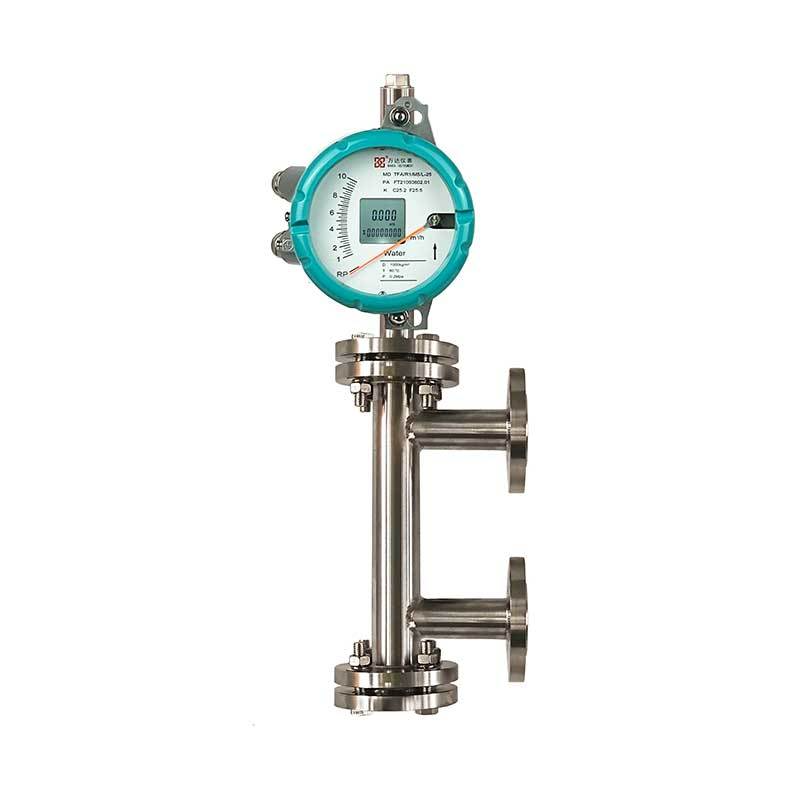
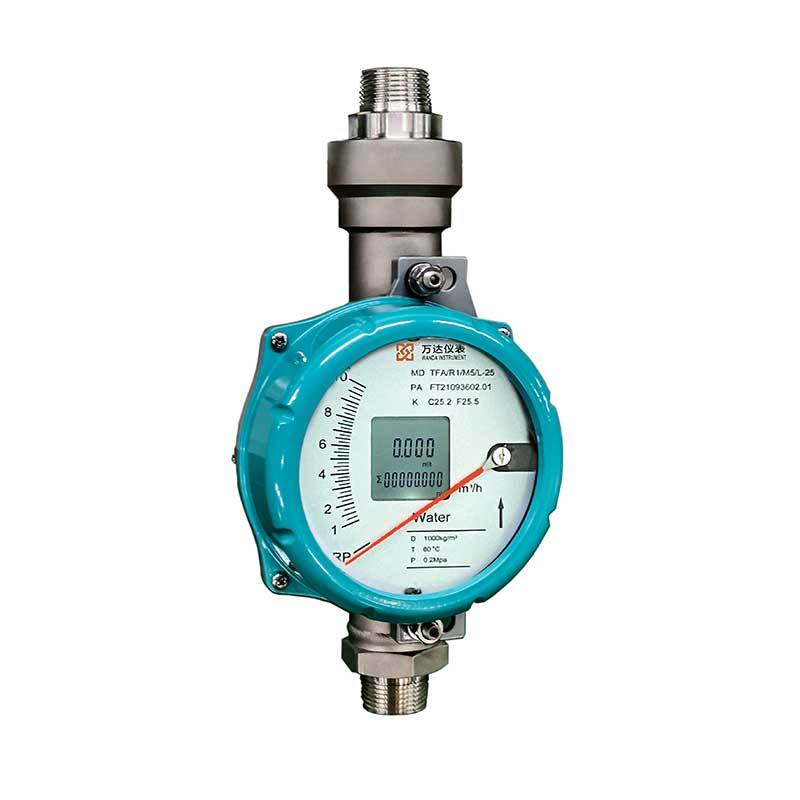
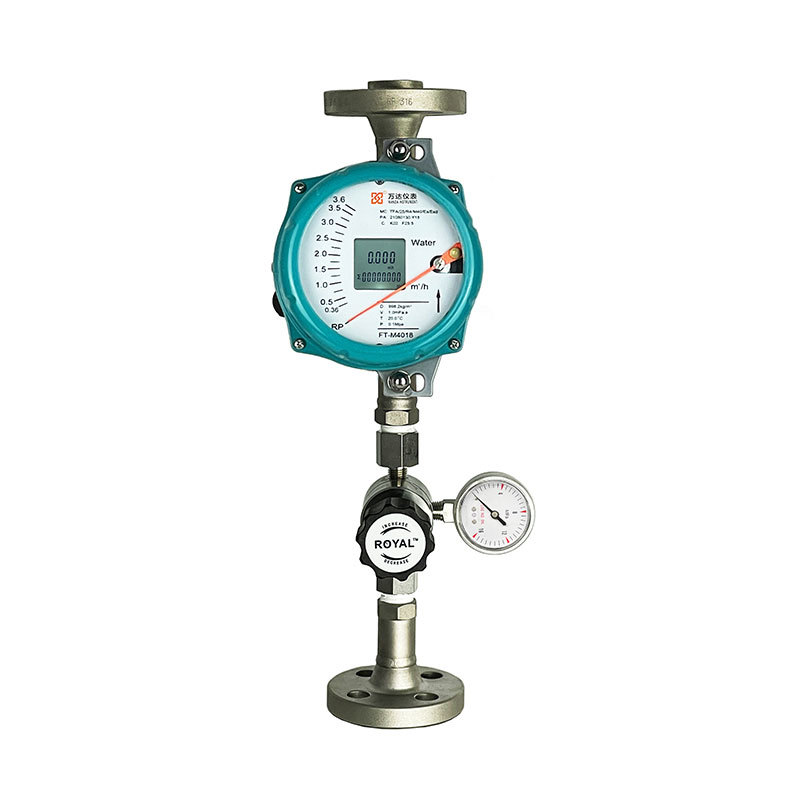
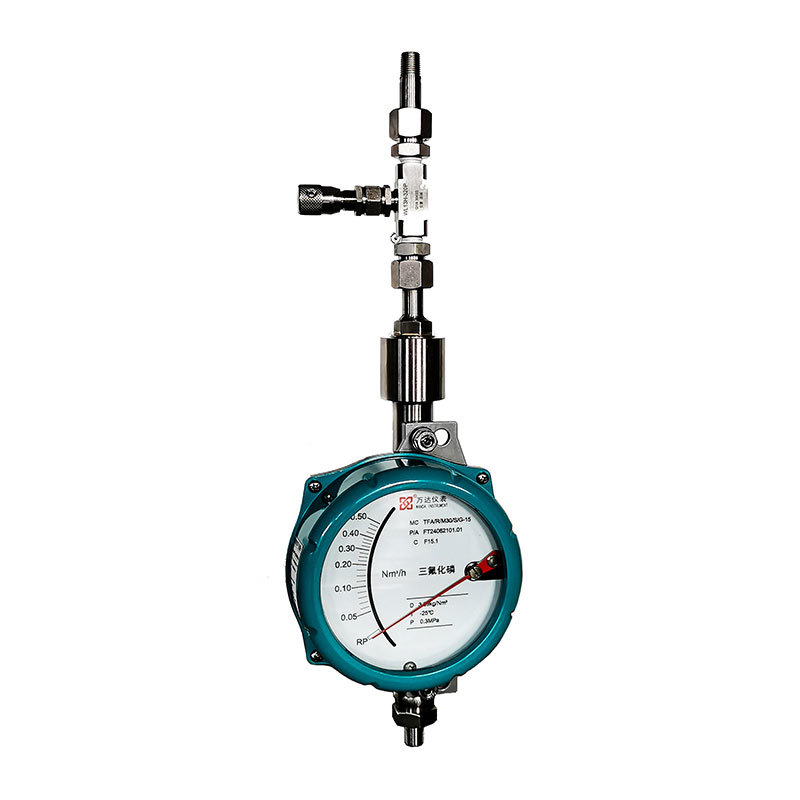
This photo introducesExplosion-proof metallic tube float flow meterThe sensor in the photo features a vertical downward entry and upward exit design. The standard sensor material is 304 stainless steel (optional materials include 316, 316L, and fluoro-lined), powered by 24VDC, with an output of 4-20mA. Users can choose an explosion-proof grade of ExdIICT6 and options with HART protocol. The sensor structure can be selected from various types based on the actual on-site conditions.
Overview:
Metal tube float flowmeter(Metal Tube Rotameter) is a commonly used variable-area flow measurement instrument in industrial automation process control. It features a compact size, a wide measurement range, and ease of use. It is capable of measuring the flow of liquids, gases, and steam, particularly suitable for low flow rate and low volume measurements. Over the years, the metal tube float rotameter has found extensive application in industries such as petrochemicals, steel, power, metallurgy, light industry, food, pharmaceuticals, and water treatment, thanks to its excellent performance, reliability, and favorable price-performance ratio.
Flowmeter Type:
TF SeriesMetal Tube FloatThe flow meter consists of a measuring tube (sensor) and an indicator (electronic converter). By selecting different types of measuring tubes and indicators, various complete units can be assembled to meet on-site requirements.
The TF series metal tube float flow meters categorize the product into 5 types based on the fluid's inlet and outlet directions: vertical, horizontal (including horizontal T-type and horizontal spring-type), bottom inlet, side outlet, side inlet, side outlet, and side inlet, top outlet. Each type also has standard, high-temperature, and jacketed models.
Horizontal Installation TypeFlow meterFor diameters less than or equal to DN50, choose T-type structures; for diameters greater than DN50, opt for spring-loaded structures.
Flowmeter Connection Specifications: The TF series metal tube float flowmeter standard model adopts the GB/T9119-2000 flange standard, which can be customized according to customer requirements; both threaded and clamp connection methods are also available.
Indicator Selection:
Users can select on-site display, battery-powered, wireless remote, intrinsically safe, explosion-proof, or HART protocol-compatible models based on actual site requirements. Detailed functional descriptions of various indicators are listed below.
Indicator Type
Instrument Function Description
M1 Model
Locally mounted pointer indicates flow, no power required, no 4~20mA remote transmission, optional flow alarm device, scale dial available with either instantaneous flow value or percentage scale value.
M3 Type
Local digital display, battery-powered, no 4~20mA remote transmission, non-explosion-proof. LCD shows instantaneous and accumulated flow rates; on-site buttons are used to view and modify related parameters. The battery can last for 6 months; replace the battery when the display shows the "T" character (battery model: ER26500, 3.6V, 7.5Ah, -55℃~85℃).
M4 model
Electrical remote transmission, intrinsic safety design, explosion-proof mark ExdⅡCT6, optional HART protocol functionality. Powered by DC24V, on-site pointer indicates instantaneous flow rate and digital display for both instantaneous and accumulated flow rates. Two-wire system with 4-20mA output, panel equipped with 4 buttons for viewing and modifying internal parameters. Detailed instructions on page 18.
M5 Model
Electrical remote transmission, explosion-proof design, with explosion-proof mark ExdⅡCT6, optional HART protocol function. Powered by DC24V, featuring on-site pointer indicating instantaneous flow rate and digital display for both instantaneous and accumulated flow rates. Two-wire system with 4~20mA output, equipped with a panel-mounted 4-button control for viewing and modifying internal parameters.
Feature Highlights:
◆ Suitable for low-pressure drop and low-flow medium flow measurement ◆ Reliable operation, minimal maintenance, long service life
◆ Not stringent requirements for straight pipe section ◆ Wide range ratio up to 10:1
◆ Two-line LCD display, showing instantaneous/accumulated flow rate on-site ◆ Equipped with a keypad on the indicator, easy for operation and settings
◆ Full metal structure, suitable for high temperatures, high pressures, and highly corrosive media ◆ Non-contact magnetic coupling transmission
◆ Suitable for flammable, explosive and hazardous environments ◆ Optional DC power or battery-powered operation ◆
◆ Data recovery, data backup, and power failure protection features ◆ Multi-parameter calibration function
Technical Specifications:
Flow Meter Sizes: DN15, DN25, DN50, DN80, DN100, DN150 (other sizes available upon negotiation with the manufacturer)
◆ Flow Range: Liquid: 1.0~150,000 l/h; Gas: 0.05~3,000 m³/h (see flow table on page 11 for details)
Range ratio: 10:1, 20:1 (special)
Accuracy 1.5 grade, 1.0 grade (special)
Pressure Class: DN15, DN25, DN50: 4.0MPa (max 20MPa)
DN80, DN100, DN150: 1.6 MPa (max: DN80: 10 MPa; DN100: 6.4 MPa; DN150: 4.0 MPa)
Medium Temperature Standard: -30℃ to +120℃; High Temperature: 120℃ to 350℃
Power Supply: 24VDC (12~36VDC)
Output Signal: 4-20mA DC (two-wire system), HART protocol optional
Output Load 500Ω (when powered by 24V)
◆ Environmental Temperature: Local Type: -40℃~120℃; Remote Type: -30℃~60℃
Storage Conditions: Temperature: -40℃ to 85℃; Humidity: ≤85%
◆ Connection Type: Flange connection, Flange Standard: GB/T9119-2000; Users may (other connection types can be negotiated with the manufacturer)
Cable Interface M20x1.5
Shell Protection IP65
Explosion-proof Mark: Intrinsically Safe Type: ExiaIICT6, Flameproof Type: ExdIICT6
◆ Pressure Loss, see flow table
◆ Medium Viscosity: DN15: η<5 mPa.s, DN25: η<250 mPa.s, DN50~DN150: η<300 mPa.s
◆ R1 Material for receiving liquid: 304, 1Cr18Ni9Ti; Ro Material: 316, 0Cr18Ni12Mo2Ti.
RL: 316L, 00Cr17Ni14Mo2Ti; Ti: Titanium alloy; Rp: Polytetrafluoroethylene lining.
Magnetic Filter:
If ferromagnetic particles are present in the medium, a magnetic filter should be installed before the flowmeter's inlet.