






















Product Description

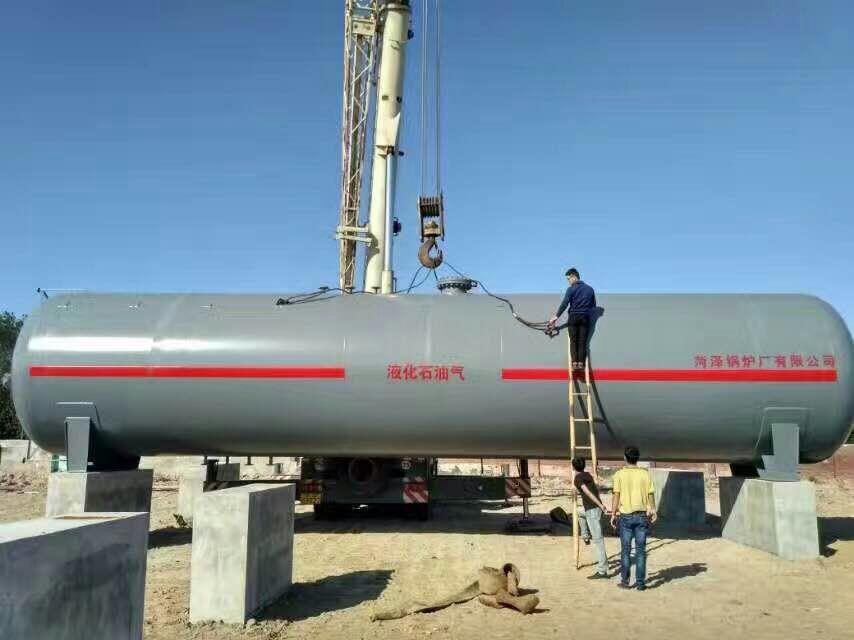
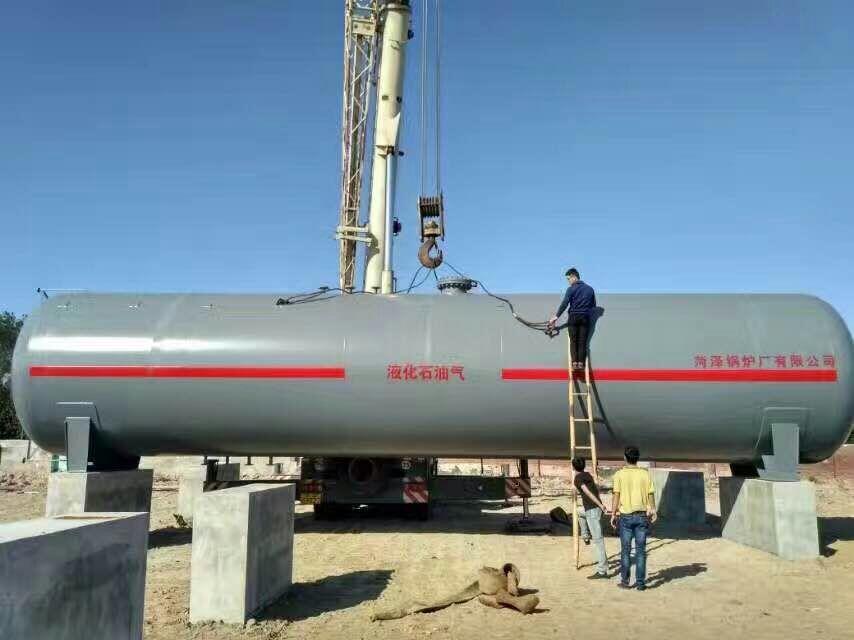
Brand: He Guo Group Model: CFW-30/0.8
Material: Stainless Steel, Diameter: 2916mm
Application Range: -162℃; Volume: 30,000L
Heat exchange area - See drawing m², Environmental temperature - See drawing °C
Wall Thickness: 8/10mm | Outer Dimensions: 2916*8289mm
Origin: Shandong Heze
30立方LNG储罐 60立方天然气储罐 100立方液化天然气储罐厂家
The operating pressure of the low-temperature LNG tank is 0.6-1.44 MPa, with an operating temperature of -162°C. (Available in vertical or horizontal designs) The LNG tank consists of two layers, both internally and externally. To minimize the transfer of external heat into the tank, a vacuum insulation structure filled with diatomaceous earth is used between the layers, isolating it from the atmosphere. This prevents the impact of atmospheric pressure or temperature changes and the entry of humid air into the insulation layer between the inner and outer tanks, effectively ensuring and enhancing the performance of the insulation material.
Safety regulations and standards for fixed pressure vessels
1. GB/T 18442-2011 "Fixed Type Vacuum Insulation Cryogenic Pressure Vessel"
2. GB50028—2006 "Urban Gas Pipeline Design Code"
(Note: Applies to the design of urban gas supply projects for new, expanded, or reconstructed urban gas systems that provide fuel for residential, commercial, industrial production, heating, ventilation, and air conditioning to various users in cities, towns, or residential areas).
3. GB50494—2009 "Urban Gas Technology Code"
(Note: Applicable to the construction, operation, maintenance, and use of urban gas facilities.)
4. GB50156—2012 Design and Construction Code for Gasoline and Natural Gas Filling Stations
(Note: Applies to the design and construction of new, expanded, and reconstructed gas stations, refueling stations, and combined refueling and gas stations.)
5. JB/T6869-1997 "Safety Rules for the Use of Low-Temperature Liquid Storage and Transportation Equipment"
(Note: Applicable to low-temperature storage and transportation equipment for liquid oxygen, nitrogen, argon, and carbon dioxide in cryogenic containers and tank trucks.)
Low-temperature LNG storage tanks are equipped with multiple valves and piping sections, including: top liquid inlet valve, bottom liquid inlet valve, liquid discharge valve, overflow valve, vent valve, vacuum gauge valve, evacuation valve, main liquid inlet valve, gas usage valve, three-way switch valve, inner cylinder safety valve, liquid level display gas phase valve, also known as the balance valve, vacuum gauge, outer cylinder explosion-proof device, pressure gauge, liquid level gauge, pipeline safety valve, remote transmission interface, and other valves. The material of the valves is extremely important; inadequate material can cause external or internal leakage of the shell and sealing surfaces; the comprehensive mechanical properties, strength, and stiffness of the components may not meet the usage requirements and may even fracture. Therefore, the material is the primary and crucial issue in the selection process of low-temperature storage tank valves. The company has strict requirements for the selection of its product valves and piping, ensuring customer safety and peace of mind through strict quality and performance screening by professionals.
30立方LNG储罐 60立方天然气储罐 100立方液化天然气储罐厂家
Product Description

Brand: He Guo Group Model: CFW-60/0.8
Material: Stainless Steel, Diameter: 2916mm
Application Range: -162℃; Volume: 60,000L
Heat Exchange Area - See drawing m², Ambient Temperature - See drawing °C
Wall Thickness: 8mm, Outer Dimensions: φ2916*14929mm
Origin: Shandong Heze
Horizontal 60 Cubic Meter LNG Storage Tank, Manufacturer of Liquefied Natural Gas Storage Tanks
LNG tanks are low-temperature insulated pressure vessels that can be refilled multiple times. They feature high gas tightness, low thermal conductivity, excellent insulation, minimal evaporation loss, and a long service life. They have been mass-produced through a continuous production line. Heze Boiler Factory produces 3-cubic, 5-cubic, 10-cubic, 15-cubic, 20-cubic, 30-cubic, 50-cubic, 60-cubic, and 100-cubic low-temperature LNG tanks, as well as customized specifications.
The operational pressure of the LNG low-temperature storage tank is 0.6-1.44 MPa, with an operating temperature of -162°C, and it is a flat, double-walled cylindrical design. The tank consists of two layers, an inner and an outer, with an insulating structure between them for the cold insulation layer. The inner tank is used for storing liquefied natural gas, while the outer shell serves as a protective and insulating barrier. To minimize the transfer of external heat into the tank, the inner and outer shells are designed to be separate and independent. The tank is composed of a carbon steel vacuum shell and a pressure vessel within it. The tank can operate at low to medium pressures as per actual design requirements. The explosion relief discs and double-acting safety valves can protect the tank in the event of excess pressure. The safety relief device is designed to protect the internal pressure vessel and vacuum shell, with its usage and type determined by the GB150 and "Fixed Container Regulations." This includes a double-acting safety relief valve and explosion-proof disc assembly for protecting the internal pressure vessel, as well as an explosion-proof cover for protecting the vacuum shell (outer shell). The tank is designed and manufactured for safety, reliable operation, and durability (can operate without fault for many years). When operating the tank, strict adherence to proper safety and operational regulations is mandatory.
LNG storage tanks are the main equipment of LNG gasification stations, directly affecting their normal production and accounting for a significant portion of the construction cost. They can be categorized into underground tanks, above-ground metal tanks, and metal prestressed concrete tanks. For LNG storage tanks, there are currently vacuum powder insulation tanks, positive pressure accumulation insulation tanks, and high-vacuum layer insulation tanks. Medium and small-scale gasification stations typically opt for vacuum powder insulation low-temperature tanks. The tanks are divided into inner and outer layers, with the gap filled with pearly sand and vacuumed to reduce the transmission of external heat, ensuring that the daily gasification rate of LNG inside the tank is less than 0.3%.

Horizontal 60 Cubic Meters LNG Storage Tank, Manufacturer of Liquefied Natural Gas Storage Tanks


优质液化天然气储罐公司-特价液化天然气储罐多少钱-销售液化天然气储罐制作-知名液化天然气储罐哪家好



















