






















Handling Instructions
1. Cylinders must be stored in well-ventilated areas, with a minimum distance of 1.5 meters from any fire or heat source. Cylinders should not be heated with fire, boiled in water, or exposed to direct sunlight. Regularly inspect the gas valves and pipeline joints for leaks, ensuring they remain airtight. Typically, soap water is used to check for leaks; using an open flame to test for leaks is strictly prohibited.
2. When lighting, always ignite the primer first, followed by opening the gas, do not reverse the order. There should be a person in attendance during use, do not leave the area, to prevent boiling water from spilling and extinguishing the flame, which could cause a liquid gas leak and explosion. After using the gas cylinder, ensure the valve is tightly closed to prevent any gas leaks.
3. Do not empty the liquefied gas inside the cylinder completely; there should be a certain residual pressure. The residual pressure should generally be greater than 49.03 kPa (i.e., 0.5 kg/cm2, gauge pressure) to prevent air from entering the gas cylinder. After the LPG is used up, the remaining residue inside the cylinder is also a flammable material; it should not be poured out自行. This is to prevent fires from being caused by the flowing and evaporation of the residue.
4、Liquefied Petroleum GasGas cylinders are pressurized containers that require proper maintenance and regular inspections. They must be handled to prevent dropping or impact, and it is forbidden to use metal tools to敲击 open the valve. They should be protected from direct sunlight and prolonged exposure to rain. Gas cylinders are typically inspected every 2 years.
5、PetroleumThe explosive range of liquefied gas is not very wide, but due to its low limit, it is easy to ignite and explode upon leakage. Additionally, as LPG is heavier than air, it tends to flow downwards upon leaking in the air, accumulating in low-lying areas and posing a hidden danger of gas explosion. Therefore, in areas where gas can leak, relying solely on window ventilation is insufficient; attention must also be given to lower-level ventilation.
6. When liquid gas leakage is detected indoors, promptly open windows and doors for ventilation, allowing it to disperse towards a direction without open flames. It is strictly forbidden to ignite any fire nearby. The area can only be used after the fault is resolved and the distinctive odor has dissipated. Waste liquid on the ground should be covered with sand and soil before being removed to a safe location. In case of a gas cylinder fire, immediately close the valve, move it to an open area outdoors, and extinguish the fire using dry powder extinguishers, carbon dioxide extinguishers, or by covering with wet burlap.
7. Educate children not to play with gas cylinders carelessly, and users must be aware of the safety knowledge related to gas cylinder usage.
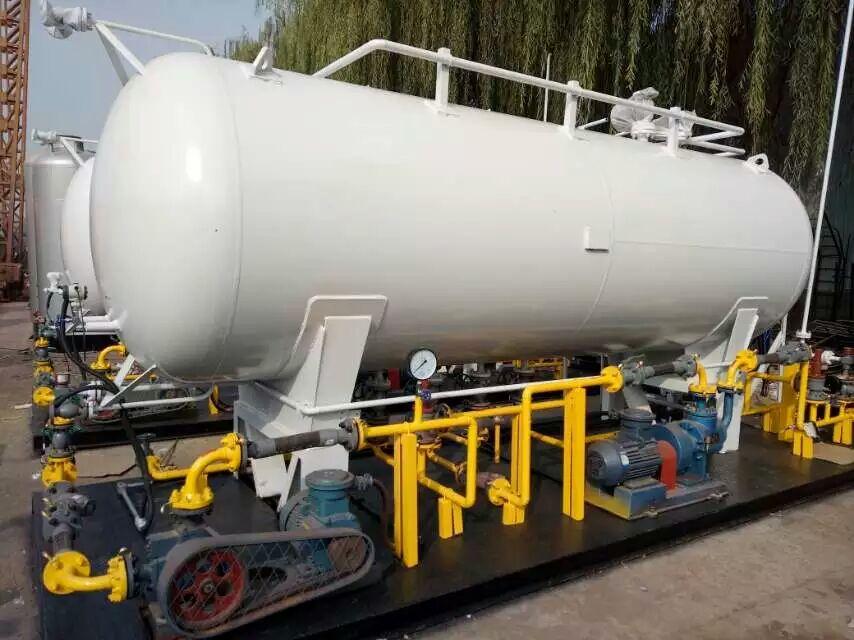
Liquefied gas tanks are pressure vessels and are required by the state to be inspected annually (the recommended service life for simple pressure vessels is 10 years). Since inspections are conducted, there are products that pass or fail. Generally, due to improper use procedures or inadequate maintenance, businesses may find their liquefied gas tanks fail inspections, necessitating mandatory decommissioning. As liquefied gas tanks are special equipment, decommissioning requires a specific process. Compressor liquefied gas tanks are often considered safe special equipment, but if any stage of manufacturing, design, installation, or usage management is not standardized, accumulated risks may lead to explosion accidents or even more severe consequences. Therefore, we must follow the operating procedures for our compressor liquefied gas tanks, avoid complacency, or purchase inexpensive tanks from unqualified manufacturers. Tanks with a volume of 1 cubic meter containing 10 kg or less are considered simple pressure vessels and do not require inspection. The National Construction Code stipulates that they are exempt from inspection for 7 years from the date of manufacture on the label, but this applies only to the tank body itself.


Special Price LPG Tanks - Professional Manufacturer of LPG Tanks - LPG Tank Sales Price - Genuine LPG Tank Wholesale Price



















