



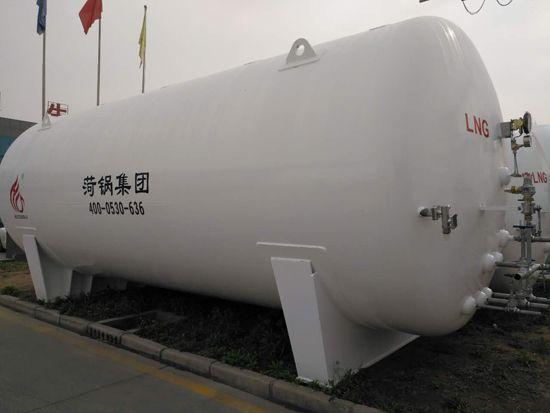


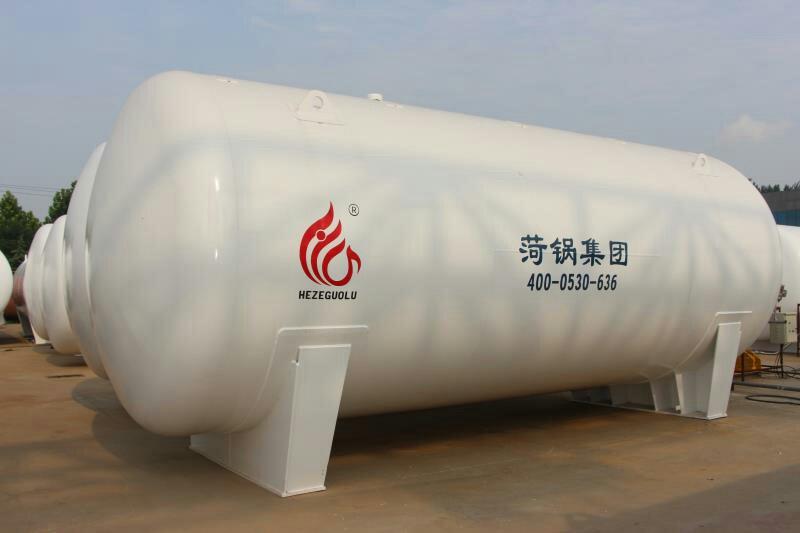


















How much do you know about the basics of stainless steel LNG storage tanks?

Stainless steel LPG storage tanks are made of tempered material, boasting strong resistance to acidity and alkalinity, and are designed to meet customer satisfaction by considering the impact of external environments on the tanks. They are highly popular in daily life and social settings. These tanks are primarily composed of natural gas pretreatment processes, liquefaction processes, storage processes, control systems, and fire protection systems, avoiding the drawbacks of outdated storage tanks and representing a new, satisfactory product.
Stainless steel LPG tanks are primarily containers for storing liquefied natural gas, mainly used in residential kitchens, automotive fuel, and chemical factories. These tanks come in various sizes for convenience, allowing you to choose based on your specific needs. Typically, sizes from 5 to 50 cubic meters are suitable for residential use or gas stations. Sizes from 50 to 100 cubic meters are commonly used for satellite liquefaction units and large-scale industrial applications. These LPG tanks feature different characteristics, making them suitable for installation in various regions, thus greatly facilitating our daily lives.
Insulation method for the protective structure of the lng tank
1. The true vacuum powder insulation method for LNG storage tanks involves evacuating the sandwich layer of the tank and filling it with powder (talcum powder), commonly used in small LNG storage tanks. Vacuum powder insulated tanks are favored due to their production technology being similar to that of liquid nitrogen and liquid oxygen tanks, resulting in a mature manufacturing technique among domestic manufacturers. Since the operation and maintenance of LNG tanks are relatively convenient and flexible, they are widely used. The majority of large-scale LNG gasification stations in China commonly employ 50m3 and 100m3 cylindrical double-metal vacuum powder LNG storage tanks. Currently, the largest size available is 200m3, but due to their larger volume, transportation is challenging, and they are less frequently chosen. Vacuum powder insulated tanks are also available in spherical designs, but their usage typically ranges from 200 to 1500m3, and the installation of spherical tanks on-site is quite difficult.
Positive Pressure Insulation Accumulation
Insulated with thermal materials, the sandwich structure is filled with nitrogen gas. The insulation layer is typically thick, widely used in large and medium-sized LNG storage tanks and containers. Usually in vertical LNG mother-daughter storage tanks.
3. High-vacuum multi-layer insulation.
Utilizing high-vacuum multi-layer insulated wrapping, commonly used in tank trucks. The cylindrical double-metal vacuum powder LNG storage tanks, commonly used in domestic LNG liquefaction stations. Considering that vertical tanks save space and have a higher static head of LNG, which is beneficial for the self-increaser's operation, vertical double-metal vacuum powder LNG storage tanks are adopted. The site's LNG storage capacity is not large, but the requirement for thermal insulation is high, thus high-vacuum multi-layer insulated storage tanks are chosen. Based on the LNG storage capacity and considering the ease of transport for skid-mounted equipment, a horizontal storage tank of 50 m³ is selected for LNG transfer. The LNG tank is equipped with one level gauge, pressure transmitter, temperature transmitter, pressure gauge, and differential pressure transmitter each, to provide on-site indication and remote control of LNG level, temperature, and pressure inside the tank. Safety explosion-proof devices are installed at the top of the tank, and interlayer extraction ports and temperature testing ports at the bottom. The design pressure inside the inner tank is determined to be 1.2 MPa, and the outer tank design pressure is -0.1 MPa, based on the system's working pressure and considering cost-effectiveness.
Safety Precautions for LNG Storage Tanks
1. Safe Operation of LNG Storage Tanks - To prevent overtemperature and overpressure phenomena in LNG storage tanks, the usage pressure and temperature should be controlled. The causes of overtemperature and overpressure in LNG storage tanks include the following:
(1) Operational Errors To prevent operational errors, warning signs should be hung on critical operation devices, clearly marked with symbols or text indicating the opening and closing directions, states, and precautions for valves, etc.
(2) Excessive Filling of Liquefied Gases Preventive measures against overfilling include: strictly filling according to the specified storage capacity, and in case of overfilling, immediately attempt to remove the excess; all instruments used for filling must be regularly inspected, and the level gauges should be periodically flushed; any residual liquid in the container should be included in the filling quantity; its weight cannot be ignored; when the surrounding temperature rises, spray cooling should be conducted.
2. Maintenance and care of LNG tanks:
1. Cylinders must be stored in well-ventilated areas, with a minimum distance of 1.5 meters from any flame or heat source. Do not use fire to bake, boil with hot water, or expose to direct sunlight. Regularly inspect the cylinder valves and pipeline joints for leaks and ensure they remain airtight. Typically, soapy water is used to check for leaks, and it is strictly prohibited to test for leaks with an open flame.
LNG储罐厂家
Low-temperature Storage Tanks, Liquid Oxygen Storage Tanks, LNG Storage Tanks, Liquid Nitrogen Storage Tanks, Carbon Dioxide Storage Tanks, Low-Temperature Vessels, Liquid Oxygen Vessels, LNG Vessels, Pressure Vessels, LNG Filling Station Equipment
Product Features: Reasonable design, high safety performance, easy to operate and maintain. The design phase fully considers equipment safety, while also aiming to reduce manufacturing costs and save users' funds.
Application Range: Suitable for industrial gas stations, LNG refueling stations, LNG gasification stations, centralized gas supply for gas boilers, and centralized gas supply equipment for corporate use. Custom manufacturing according to customer requirements is available.
LNG Tank Operation and Maintenance Procedures
I. LNG Unloading Operation Procedure
Note: (Example: Using the 1# LNG Storage Tank as an example)
1. Inspect that the pressure gauges, level gauges, thermometers, flammable gas detectors, and safety valves on the LNG unloading platform and within the 1# LNG storage tank area are functioning normally.
2. Check if valves C-8, G1-5, G1-11, G1-13, G1-15, B-1, and B-2 are in the open position, and if valves G1-8, C-1, C-2, C-3, C-4, C-5, C-6, and C-7 are closed. Inspect that the bolt on the LNG tank root valve is tight and the flange interface is intact; if loose, secure immediately.
3. Prior to entering the station, the LNG tanker must raise the static electricity grounding wire. After entering, the speed of the LNG tanker must not exceed 5 kilometers per hour, and it must stop at the designated location, turn off the engine, remove the key, pull up the handbrake, close the doors securely, place the wooden chocks, and connect the static electricity grounding wire. Install the LNG tanker loading and unloading hoses: one: Connect the LNG tanker (Xinjiang Guanghui) self-pressurized liquid phase outlet to the liquid phase inlet of the gasifier; connect the LNG tanker self-pressurized gas phase inlet to the gas phase outlet of the gasifier; connect the LNG tanker liquid phase outlet to the LNG pipeline. Two: Connect the lower liquid inlet and outlet of the LNG tanker (XinAo Anruike) to the LNG pipeline, and connect the gas phase pipeline to the BOG pipeline.
4. The pressure of LNG tank trucks should be maintained between 0.55-0.7 MPa. When the pressure of the LNG tank truck falls below 0.55 MPa, the self-pressurization system of the LNG tank truck or the gasifier at the unloading platform should be activated to increase the pressure.
5. Open valve G1-8 to pre-cool the incoming liquid pipeline using LNG from the storage tank.
6. After pre-cooling is completed, open valve C-2, activate the LNG tanker's liquid discharge valve, and fill the LNG storage tank with LNG, using a simultaneous bottom and top liquid intake method for loading. The opening of valve C-2 is determined on-site based on the filling rate of tank No. 1.
7. When the pressure difference between the LNG tank truck and the LNG storage tank is less than 0.1 MPa, open valve G1-14 to depressurize the LNG storage tank, or activate the LNG tank truck's self-pressurization system or the tank truck degasifier at the unloading platform to increase pressure on the LNG tank truck, maintaining a pressure difference of 0.2 MPa between the LNG tank truck and the LNG storage tank is advisable. During the depressurization process of the LNG storage tank, the pressure after the pressure regulator should be strictly controlled and should not exceed the cut-off pressure of the pressure regulator.
8. After confirming that the LNG in the LNG tank truck has been unloaded, close valve C-2 and open valve C-3 to depressurize. When the LNG tank truck is connected to the city...
Product Description
Brand Hegu Group Model CFW-100/0.8
Material: Stainless Steel, Diameter: 3400mm
Application Range -162℃ Volume 100,000L
Heat exchange area - See drawing, sq. m; Environmental temperature - See drawing, °C
Wall Thickness: 10/12mm, Outer Dimensions: 3424*16442mm
Origin: Shandong Heze
60-cubic-meter LNG tank price 30-cubic-meter to 60-cubic-meter LNG storage tank supply by manufacturer
3. LNG Tank Fault Inspection and Handling 3.1 Daily Inspections
3.1.1 Level gauge and pressure gauge operation status.
3.1.2 Are the stop valves, regulating valves, and safety valves in normal working condition?
3.1.3 Check for any leaks in storage tanks, pipelines, and valves.
3.2 Regular Inspections
3.2.1 Pressure gauges should be calibrated annually and accompanied by a test certificate with a lead seal.
3.2.2 The safety valve should be calibrated annually and sealed with lead.
3.2.3 Liquid at low temperatures should be analyzed every three to six months as needed for operation.
3.3 Fault Handling
Fault occurred
Original Cause
Mitigation Measures
1. Abnormal inner tube pressure
(Raise or Lower)
A Pressure Gauge Distortion
B tank vacuum reduced
Valve operation error
A pressure gauge
B heavy vacuum extraction
C conforms to the manual's operation requirements
2 Level Gauge Distortion
Improper operation of the A level gauge valve
B level gauge is damaged
Reoperate as per requirements.
Replace with new level gauge
3 External tank frosting
A vacuum failure
B-laminate leakage
C Pearl-like sand sinking
A vacuum again
B Pressure Test Leak Check and Vacuum Extraction
Install pearl sand in the C balanced sandwich and then vacuum again.
Note:
1. If the user needs to evacuate or re-install pearlescent sand in the sandwich, they must first empty the inner cylinder liquid and wait until the inner cylinder returns to room temperature before proceeding.
2. If users encounter issues that are difficult to handle, they may contact our after-sales department promptly. We offer a three-package quality guarantee for our products. We also provide repair services for products beyond the warranty period and for non-company products.
4. Cautionary Notes
4.1 The vacuum valve is sealed before the product leaves the factory. After the storage tank is delivered to the customer's site, the customer must ensure to protect all pipeline valves during installation, particularly the vacuum valve, and strictly prohibit any collision or opening of the vacuum valve.
4.2 Do not empty the liquid in the storage tank unless it is for an extended period, as this can cause the inner cylinder to overheat and require recooling when refilling, leading to unnecessary losses.
4.3 The low-temperature liquid storage tank can be used to store liquid nitrogen, liquid oxygen, and liquid argon. However, when switching to another liquid, the original liquid must be completely drained and the tank purged before refilling with the new liquid.
Note:
1. The fill valve opens when the liquid is nearly full, closes when liquid starts to flow, and stops the inflow. For the first filling, start from the top and then proceed to the bottom.
2. Open during waste liquid disposal.
3. Open the vent valve when the container pressure is too high.
4. The container automatically opens when over-pressurized. Normally, only one is used. In case the working one fails, the other is immediately activated to ensure the safe operation of the storage tank. The damaged safety valve is then repaired and calibrated, and upon passing inspection, it is promptly reassembled.
5. The inner cylinder will automatically start after the boost valve is opened for increased pressure.
6. The level gauge is often turned off during normal operation.
7. Burst upon overpressure; replacement is mandatory immediately after bursting.

Natural Gas Storage Tank Price - 100 Cubic Horizontal LNG Storage Tank Direct from Manufacturer - Price Advantage - High Vacuum Level


Which supplier offers high-quality liquefied natural gas (LNG) storage tanks? - Wholesale professional LNG storage tank prices - LNG storage tank supplier - Professional manufacturer of LNG storage tank gas hot water boilers



















