






















How much do you know about the basics of stainless steel LPG storage tanks?

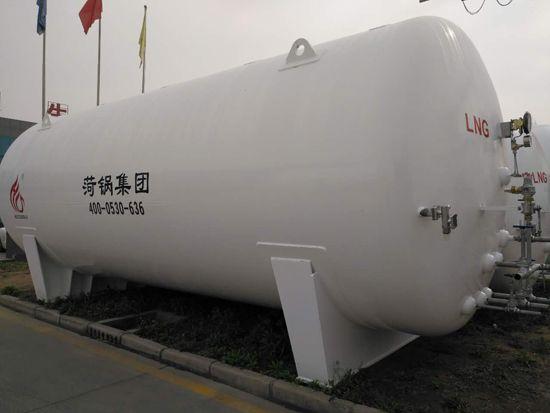
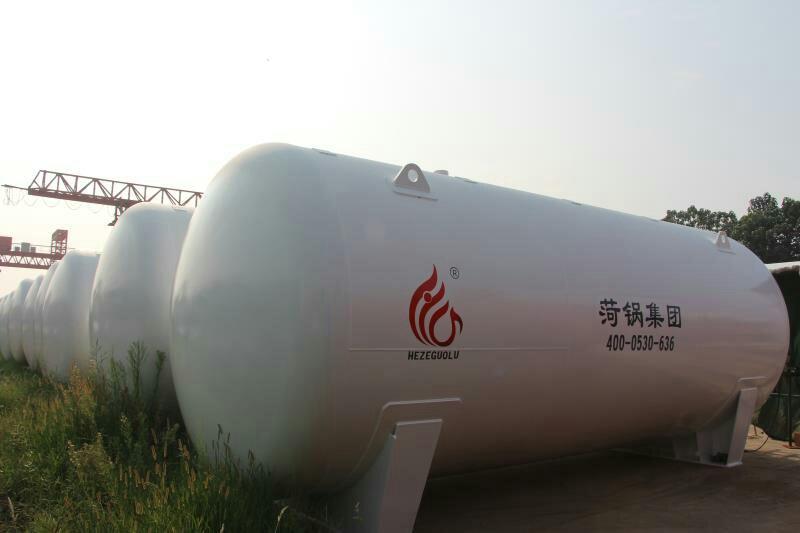
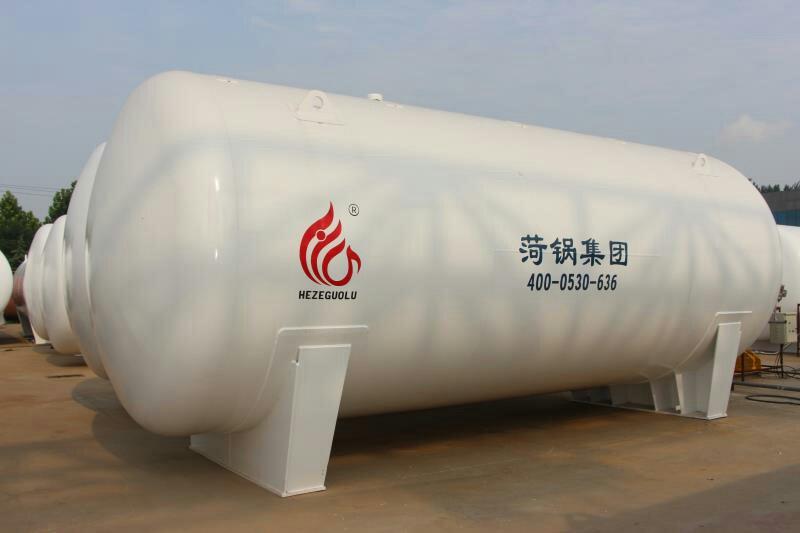
Stainless steel LNG tanks are made of tempered material, boasting excellent resistance to acidity and alkalinity, and are designed to meet public satisfaction by catering to the influence of external environments on the storage. They are highly favored in daily life and social settings. These tanks are primarily composed of natural gas pretreatment processes, liquefaction processes, storage processes, control systems, and fire protection systems, avoiding the drawbacks of outdated storage tanks, and represent a new, satisfactory product.
Stainless steel LNG tanks are primarily containers for storing liquefied natural gas, mainly used in household kitchens, automotive fuel, and chemical factories. These tanks come in various sizes for convenience, allowing users to choose according to their specific needs. Generally, tanks ranging from 5 to 50 cubic meters are suitable for residential use or gas stations. Tanks from 50 to 100 cubic meters are commonly used in satellite liquefaction units and large-scale industrial applications. These LNG tanks possess different characteristics suitable for installation in various regions, greatly enhancing our daily lives.
Insulation methods for the protective structure of LNG tanks
1. The true Zhong powder insulation method involves vacuuming the sandwich layer of the LNG tank, filling it with powder (talcum powder), commonly used in small LNG tanks. Vacuum powder insulation tanks are popular due to their production technology being similar to that of liquid nitrogen and liquid oxygen tanks, with domestic manufacturers' production techniques being highly mature. Since the operation and maintenance of LNG tanks are relatively convenient and flexible, they are widely used. The majority of large-scale LNG gasification stations in China commonly use 50m3 and 100m3 cylindrical double-metal vacuum powder LNG tanks. Currently, tanks up to 200m3 can be produced, but due to their larger size, transportation is challenging, and they are generally less frequently used. Vacuum powder insulation tanks are also available in spherical shapes, but their usage typically ranges from 200 to 1500m3, and the installation of spherical tanks on-site is difficult.
2. Positive Pressure Insulation Accumulation
Insulated with thermal materials, the sandwich structure is flushed with nitrogen gas; the insulation layer is typically thick, and it is widely used in large and medium-sized LNG storage tanks and containers. Generally, it is a vertical LNG mother-child storage tank.
3. High vacuum multilayer insulation.
High-vacuum multi-layer wrapped insulation is used, commonly in tank trucks. The cylindrical double-metal vacuum powder LNG storage tanks are commonly used in domestic LNG liquefaction stations. Considering that vertical tanks save space and have a larger static pressure head of LNG, which is beneficial for the self-increaser, vertical double-metal vacuum powder LNG storage tanks are adopted. The LNG storage capacity of this station is not large, but the cooling performance requirements are high, so high-vacuum multi-layer wrapped insulation storage tanks are chosen. Based on the LNG storage capacity and considering the ease of transportation of skid-mounted equipment, a horizontal 50m3 storage tank is selected for LNG transfer. Each LNG storage tank is equipped with a level gauge, differential pressure transmitter, pressure transmitter, temperature transmitter, and pressure gauge to provide on-site indication and remote control of LNG level, temperature, and pressure inside the tank. Safety explosion-proof devices are installed at the top of the tank, and an interlayer extraction port and temperature testing port are installed at the bottom. The design pressure of the inner tank is determined to be 1.2MPa and the outer tank is -0.1MPa, based on the system's working pressure and considering economic factors.
Cautionary Notes for LNG Storage Tanks
1. Safe Operation of LNG Storage Tanks: To prevent over-temperature and over-pressure phenomena in LNG storage tanks, the usage pressure and temperature should be controlled. The causes of over-temperature and over-pressure in LNG storage tanks include the following:
(1) Operation Errors To prevent operation errors, labels should be affixed to critical operation devices, with clear markings or text indicating the opening and closing directions of valves, their open/closed states, and precautions, etc.
(2) Overfilling of Liquefied Gases - Measures to prevent overfilling include: strictly filling to the specified storage capacity; upon discovering an overfill, immediately attempt to remove the excess; all gauges used for filling must be regularly inspected; level gauges should be flushed regularly; if there is any remaining liquid in the container, it should be included in the filling quantity; the weight should not be ignored; and when the surrounding temperature rises, spraying for cooling should be conducted.
2. Maintenance and care for LNG tanks:
1. Cylinders must be stored in well-ventilated areas, with a minimum distance of 1.5 meters from any source of fire or heat. Cylinders should not be heated with fire, scalded with boiling water, or exposed to direct sunlight. Regularly inspect the cylinder valves and pipeline joints for gas tightness to ensure no leakage occurs. Typically, leakage is checked using soapy water, and it is strictly prohibited to test for leaks with an open flame.
LNG储罐厂家
Low-temperature Storage Tanks, Liquid Oxygen Tanks, LNG Storage Tanks, Liquid Nitrogen Tanks, Carbon Dioxide Storage Tanks, Cryogenic Tanks, Liquid Oxygen Vessels, LNG Vessels, Pressure Vessels, LNG Filling Station Equipment
Product Features: Reasonably designed, high safety performance, easy to operate and maintain. The design phase fully considers equipment safety, while also aiming to reduce manufacturing costs and save the user's funds.
Application Range: Suitable for industrial gas stations, LNG refueling stations, LNG gasification stations, centralized gas supply for gas boilers, and centralized gas supply equipment for enterprise use. Custom manufacturing available according to customer requirements.
LNG Tank Operation and Maintenance Procedures
I. LNG Unloading Procedure
Note: (Example using 1# LNG Storage Tank Inlet)
1. Inspect the pressure gauges, level indicators, thermometers, combustible gas detectors, and safety valves on the LNG unloading platform and within the 1# LNG storage tank area to ensure they are functioning normally.
2. Verify that valves C-8, G1-5, G1-11, G1-13, G1-15, B-1, and B-2 are in the open position, and that valves G1-8, C-1, C-2, C-3, C-4, C-5, C-6, and C-7 are closed. Check that the bolts securing the root valve of the LNG tank are tight and that the flange connections are intact. Tighten any loose bolts immediately.
3. Prior to entering the station, the LNG tanker must raise the static electricity grounding wire. After entering, the LNG tanker's speed must not exceed 5 kilometers per hour, and it must park in the designated location, turn off the engine, remove the car key, pull up the handbrake, close the door securely, place the wheel chocks properly, and connect the static electricity grounding wire. Install the LNG tanker loading and unloading hoses: 1. The LNG tanker (Xinjiang Guanghui) self-pressurized liquid phase outlet connects to the liquid phase inlet of the vaporizer; the self-pressurized gaseous phase inlet of the LNG tanker connects to the vaporizer's gaseous phase outlet; the liquid phase outlet of the LNG tanker connects to the LNG pipeline. 2. The lower liquid in/outlets of the LNG tanker (XinAo Anruike) connect to the LNG pipeline, and the gaseous phase pipeline connects to the BOG pipeline.
4. The pressure of LNG tank trucks should be maintained between 0.55-0.7 MPa. When the pressure of the LNG tank truck falls below 0.55 MPa, the self-pressurization system of the LNG tank truck or the gasifier on the unloading platform should be activated to increase the pressure.
5. Open valve G1-8 to pre-cool the incoming liquid pipeline using LNG from the storage tank.
6. After pre-cooling is completed, open valve C-2 and the LNG tanker discharge valve. Fill the LNG storage tank with LNG by simultaneously introducing liquid from both the bottom and top. On-site, adjust the opening of valve C-2 based on the filling speed of Tank No. 1.
7. When the pressure difference between the LNG tanker and the LNG storage tank is less than 0.1 MPa, open valve G1-14 to depressurize the LNG storage tank, or activate the LNG tanker's self-pressurization system or the tanker loading platform's gasifier to increase the pressure in the LNG tanker, maintaining a pressure difference of 0.2 MPa between the LNG tanker and the LNG storage tank is recommended. During the depressurization of the LNG storage tank, the pressure after the regulator should be strictly controlled and should not exceed the regulator's cut-off pressure.
8. Upon completion of LNG offloading from the LNG tank truck, close valve C-2 and open valve C-3 to reduce pressure. When the LNG tank truck is connected to the city...
Product Description
Brand Hegu Group Model CFW-30/0.8
Material: Stainless Steel, Diameter: 2916mm
Application Range -162℃ Volume 30000L
Heat Exchange Area - See drawing m², Ambient Temperature - See drawing °C
Wall Thickness: 8/10mm, Dimensions: 2916*8289mm
Origin: Shandong Heze

30立方立式lng储罐 卧式LNG储罐 低温天然气储罐厂家
The low-temperature storage tank is a double-layer structure, with the inner tank storing low-temperature liquids, withstanding the pressure and low temperatures of the medium. The material of the inner tank is a low-temperature-resistant alloy steel (0Crl8Ni9). The outer shell serves as a protective layer for the inner tank, maintaining a certain gap to form an insulating space. It bears the gravitational loads of the inner tank and the medium, as well as the vacuum negative pressure of the insulating layer. The outer shell does not come into contact with the low temperature and is made of container steel. The insulating layer is mostly filled with mica sand and high vacuum is drawn. The evaporation rate of the low-temperature storage tank is generally below 0.2%.
LNG tanks are categorized by capacity
(1) Small (5-50 m³): Commonly used for civil LNG vehicle refueling stations and civil gas liquefaction stations. (2) Medium (50-100 m³): Often utilized in industrial gas liquefaction stations. (3) Large (100-1000 m³): Suitable for small-scale LNG production facilities.
(4) Large (10,000-40,000 m³): For base load and peak-shaving liquefaction facilities. (5) Extra-large (40,000-200,000 m³): For LNG receiving terminals.
LNG tanks are categorized by shape
Spherical: Generally used for medium to small capacity storage tanks. (2) Cylindrical: Used in storage tanks of various capacities. LNG storage tanks are categorized by their placement: (1) Above-ground: Located on the ground. (2) Underground: Located beneath the ground.
Determination of Design Pressure and Calculated Pressure
Currently, the vast majority of 100m3 vertical LNG storage tanks have a maximum working pressure of 0.8MPa. According to the GB150 "Steel Pressure Vessels" regulation, when the maximum working pressure of the storage tank is 0.8MPa, the design pressure may be taken as 0.84MPa. The filling coefficient of the tank is 0.95, and the net pressure of the liquid column after filling LNG in the inner tank is 0.062MPa. The absolute pressure between the inner and outer tanks is 5Pa, so the calculated pressure of the inner tank is 1.01MPa.
The primary function of the outer罐 is to fix the inner罐 and the insulating material in a suspended or supported manner, forming a high-vacuum insulating layer with the inner罐. The loads acting on the outer罐 are mainly the gravitational loads of the inner罐 and the medium, as well as the vacuum negative pressure of the insulating layer. Therefore, the outer罐 is an external pressure vessel, with a design pressure of -0.1 MPa.
Material selection for LNG tanks
During normal operation, the working temperature of the LNG storage tank is -162.3°C. Before the first use, the tank must be pre-cooled with liquid nitrogen at -196°C, making the design temperature of the tank -196°C. The inner tank must withstand both the working pressure of the medium and the low temperature of LNG, requiring the material to have excellent comprehensive mechanical properties at low temperatures, particularly good low-temperature toughness. Therefore, the inner tank material is SS30408. Based on the calculated pressure of the inner tank and the selected material, the calculated thickness and design thickness are 11.1mm and 12.0mm, respectively. As a normal temperature external pressure vessel, the outer tank material is selected as low-alloy steel 16MnR, with a design thickness of 10.0mm.
LNG Tank接管Design
Tapping ports on the inner tank of the storage tank include: inlet liquid port, outlet liquid port, discharge port, vapor phase port, level checking port, upper level gauge port, lower level gauge port, and 8 process manholes. The material of the tapping ports on the inner tank is all OCrl8Ni9.
For ease of regular vacuum measurement and evacuation, a vacuum evacuation port is provided in the lower封 head of the outer casing (the port is sealed after evacuation). To prevent vacuum failure and the leakage of the inner casing medium into the outer casing, a pressure-relief device is installed on the outer casing封 head.
30立方立式lng储罐 卧式LNG储罐 低温天然气储罐厂家


液化天然气储气罐_液化天然气储气罐价格_液化天然气储罐-特价液化天然气储罐哪家好-正规液化天然气储罐生产厂家-现货液化天然气储罐批发价



















