



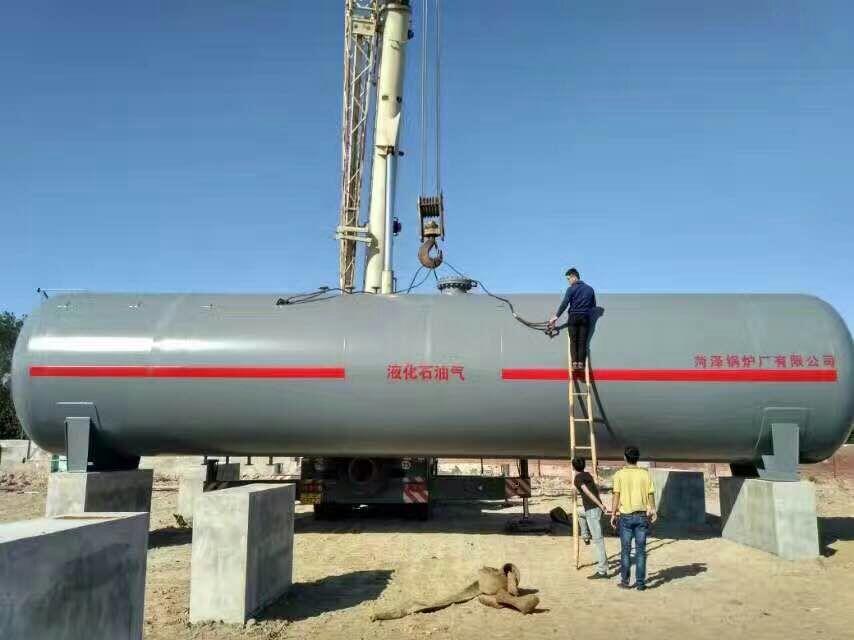

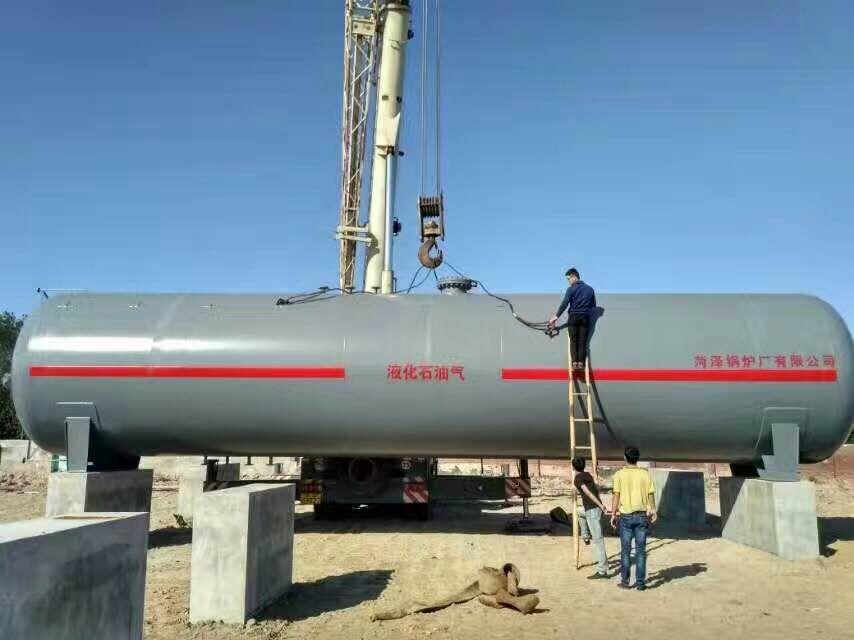
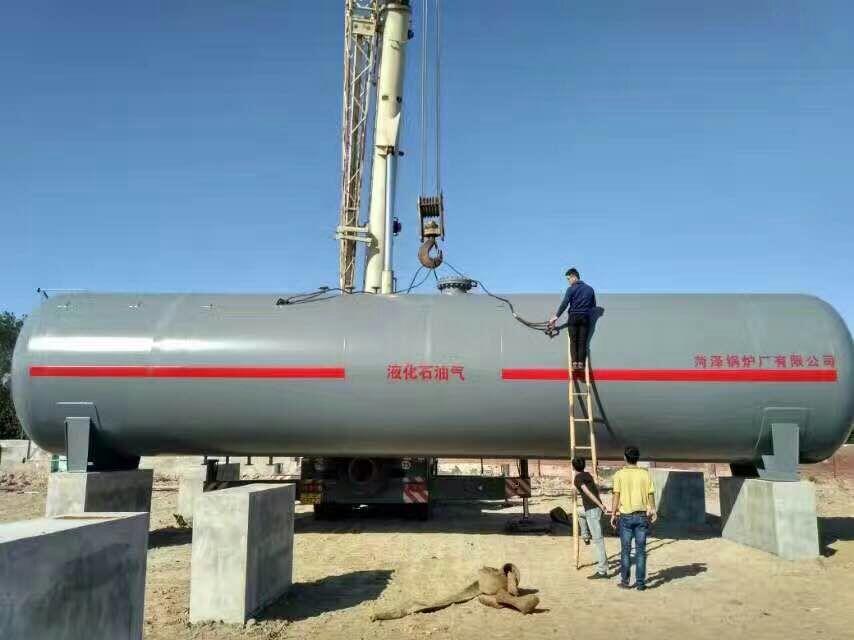


















LNG natural gas storage tank, cryogenic low-temperature container
Low-temperature liquid natural gas storage tank equipment is widely used in various industries of the national economy, including industry, agriculture, national defense, and scientific research. The application of natural gas storage equipment is increasingly widespread due to its advantages over traditional steel cylinders, such as convenient transportation, energy savings, safety, reliability, purity assurance, and versatility. China's low-temperature storage tanks are developing towards high quality, a variety of types, and large capacities.
Low-temperature liquid storage tanks are high-vacuum insulated stainless steel pressure vessels, designed for the storage, transportation, and use of liquefied natural gas, liquid oxygen, liquid nitrogen, liquid argon, or carbon dioxide. These low-temperature tanks are manufactured according to GB18442 standards and are used for reliable and economical transportation and storage of low-temperature liquids, as well as for on-site storage and supply of low-temperature liquid gases across a wide range of applications.

Manufactured fixed pressure vessels comply with the following regulations and standards:
1. TSG 21-2016 "Safety Supervision Regulations for Fixed Pressure Vessels"
2. GB150.1-150.4-2011 "Pressure Vessels"
3. NB/T47014-2011 "Welding Procedure Qualification for Pressure Equipment"
4. NB/T 47015-2011 "Code for Welding Procedures of Pressure Vessels"
5. GB/T25198-2010 "Pressure Vessel End Cap"
6. NB/T47013-2015 "Non-Destructive Testing of Pressure Equipment"
7. NB/T47016-2011 "Mechanical Property Testing of Welded Specimens for Pressure Equipment"
8. JB/T4711-2003 "Coating and Packaging for Pressure Vessels"
9. GB/T18442-2011 "Fixed Type Vacuum Insulation Low Temperature Pressure Vessel"

A low-temperature storage tank is a pressure vessel used to store various low-temperature liquids, such as natural gas tanks, LNG tanks, liquid oxygen tanks, liquid argon storage containers, and low-temperature liquid nitrogen tanks. Therefore, its safe operation rules should take into account factors such as the gas risk characteristics, low-temperature maintenance effects, surrounding environmental conditions, and characteristics of the pressure vessel. So, what are the detailed operation rules for low-temperature storage tanks? Let's find out together below.
1. Types of facilities and fire separation
Low-temperature storage tanks are of type B, with the minimum fire resistance grade of two. The fire separation between low-temperature storage tanks should not be less than half the diameter of the larger tank among the adjacent two tanks. There are no fire separation requirements for oxygen storage tanks with a volume of 50m3 or less and their operational buildings. The spacing of nitrogen and argon storage tanks should meet construction and maintenance requirements and should not be less than 2m.
2. Lightning and Static Electricity Protection
The low-temperature storage tank area must have lightning and static electricity grounding devices. It is required to invite a qualified unit to regularly inspect the grounding resistance annually. The equipment, pipelines, and flange connections on the low-temperature storage tank, as well as threaded connections, should be bridged with metal wires, with the bridging resistance being less than 0.03Ω.
Establish strict systems for the distribution, collection, and on-site handling of low-temperature steel materials, which are crucial quality assurance methods for the manufacturing of low-temperature pressure vessels. Particularly in the manufacturing site, as low-temperature steel can easily be mixed with general steel, improper handling can leave significant safety hazards. Low-temperature steel and welding rods should be handled separately in dedicated storage. After technical briefings, construction personnel and handlers should be familiar with the identification of low-temperature steel and welding rods to prevent mixing with other steels. Record books must be kept for the incoming and outgoing materials, and leftover materials should be promptly re-labeled. The surface quality of low-temperature steel requires high standards, and during storage and transportation, the surface should be protected and color-coded labels should be used for identification. Cutting and material processing should be under the supervision of material handlers and color-coded labels should be applied promptly. No steel marks should be used for identification on the surface of low-temperature steel. Plate materials and semi-finished products should be stored on shelves by batch number and standards. Pre-fabricated and processed materials should be stored on racks. It is strictly prohibited to place low-temperature steel materials, especially焊接 materials, directly on the ground. The distance from the racks to the ground and walls should not be less than 300mm. The welding rod storage should comply with relevant welding material handling regulations, with the temperature not below 10℃ and relative humidity not exceeding 60%, and proper records should be maintained. Welding rods should be dried for 2 hours at the specified temperature before use and then stored in a constant-temperature drying box (100-150℃).
In the pressure vessels currently used in petrochemical enterprises, low-temperature pressure vessels account for a significant proportion. Due to their lower operating temperatures, the brittleness of the container materials increases correspondingly. Under the effect of tensile stress, the stressed components may suddenly experience brittle cracking at stress levels below the material's yield strength or allowable stress. This type of cracking typically occurs with minimal or no plastic deformation before or after the event, without overall yielding, making it difficult to detect during normal production and posing a greater safety threat to petrochemical production. Therefore, for low-temperature pressure vessels, there must be a progressive increase in requirements for design, material selection, manufacturing, and inspection compared to non-low-temperature pressure vessels.

LNG Natural Gas Storage Tank, Low-Temperature Liquid Container


Professional Liquefied Natural Gas Tank Wholesale Prices - Best Liquefied Natural Gas Tank Supplier - Shandong He Guo Group Liquefied Natural Gas Tank Supply - Gas Conduction Oil Boiler Liquefied Natural Gas Tank Shandong He Guo



















