




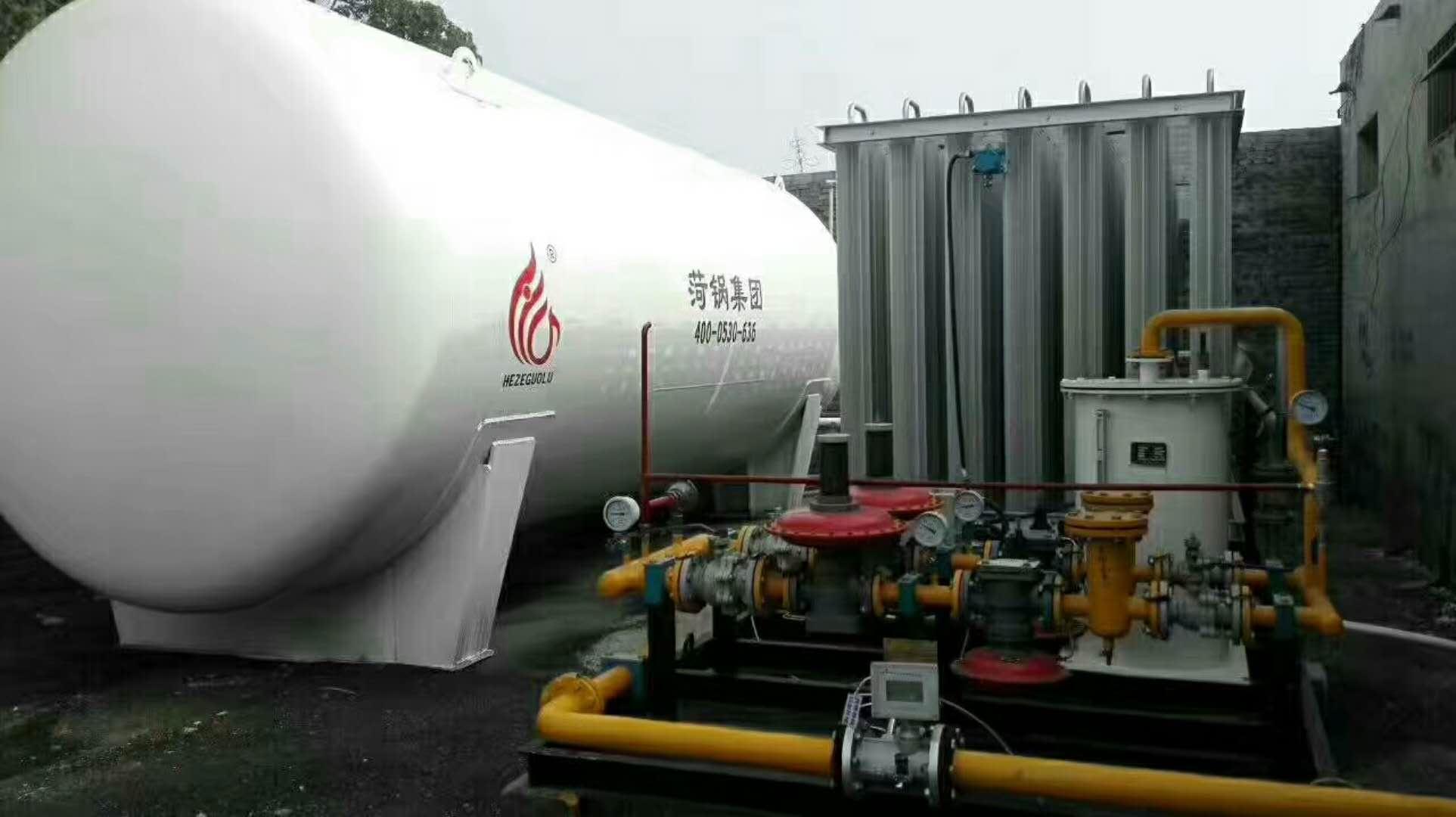


















30, 60, 100 cubic meter LNG storage tanks, LNG gasification station process flow
As shown in the figure, LNG is transported to the LNG satellite station via low-temperature tank trucks. It is pressurized in the tank trucks using horizontal dedicated unloading boosters at the unloading platform. The LNG is then delivered to the satellite station's low-temperature LNG storage tanks by utilizing the pressure difference. Under operating conditions, the storage tank booster increases the pressure of the LNG inside the tank to 0.6 MPa. The pressurized low-temperature LNG enters an air-cooled gasifier, where it is heated by air exchange and converted into gaseous natural gas, raising its temperature. The exit temperature is 10°C lower than the ambient temperature, with a pressure of 0.45-0.60 MPa. If the temperature of the natural gas at the outlet of the air-cooled gasifier does not reach above 5°C, it is heated using a water bath heater. Finally, after pressure regulation (regulator outlet pressure of 0.35 MPa), measurement, and odorization, it enters the city's transmission and distribution network, supplying various customers.
1. Unloading Process
LNG is transported to the gasification station in cities via road tankers or tank container trucks from the LNG liquefaction plant. The tanker's vacuum-temperature booster gasifier is used to increase pressure in the tanker's storage tank (or a booster gasifier set up within the station is used to increase pressure in the tank container trucks), creating a pressure difference between the tanker and the LNG storage tank. This pressure difference is then utilized to unload the LNG from the tanker into the storage tank at the gasification station. Upon completion of unloading, the gaseous natural gas in the tanker is recovered through the vapor phase pipeline at the unloading platform.
During unloading, to prevent the pressure inside the LNG storage tank from rising and affecting the unloading speed, an upward liquid injection method is used when the temperature of the LNG in the tanker is lower than that in the storage tank. The low-temperature LNG in the tanker is sprayed into the tank through the nozzle of the upward liquid injection pipe in a spray state, cooling some of the gas to a liquid and thereby reducing the tank's pressure, ensuring smooth unloading. If the temperature of the LNG in the tanker is higher than that in the storage tank, a downward liquid injection method is employed, with the high-temperature LNG entering the tank from the lower injection port, mixing with the low-temperature LNG inside and cooling down, thus preventing the high-temperature LNG from evaporating through the upward injection port, which could increase the tank's pressure and make unloading difficult. In practice, due to the relatively long distance between the LNG gas source and the cities that use it, the LNG in the tanker is usually at a higher temperature upon arrival at the cities, necessitating the downward liquid injection method. Therefore, except for the initial LNG loading, the downward liquid injection method is predominantly used during regular tanker unloading.
To prevent significant temperature difference stress from causing damage to the pipeline or affecting unloading speed during unloading, the unloading pipeline should be pre-cooled with LNG from the storage tank before each unloading. At the same time, it should be prevented that rapid opening or closing of valves causes a sudden change in LNG flow rate, leading to liquid impact damage to the pipeline.
2. Storage Tank Pressure Boosting Technology
Driven by pressure, LNG flows from the storage tank to the atmospheric vaporizer, where it is vaporized into gaseous natural gas for customer use. As LNG is depleted from the tank, the internal pressure decreases, and the outflow rate of LNG slows down until it stops. Therefore, during normal gas supply operations, it is necessary to continuously replenish the tank with gas to maintain the pressure within a certain range, ensuring the continuous vaporization process. The tank pressurization is achieved using an automatic pressure booster valve and an auto-pressurizing atmospheric vaporizer. When the tank pressure falls below the set opening value of the automatic pressure booster valve, the valve opens, and the LNG within the tank flows into the auto-pressurizing atmospheric vaporizer due to the liquid level difference (the installation height of the auto-pressurizing atmospheric vaporizer should be below the lowest liquid level of the tank). In the auto-pressurizing atmospheric vaporizer, the LNG vaporizes into gaseous natural gas by exchanging heat with air, which then flows back into the tank, raising the pressure to the required working level.
3. LNG Gasification Process
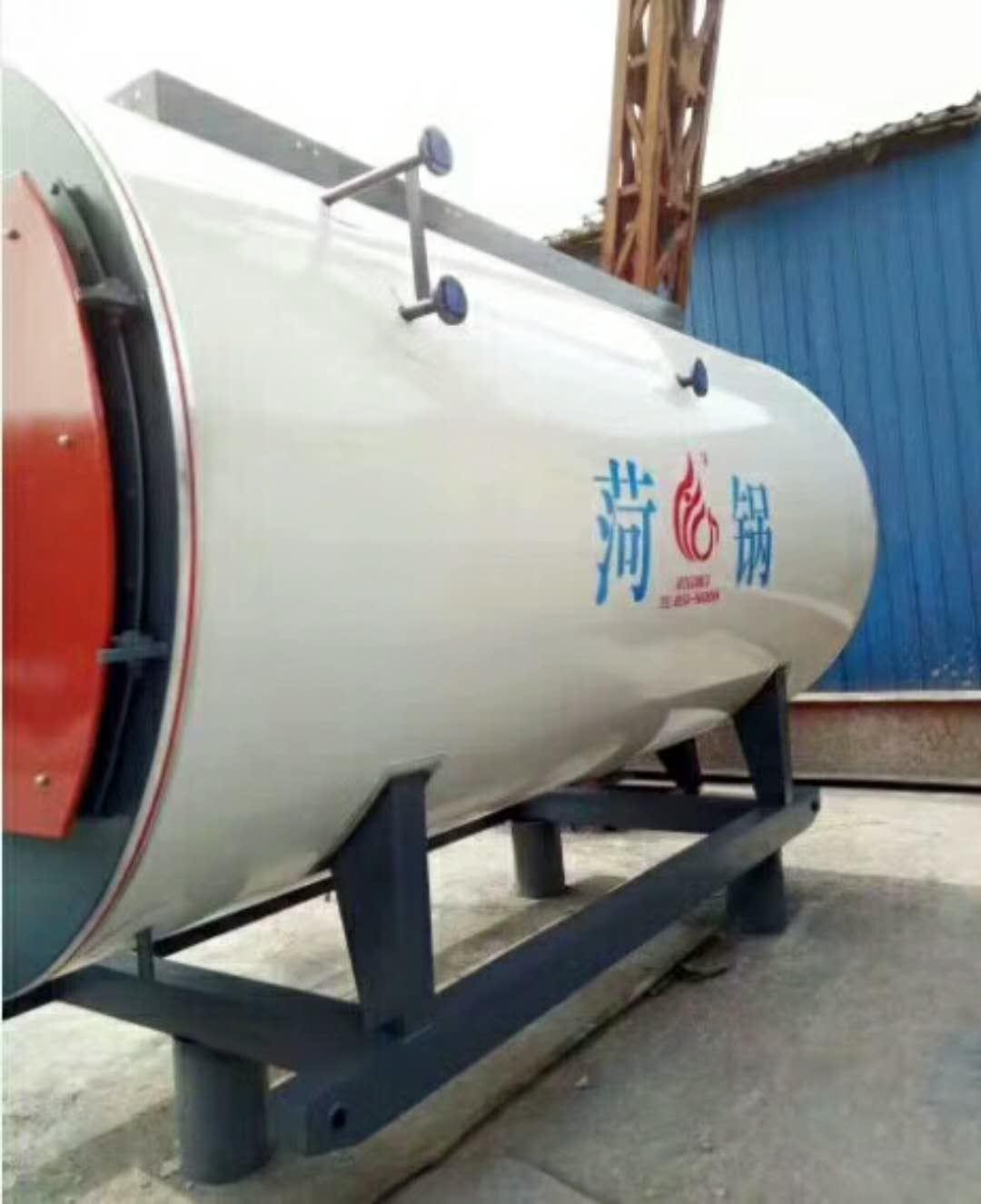
LNG undergoes heat exchange with the atmosphere in a vacuum gasifier, transitioning from liquid to gas. By the time it reaches the outlet, it is 10°C cooler than the ambient temperature. If it drops below 5°C, it is heated by a water bath vaporizer. The hot water for the water bath vaporizer comes from a water circulation loop connected to a hot water boiler.
4. Gas Safety Discharge Process
LNG is a liquid mixture primarily composed of methane, with a boiling point at -161.5°C under normal pressure and a storage temperature of -162.3°C under normal pressure, with a density of approximately 430 kg/m³. When LNG vaporizes into gaseous natural gas, its critical buoyancy temperature is -107°C. When the temperature of the gaseous natural gas exceeds -107°C, it is lighter than air and will rise and drift away from the leak source. When the temperature of the gaseous natural gas is below -107°C, it is heavier than air, and the low-temperature gaseous natural gas will accumulate downward, forming a flammable explosive mixture with air. To prevent the accumulation of low-temperature gaseous natural gas released by safety valves from forming an explosive mixture, a 1-unit air-temperature safety vent gas heater is set up. The vent gas is first heated by this heater to reduce its density below that of air, and then released into the high air.
For LNG regasification stations in the south without EAG heating equipment, to prevent operators from being injured by cold burns from the released low-temperature LNG gas-liquid mixture after the safety valve trips, the single safety valve vent pipe and the storage tank vent pipe should be connected to the central vent main pipe for venting.





















