






















Liquefied Natural Gas (LNG) Storage Vessel Capacity and Applicable Scenarios
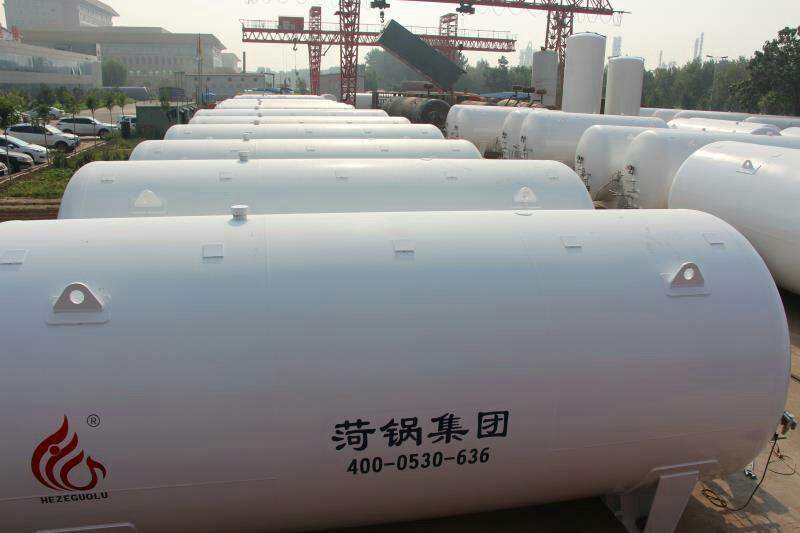
1. 60-cubic-meter LNG storage tank, vacuum powder insulation, 5 to 200 cubic meters, suitable for residential gasification stations, industrial gasification stations, LNG fueling stations, small mobile liquefaction units, and refrigerant storage.
2. Mother-child horizontal low-temperature storage tanks, 300 to 5,000 cubic meters, suitable for small liquefaction units, air separation units, civil gasification stations, industrial gasification stations, and LNG gasification stations, etc.
3. Horizontal and Lying Low-Temperature Storage Tanks, 100~10,000 cubic meters, suitable for small and medium-sized liquefaction units, peak-shaving liquefaction units, air separation units, LNG storage and distribution stations, LNG gasification stations, etc.
4. Vertical flat-bottomed cylindrical storage tanks, 200 to 200,000 cubic meters, suitable for various liquefaction units, LNG storage and distribution stations, LNG gasification stations, air separation units, liquid hydrocarbon storage, coastal LNG receiving terminals, etc.
Vacuum powder insulation storage tanks consist of an inner cylinder and an outer cylinder, with the annular space insulated using vacuum powder insulation technology. Due to transportation constraints, the maximum tank capacity is currently 200m³, and they are commonly used for storing smaller quantities of liquids.
When the liquid storage capacity exceeds 200 m³, a 60-cubic-meter LNG storage tank can be connected in parallel as a cluster tank using multiple vacuum powder-insulated storage tanks. When the storage capacity exceeds 1500 m³, it is advisable to use a horizontal sub-mother storage tank (abbreviated as sub-mother tank), which has the advantages of fewer site equipment, lower investment, convenient operation and maintenance, and safety and reliability compared to cluster tanks. The sub-mother tank consists of multiple (more than 3) sub-tanks in parallel to form the inner tank, and is assembled into a large outer tank (mother tank). The sub-mother tank is also limited by transportation and lifting conditions, with a maximum single tank capacity of 250 m³ and a total maximum capacity of 5000 m³. When the storage capacity exceeds 200 m³, spherical horizontal low-temperature storage tanks and vertical flat-bottomed horizontal low-temperature storage tanks can also be chosen. When the storage capacity exceeds 10,000 m³, horizontal flat-bottomed cylindrical low-temperature storage tanks are more commonly used. In the actual selection process, when the storage capacity is less than or equal to 200 m³, a vacuum powder-insulated storage tank with mature manufacturing and installation technology is chosen for the 60-cubic-meter LNG storage tank.





















