






















Key Equipment for LNG Gasification Station
LNG Tank
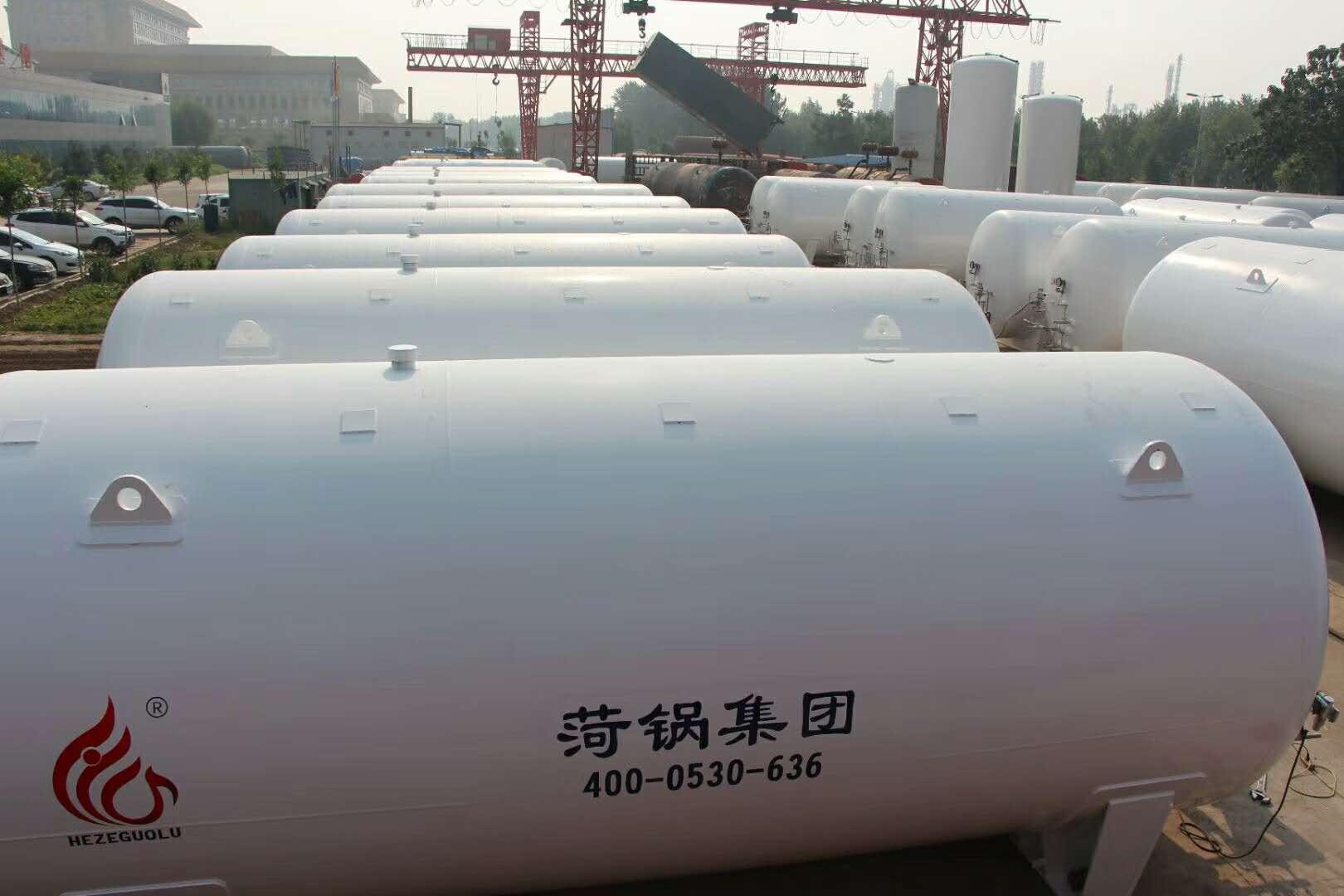
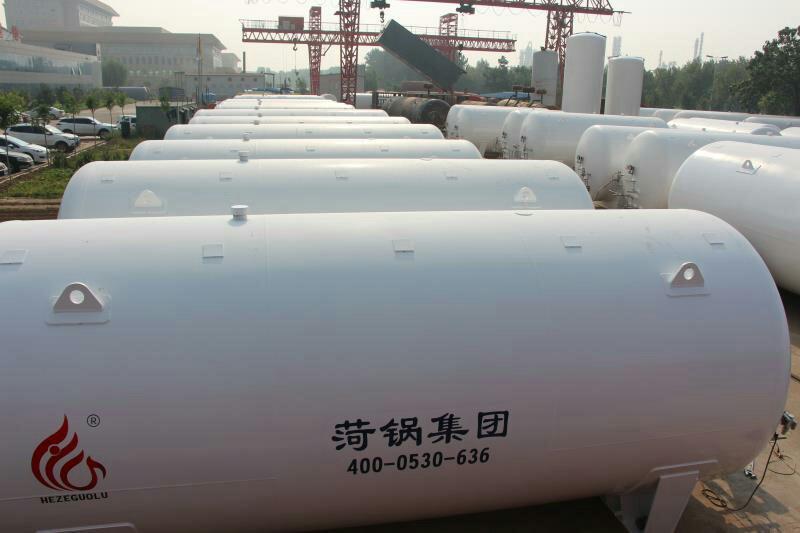
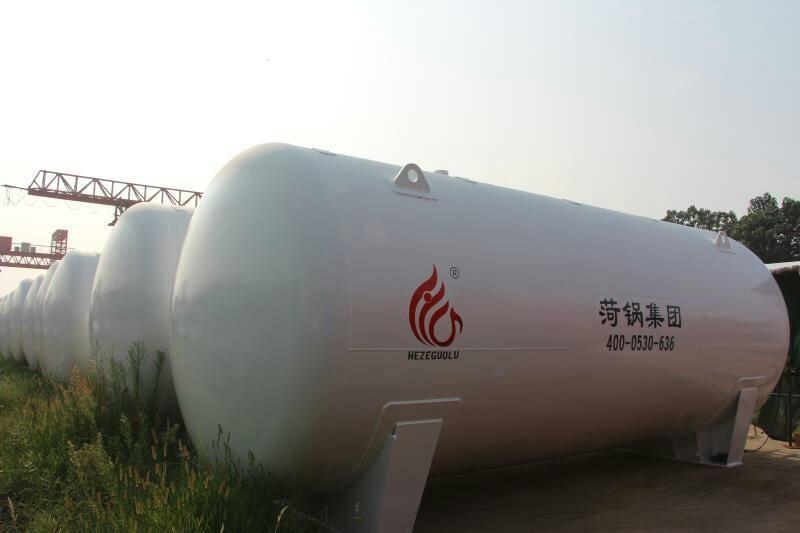
Tanks are the main equipment of LNG liquefaction plants, accounting for a significant portion of the construction cost. Great emphasis should be placed on tank design.
1.1 Selection of Materials for LNG Tanks
Normal operating temperature of the LNG tank is -162.3°C; it needs to be cooled to -196°C prior to the first use.
Liquid nitrogen pre-cools the tank, with the tank's design temperature at -196°C. The inner tank must withstand both the working pressure of the medium and the low temperature of LNG, requiring the inner tank material to have excellent comprehensive mechanical properties at low temperatures, particularly good low-temperature toughness. Therefore, the inner tank material is selected as 0Crl8Ni9, equivalent to ASME standard 304.
As a constant temperature external pressure vessel, the outer shell material is selected to be low-alloy steel Q345R, low-carbon steel Q245R, and Q235B.
1.2 Takeover Design
Tapped openings on the inner tank include: inlet liquid port, outlet liquid port, discharge port, vapor port, level checking port, upper level gauge port, lower level gauge port, and 8 process manholes. The material of the taps on the inner tank is all 0Cr18Ni9.
To facilitate regular measurement of vacuum and evacuation, a vacuum evacuation port is provided on the bottom closure of the outer tank (the port is sealed after evacuation). To prevent vacuum failure and the leakage of internal tank medium into the outer tank, a pressure relief device is set on the outer tank's closure.
2. Truck Unloading Booster Vaporizer
Due to the absence of a pressure boosting device on the LNG tank trucks, an onboard vaporizer with a vaporization capacity of m3/h is installed to increase the tank truck pressure to 0.6 MPa. The temperature of the LNG entering the vaporizer is -162.3°C, while the temperature of the gaseous natural gas exiting the vaporizer is -145°C.
3. Storage Tank Pressure VapORIZer
After filling a 100m³ LNG tank with 90m³ of LNG, calculate the pressure increase from 0.4 MPa (unloading state) to 0.6 MPa (operational state) in the 10m³ gas phase space within 30 minutes. According to the calculation, one 200m³/h capacity atmospheric temperature vaporizer is selected for each tank to boost pressure. The temperature of LNG entering the booster vaporizer is -162.3°C, and the temperature of the gaseous natural gas exiting the booster vaporizer is -145°C.
Designs often feature one LNG tank paired with one booster gasifier. Multiple tanks can also share a single or a set of gasifiers for boosting, which can simplify the process, reduce equipment, and lower costs through valve switching.
4. Air-temperature evaporator
The air-temperature vaporizer is the main vaporization facility for the LNG gasification station to supply gas to the city. The vaporization capacity of the vaporizer is determined based on the peak-hour gas consumption, with a certain margin, usually set at 1.3 to 1.5 times the peak-hour gas consumption. They are typically grouped in sets of 2 to 4, with 2 to 3 sets designed for alternating use.
5. Water Bath Vaporizer
When the ambient temperature is low and the outlet temperature of the air-cooled vaporizer is below 5°C, a water bath natural gas heater is connected in series after the air-cooled vaporizer to heat the gaseous natural gas [5, 6]. The heating capacity of the heater is determined as 1.3 to 1.5 times the peak hour gas consumption.
6. BOG Heater (Boil Off Gas)
Essentially an air-temperature vaporizer
Due to the largest BOG volume occurring after unloading from the recycling tanker, the design capacity of the BOG air-temperature heater is calculated based on this, with the time for unloading the gas phase natural gas from the tanker set at 30 minutes. Taking a 40m3 tanker's pressure dropping from 0.6MPa to 0.3MPa as an example, the required capacity of the BOG air-temperature heater is calculated to be 240m3/h. Generally, the BOG air-temperature heater is selected based on the number of tankers that can be unloaded simultaneously at the gasification station. Typically, the heating capacity of BOG heaters ranges from 500 to 1000m3/h. During winter, water bath-style natural gas heaters are used, with BOG serving as fuel for hot water boilers. The rest of the year, it is sent into the city's transmission and distribution network.
7. BOG Buffer Tank
For peak-shaving LNG gasification stations, to recover excess gas from unloading trucks during off-peak periods and BOG (Boil Off Gas) from storage tanks, or for natural gas blending stations to achieve uniform blending, a BOG buffer tank is often added at the outlet of the BOG heater. Its capacity is set according to the recovered excess gas from the trucks.
8. Safety Relief Gas (EAG) Heater
The EAG atmospheric temperature heater equipment capacity is calculated based on the maximum safe venting volume of a 100m3 tank. Calculations show that the safe venting volume of the 100m3 tank is 500m3/h, and a single atmospheric temperature heater with a gasification volume of 500m3/h was selected in the design. The incoming gas temperature to the heater is -145°C, and the outgoing gas temperature is -15°C.
9. Pressure Regulating, Metering, and Odorization Equipment
Select pressure-reducing equipment based on the scale of the LNG gasification station. Typically, a two-way pressure-reducing device is set up, with self-contained pressure regulators equipped with controllers and over-pressure cut-off features.
The measurement is conducted using a turbine flow meter. The odorant is tetrahydrothiophene, and it is injected into the gas pipeline using a diaphragm metering pump powered by the flow signal.
10. Filter
Filter Structure Features
The station uses a mesh core filter for filtering out particulate impurities and water from the outgoing natural gas. The filter cores are replaceable, and the removed cores (made of stainless steel mesh) can be reused after cleaning. The filter is equipped with a differential pressure gauge, indicating the pressure difference between the inlet and outlet of the filter's gas, which signifies the degree of clogging of the filter cores. The general precision of the filter cores is 50um, and the volume of the water collection chamber is greater than 12% of the filter's volume.

Section 9: LNG Filling Station Process Flow
Tenth: L-CNG Vehicle Refueling Station Process
Eleven. Multi-functional Compressed Gas Station Process Flow
Chapter 12: CNG Filling Station Process
Thirteen. Operations
What are LNG cars and CNG cars?
2. What is the function of an LNG liquefaction plant?
3. What are the classifications of gas stations for vehicles?
4. Briefly describe the four process flows of the LNG gasification station.
5. When should liquid be introduced from above during unloading, and when from below? Why?
What method is used for the self-pressurization of the storage tank?
Why use EAG heaters during gas venting?
Why is a dike set up around the LNG storage tank and its auxiliary equipment?
9. Briefly describe the main equipment of an LNG liquefaction plant and its functions.
10. Briefly describe the main equipment of an LNG vehicle refueling station.
11. Briefly describe the main process flow of a multifunctional auto-gas station.
Heze Boiler Factory Co., Ltd. was established in1984Year, located in Jiaozhou Road, Development Zone, Heze City2218Number, occupies10Over 10,000 square meters, main workshop area30000㎡. Current staff800Multiple people, including engineering technicians110Additional personnel, fixed assets2.5Billions.
The company hasBGrade A boiler manufacturing qualificationA2Grade pressure vessel design and manufacturing qualifications2Grade boiler installation andGB、GCCertified for installation of pressure pipelines and electromechanical equipment, etc. The company values technological research and innovation, and is recognized as a national high-tech enterprise, a famous trademark enterprise in Shandong Province, a provincial energy-saving and environmental protection demonstration enterprise, and a member of the China Chemical Equipment Association.
The company is highly focused on the green energy special equipment industry, specializing in the professional manufacturing of boilers and special pressure vessels. Leading products include: fuel oil(Gas)Boilers, biomass boilers, waste heat boilers, coal-fired boilers, organic heat carrier boilers, and other boiler products. LNGTanks, Oxygen/Nitrogen/Argon Storage TanksCO2Tanks and vacuum insulation cryogenic pressure vessels; LPG tanks, liquid ammonia tanks, denitrification and auxiliary equipment, heat exchangers, complete chemical equipment sets, stainless steel pressure vessels, refrigeration auxiliary equipment, etc.
The company operates with strict and efficient management.ISO9001Quality Management SystemISO14001Environmental Management SystemOHSAS18001Occupational Health and Safety Management System Certification. The company holds independent import and export rights, with products distributed to over twenty provinces, municipalities, and autonomous regions, and exported to countries and regions in Southeast Asia, Central Asia, Africa, Latin America, etc., enjoying high praise from customers.
Corporate“Ascend to become a top-tier special equipment supplier in China, upholding the reputation of Made in China.”In pursuit of our vision for development, the company adheres to“Achieve employees' dreams, create customer value, and strive for our nation's prosperity.”Our corporate mission is dedicated to the development of green special equipment, providing outstanding products and services to society.





















