






















Product Description
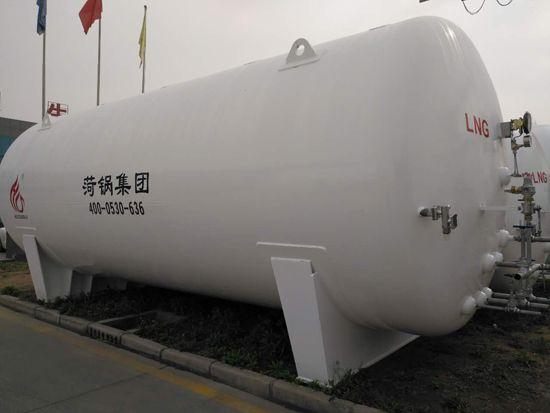
Brand Hegu Group Model CFW-60/0.8
Material: Stainless Steel, Diameter: 2916mm
Application Range -162℃ Volume 60000L
Heat Exchange Area - See drawing in square meters, Ambient Temperature - See drawing in degrees Celsius
Wall Thickness: 8mm, Outer Dimensions: φ2916*14929mm
Origin: Shandong, Heze
Jiangxi 60-cubic-meter LNG Storage Tank, Hunan 100-cubic-meter Natural Gas Storage Tank, 30-cubic-meter LNG Storage Tank Price

1.2 Pre-Pressure Regulating Preparation
1.2.1 Tool Preparation: explosion-proof adjustable wrench, two pairs of gloves, and two sets of protective gear.
1.2.2 Work Preparation
Wear protective gear, including antistatic suits, static-proof shoes, and safety helmets, etc.
Check if mobile phones, computers, and other static-sensitive equipment have been placed in a safe area, inspect the surrounding environment for safety, and ensure it meets the operational conditions.
Before entering, touch both hands to the static discharge device to release static electricity.
Check if all pressure adjustment tools, such as explosion-proof wrenches, are fully equipped.
Check that the tank's pressure gauge, level gauge, thermometer, combustible gas detector, and safety valve are functioning normally.
Inspect the pipeline valves, pressure gauges, and safety valves to ensure they are operating normally.
(7) Prepare all explosion-proof tools
1.2.3 LNG Storage Tank Gas Supply Process:
All valves of the tanks to be pressurized, excluding the root valve and the emergency shut-off valve, are in a closed position.
Open the lower tank inlet valve and both the liquid and vapor pressure valves, check that the valves before and after the pressure vaporizer are both in the open position.
Open the low-temperature cutoff valve before the gasifier, the ambient temperature flanged ball valve after the gasifier, and all valves in the pressure regulation system that need to be opened.
When the gas supply volume is less than 1000-2000 Nm3/h, one storage tank is sufficient to meet the gas supply requirements.
5. Flow Rate:
5.1 When the tank pressure rises above 0.15 MPa higher than the outlet pressure, slowly open the outlet valve to commence the gas supply operation.
5.2 Record the liquid storage tank number and the start of gas supply.
5.3 Pay close attention to the tank's liquid level, pressure changes, and variations in the outgoing flow and pressure when supplying gas.
1.2.4 Procedure for Self-pressurization of LNG Tanks
Upon manual operation, open the valves: the pressure booster liquid phase valve, pressure booster gas phase bypass valve, and the liquefied gas receiver inlet valve. This allows LNG to directly enter the self-pressurized gasifier, where it is vaporized and then enters the LNG storage tank. At this point, closely monitor the pressure, and close the pressure booster liquid phase valve once the pressure in the LNG storage tank reaches the required level.
Cautionary Notes:
During LNG tank operation, the liquid level must be maintained at ≤90% for the upper limit and ≥15% for the lower limit. (2) When manually operating the self-pressurization system, it is strictly prohibited to leave the site unattended.
(3) When the self-pressurizing system is in operation, the pressure-reducing system should be in the off state.
Cautionary Notes:
During the operation of the LNG storage tank, the liquid level must be ≥15%.
(2) When operating manually, it is strictly prohibited to leave the site unattended.
1.2.5 Risk Analysis and Countermeasures
During the loading and unloading of LNG tankers, operators should wear masks, antistatic work clothes, and antifreeze gloves, etc.
During LNG tanker unloading, it is strictly prohibited to move the vehicle to prevent the rupture of loading and unloading hoses, which could lead to a large-scale LNG leak.
When LNG is inside the pipeline, both ends' valves cannot be closed simultaneously.
Absolutely no touching or stepping on low-temperature pipelines and facilities.
Under no circumstances should moisture, oil, mechanical impurities, etc., enter the pipeline to avoid blockages.
No hammering, fire roasting, or water spraying on the frozen areas.
To ensure the safety of the working environment, operators must properly wear protective gear. Eliminate static electricity before entering the station. Open flames are strictly prohibited in the work area, and the use of non-explosion-proof tools and electronic devices is strictly forbidden.
Adhere strictly to the operation ticket system, following the steps outlined on the ticket. The on-site operation requires at least two personnel: one to perform the operation and another to supervise, ensuring safety throughout.
Conduct safety training prior to operation, implement proper on-site safety precautions, and be aware of how to escape and control emergencies in case of danger.
1.2.6 Procedure for Maintenance and Care of LNG Tanks
Operations technicians at LNG stations must be familiar with the structure and principles of the storage tanks and strictly follow the operational procedures for LNG-related operations.
LNG operation technicians must be familiar with the performance and principles of storage tank accessories (pressure gauges, level gauges, temperature gauges, vacuum test valves).
The outer shell of the liquefied natural gas tank is a vacuum vessel under external pressure, and welding operations are strictly prohibited under negative pressure. 4. Regularly inspect the outer shell of the tank for signs of icing or frost formation. Upon discovery, promptly report to the duty supervisor and station manager. The duty supervisor or station manager should immediately contact the manufacturer to identify the cause and address the issue. During the process, closely monitor the changes in icing or frost formation. If there is a tendency for the accident to escalate, immediately proceed with tank draining or halt the filling operation, and close the relevant emergency shut-off valves at the inlet and outlet.
Regularly inspect the storage tank's connecting pipes, valves, etc., for frost formation, and report any issues to the on-duty supervisor immediately. The on-duty supervisor will then arrange for personnel to address the situation.
Regularly inspect the tank's pressure gauge, level gauge, and thermometer to observe if the readings are normal. 7. Regularly check the sealing performance and operation of the valves connected to the tank to ensure proper functioning.
Regularly inspect and calibrate safety valves, pressure gauges, level gauges, and thermometers as per regulations to ensure proper operation and promptly update the equipment inventory records.
Regularly perform anti-corrosion treatment on the outer shell of the storage tank and carry out external cleaning and maintenance of the pressure gauge, level gauge, and thermometer of the tank.
Regularly perform rust removal and anti-corrosion treatment on the high-erosion areas such as the pressure and level control valves of storage tanks.
11. Perform annual or as-needed vacuum level inspections on the storage tanks to monitor their operational status.

Jiangxi 60 cubic meter LNG tank, Hunan 100 cubic meter natural gas tank, 30 cubic meter LNG tank price
Product Description
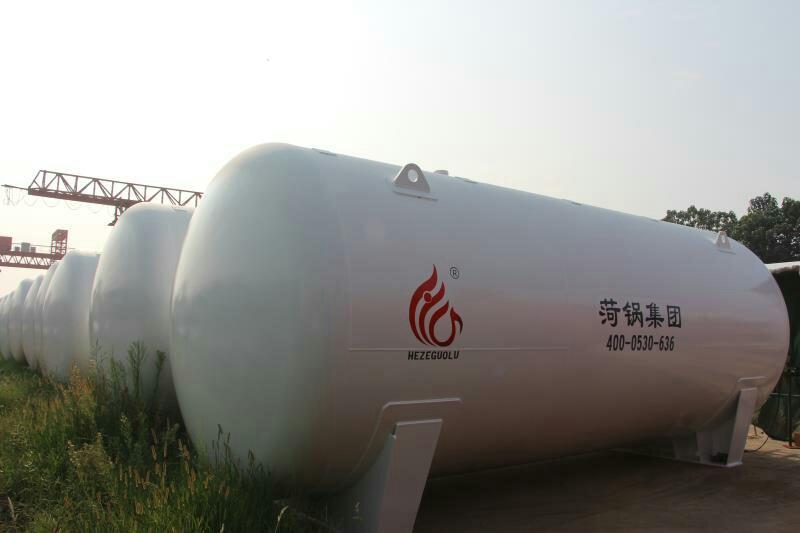
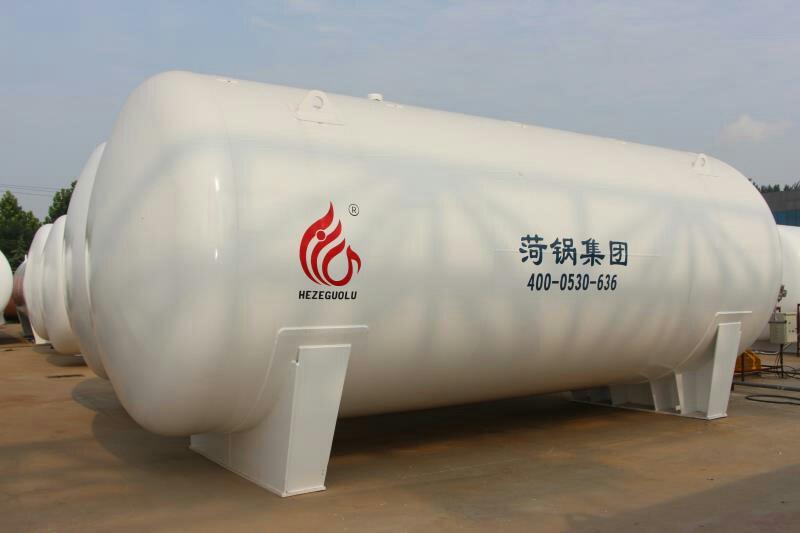
Brand Hegu Group Model CFW-30/0.8
Material: Stainless Steel, Diameter: 2916mm
Application Range -162℃ Volume 30000L
Heat Exchange Area See drawing m² Ambient Temperature See drawing °C
Wall Thickness: 8/10mm, External Dimensions: 2916*8289mm
Origin: Shandong Heze

30立方立式lng储罐 卧式LNG储罐 低温天然气储罐厂家
The low-temperature storage tank is a double-layer structure, with the inner tank storing low-temperature liquids, withstanding the pressure and low temperatures of the medium. The material of the inner tank is a low-temperature-resistant alloy steel (0Crl8Ni9). The outer shell serves as a protective layer for the inner tank, maintaining a certain distance from the inner tank to form an insulating space. It bears the gravitational loads of the inner tank and the medium, as well as the vacuum negative pressure of the insulating layer. The outer shell does not come into contact with the low temperature and is made of container steel. The insulating layer is mostly filled with mica sand, and a high vacuum is drawn. The evaporation rate of the low-temperature storage tank is generally less than 0.2%.
LNG tanks are categorized by capacity
(1) Small (5-50 m³): Commonly used at civil LNG refueling stations and civil gas liquefaction stations. (2) Medium (50-100 m³): Often used in industrial gas liquefaction stations. (3) Large (100-1000 m³): Suitable for small-scale LNG production facilities.
(4) Large (10,000-40,000 m³): Used for base load and peak-shaving liquefaction facilities. (5) Extra-large (40,000-200,000 m³): For LNG receiving terminals.
LNG tanks are categorized by shape
Spherical: Generally used for medium to small capacity storage tanks. (2) Cylindrical: Used in storage tanks of various capacities. LNG Storage Tanks by Placement Category (1) Above Ground: Located on the ground. (2) Underground: Located beneath the ground.
Determination of Design Pressure and Calculated Pressure
Currently, the majority of 100m3 vertical LNG storage tanks have a maximum working pressure of 0.8MPa. According to the provisions of GB150 "Steel Pressure Vessels," when the maximum working pressure of the storage tank is 0.8MPa, the design pressure can be taken as 0.84MPa. The filling factor of the tank is 0.95, and the net pressure of the liquid column in the inner tank after filling with LNG is 0.062MPa. The absolute pressure between the inner and outer tanks is 5Pa, resulting in a calculated pressure of 1.01MPa for the inner tank.
The primary function of the outer shell is to securely fix the inner shell and insulating material in a suspended or supported manner, while forming a high vacuum insulating layer with the inner shell. The loads acting on the outer shell are mainly the gravitational loads of the inner shell and the medium, as well as the vacuum negative pressure of the insulating layer. Therefore, the outer shell is an external pressure vessel, with a design pressure of -0.1 MPa.
Material selection for LNG tanks
During normal operation, the working temperature of the LNG storage tank is -162.3°C. Prior to the first use, the tank must be pre-cooled using liquid nitrogen at -196°C, hence the design temperature of the tank is -196°C. The inner tank must withstand both the working pressure of the medium and the low temperature of LNG, requiring the material to have excellent comprehensive mechanical properties at low temperatures, particularly good low-temperature toughness. Therefore, the inner tank material is selected as SS30408. Based on the calculated pressure of the inner tank and the selected material, the calculated thickness and design thickness are 11.1mm and 12.0mm, respectively. As a normal temperature external pressure vessel, the outer tank material is chosen as low-alloy container steel 16MnR, with a design thickness of 10.0mm.
LNG Tank接管Design
Tapped openings on the inner tank include: inlet liquid ports, outlet liquid ports, liquid discharge ports, vapor ports, level measurement ports, upper level gauge ports, lower level gauge ports, and 8 process manholes. All tapped openings on the inner tank are made of OCrl8Ni9 material.
For easy regular measurement of vacuum levels and vacuum extraction, a vacuum extraction port is provided on the bottom cap of the outer cylinder (the port is sealed after vacuum extraction). To prevent vacuum failure and the leakage of internal medium into the outer cylinder, a safety device is installed on the cap of the outer cylinder.
30立方立式lng储罐 卧式LNG储罐 低温天然气储罐厂家


Supply Liquefied Natural Gas Storage Tanks - Gas Hot Water Boilers LNG Storage Tanks Heze Boiler Factory - Professional Liquefied Natural Gas Storage Tank Phone - Genuine LNG Storage Tank Production



















