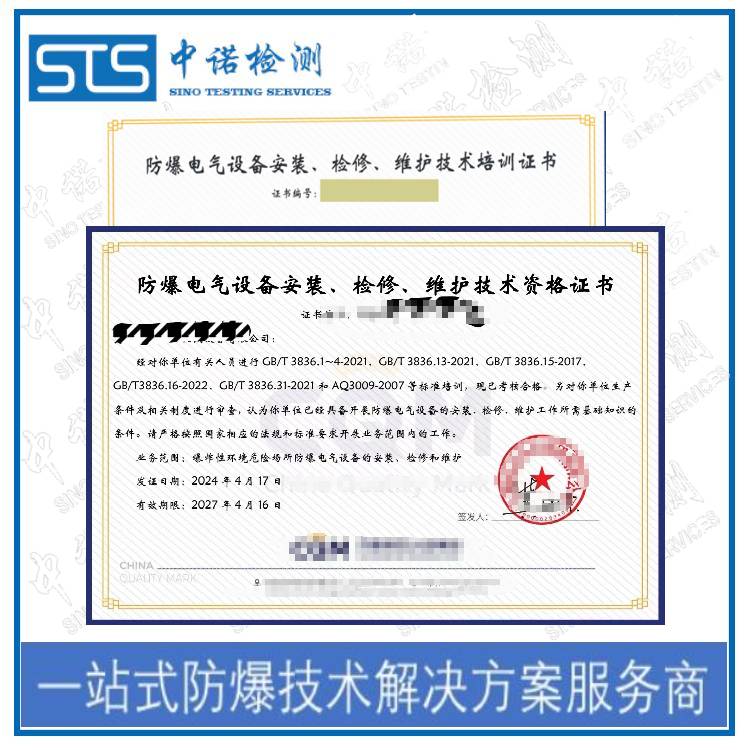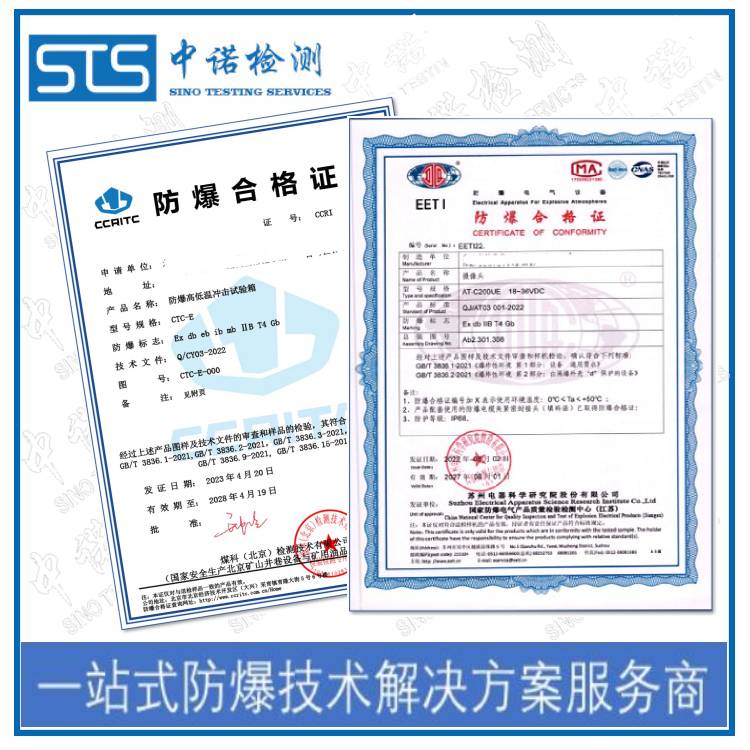


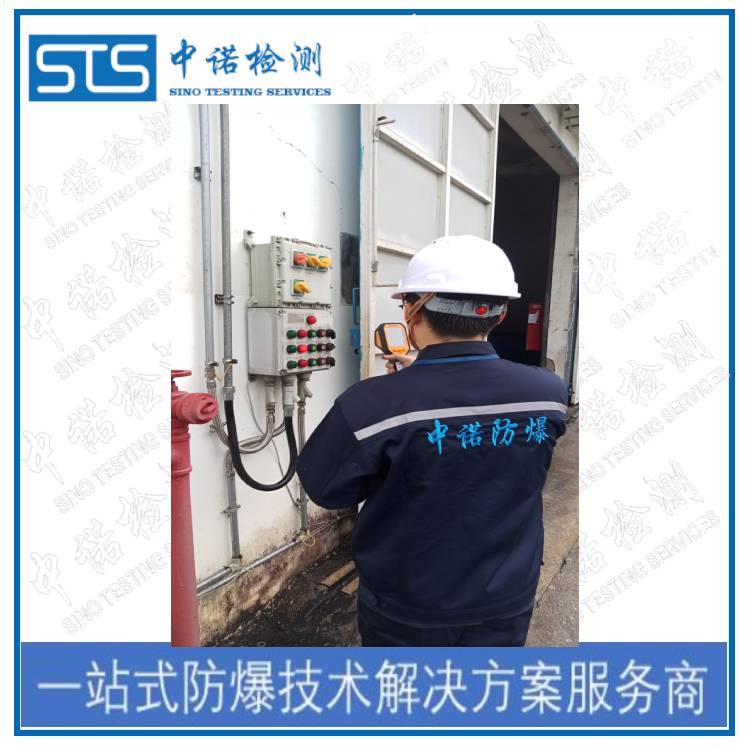





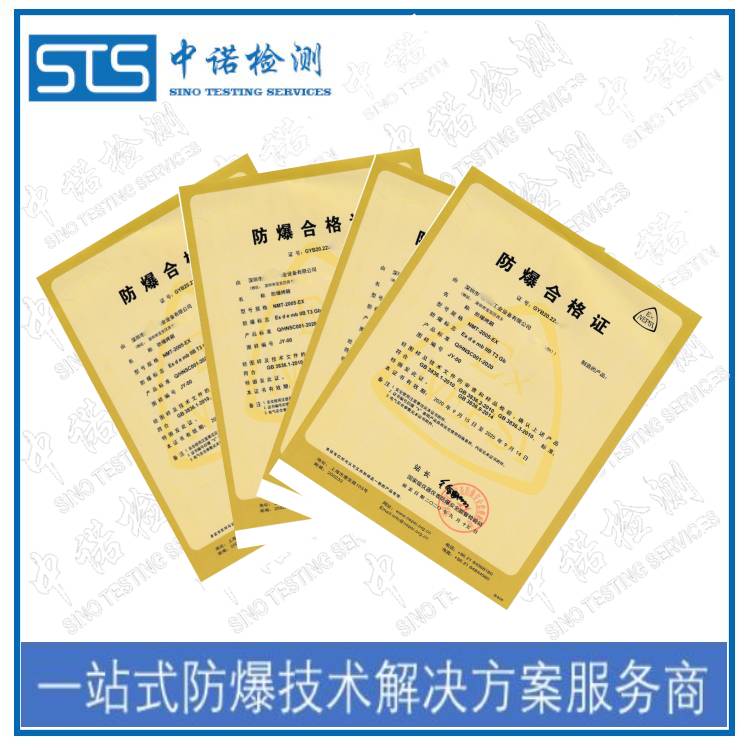
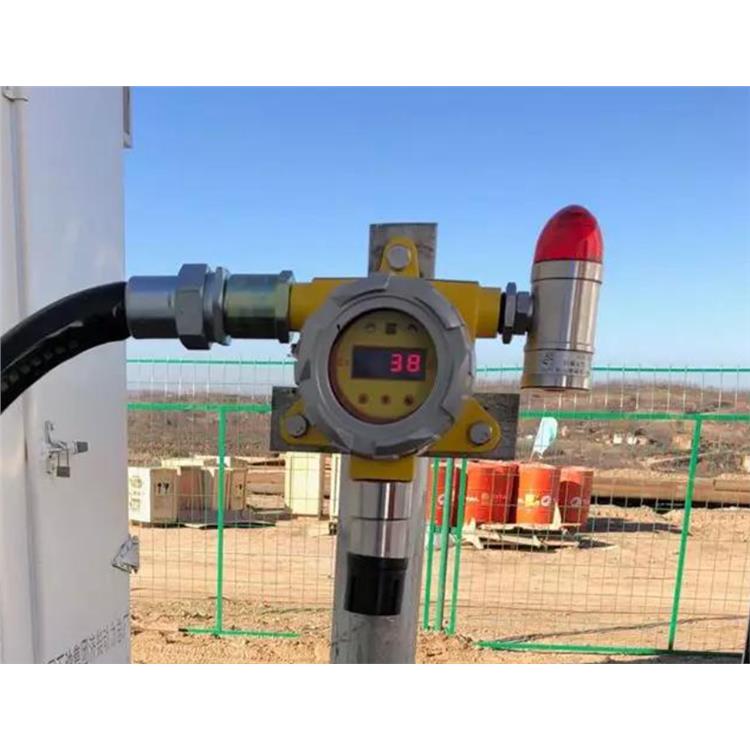
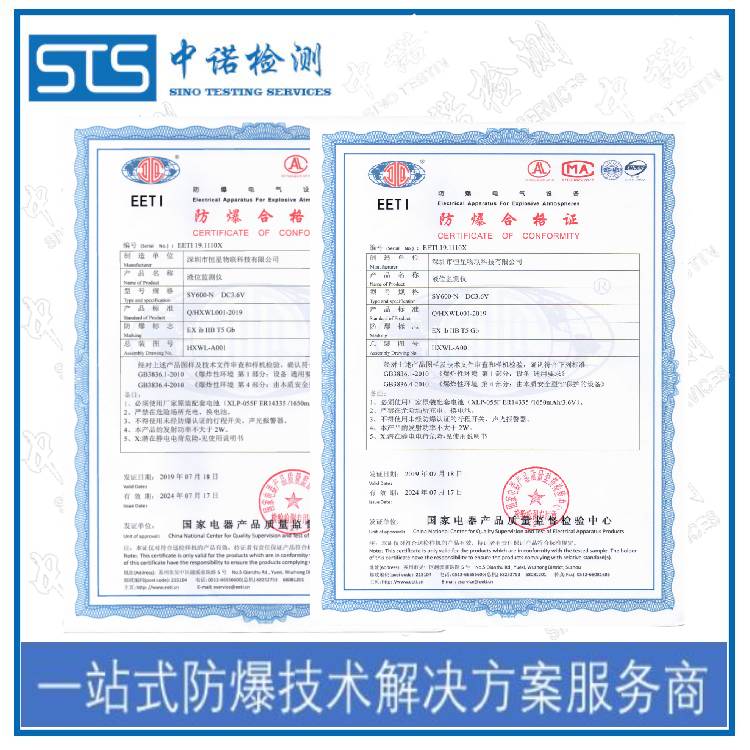
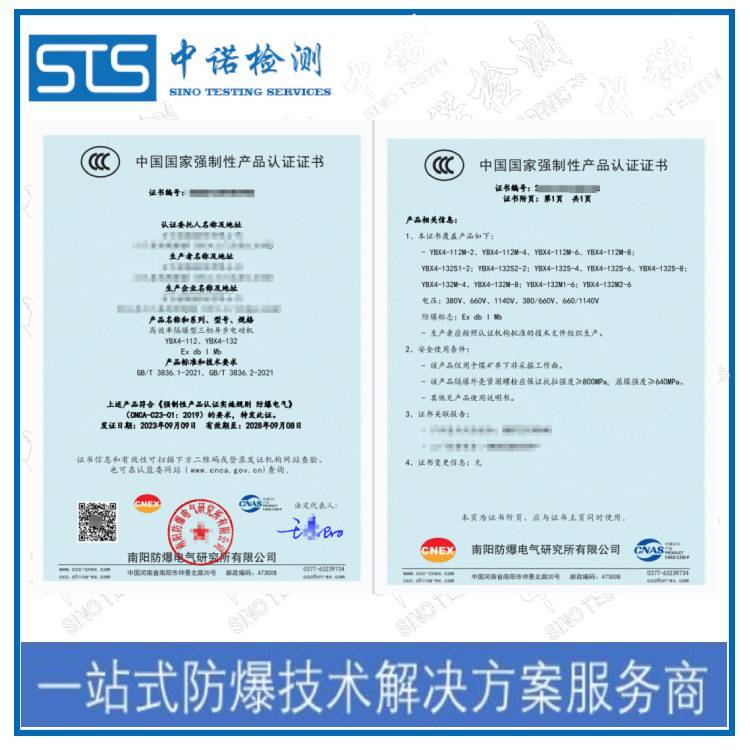
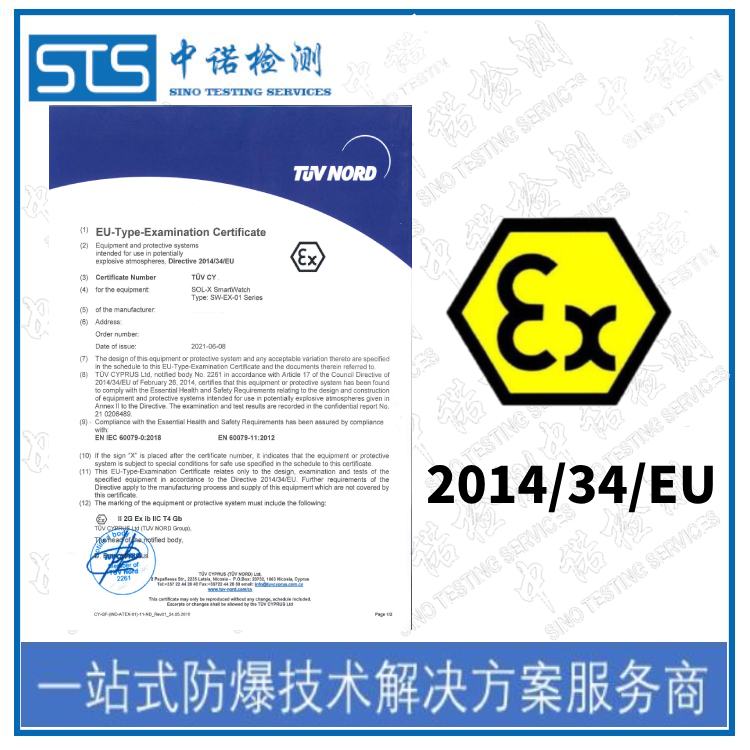
Shenzhen Zhongnuo Testing Technology Co., Ltd. is based in South China and specializes in explosion-proof certification and coal mine safety certification application consulting services, offering a one-stop explosion-proof technology consulting service.
Blastproof certification is the process of verifying that equipment meets the requirements of blastproof standards, type testing, and applicable routine tests, and issuing relevant qualification certificates.
Certificates are available for Ex equipment or Ex components.
The explosion-proof standard GB/T3836 specifies that electrical equipment manufactured in accordance with the explosion-proof type standards listed in GB/T3836.
All must be tested for explosion-proof requirements by authorized institutions in accordance with relevant standards and obtain an explosion-proof certificate.
This means that explosion-proof products must obtain the relevant explosion-proof certification.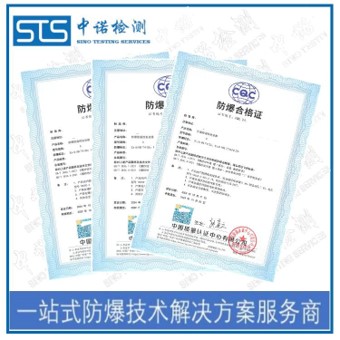
Certification standards for explosion-proof equipment used in environments with explosive gas:
GB/T 3836.1-2021 Explosive Atmospheres Part 1: Equipment General Requirements
GB/T 3836.2-2021 Explosive Atmospheres, Part 2: Equipment protected by a flameproof enclosure "d"
GB/T 3836.3-2021 Explosive Atmospheres, Part 3: Equipment protected by an "e" type of increased safety
GB/T 3836.4-2021 Explosive Atmospheres, Part 4: Equipment protected by intrinsic safety "i"
GB/T 3836.5-2021 Explosive Atmospheres, Part 5: Equipment protected by positive pressure enclosures "p"
GB/T 3836.6-2017 Explosion-Proof Environment, Part 6: Equipment Protected by Liquid-Immersed Type “O”
GB/T 3836.7-2017 Explosive Atmospheres, Part 7: Equipment protected by sand filling type "q"
GB/T 3836.8-2021 Explosive Atmospheres, Part 8: Equipment protected by "n" type protection
GB/T 3836.9-2021 Explosive Atmospheres, Part 9: Equipment protected by cast-in “m” type enclosures
Limitation requirements for surface resistance of non-metallic enclosures of explosion-proof equipment
In hazardous areas with explosive dust or gases/vapors, such as coal dust and flour, static electricity can cause fires or explosions, posing significant danger. Therefore, it is advisable to minimize the use of insulating materials in explosive hazard areas. When selecting electrical insulating materials, it is recommended to maintain low insulation resistance to prevent discharge when non-metallic components come into contact with charged components. For non-metallic insulating materials, the antistatic ability of the equipment can be assessed by measuring the surface resistance of the equipment's housing.
Surface Resistance, measured in ohms (Ω), refers to the resistance between two electrical contacts on the measuring surface.
In compliance with the IEC 60079 series standards:
In environments with Category II explosive gas atmospheres, when the surface area of a non-metallic shell of electrical equipment exceeds a certain limit value (as shown in Table 1), a surface resistance test of the non-metallic material is required to ensure: By selecting the material, the surface resistance meets at least one of the following requirements during measurement according to IEC 60079-0 26.13:
At ≤1 GΩ, (505)% relative humidity;
At ≤100 GΩ, (305)% relative humidity.
2. In Class III explosive dust environments, if the surface area of the non-metallic housing of electrical equipment does not exceed 500 mm², the risk of static electricity can be disregarded; if it exceeds this limit, a surface resistance test must be conducted for verification. The requirements for determination are the same as those for the surface resistance test limit requirements for Class II gas environments. For fixed installation equipment that cannot meet the surface resistance limit, an "X" can be added after the "Ex" marking, a corresponding warning sign should be placed on the equipment, and the user should be informed in the operating instructions.
Market Access System for Explosion-Proof Products
1. Explosion-proof certification system: Applies to all explosion-proof products, utilizing the "type testing" method.
2. CCC Certification: Applicable only to certain explosion-proof products (measuring instruments and explosion-proof lighting equipment excluded), utilizing the "type testing + factory inspection" method
3. Coal Mine Safety Mark (MA): Suitable for mining products, adopting the method of "Type Inspection + Factory Inspection"
Explosion Proof Certification Application Consulting Services - Shenzhen Zhongnuo Testing Technology Co., Ltd.
WeChat Official Account

Scan to follow Official Account