























Low-temperature storage tanks are primarily used in the industrial gas sector, with a wide range of applications across various industries. These include steel mills, chemical plants, oil refineries, food processing, and aerospace, among others, all of which require gases. Industrially, gases like oxygen, nitrogen, and argon, which are in high demand, are separated from air using air separation equipment. The air is compressed and liquefied, then separated based on the different boiling points of oxygen, nitrogen, and argon, before being stored in low-temperature storage vessels.
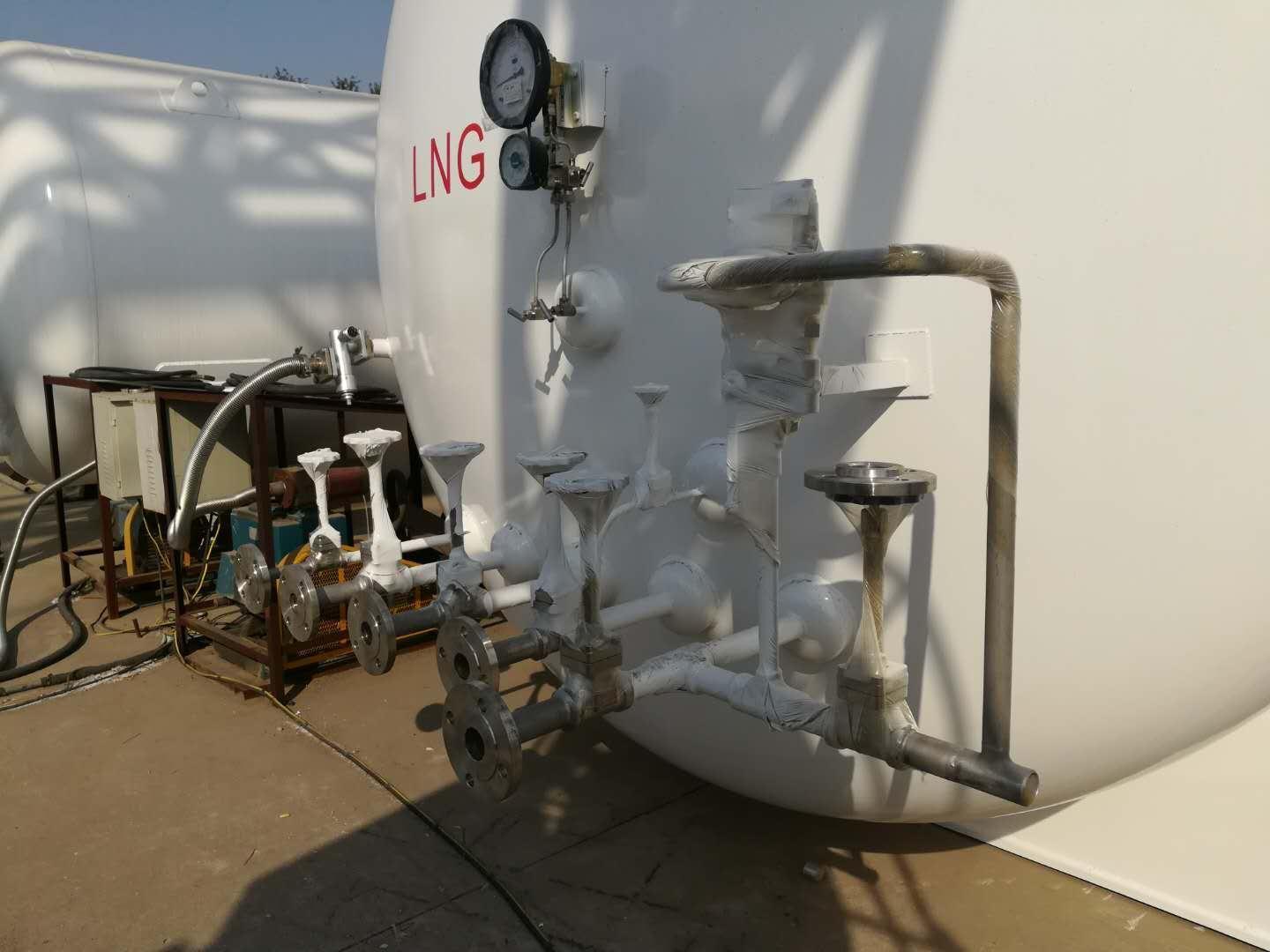
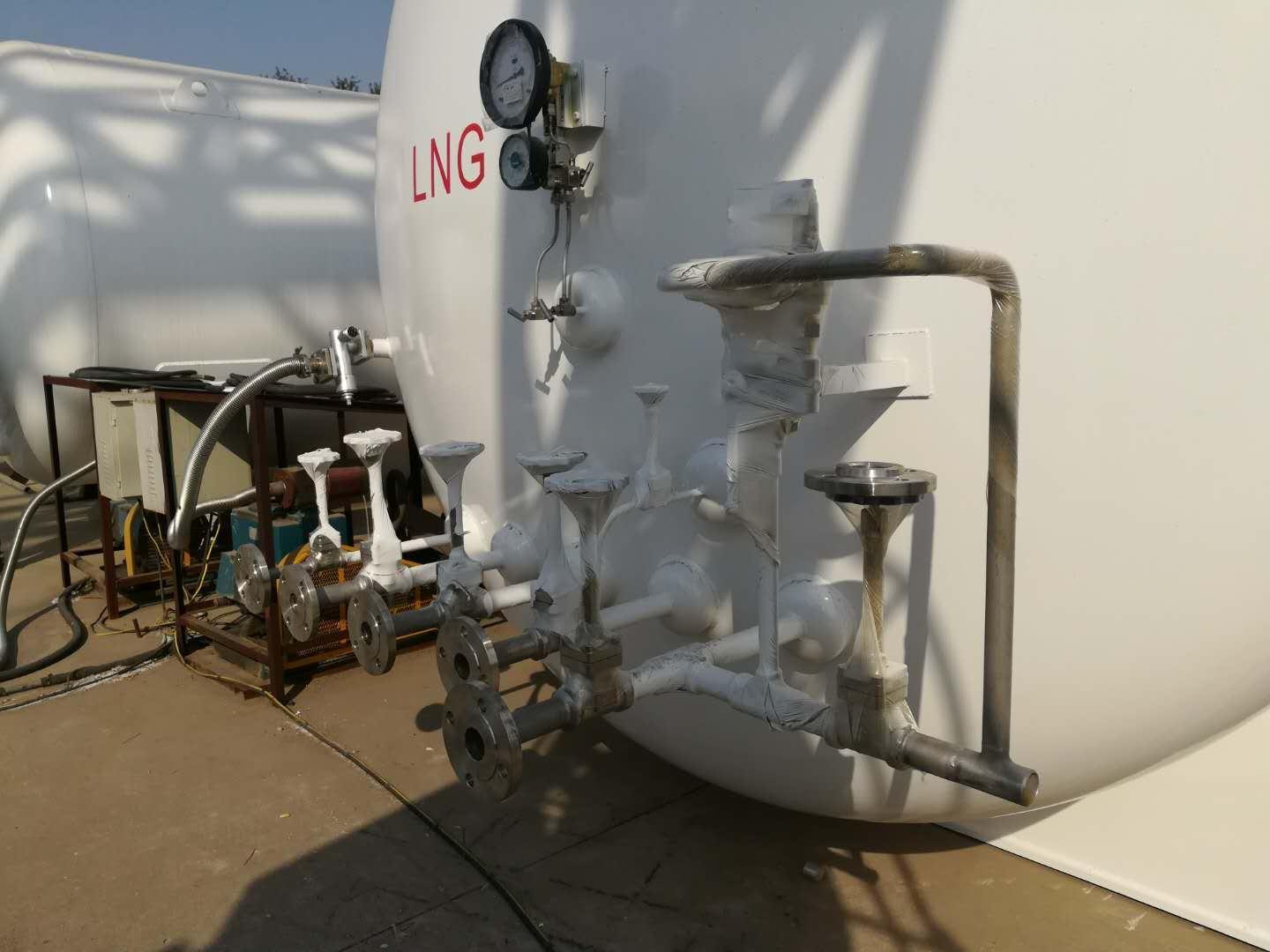
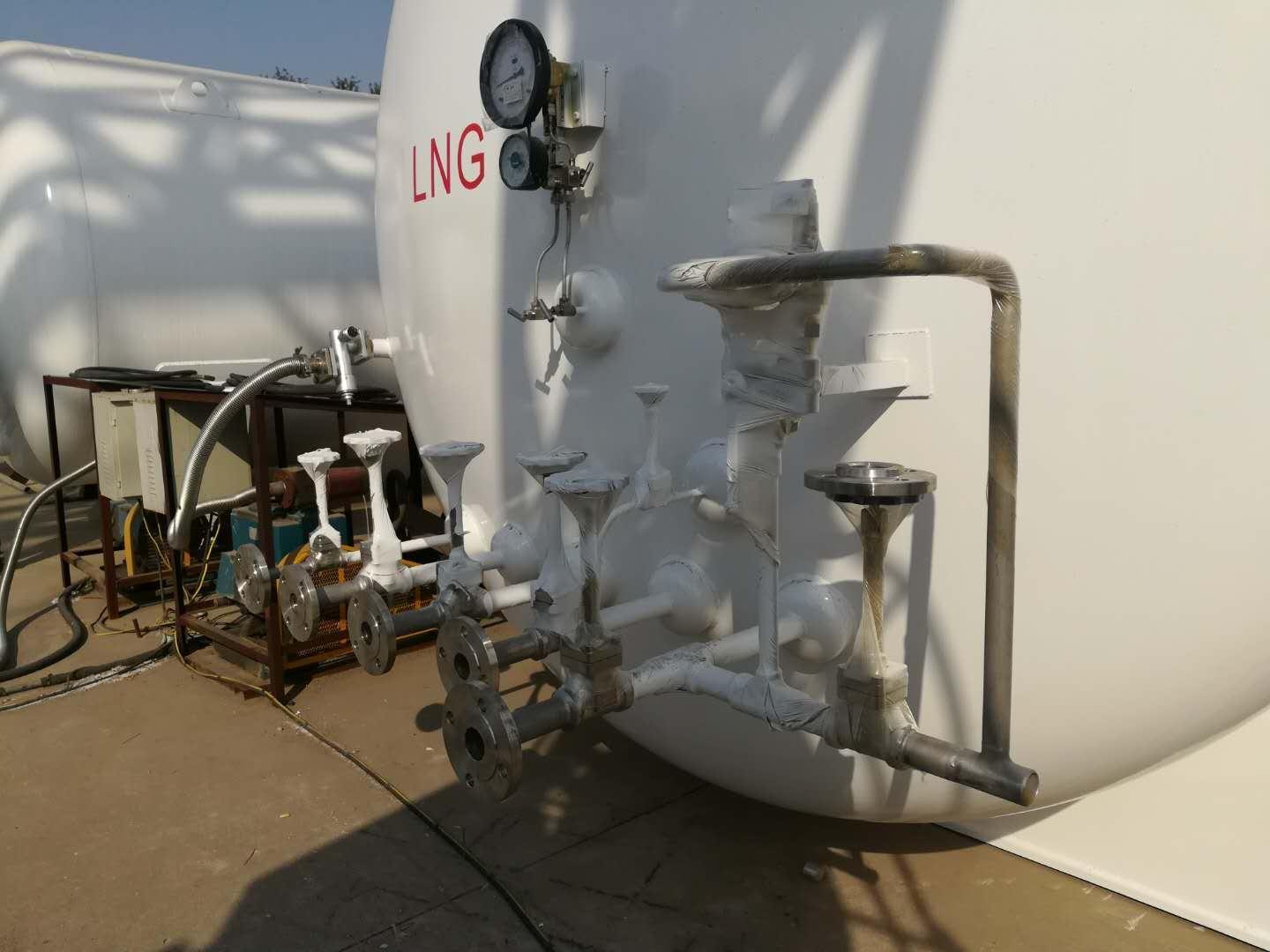
Liquefied Natural Gas (LNG)The tank features a long service life, compact structure, minimal land area, centralized control, ease of operation, and convenient maintenance. It is a double-layer fixed vacuum powder insulation low-temperature storage tank. The inner shell is made of stainless steel.,Outer shell material isQ235BOr16MnRThe liquid oxygen tank surface is protected with an anti-corrosion coating applied through shot blasting, sweeping, and spraying processes, along with a two-component rapid curing liquid paint.
Liquefied Natural Gas (LNG) storage tanks consist of the tank body, instruments, pipelines, valves, etc. These tanks are designed with both upper and lower liquid inlet methods, allowing for selection based on specific conditions.
The inner tank of the Liquefied Natural Gas (LNG) storage tank is equipped with a safety system consisting of dual safety valves. Under normal operation, one set is in operation while the other is on standby. If the operating safety valve trips, the manual pressure relief valve is immediately opened to release pressure to the highest working pressure of the storage tank. Simultaneously, the safety system is quickly switched to the standby system using the manual handle, effectively ensuring the tank's safety. This safety system device consists of safety valves, explosion-proof devices, vent valves, and three-way ball valves, not only ensuring pipeline welding quality but also featuring excellent fire and static electricity prevention structures. Additionally, the safety relief ports on the outer shell are designed to fully ensure the safety and reliability of the entire equipment. The low-temperature pipelines are集中引出 to facilitate operation and control, with the outlet using Duralumin pipe structure to accommodate low-temperature requirements and reduce stress caused by thermal expansion and contraction of the pipeline, ensuring the tank's safety. The vacuum relief valve uses three "O" rings for sealing, effectively guaranteeing the reliability of the sandwich seal, and is made entirely of stainless steel, with a compact size. The top of the LNG storage tank features a research and developed suspension structure for easy transportation, lifting, and installation. A unique process manhole design ensures the cleanliness inside the inner tank when it is sealed. Vacuum isolation valves and combined vacuum gauges are used on the LNG storage tank for measuring and maintaining the vacuum level in the sandwich, extending the tank's service life and enhancing its quality. The LNG storage tank is equipped with a level gauge and pressure gauge for local display of liquid level and pressure.

During operation, low-temperature storage tanks pose potential hazards such as leaks, overpressure, and explosions. If the latent dangers prior to these accidents are not discovered and addressed promptly, they can escalate into severe incidents. Therefore, establishing and rigorously implementing a comprehensive inspection system is crucial for ensuring the safe operation of low-temperature storage tanks.
When the low-temperature storage tank is in operation, there are potential hazards such as leaks, overpressure, and explosions. If these hidden dangers before an accident are not discovered and addressed in time, they can escalate into serious incidents. Therefore, establishing a comprehensive inspection system and strictly enforcing it is crucial for ensuring the safe operation of the low-temperature storage tank. Daily inspections of the low-temperature storage tank mainly include the following:
1. Check for any leaks in valves and piping, as well as frosting or sweating on the housing.
2. Are all valves in normal open/close status?
3. Are the instruments (level gauges, pressure gauges) functioning properly, and do the DCS display parameters match the field primary meters?
4. Is the tank gauge pressure normal? Open the vent valve to relieve pressure when the pressure approaches or equals the maximum pressure.
5. Is the liquid fill rate over 95%?
6. Is the sealed gas normal for atmospheric pressure powder insulation storage tanks? (50mmH2O)
7. No flammable, explosive materials or any debris are allowed near the liquid oxygen storage tank, with clear signage.
8. No smoking or open flames near the liquid oxygen storage tank.
9. Test the acetylene and total hydrocarbon content in the liquid oxygen storage tank at least once a week. The acetylene content must not exceed the specified process standards; if it does, liquid oxygen must be discharged and replaced promptly for treatment.
10. Is the liquid oxygen storage tank properly grounded?
11. Ensure there is a certain amount of liquid inside the can if it's not to be used for a long period, to avoid spending a considerable amount of time refilling and cooling the can again.
12. Are the legs damaged, is the foundation sinking, tilting, or cracking, the condition of the bolts, and any deformation of the tank?
13. Regularly check the tank's vacuum level.


High-Quality Natural Gas Storage Tanks for Sale - Natural Gas Tank Prices - Best Supplier of Natural Gas Storage Tanks - Top 10 Professional Natural Gas Tank Brands



















