






















液化天然气储罐价格液化天然气储罐厂家
LNG储罐厂家,液化天然气储罐价格液化天然气储罐厂家:Shandong Hezhou Group,ForManager1??????????。
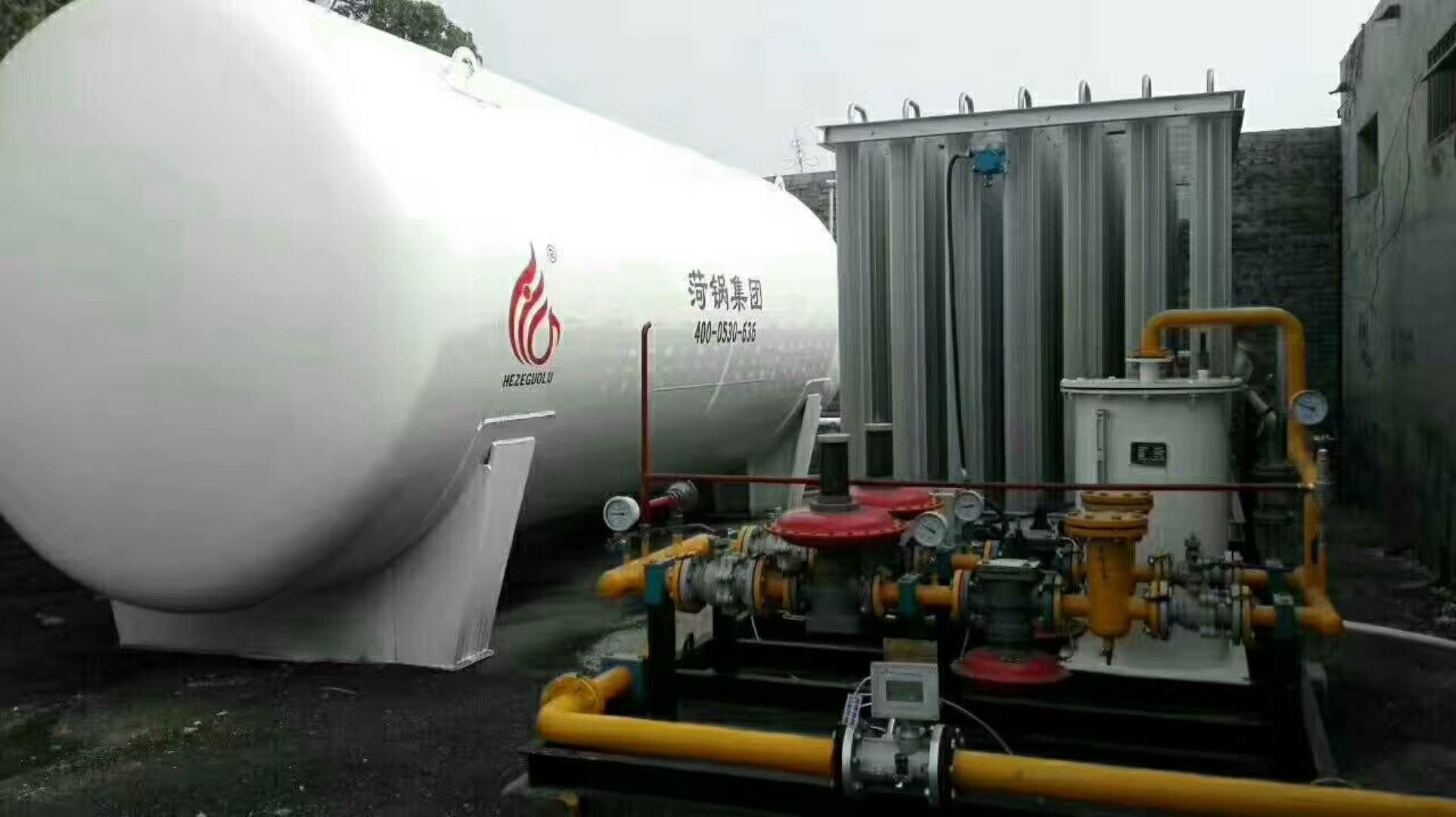
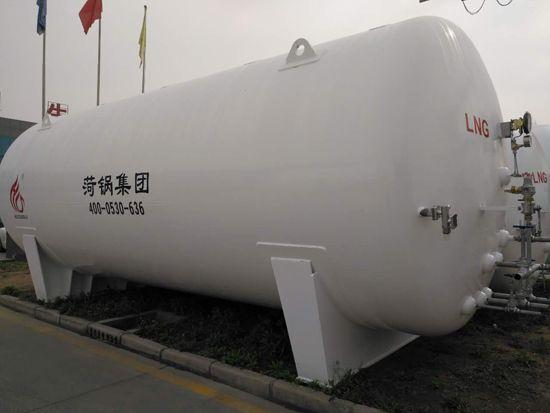
The basic structure of the LNG storage tank is as shown in the figure. The outer piping and operating system are located at the bottom of the tank, while the inner cylinder is used to contain LNG. Various pipelines connected to it extend from the inner cylinder to the outer piping system through the annular space. The outer cylinder, on one hand, forms a sealed vacuum insulated space with the inner cylinder, and on the other hand, provides protection and support for the inner cylinder. The support between the inner and outer cylinders is made of glass fiber reinforced plastic with excellent insulation properties, used to support the axial and radial loads of the inner cylinder.
液化天然气储罐价格液化天然气储罐厂家
LNG储罐厂家,液化天然气储罐价格液化天然气储罐厂家:Shandong Hezhou Group,AtManager1??????????
When filling the tank with liquid, open the upper and lower inlet valves, and activate the exhaust pipeline system. The liquid enters the tank through the filling and discharge ports, and the liquid level is read by the level gauge. Stop filling when liquid starts to flow out of the overflow port. To discharge liquid, activate the self-pressurization system; the tank will maintain stable pressure for discharge, and the liquid will be expelled through the filling and discharge ports.

LNG (Liquefied Natural Gas) is the abbreviation for Liquefied Natural Gas in English.
Natural gas is a combustible gas extracted naturally from gas fields, primarily composed of methane.
2, LNG is produced by cooling natural gas to -162℃ at atmospheric pressure, causing it to condense into a liquid.
3. Liquefied natural gas significantly reduces storage and transportation space and costs, while offering high calorific value and superior performance.
液化天然气储罐价格液化天然气储罐厂家
LNG储罐厂家,液化天然气储罐价格液化天然气储罐厂家:Shandong Hezhou Group,AtManager1??????????。
LNG is a clean, efficient energy source.
1. Importing LNG aids energy-consuming countries in diversifying energy supply and ensuring energy security, while exporting LNG helps natural gas-producing countries effectively develop their gas resources, increase foreign exchange earnings, and boost national economic development. Therefore, LNG trade is emerging as a new hot spot in the global energy market.
Natural gas, as a clean energy source, is increasingly popular, with many countries listing LNG as an optional fuel, and its proportion in the energy supply is rapidly increasing.
Liquefied natural gas is growing at an annual rate of approximately 12%, making it one of the fastest-growing energy sectors globally.
In recent years, the production and trade of global LNG have become increasingly active, making LNG a scarce clean resource and a new hot spot in the world's oil and gas industry.
To ensure energy supply diversification and improve the energy consumption structure, major energy-consuming countries are increasingly focusing on the import of LNG, with Japan, South Korea, the United States, and Europe all constructing large-scale LNG receiving terminals.
6. Major international oil companies are increasingly shifting their new profit growth focus to LNG operations, with LNG poised to become the next hot global commodity in the energy race after oil.
China's natural gas utilization is extremely unbalanced, with natural gas accounting for a very small proportion in China's energy mix.
8. From the perspective of China's natural gas development, natural gas resources are limited, and the production of natural gas is far less than the demand, with the supply and demand gap widening increasingly.
9. Although not yet on a large scale, the characteristics of LNG determine its rapid development.
10. It is predictable that over the next 10 to 20 years, LNG will become the main force in China's natural gas market.
In 2007, China imported 2.91 million tons of LNG, a quantity three times more than the import volume of 2006.
In January to December 2008, China's total imported liquefied natural gas (LNG) reached 3,336,405 tons. In January to December 2009, the total imported LNG was 5,531,795 tons. Amidst China's sustained and rapid economic growth, there was an extreme shortage of energy to power the economy.

Liquefied Natural Gas (LNG) Storage Tank
Low-temperature Liquefied Natural Gas (LNG) Storage Tanks, Manufacturer of LNG Storage Tanks:Huzhou Boiler Factory Co., Ltd., Manager Yu, 18769007684。
LNG above-ground storage tanks are available in five forms: the single-container tank is the most common, which comes in single-walled and double-walled versions. For safety and insulation reasons, single-walled tanks are not used for LNG storage. The outer shell of the double-walled single-container tank is made of ordinary carbon steel and cannot withstand the low temperatures of LNG or the gases. It primarily serves to secure and protect the insulation layer. Single-container tanks are generally suitable for locations far from densely populated areas and less prone to catastrophic damage, as their structural characteristics require a larger safety distance and footprint. The design pressure for single-container tanks is typically kPa, with operating pressure at 12.5kPa. For large-diameter single-container tanks, the design pressure is correspondingly lower; according to BS7777 standards, this pressure is less than 14kPa, which is challenging to achieve when the tank diameter is 70-80m, with the maximum operating pressure around 12kPa. Due to the lower operating pressure of the equipment, during unloading, the evaporated gas cannot be returned to the LNG cargo hold, necessitating an additional return gas fan. The lower design pressure makes the recovery and compression system for evaporated gases require more power, increasing investment and operational costs. While the investment in single-container tanks is relatively low and the construction period is shorter, leakage is a significant issue. According to regulations, the safety distance between single-container tanks is larger, and firebreaks must be set up, thereby increasing the land and firebreak investment. There should be no other critical equipment nearby. Therefore, there is a higher requirement for safety inspections and operations.
Liquefied Natural Gas (LNG) Storage Tanks, Low-Temperature LNG Storage Tanks, Manufacturer of LNG Storage Tanks:
Huzhou Boiler Factory Co., Ltd., Manager Yu, 18769007684。
(1) A trench 1.5 em deep, 20 meters long, and 20 tons wide is excavated on the foundation of the storage tank. Figure 3 shows the electrolytic ion grounding electrode, and Figure 4 shows the installation diagram of the electrolytic ion grounding electrode. (2) Clean the grounding electrode with a dry cloth, ensuring no oil residue; inject clean water into the ion release holes at the top, middle, and bottom of the grounding electrode. (3) Mix the GAF powdered grounding improvement agent with water, and place it at the bottom of the trench. (4) Place the grounding electrode at a certain angle on the bottom of the trench, covering the top with the improvement agent. (5) Wrap the grounding electrode lead with insulating tape and connect it to the grounding main using a heat-fused welding method. 5 Static Grounding Setup When LPG is injected into the storage tank, the liquid flow generates charge separation. When the charge accumulates to a certain extent, static discharge occurs. Since static discharge is completed in the nanosecond range, the peak current can reach dozens of amperes, making the instantaneous power enormous and the static discharge highly destructive. To avoid static hazards: 1) Limit the speed of flammable liquid flow to greatly reduce the generation and accumulation of static electricity; 2) Ensure proper static grounding. Static grounding provides a path for the release of static charges by grounding. The grounding circuit must be reliably connected; otherwise, spark discharges will occur at poor contact points. The specific method is: weld grounding bolts to the inner wall of the storage tank, connect them to the outer metal body through 70 mm² insulated copper core wire, and release the static electricity. The static grounding connection is shown in Figure 5. Figure 5 Static Grounding Connection Wall 6 Grounding Test Results According to GB 50057-2010, Article 4.3.10, the impact grounding resistance value at each grounding point should not exceed 30 Ω. According to GB 12158-2006, "General Guidelines for Preventing Static Electricity Accidents," Article 6.1.2, to dissipate static charges as quickly as possible in static hazard areas, all objects that are static conductors must be grounded. The grounding resistance value of each group of dedicated static grounding bodies should generally not exceed 100 Ω. In areas with high soil resistivity, such as 100 Ω zones, the grounding resistance value should not exceed 1000 Ω. After the lightning protection grounding project is completed, the measured grounding resistance value is 0.8 Ω, and the grounding leads are well connected to the grounding main, meeting the lightning protection grounding requirements.
Liquefied Natural Gas (LNG) Storage Tanks, Low-Temperature LNG Storage Tanks, Manufacturer of LNG Storage Tanks:
Heze Boiler Factory Co., Ltd., Manager Yu, 18769007684。
Current Transformer Secondary Circuit Open Circuit Differential Protection. By selecting the control word, it determines whether the differential protection output is locked when the current transformer secondary circuit is open-circuited. When the current transformer secondary circuit is open-circuited and the differential current is not significant, the differential protection device emits an alarm signal, notifying the dispatch personnel to shut down the transformer for maintenance by reversing the load. This prevents the main transformer from tripping due to the current transformer secondary circuit being open-circuited. If the differential current increases to the open-circuit differential protection setpoint (usually the transformer rated current, P), the open-circuit differential protection is activated. This way, the transformer differential protection operates, the main transformer trips, and the protective device can correctly disconnect the fault current, preventing the accident from escalating. This can be considered a compromise solution that balances the advantages and shortcomings of the first two methods, achieving a good effect. For the No. 1, 110 kV substation's 3rd main transformer (capacity 63 MVA, voltage ratio 110 kV/10.5 kV, connection type YNdll, primary current transformer ratio 600 A, secondary current transformer ratio 4000 A, the differential protection setpoints are as follows: differential instantaneous current setpoint, ..=4.4 (A), differential protection starting setpoint, ..=0.28 (A), ratio制动 coefficient setpoint K=0.5, secondary harmonic braking coefficient 0.15, open-circuit differential protection setpoint 0.8. On a certain day at 6:42, an alarm was reported at the No. 1 substation, indicating that the secondary circuit of the 3rd main transformer's differential protection current transformer was open-circuited, with a sudden change in current of 0.08 A and a phase difference differential current of 0.056 A. After contacting the dispatch personnel to reverse the load and shut down the power, the equipment was inspected and found to be loose terminal blocks on the SF6 enclosed switchgear. After tightening the terminal blocks, the fault was eliminated.


LNG Tank Wholesale Prices - Who Makes the Best LNG Tanks - Buy Specialized LNG Tanks - Which Manufacturer Offers the Highest Quality LNG Tanks?



















