




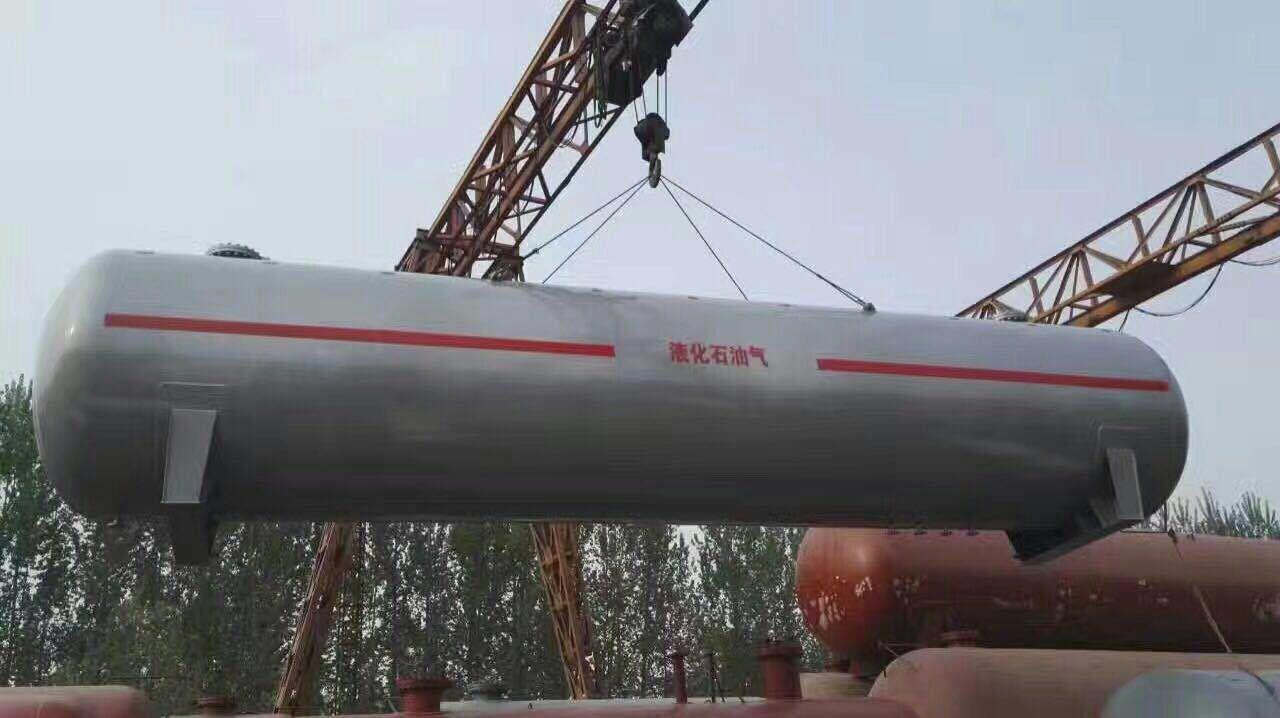
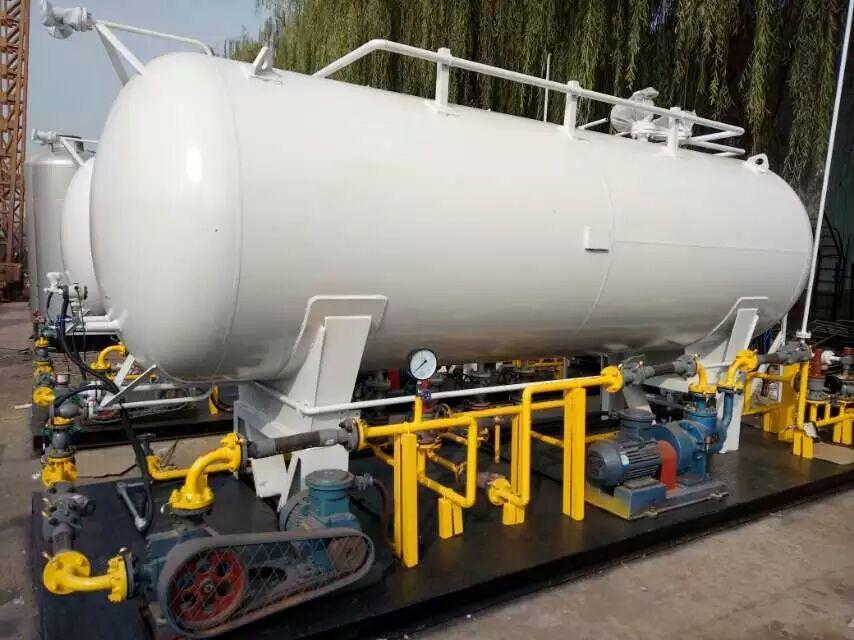


















 Materials used for liquefied gas storage tanks:Q345RIt is a special steel plate for pressure vessels; this equipment has been heat-treated by high-temperature annealing.,Huzhou Boiler Factory Co., Ltd. is one of the highly competitive and outstanding private enterprises in China's pressure vessel manufacturing industry, particularly renowned for its independent low-temperature storage tanks.|Low-temperature thermal insulation storage tank(LiquidCO2,Liquid Nitrogen,Liquid Oxygen, Liquid Argon)Frame-type Low-Temperature Insulation Storage Tank|Tanks, frame-type container,And other chemical pressure vessels(Liquid ammonia storage tank, liquid chlorine, ethylene oxide storage tank,Ethylene, Propane Storage Tank,Propylene)Aspects, After years of accumulation, we have developed a series of products, user solutions, and equipment installation and debugging technologies, offering comprehensive solutions including consultation, design, production, integration, and installation and debugging services.
Liquefied gas storage tanks are pressure vessels used for storing liquefied petroleum gas. They are special equipment that can only be produced by enterprises approved by the National Quality Supervision and Inspection总局. They require a national-issued Class III pressure vessel design and manufacturing qualification. Shandong Heze Boiler Factory Co., Ltd. is a national-approved Class 1-3 pressure vessel design and manufacturing enterprise. It can produce pressure vessels such as liquefied gas storage tanks under 200 cubic meters. It is one of the few companies capable of producing...200Cubic Corporation.
Our liquefied gas storage tank advantages:
One, our company conducts an annual quality assessment for all suppliers to ensure supplier quality.
Two, all main pressure materials are made from Jining Steel and Anyang Steel customized steel plates, with the thickness deviation of the steel plates all exceeding national standards.***Standard Specifications50m3For example, in the case of liquefied gas storage tanks, to ensure the design service life of the tank, the nominal thickness of the standard end cap is14mm, but our company uses customized steel plates for the caps***thin gauge14.7mmSheet steel. (Other companies have low production capacity and cannot customize sheet steel, so they either directly purchase14mmSteel plate, may result in premature scrapping during future inspections due to insufficient thickness of the head end curvature; or opt for16mmSheet metal manufacturing, leading to resource waste and incurring additional costs for the customer.
Section 3: Prior to production, the custom steel plates purchased need to be delivered to the production workshop.100%Ultrasonic re-inspection to further ensure steel plate quality and guarantee superior product production.
Four: Products are produced on an assembly line with standardized operations. This has improved efficiency and ensures the smooth operation of the quality system, guaranteeing the quality of the products.
Five, the main body of the product is焊接 with both internal and external automatic welding, ensuring proper welding shape and internal quality.
All pressure parts are焊接with full penetration structures to ensure welding strength.
Section 7: All LPG storage tanks undergo full-body stress-relieving heat treatment. The company has constructed two gas-fired whole-body heat treatment furnaces, with a single furnace having a processing capacity of300Rectangular storage tankDN≤4000mm,LTotal ≤25000mmThe lifespan and safety quality of the product are greatly influenced by this. It's also a major selling point for our company's exports.
Inspection (at various inspection points)
Eight, throughout the product manufacturing process, from raw materials to factory and to product inspection upon shipment, set up various inspection checkpoints to effectively control product quality.
All main weld seams100% XRay inspection, connectors, flangesC、DWelding-type100%Surface flaw detection ensures welding quality. The company has a non-destructive testing room and is equipped with certified inspectors at all levels.
Ten. Individual hydrostatic testing to ensure equipment strength safety; individual air tightness testing to guarantee equipment sealing performance. After hydrostatic testing, internal air blow cleaning.
Eleven, the company has2A cabinet type shot blasting room, all tanks are processed with an air-powered steel grit blasting rust removal technique, ensuring both the appearance quality and paint quality. (After overall shot blasting and rust removal, the lifespan of the paint can be significantly extended.) Apply two coats of anti-rust primer, followed by two coats of topcoat; four layers of paint guarantee the tank will not peel for five to ten years, and with good maintenance, it can last up to twenty years without repainting.
Twelve, large production capacity, customers can see the real products at the company. Regular products are all available for immediate supply, allowing customers to shorten the construction cycle and make money sooner.
Chapter Thirteen: Witnessing the Project4000Customers from households to businesses, spanning across the globe, ensure your peace of mind in purchasing.
Huzhou Boiler Factory Co., Ltd. operates a development center, an installation company, and three production bases. It has established close cooperative relationships with numerous key universities and research institutions in China. New product development is ongoing and highly favored by a wide customer base. We offer industrial and residential coal-fired boilers, oil-fired boilers, gas-fired boilers, biomass boilers, heat transfer oil boilers, waste heat recovery boilers, refrigeration auxiliary equipment, and pressure vessels of categories I, II, and III (including liquefied gas tanks, liquid ammonia tanks, methyl chloride tanks, propane tanks, underground tanks, tower equipment), as well as low-temperature containers (liquid oxygen tanks, liquid nitrogen tanks, liquid argon tanks), heat exchanger units, ground-source heat pump units, and more. For many years, the company has actively implemented an innovation strategy centered around technological, market, and management innovation, accelerating the pace of corporate reform and restructuring, and gradually establishing a modern corporate system that adapts to the socialist market economy system.
Liquefied Petroleum Gas primarily originates from refinery gas and associated gas from oil fields.
I. Derived from refinery natural gas
Refinery gas, a byproduct of the oil refining and processing, is produced during the production and processing of crude oil. The quantity depends on the production method and processing depth of the refinery, generally around 4%-10% of the original weight. Currently, the recovery of liquefied petroleum gas from the catalytic cracking gas of refineries is the main source of domestic LPG.
Obtained from associated gas from oil fields
Associated gas from oil fields is a byproduct gas produced during the oil extraction process. It is itself a combustible gas existing within the geological structure of the oil reservoir, containing 10%-40% of propane, butane, pentane, and higher carbon alkanes. During oil extraction, both oil and associated gas are emitted simultaneously. Utilizing gas-oil separation equipment installed above the oil well, the oil is separated from the associated gas. The associated gas contains approximately 5% of propane and butane components, which can be extracted using absorption methods to yield high-purity liquefied petroleum gas with very low sulfur content. The liquefied petroleum gas supplied by countries such as Europe, the United States, and Japan is often of this type.
III. Extracted from Natural Gas
Pure natural gas extracted from underground is divided into dry gas and wet gas. Wet gas contains less than 90% methane, with more than 10% of ethane, propane, butane, and other alkanes. After the gas is compressed and fractionated, it is absorbed using diesel spray, then condensed into a liquid state at a pressure of 1.6 MPa in a fractionation tower, forming liquefied petroleum gas.
Safety Procedure for Tank Emptying
1. Prior to production or maintenance procedures, first check the pressure, liquid level, and temperature of the filling and emptying tanks. After confirming everything is correct, record the details before proceeding with the tank transfer.
2. Determine the discharge volume from the liquid tank and the intake volume of the receiving tank, and calculate whether the receiving tank's capacity meets the process and safety requirements. Confirm the tank transfer process.
3. The procedure is: open the liquid phase valves for in and out of the tank—adjust the vapor phase valves—start the circulating compressor.
4. During decanting, pay attention to checking the storage tank's pressure and liquid level changes, and constantly reverify calculations. The incoming liquid tank must not exceed the maximum allowable liquid level.
5. After decanting is complete, shut off the compressor, close the liquid phase valve, and re-adjust the compressor valve.
6. Carefully fill out the operation records.


Liquid Propane Tanks - Sales Price - Professional Liquid Propane Tank Specifications - Stock Liquid Propane Tanks - Wholesale Price



















