



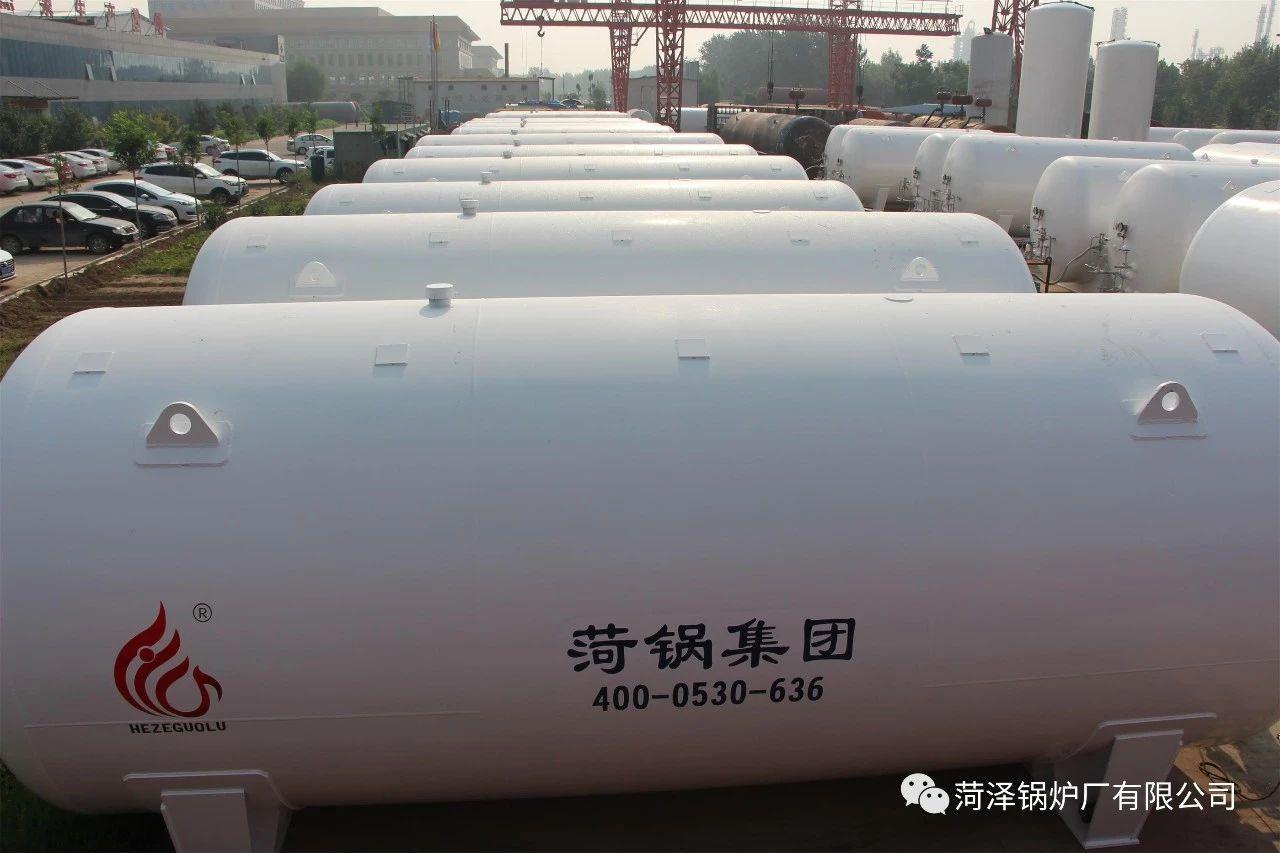

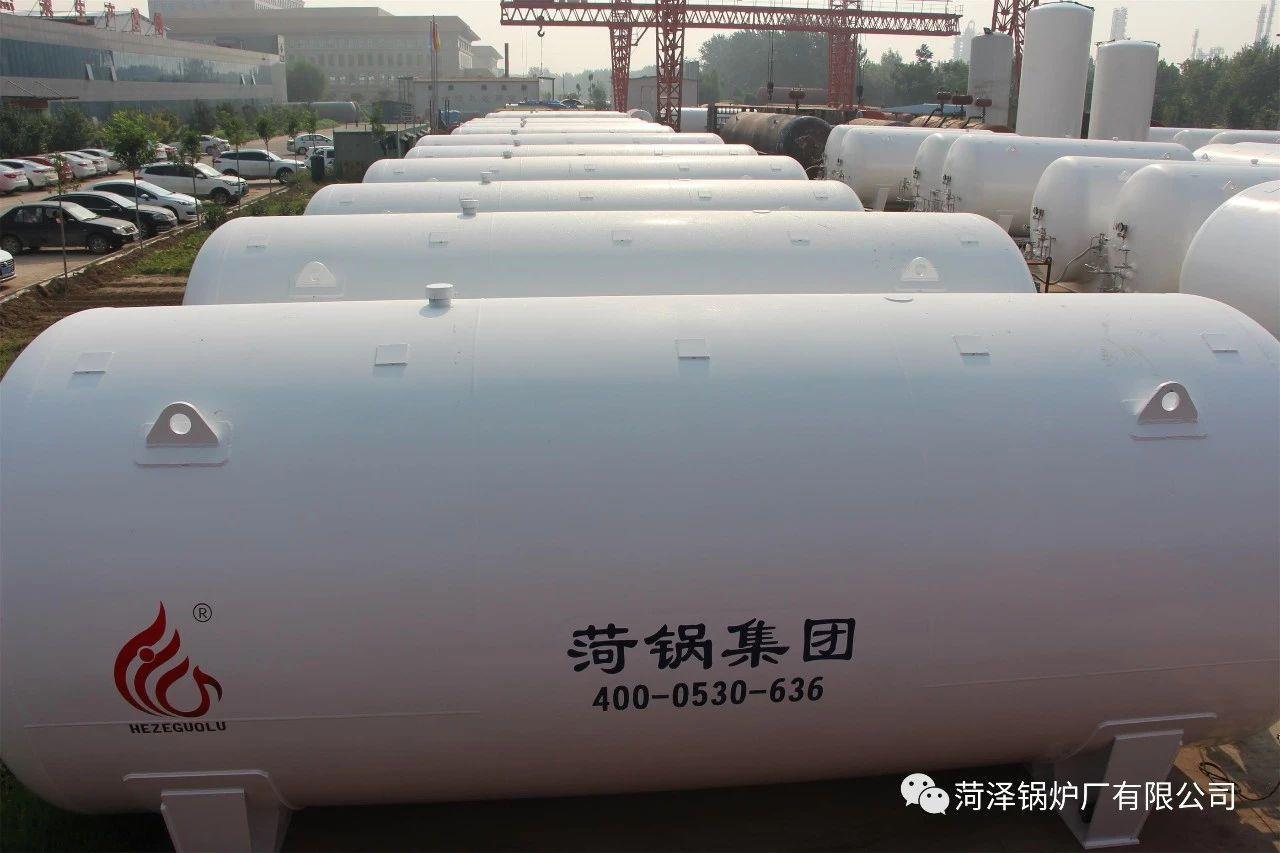
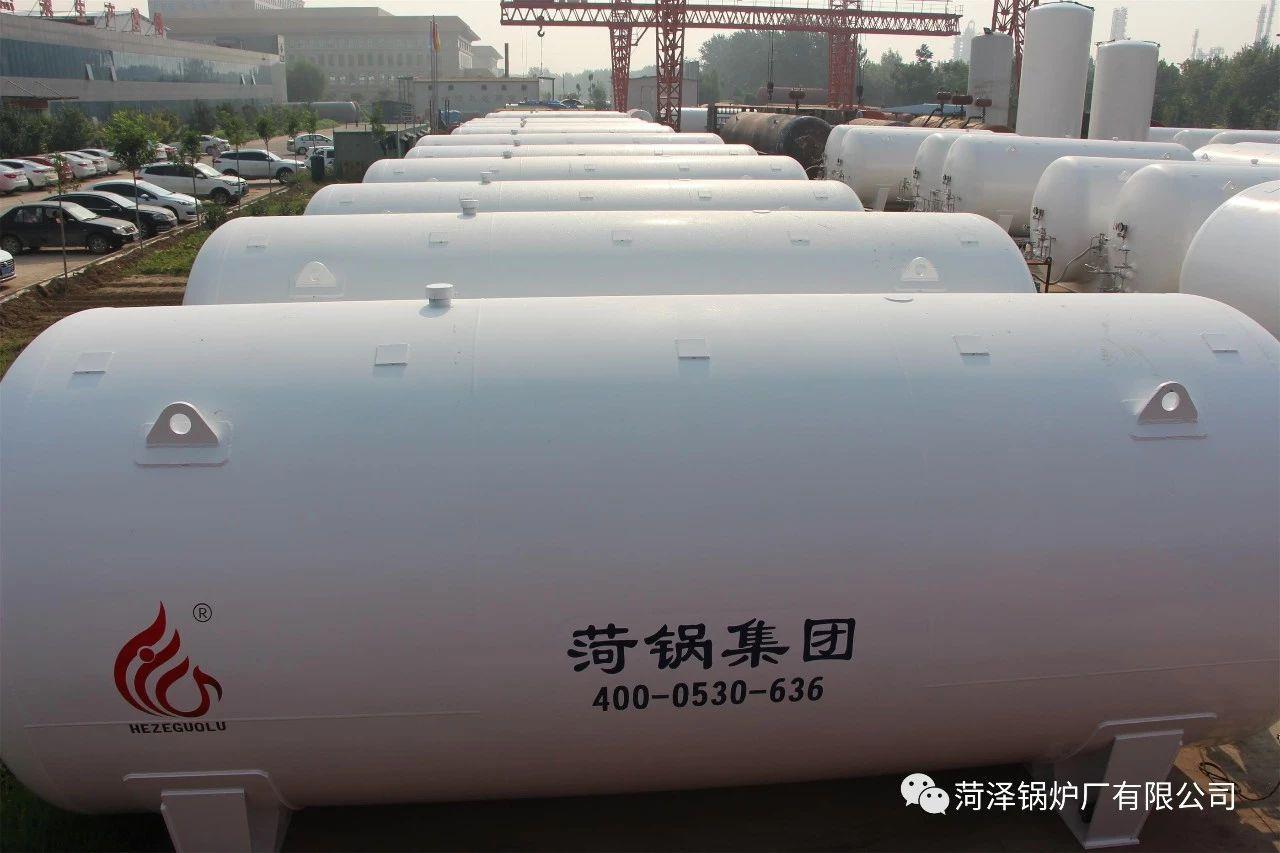



















Liquefied Natural Gas Storage Tank
Low-temperature Liquefied Natural Gas (LNG) Storage Tanks, Manufacturer of LNG Storage Tanks:Huzhou Boiler Factory Co., Ltd., Manager Yu。
LNG above-ground storage tanks are available in five forms: single-container tanks are the most common, and they come in single-walled and double-walled versions. Due to safety and insulation concerns, single-walled tanks are not used for LNG. The outer shell of the double-walled single-container tank is made of carbon steel, which cannot withstand the low temperatures of LNG or other gases, and primarily serves to secure and protect the insulation. Single-container tanks are generally suitable for use in areas far from densely populated zones and less prone to catastrophic damage, as their structural characteristics require larger safety distances and占地面积. The design pressure for single-container tanks is typically kPa, with operating pressure at 12.5kPa. For large-diameter single-container tanks, the design pressure is lower; according to BS7777 standards, this pressure is less than 14kPa, which is difficult to achieve when the tank diameter is 70-80 meters, with the operating pressure around 12kPa. The lower design pressure necessitates a higher power requirement for the recovery and compression system of the evaporated gas, which increases investment and operational costs. While single-container tanks have a relatively lower investment and shorter construction period, leakage is a significant issue. In accordance with regulations, there is a larger safety distance between tanks and the need for firebreaks, which increases land and firebreak investment. There should be no other critical equipment nearby. Consequently, there is a higher requirement for safety inspections and operations.
Liquefied Natural Gas (LNG) Storage Tanks, Low-Temperature LNG Storage Tanks, Manufacturer of LNG Storage Tanks:
Heze Boiler Factory Co., Ltd., Manager Yu。
(1) A trench with a base of 1.5 em, length of 20,000 cubic meters (Chang Yushi Wu 2014-7), power distribution, grounding electrode, Figure 3 electrolytic ion grounding electrode, factory backfill clay, Figure 4 electrolytic Yuzi grounding electrode installation, 330 cm in length, 20 tons wide. (2) Wipe the grounding electrode clean with a dry cloth, ensuring no oil residue; inject clean water into the ion release holes at the top, middle, and bottom of the grounding electrode. (3) Mix the GAF powdered grounding improvement agent with water, and place it at the bottom of the trench. (4) Position the grounding electrode at a certain angle on the bottom of the trench, covering the top with the improvement agent. (5) Wrap the grounding electrode lead with insulating tape and connect it to the grounding main using a hot melt welding method. Static Grounding Setup: When LNG is injected into the storage tank, the liquid flow results in charge separation. Once the charge accumulates to a certain degree, static discharge occurs. Since static discharge is completed within a nanosecond, the peak current can reach several tens of amperes, making the instantaneous power immense and the static discharge highly destructive. Methods to avoid static hazards: 1) Limit the speed of flammable liquid flow to greatly reduce the generation and accumulation of static electricity; 2) Ensure proper static grounding. Static grounding provides a pathway for the release of static charges by grounding. The grounding circuit must be connected reliably; otherwise, spark discharges may occur at poor contacts. The specific method is: welding grounding bolts on the inner wall of the storage tank, connecting them to the outer wall metal through 70 mm² insulated copper-core wire to release static electricity. The static grounding connection is shown in Figure 5. Figure 5 Static Grounding Connection Wall 6 Grounding Test Results: GB 50057-2010 Section 4.3.10 stipulates that the impulse grounding resistance at each grounding point should not exceed 30 Ω. GB 12158-2006 "General Guidelines for Preventing Static Electricity Accidents" Section 6.1.2 states that to dissipate static charges as quickly as possible in static hazard areas, all objects that are conductors of static electricity must be grounded. The grounding resistance value of each dedicated static grounding body should generally not exceed 100 Ω. In areas with high soil resistivity, such as the 100 Ω zone, the grounding resistance value should not exceed 1,000 Ω. After the lightning protection grounding project is completed, the measured grounding resistance value is 0.8 Ω, and the grounding leads are connected well to the grounding main, meeting lightning protection grounding requirements.
Liquefied Natural Gas (LNG) Storage Tanks, Low-Temperature LNG Storage Tanks, Manufacturer of LNG Storage Tanks:
Heze Boiler Factory Co., Ltd., Manager Yu。
Current transformer secondary circuit open circuit differential protection. Select through control words whether to lock the differential protection output when the current transformer secondary circuit is open-circuited and the differential current is not significant. When the current transformer secondary circuit is open-circuited and the differential current is not significant, the differential protection device emits an alarm signal, notifying the dispatch personnel to shut down the transformer for maintenance by reversing the load. This prevents the main transformer from tripping due to the secondary circuit open-circuit of the current transformer. If the differential current increases to the open-circuit differential protection setpoint (usually the transformer rated current, P), the open-circuit differential protection is activated. Thus, the transformer differential protection operates, the main transformer trips, and the protective device can correctly disconnect the fault current, preventing the accident from escalating. This can be considered a compromise solution, balancing the advantages and shortcomings of the first two methods, achieving good results. For the 1st 110kV substation's 3rd main transformer (capacity 63 MVA, voltage ratio 110kV/10.5kV, connection type YNdll, primary current transformer ratio 600A, secondary current transformer ratio 4000A, differential protection setpoints: differential quick-break current setpoint, ..=4.4(A), differential protection start setpoint, ..=0.28(A), ratio制动 coefficient K=0.5, secondary harmonic制动 coefficient 0.15, open-circuit differential protection setpoint 0.8. One day at 06:42, the 1st substation's back-end alarm indicated an open-circuit in the 3rd main transformer's differential protection current transformer secondary circuit, with a sudden current of 0.08A, and a phase difference differential current of 0.056A. After contacting the dispatch personnel to reverse the load and shut down the power, the equipment was inspected and found to be loose terminal blocks on the SF6 enclosed switchgear. Tightening the terminal blocks resolved the fault.
Heze Boiler FactoryLimited Company
Equipment Name: Natural Gas Storage Tank - Liquefied Natural Gas Storage Tank - Natural Gas Storage Tank (Function Description)
Contact Information: AvailableManager
Manufacturer:Huzhou Boiler FactoryLimited Company
This article analyzes the hazardous characteristics of low-temperature liquids and, in conjunction with various gas supply modes for low-temperature storage tanks, briefly outlines their basic requirements and key safety usage points.
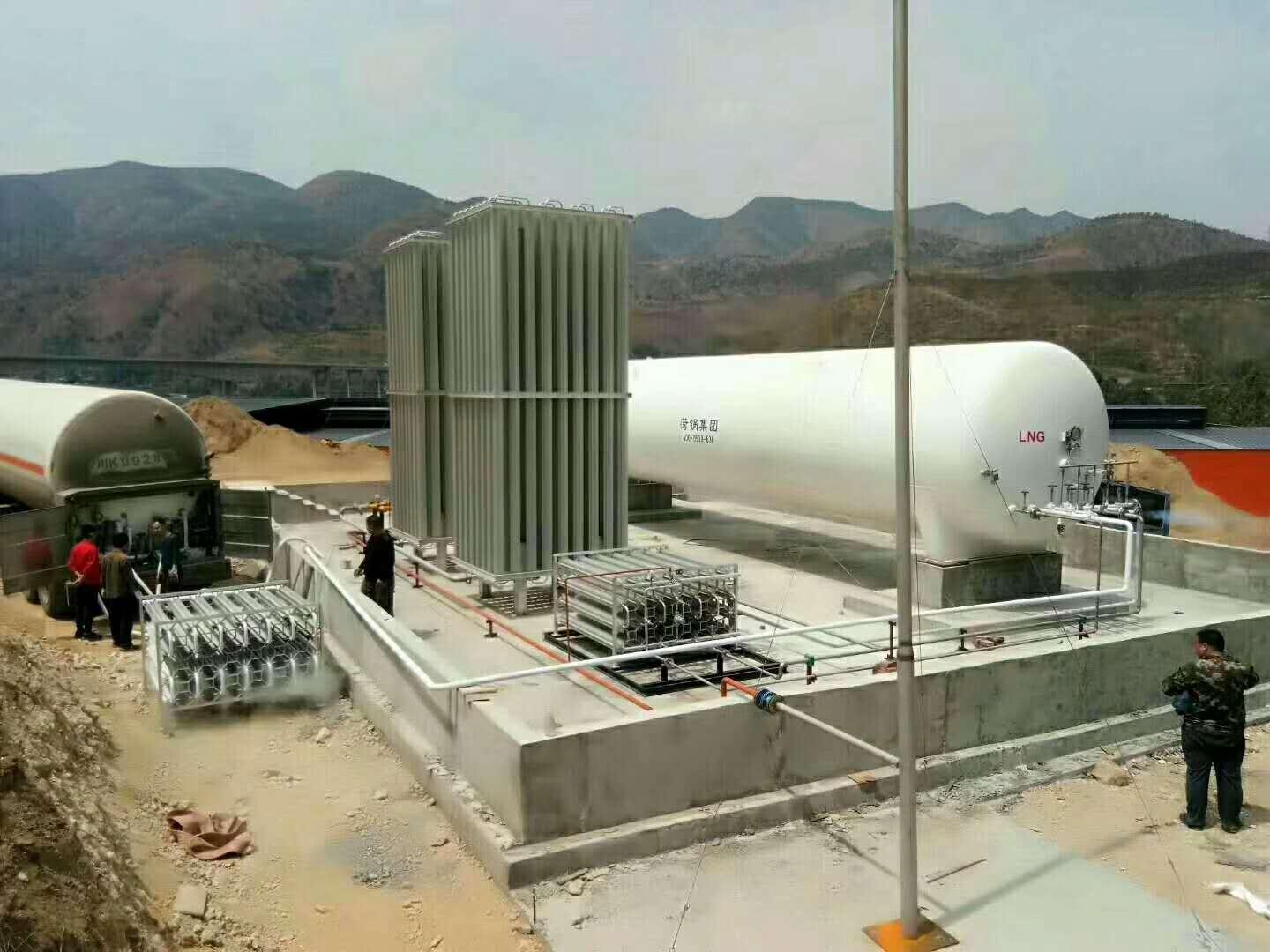
An LNG tank is a jacketed vacuum powder-insulated pressure vessel specifically designed for storing and supplying low-temperature liquefied gases (such as liquid nitrogen, liquid oxygen, liquid argon, liquid carbon dioxide, etc.). It has been widely used in both industrial production and daily life.
1. Analysis of Low-Temperature Liquid Hazardous Properties
Low-temperature liquids possess hazardous characteristics such as low boiling points, high expansibility, strong asphyxiating properties, and strong oxidizing properties.
1.1 Boiling points of low-temperature liquids under 101.3 KPa pressure: Liquid nitrogen at -196°C, liquid oxygen at -183°C, and liquid argon at -186°C. Contact with the human body can cause severe frostbite to the skin and eyes. In cases of minor leaks or internal leakage in valves, they absorb heat from the surrounding environment, causing rapid condensation and frost formation at the leak point, which can freeze severely.
Low-temperature storage tank
1.2 Low-temperature liquids absorb surrounding energy due to high heat or large leaks, causing their volume to expand rapidly as they vaporize. At 0℃ and 101.3 KPa pressure, the volume of gas produced from 1L of low-temperature liquid upon vaporization is: nitrogen - 674L, oxygen - 800L, argon - 780L. Inside sealed containers or pipelines, the increase in internal pressure due to the vaporization of low-temperature liquids can easily lead to overpressure explosions.
1.3 In the surrounding environment of low-temperature storage tanks, the leaked low-temperature liquid tends to vaporize and form a rich gas area. If concentrations of nitrogen, argon, or carbon dioxide are high, asphyxiation injuries can easily occur. Additionally, high oxygen concentrations can also lead to oxygen enrichment injuries.
1.4 Oxygen is a powerful oxidizer with extremely strong oxidizing properties. Liquid oxygen, when in close proximity to combustible materials, is highly flammable upon contact with open flame; contact with combustible materials may easily cause explosions due to vibrations or impacts; mixing with combustible materials poses potential explosive hazards. Liquid oxygen can adhere to clothing fabric, and upon ignition, it can cause a flash fire, potentially causing harm to individuals.
2. Low-Temperature Storage Tank Gas Supply Mode and Basic Requirements
The gas supply modes for low-temperature storage tanks mainly vary depending on the application and user requirements.
We offer services such as high-pressure gas cylinder refilling, low-temperature insulated gas cylinder filling, centralized gas supply through pipelines, and low-temperature liquid spray supply.

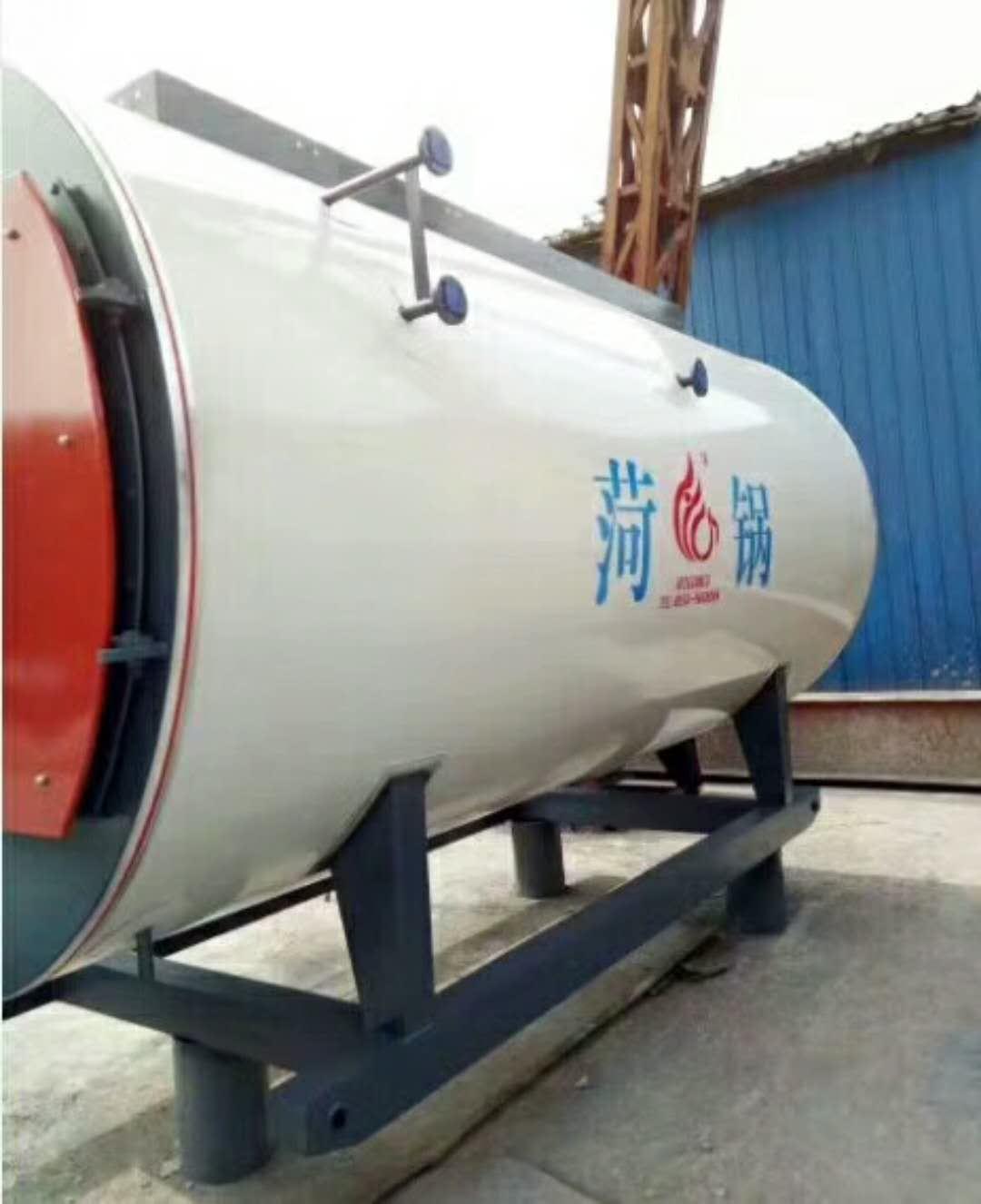
专业制造LNG储罐生产厂家-LNG储罐哪个牌子好-专用LNG储罐价格-哪里有LNG储罐厂家直销



















