
























Heze Boiler Factory Co., Ltd.
LNGTank Features: The tank is equipped with an automatic steel shot blasting process for rust removal, achieving an exceptional level of rust removal, exceeding SA2.5 standards. The paint has a very strong adhesion. The paint used is imported from Norway, Jotun brand.5-year warrantySand filling uses negative pressure suction and positive pressure compaction, along with vibration rod technology, significantly increasing the sand filling volume in the sandwich. The thermal insulation of the storage tank is very effective. The vacuum degree is a critical indicator for testing the performance of the storage tank. Our company has professional technical personnel dedicated to vacuum degree research, and can completely remove the vacuum degree within one week, ensuring that both the vacuum degree and the leakage gas rate at the time of delivery are half of the standard规定的 values.

In the surrounding environment of low-temperature liquid storage tanks, the leaked liquid can easily vaporize and form a rich gas area. High concentrations of nitrogen, argon, and carbon dioxide can easily cause asphyxiation injuries. Additionally, high oxygen concentrations can lead to hyperoxygenation injuries. Oxygen is a strong oxidizing agent with extreme oxidizing properties. Liquid oxygen, when in close proximity to combustible materials, can easily ignite upon contact with an open flame; it can produce explosions due to vibrations or impacts when in contact with combustibles; and when mixed with combustibles, in a liquefied natural gas storage tank, it poses a potential explosive risk. Liquid oxygen can adhere to clothing, and upon ignition, it can cause flash fires, posing a risk to personal safety.
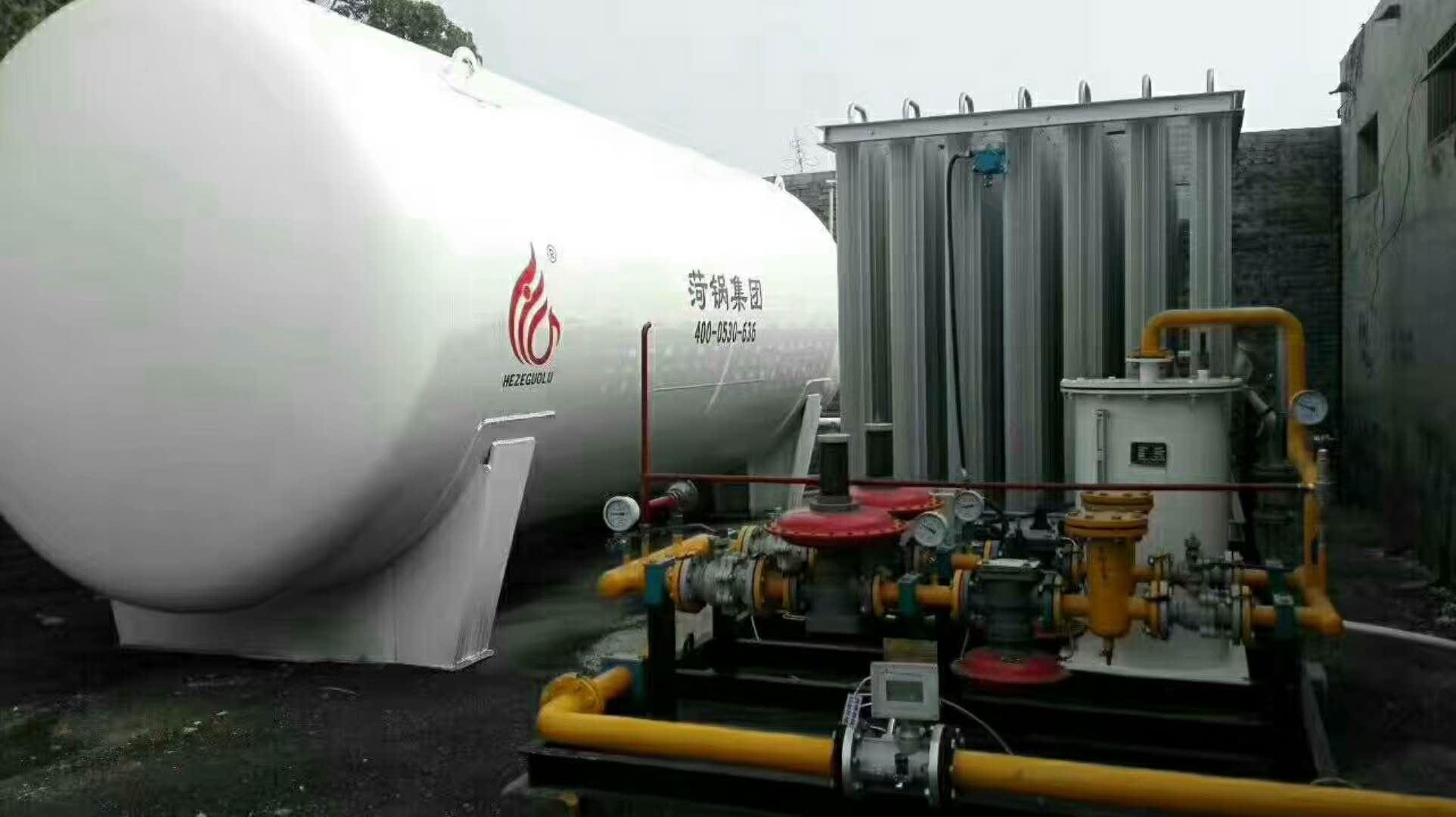
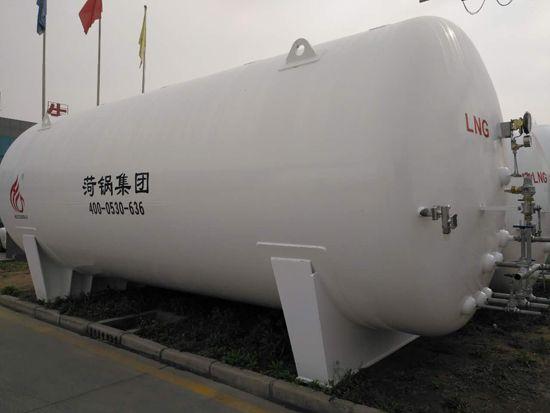
Natural gas tanks, also known as low-temperature tanks, are vertical or horizontal double-layer vacuum insulated tanks. The inner lining is made of austenitic stainless steel, while the outer shell material varies by customer location and is selected as 345R according to national regulations. The space between the inner and outer shells is filled with insulating material pumice and vacuumed. The product undergoes on-site inspection by the National Technical Supervision Bureau and is issued with a pressure vessel supervision and inspection certificate.

Natural gas tanks are the main equipment of LNG gasification stations, directly affecting the normal production of the stations and accounting for a significant portion of the construction cost. They can be categorized by structure into underground tanks, above-ground metal tanks, and metal prestressed concrete tanks. For LNG tanks, there are currently vacuum powder insulation tanks, positive pressure accumulation insulation tanks, and high-vacuum layer insulation tanks. Medium and small-sized gasification stations typically choose vacuum powder insulation low-temperature tanks. The tanks consist of an inner and outer layer, with the gap filled with pearly sand and vacuumed to reduce the transmission of external heat, ensuring that the daily gasification rate of LNG inside the tank is less than 0.3%.

Natural Gas Storage Tank
The operating pressure of the natural gas storage tank is 0.6-1.44 MPa, with an operating temperature of -162°C. (Available in vertical or horizontal configurations) The tank is constructed with two layers for the shell. To minimize heat transfer from the outside to the inside, a vacuum insulation structure filled with diatomaceous earth is used between the layers, isolating it from the atmosphere. This prevents the impact of atmospheric pressure or temperature changes and the entry of humid air into the insulation layer between the inner and outer shells, effectively ensuring and enhancing the performance of the insulation material.
Natural gas storage tanks have high safety requirements. As they store low-temperature liquids, in the event of an accident, the refrigerated liquid would vaporize in large quantities, with the vaporization rate being approximately 300 times that of the refrigerated state. This would form explosive gas clouds in the atmosphere. Therefore, standards such as API and BS require the use of double-walled tank structures and the application of containment concepts. In the event of a leak in the primary tank, the secondary tank can completely contain the leaked liquid and evaporated gas, ensuring storage safety.


哪家LNG储罐哪里有卖-LNG储罐加工-专业定做LNG储罐定制-专业LNG储罐生产厂家



















