






















Heze Boiler FactoryLimited Company

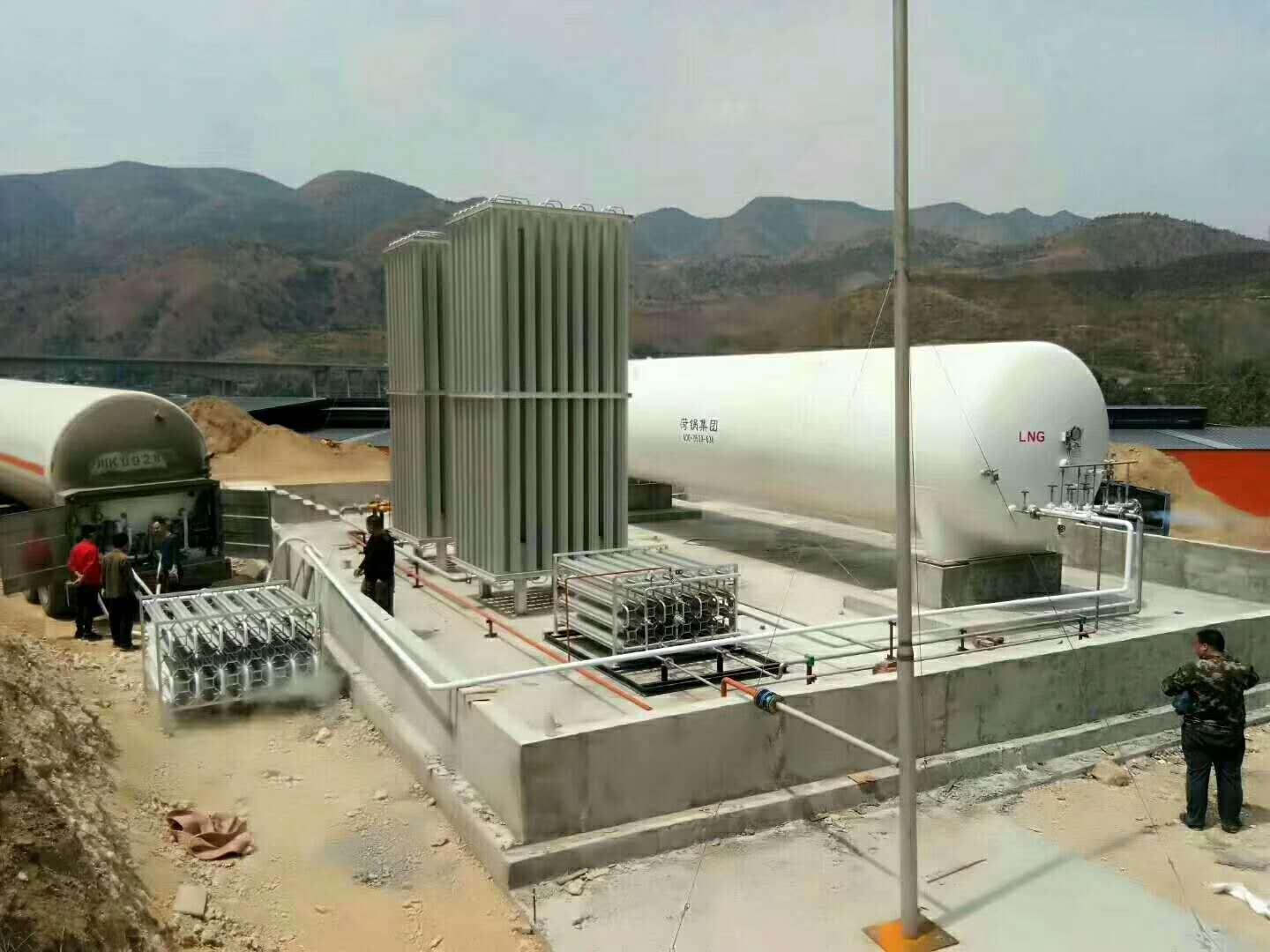
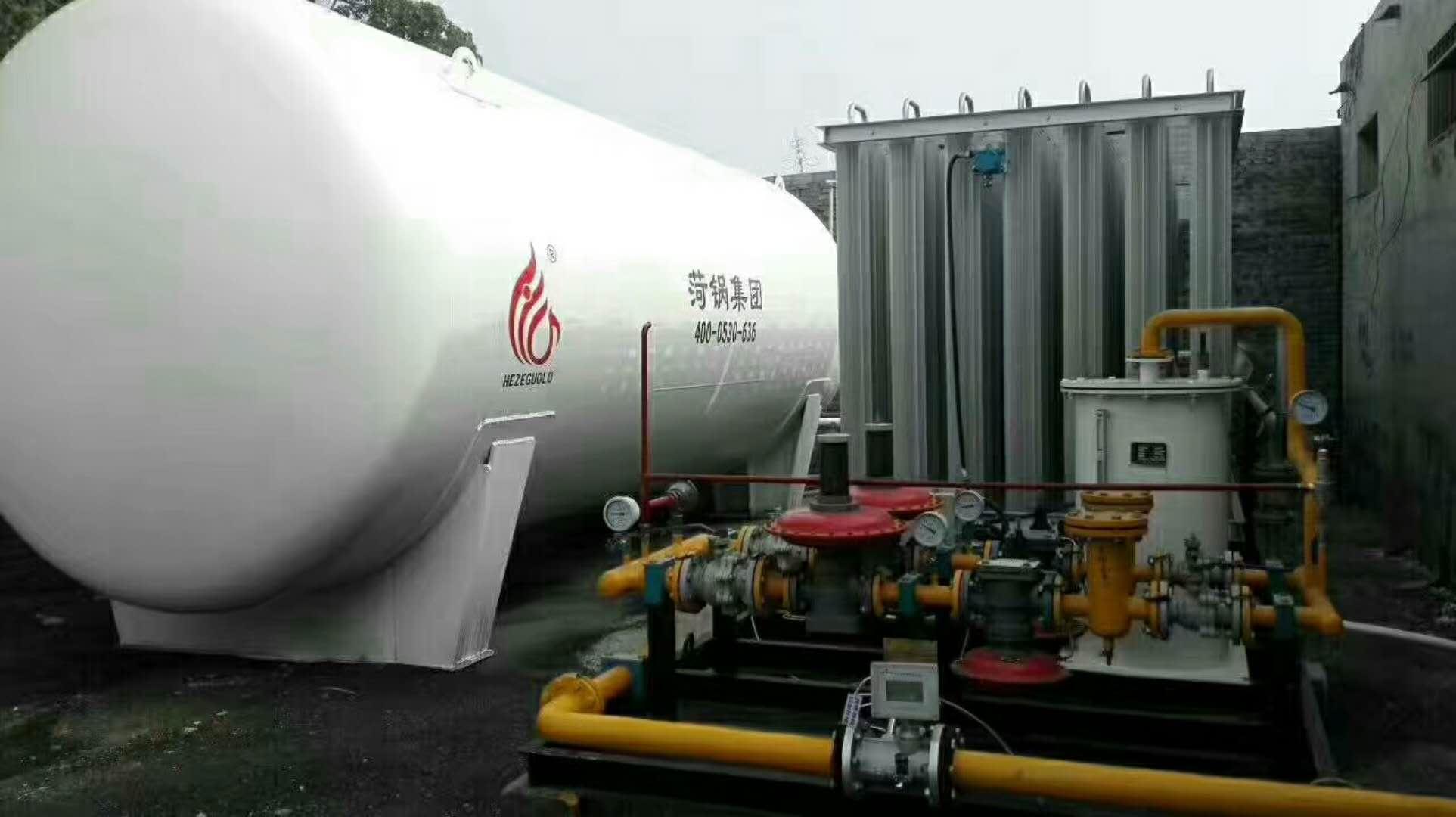
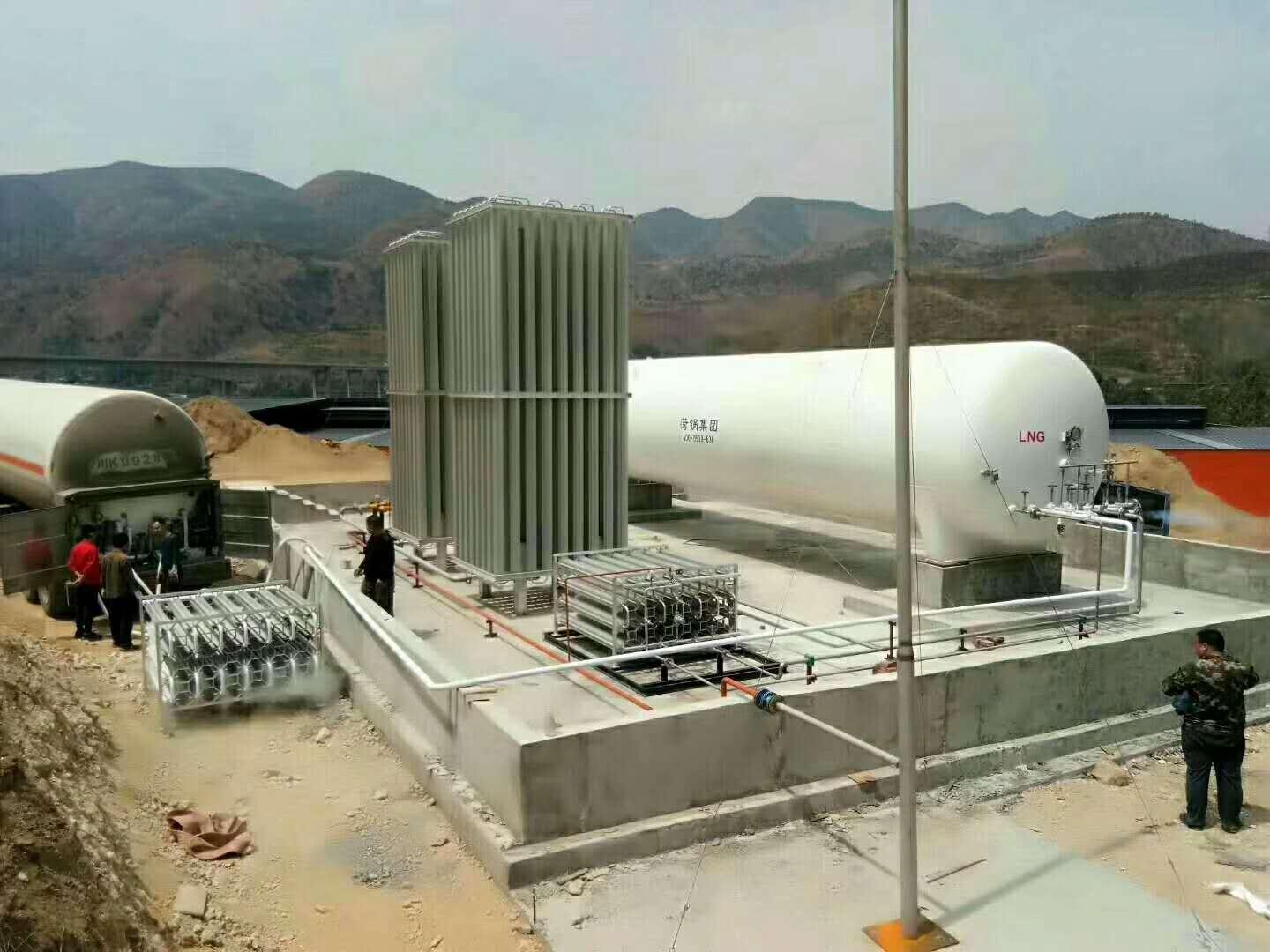
60 cubic meter LNG storage tank
Product Category: LNG Storage Tanks
LNG stands for Liquefied Natural Gas. Its primary component is methane. LNG is colorless, odorless, non-toxic, and non-corrosive. Its volume is approximately 1/600th that of an equivalent volume of gaseous natural gas. The weight of LNG is about 45% of the weight of an equivalent volume of water, with a calorific value of 52 MMBtu/ton (1 MMBtu = 2.52×10^8 calories).
Model:
60 cubic meters0.8MPa
Detailed Description
【Product Name】: LNG Storage Tank
Manufacturer:Heze Boiler FactoryLimited Company
LNG Storage Tank
Hezhou Group
An LNG tank is a jacketed vacuum powder-insulated pressure vessel specifically designed for storing and supplying low-temperature liquefied gases (such as liquid nitrogen, liquid oxygen, liquid argon, liquid carbon dioxide, etc.). It has been widely used in industrial production and daily life. This article briefly discusses the basic requirements and key safety points for the use of low-temperature liquid storage tanks, combining the analysis of the hazardous characteristics of low-temperature liquids with various gas supply modes.
1. Analysis of Low-Temperature Liquid Hazardous Characteristics
Low-temperature liquids possess hazardous characteristics such as low boiling points, high expansibility, strong asphyxiating properties, and strong oxidizing properties.
1.1 Boiling points of low-temperature liquids at 101.3 KPa pressure: Liquid nitrogen at -196°C, liquid oxygen at -183°C, and liquid argon at -186°C. Contact with the human body can cause severe frostbite to the skin and eyes. In cases of minor leakage or internal leakage in valves and pipes, these liquids absorb heat from the surrounding environment, causing rapid condensation and frost formation at the leak point, which can lead to freezing in severe cases.
1.2 Low-temperature liquids absorb energy from the surrounding environment due to high heat or large leaks, causing their volume to expand rapidly as they evaporate. At 0°C and 101.3 kPa pressure, the volume of gas resulting from the evaporation of 1L of low-temperature liquid is: nitrogen at 674L, oxygen at 800L, and argon at 780L. Inside sealed containers or pipelines, the increase in internal pressure due to the evaporation of low-temperature liquids can easily lead to overpressure explosions.
1.3 In the surrounding environment of low-temperature liquid storage tanks, the vaporized low-temperature liquid can easily form a rich gas area. If concentrations of nitrogen, argon, or carbon dioxide are high, asphyxiation injuries are highly likely. Additionally, oxygen-rich injuries can occur when oxygen concentrations are elevated.
1.4 Oxygen is a powerful oxidizer with extremely strong oxidizing properties. Liquid oxygen, when in close proximity to combustible materials, is highly flammable upon contact with an open flame; it can easily produce detonation upon contact due to vibration or impact; mixing with combustible materials poses a potential explosive hazard. Liquid oxygen can adhere to fabric, and upon contact with a ignition source, it may cause a flash fire, posing a risk to personal safety.
2. Low-Temperature Liquid Storage Tank Air Supply Mode and Basic Requirements
The supply mode of low-temperature liquid storage tanks mainly varies depending on the application and the user's requirements.
Available services: High-pressure cylinder refilling, low-temperature insulated cylinder packaging, centralized gas supply via pipelines, and low-temperature liquid spray feeding.
LNG60 cubic meters, 0.8 MPa parameter value:
60-cubic-meter LNG Storage Tank
Formation:
The natural gas produced from the gas field is first purified and then liquefied under ultra-low temperature (-162℃) and atmospheric pressure to form liquefied natural gas.
The critical temperature of LNG between gas and liquid phases at atmospheric pressure is -162°C.
The standard commonly used in LNG manufacturing is API 620 of the American Petroleum Institute.
LNG Storage Tank
By low-temperature liquid storage tank as the gas source, suitable for filling high-pressure gas cylinders.
Individual users of scattered gas generally require standardized implementation by professional production and filling units. According to current national administrative permit requirements, filling units must hold a designated production (storage) approval for hazardous chemicals, a safety production license, and a gas cylinder filling license, collectively known as "one document and two permits," before they can carry out high-pressure gas cylinder filling. At the liquid outlet of low-temperature liquid storage tanks, low-temperature liquid pumps and high-pressure gasifiers are installed, and a high-pressure filling system is used to fill high-pressure gas into special gas cylinders. In the gas cylinder filling process, a pipeline low-temperature and overpressure automatic shutdown protection system must be set up. If there is still low-temperature liquid at the gasifier outlet or if the pipeline pressure exceeds the high working pressure of the gas cylinder, the low-temperature liquid pump should automatically shut down, and the low-temperature liquid storage tank should stop supplying gas to prevent the direct filling of low-temperature liquid into the gas cylinder or overpressure filling that could cause an explosion.

Huzhou Boiler Factory Co., Ltd. _ Shandong Hezhou Boiler Group
Regular inspections
1. The user unit should apply for regular inspections with the inspection agency one month prior to the expiration of the regular inspection validity period. The first regular inspection of storage tanks is generally conducted within three years of their commissioning. Subsequent inspection intervals are determined by the inspection agency based on the safety status level.
2. The user unit and related auxiliary units should perform technical handling after shutdown and conduct safety inspections prior to testing. Confirm that the on-site conditions meet the requirements for the inspection work and prepare accordingly.
3. During inspections, the unit's safety manager, operation, and maintenance personnel should be present to assist with the inspection, promptly provide relevant documents, oversee safety, and establish reliable communication methods.
Safety Protection
The potential hazards in the operation of liquefied natural gas primarily arise from its physical properties:
Liquefied natural gas has an extremely low temperature under atmospheric pressure: -162°C.
The gas-liquid volume ratio is quite high; improper pressure reduction measures can lead to a rapid increase in pressure. The gas-liquid volume ratio of liquefied natural gas is approximately 620:1.
Natural gas is an asphyxiating gas.
Natural gas is a flammable gas (ignition point 538°C).
Explosions may occur in confined spaces (explosive limits in air: 5.3% to 15%)
2. When working at a site with natural gas or liquefied natural gas, the following safety knowledge is required:
Keep liquefied natural gas equipment away from flames or electrical sparks.
No smoking or flame allowed in areas involved in liquefied natural gas equipment maintenance, refueling, and storage.
When working in areas with liquefied natural gas, safety goggles, face shields, and insulated gloves must be worn. Pants should not be tucked into boots, sleeves should not be worn inside insulated gloves, and boots should not have nails.
During disassembly and component maintenance, it is necessary to empty and depressurize the liquefied natural gas storage tank.
Tools used for maintenance should not produce sparks.
Warning
Protect eyes and exposed skin.
Maintain good ventilation in the area where the equipment is located.
Ensure the system is depressurized when repairing or maintaining equipment.
Keep away from flammable materials or electric sparks.
The root valve must always remain open.


专业制造LNG储罐批发价格-专用LNG储罐什么牌子好-正品LNG储罐供应商-知名LNG储罐哪家好



















