



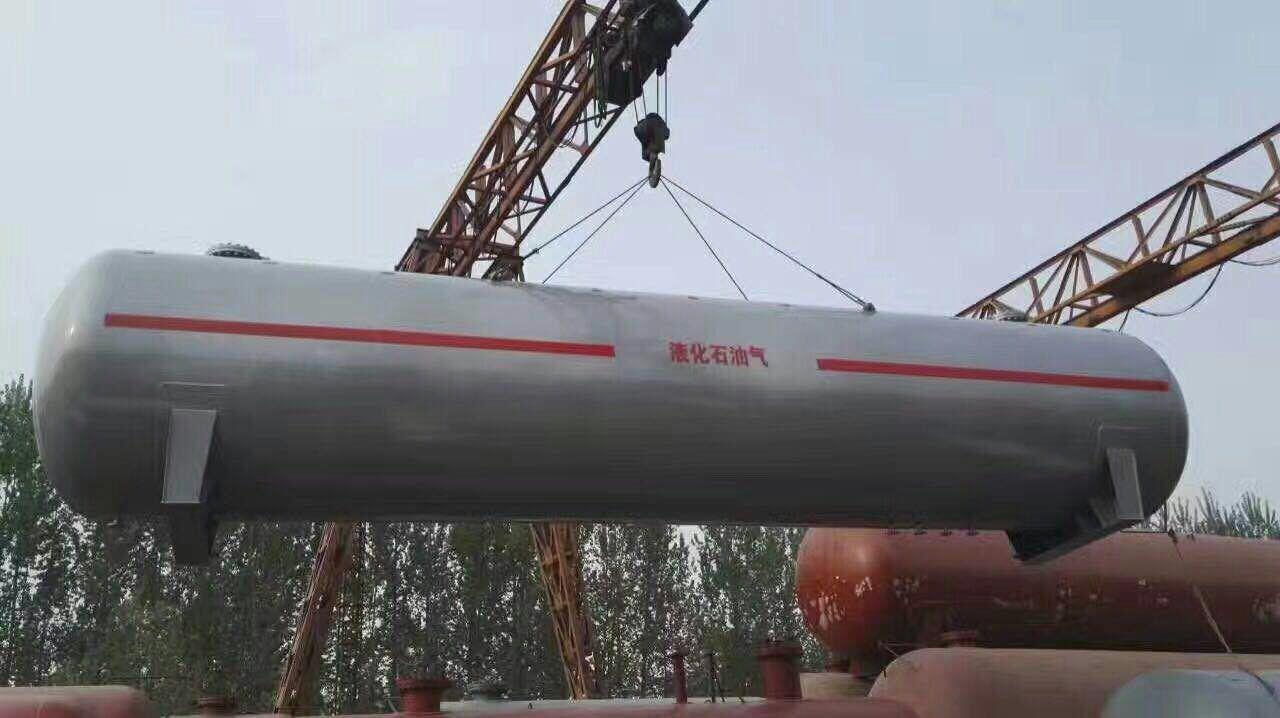

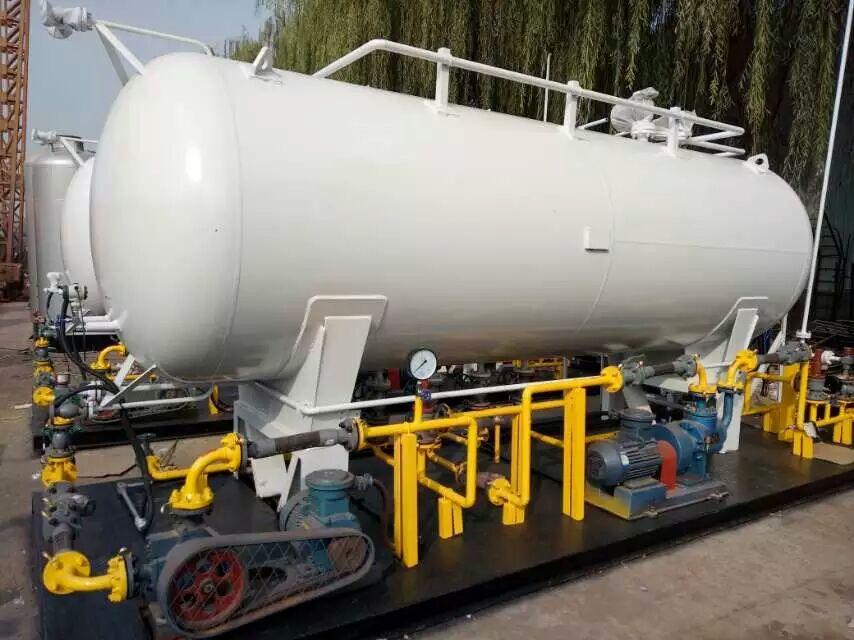
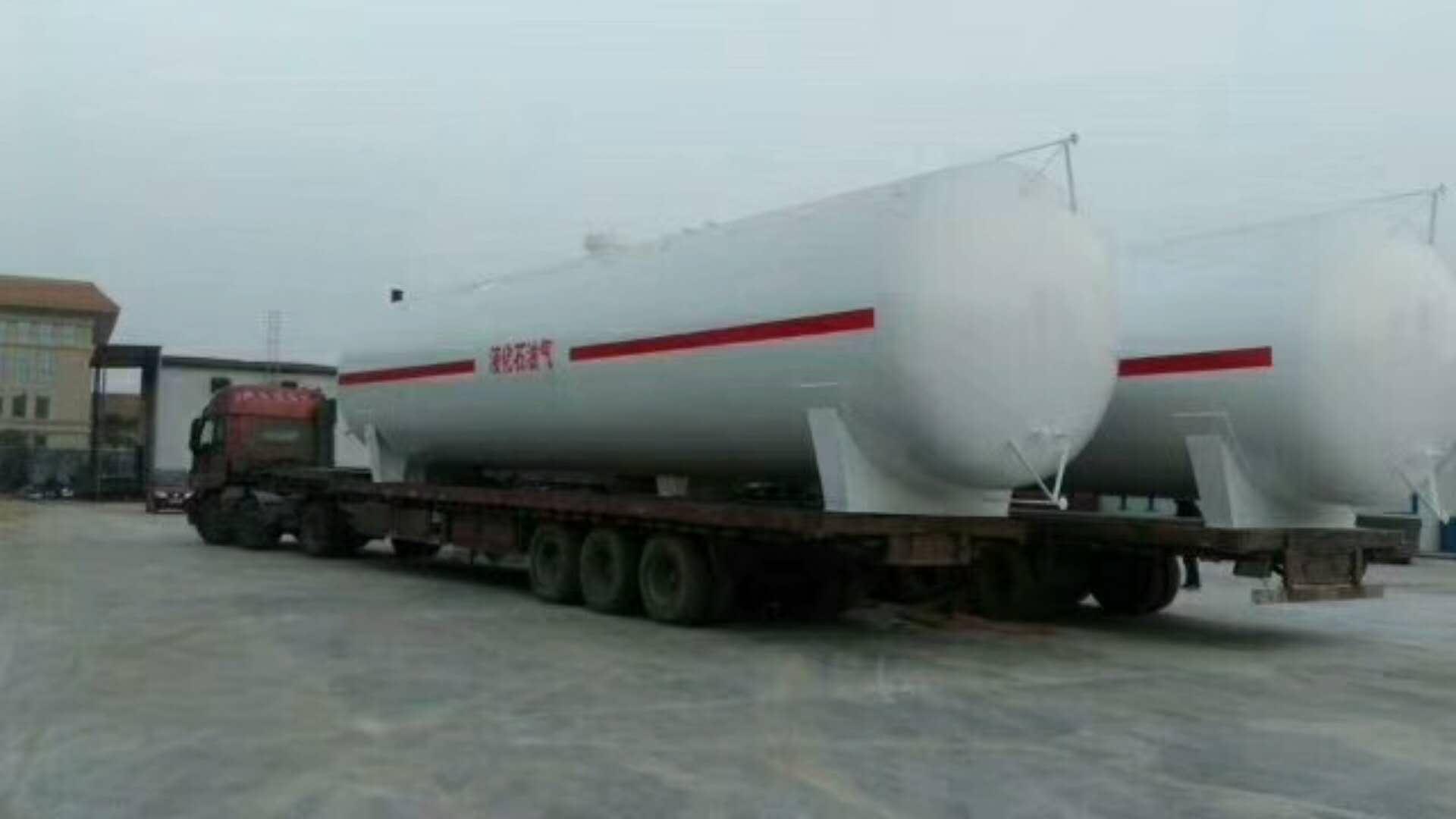



















Our company specializes in tank-type pressure vessels, which are among our key products. These include LPG storage tanks, liquid ammonia tanks, liquid chlorine tanks, propane tanks, pentane storage tanks, and low-temperature storage tanks for liquid oxygen and nitrogen. Particularly, our LPG storage tanks have reached mass production levels with a continuous production line, and various models are available in stock. Volumes range from 5 to 200 cubic meters, and we offer both above-ground and underground tanks.
Procedures for Safe Operation of Liquefied Petroleum Gas Aboveground Storage Tanks
1. Use the storage tanks in accordance with national regulations and design parameters, strictly prohibit overpressure and overfill operations.
2. Inspections are strictly conducted according to regulations; tanks that fail to meet standards are not to be put into use.
3. Various safety accessories of the storage tank must be inspected regularly in accordance with regulations to ensure proper operation.
4. Valves connected to the storage tank should be clearly marked, with open and close valves distinctly identified.
5. The storage tank's liquid volume should be strictly controlled at 85% or less, with clear limit markings on the liquid level gauge.
5. Promptly empty the tank if it's found to be overfilled.
6. Conduct daily routine checks of the tank's pressure, temperature, and liquid level; handle and report any anomalies promptly.
7. When the summer temperature exceeds 35℃ and the storage tank pressure is above 10 kgf, it is mandatory to activate the spray cooling system.
8. When the winter temperature drops below 5°C, a daily inspection and treatment of the tank's drainage should be conducted to prevent ice blockage.
Huzhou Boiler Factory Co., Ltd. operates a development center, an installation company, and three production bases. It has established close cooperative relationships with numerous key universities and research institutions in the country. New product research and development is continuous and highly favored by a wide range of customers. Our offerings include industrial and residential coal-fired boilers, oil-fired boilers, gas-fired boilers, biomass boilers, heat transfer oil boilers, waste heat recovery boilers, refrigeration auxiliary equipment, pressure vessels of categories I, II, and III (such as liquefied gas storage tanks, liquid ammonia storage tanks, chloromethane storage tanks, propane storage tanks, underground tanks, tower vessels), low-temperature vessels (like liquid oxygen storage tanks, liquid nitrogen storage tanks, liquid argon tanks), heat exchanger units, ground-source heat pump units, and more. For many years, the company has actively implemented an innovative strategy centered around technological, market, and management innovation, accelerating corporate reform and transformation, and gradually establishing a modern corporate system that adapts to the socialist market economy system.
Liquefied Petroleum Gas primarily originates from refinery gas and associated gas from oil fields.
One, obtained from the natural gas of the oil refinery
Refinery gas oil is a byproduct gas generated during the refining and processing of crude oil, with its quantity depending on the production methods and processing depth of the refinery, typically around 4%-10% of the original weight. Currently, the recovery of liquefied petroleum gas from the catalytic cracking gas at refineries is a major source for domestic LPG.
Obtained from associated gas from oil fields
Associated gas from oil fields is a byproduct gas produced during the oil extraction process. It is itself a combustible gas existing within the geological structures of the oil-bearing layer, containing 10%-40% of propane, butane, pentane, and high-carbon alkanes. During oil extraction, both oil and associated gas are emitted simultaneously. They are separated using oil and gas separators installed above the oil wells. The associated gas contains approximately 5% of propane and butane components, which can be extracted using absorption methods, resulting in high-purity liquefied petroleum gas with very low sulfur content. The liquefied petroleum gas supplied by countries in Europe, the United States, Japan, and other regions often falls into this category.
III. Extracted from Natural Gas
Pure natural gas extracted from underground is divided into dry gas and wet gas. Wet gas contains less than 90% methane, with more than 10% of ethane, propane, butane, and other alkanes. After the gas is compressed and fractionated, it is absorbed using diesel spray, then condensed into a liquid state at a pressure of 1.6 MPa in a fractionation tower, forming liquefied petroleum gas.
Drum Unloading Safety Operating Procedure
1. Prior to production or maintenance procedures, first inspect the pressure, liquid level, and temperature of the filling and emptying tanks. Record all checks accurately before proceeding with tank transfer.
2. Determine the discharge volume from the liquid storage tank and the intake volume of the receiving tank, and calculate whether the receiving tank's capacity meets the process and safety requirements; confirm the tank transfer process.
3. The operational procedure is: open the liquid phase valves for in and out of the tank - adjust the vapor phase valve - start the circulating compressor.
4. During decanting, pay attention to checking the storage tank's pressure and liquid level changes, and always reverify calculations. The incoming liquid tank must not exceed the maximum permitted liquid level.
5. After emptying the drum, shut off the compressor, close the liquid phase valve, and then re-adjust the compressor valve.
6. Carefully fill out the operation records.


Official Liquefied Gas Tank Company - Special Price Liquefied Gas Tank Company - Special Price Liquefied Gas Tanks - Professional Manufacturer of Liquefied Gas Tanks



















