




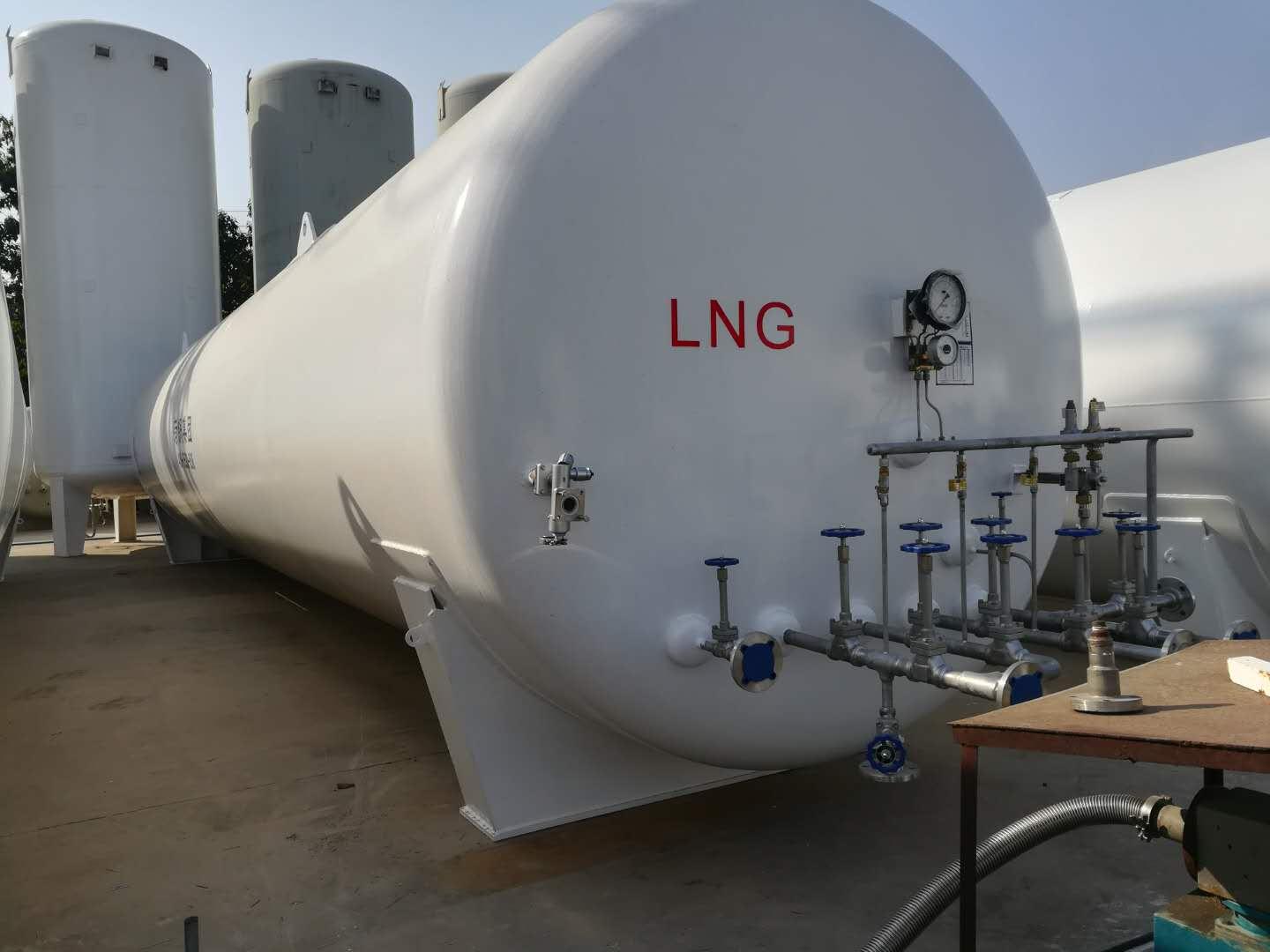
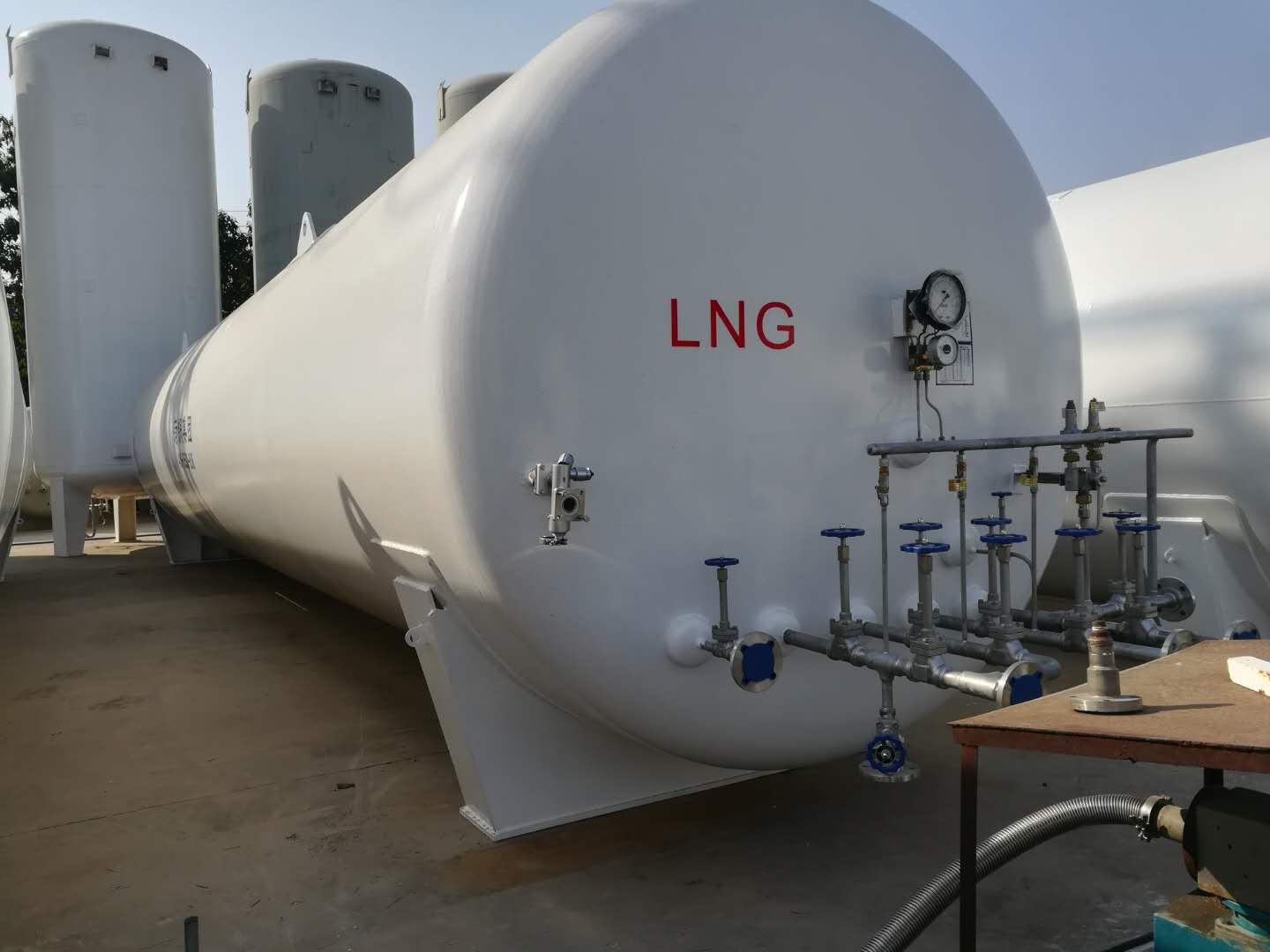



















Operation Instructions
1. Utilize security management
(1) The user unit shall apply for and obtain the "Special Equipment Operation Registration Certificate" from the department responsible for special equipment operation registration at the location within 30 days before or after the product is put into use, in accordance with regulations.
(2) Users shall comply with the relevant requirements of the "Special Equipment Operation and Management Regulations" to ensure safety management of this product. This includes appointing a safety management supervisor, safety staff, and operational personnel, establishing various safety management systems, formulating operational procedures, and conducting inspections.
2. Pre-Use Preparation
Tanks and associated pipelines are installed and positioned. After passing the acceptance inspection, prepare for pre-use.
Tanks must be purged with dry nitrogen and pre-cooled with liquid nitrogen prior to first use. The purge pressure should not be less than 0.2 MPa.
Prior to blowing, loosen the connections at both ends of the differential pressure (level) gauge, and fully open the combination valve A9 of the differential pressure (level) gauge. Check if there is any water in the exhaust gas flow. If water is present, continue blowing until water stops. Tighten the connections at both ends of the differential pressure (level) gauge, and close the balancing valve to put the differential pressure (level) gauge into normal operating condition.
Prior to the first filling of the tank with LNG, the liquid nitrogen or nitrogen inside the tank should be replaced with LNG gas. First, open the drain valve A-6 to vent the nitrogen, then close the drain valve. Open the exhaust valve A-12 and transfer LNG gas from the tank container to the storage tank via the unloading platform. When the tank pressure reaches 0.1-0.2 MPa, close the exhaust valve A-12, stabilize for 3 minutes, and then open the drain valve A-6 to vent. Repeat this process 2-3 times, and the replacement is complete. Use a flammable gas detector or take a sample of the vented air for ignition testing to check the replacement degree.
During the first LNG filling, the tank should be pre-cooled or check the pre-cooling status of the tank previously. The liquid inflow speed should be strictly controlled and the operation should be slow. First, slowly open the upper liquid inflow valve A-2, and transfer the LNG from the tank car to the storage tank through the unloading platform. Due to the lagging vaporization process when LNG is transferred to the tank, closely monitor the rate of pressure increase in the tank, and ensure the liquid inflow is minimal. When the pressure reaches 0.3 MPa, open the gas exhaust valve A-12 to depressurize; if necessary, close the upper liquid inflow valve A-2. Through continuous inflow and exhaust, pre-cool the tank. After a period of controlling the inflow volume, when the tank pressure stabilizes and the liquid level gauge indicates a certain level in the tank, gradually increase the opening of the upper liquid inflow valve A-2, and open the lower liquid inflow valve A-1.
3. Initial Filling Operation for Storage Tanks
(1) Open the liquid inlet valves A-2 and A-1 at the top and bottom simultaneously for filling. During the filling process, monitor the differential pressure (level) gauge readings. Open the full indicator valve A-4 to vent the storage tank's gas. Close valve A-4 immediately upon the release of LNG gas.
(2) When filling to over 50% of the storage tank's capacity, valve A-1 should be closed.
(3) Upon reaching 85% of the storage tank's capacity, close valve A-2 to stop filling and wait for 5 minutes to stabilize the liquid level in the container. Then, reopen valve A-2 to continue filling and activate fill indicator valve A-4. Close valve A-4 and A-2 immediately when liquid starts to flow from A-4.
4. Tank Refilling Liquid Operation Procedure
(1) Upon the first formal filling, the pressure of the gaseous phase inside the tank should be reduced as much as possible during subsequent refilling.
(2) Fill both the upper and lower sections simultaneously. When the differential pressure (level) gauge indicates approximately 50% of the tank's volume, close the lower inlet valve A-1. When filled to about 85% of the tank's volume, close the upper inlet valve A-2, stop filling for 5 minutes to allow the liquid level in the container to stabilize, then reopen the upper inlet valve A-2 to continue filling and open the full indicator valve A-4. Continue filling until liquid begins to discharge from the full indicator valve A-4, then close the full indicator valve and simultaneously close the upper inlet valve A-2, stopping the filling process.
(3) Observe the pressure gauge and differential pressure (level) gauge during filling. (If the pressure rises above the filling delivery pressure or close to the safety valve pressure, open drain valve A-12 to release a controlled amount of gas from the storage tank to relieve pressure.)
(4) Fill out the operation record form.
5. Storage Tank Pressure Boosting Operation Procedure (Valves and equipment for this stage are provided and installed by the owner)
The turbocharger can increase the pressure inside the tank, with the boost pressure controlled according to the draining requirements and not exceeding the tank's maximum working pressure. The boost system of this tank is controlled by a pressure regulating valve, with the product pressure adjustment range being 0.2 to 0.8 MPa. The boost operation procedure is as follows:
Check if the pressure gauge is in working condition.
(2) Confirm that the boost system pressure regulating valve is open.
(3) Gently open the shutoff valve.
(4) When stopping drainage, close the shut-off valve to prevent the tank pressure from rising.
(5) Cautionary Notes:
1) During operation, the LNG tank must maintain a liquid level of ≥15%.
2) When operating the boost system, safety must be prioritized, strict monitoring is required, and unauthorized personnel leaving the scene is strictly prohibited.
6. Tank Pressure Reduction Procedure
Open valve A-12 to reduce the vapor pressure inside the storage tank to no more than the new set pressure of the pressure regulating valve, then close valve A-12.
7. Tank Discharge Operation Procedure
(1) Check that the tank's pressure gauge, differential pressure (level) meter, combustible gas detector, and safety valve are all operating normally.
(2) Inspect the pipeline valves, pressure gauges, and safety valves to ensure they are in normal working condition.
(3) Prepare all explosion-proof tools and wear protective gear.
(4) Inspect the IV line and open drain valve A-6.
LNG stands for Liquefied Natural Gas, a premium natural gas product primarily composed of methane. Known for its high calorific value, low pollution, and ease of storage and transportation, natural gas has become one of the preferred high-quality energy sources in modern society. LNG is the result of purifying and treating natural gas produced from gas fields, removing all impurities, and then cooling it to approximately -162°C under atmospheric pressure, condensing it into a safe, colorless, odorless, and non-toxic low-temperature liquid. It boasts high purity, safety, storage efficiency, and flexible transportation. Its volume is about 1/600th that of the equivalent gaseous natural gas, and its weight is approximately 45% of the same volume of water.

Safety Advantages of LNG
Safe due to excellent physical and chemical properties: higher ignition point, auto-ignition temperature at 590°C, narrow combustion range of 5-15%, lighter than air and easily dispersed. LNG will quickly heat up and vaporize upon leakage, and the gas density of the resulting natural gas is approximately half that of air, making it highly volatile but non-flammable and non-toxic. Methane has relatively stable chemical properties and can burn quietly in air without promoting combustion.
Due to excellent storage conditions, safety is ensured: the tank material exhibits high mechanical strength, such as tensile and compressive strength,低温impact toughness, and thermal expansion coefficient, suitable for operation at low temperatures. The foundation of the tank can withstand low temperatures from direct contact with LNG. The insulation material is non-combustible and has sufficient strength to withstand the impact force of firefighting water, and the safety protection system is reliable. Automotive LNG is stored in insulated containers at pressures ranging from 0.05 to 0.5 MPa, which is significantly lower than the storage pressure of 20 MPa for CNG, offering higher safety. The low-temperature automotive cylinders have undergone rigorous inspections including high-temperature tests, impact tests, and simulated vehicle tests by the National Quality Supervision and Inspection总局, making LNG leakage issues rare even in the event of traffic accidents.
Economic Advantages of LNG
High calorific value and economic. Compared to coal, natural gas, and liquefied petroleum gas, LNG has a higher calorific value and a relatively stable price, which is less affected by international fluctuations. The calorific value of LNG is 12,000 kcal, while good coal only has about 8,000 kcal (per kilogram). LNG vehicles with the same displacement can save about 20% in fuel costs compared to gasoline and diesel vehicles, and their maintenance costs can also be reduced by about 10%. Although there is a price difference of about 80,000 yuan between LNG heavy trucks and diesel trucks, the operating advantage is significant due to lower fuel expenses. One cubic meter of LNG (after gasification) is equivalent to about 0.95 liters of diesel (Number 0). Calculations show that a牵引 truck can save about 80,000-140,000 yuan in fuel costs annually. A dump truck can save about 100,000 yuan in fuel costs annually.
Advantages of LNG Transportation
Low temperature, high gas-liquid expansion ratio, high energy efficiency, easy to transport and store. Natural gas is piped and continuously supplied, with simple and easy-to-operate equipment. It is straightforward, convenient for long-distance transportation, and cost-effective. With the rapid development of the global natural gas industry, liquefied natural gas (LNG) has become a significant part of international natural gas trade. Compared to ten years ago, the world's LNG trade volume has doubled, showing a strong growth momentum.
Convenience advantages of using LNG
Convenient due to the LNG refueling time, which is even shorter than gasoline refueling. Long-distance LNG buses equipped with two cylinders can safely travel over 1,000 kilometers, and a single refueling takes only a few minutes.
Convenient due to LNG's power performance. LNG vehicles are no less powerful than diesel cars and have a longer driving range. A LNG truck equipped with two 450-liter gas cylinders can travel 800-1,000 kilometers.
Due to the well-developed LNG industry chain. China has established a complete technical and industrial chain for LNG vehicles. The core technology of natural gas engines and cryogenic vehicle cylinders is mature, and the whole vehicle assembly, spare parts production, and maintenance technologies have all reached international standards.
The clean and environmental advantages of LNG
LNG is considered to be the cleanest fossil fuel on Earth, offering good environmental benefits.
Clean due to the chemical properties of its main component, natural gas significantly reduces emissions of carbon dioxide, carbon monoxide, sulfur oxides, soot, and other pollutants compared to coal-based fuel. This contributes to a substantial improvement in environmental quality, yielding immense social benefits.
Cleaned due to the liquefied natural gas production process. During the liquefaction process, where natural gas is cooled to a liquid state, it first passes through a gas-liquid filter to remove mechanical impurities and free liquid droplets; then, a raw gas heater uses MDEA to absorb CO2 and H2S from the gas; subsequent processes include decarbonization, dehydration, dehydrocarbonation, and mercury removal; a dust filter is also used to remove dust from the gas, among other purification steps, resulting in LNG at -162 degrees Celsius. Data shows that using engines that burn LNG reduces overall emissions by approximately 85% compared to gasoline and diesel, with a 72% reduction in hydroxides in vehicle exhaust, a 97% reduction in carbon monoxide, a 39% reduction in nitrogen oxides, a 24% reduction in CO2, a 90% reduction in sulfur dioxide, a 40% reduction in noise, and the absence of lead and benzene, which are carcinogenic substances. Sulfides are virtually non-existent.


专业生产LNG储罐促销-专业制造LNG储罐-专业定做LNG储罐品牌-知名LNG储罐生产商



















