


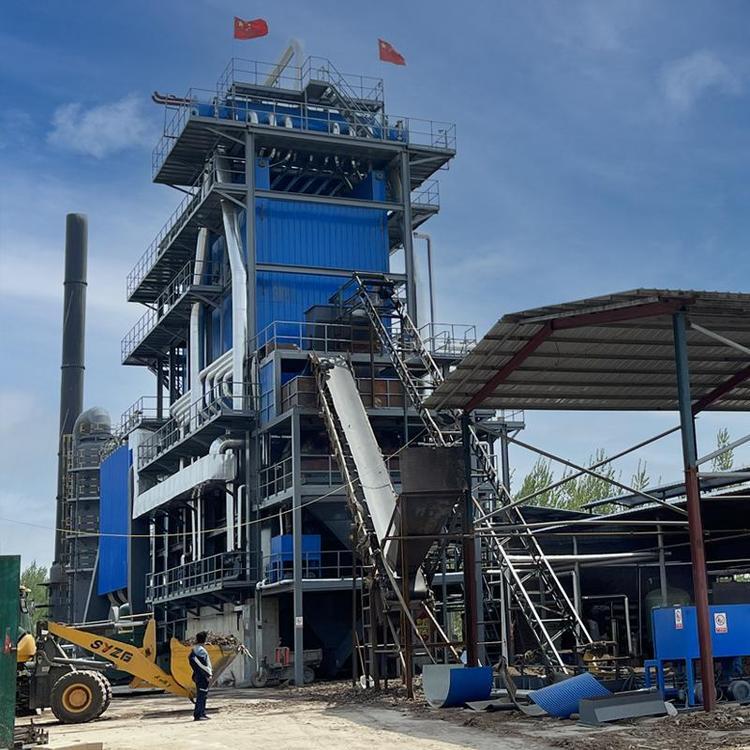

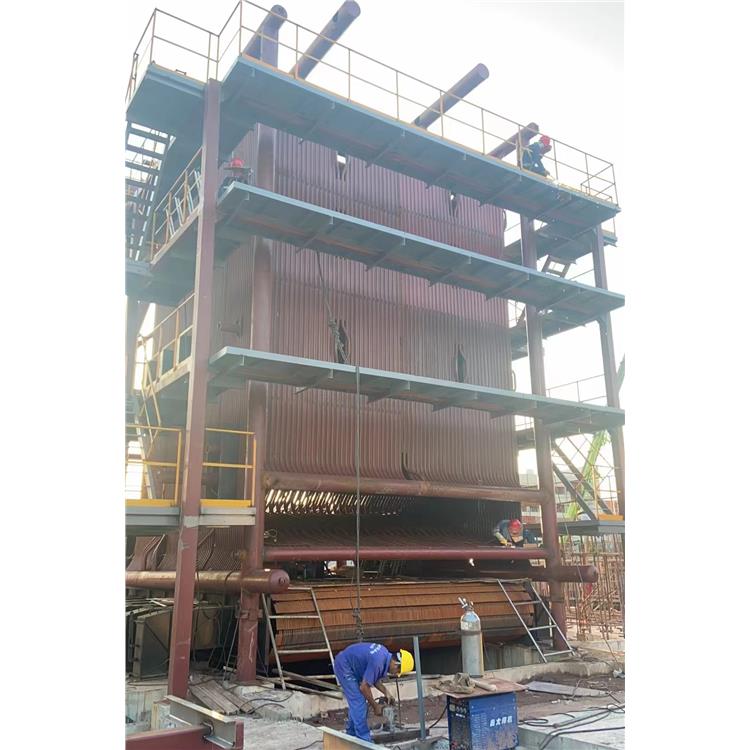
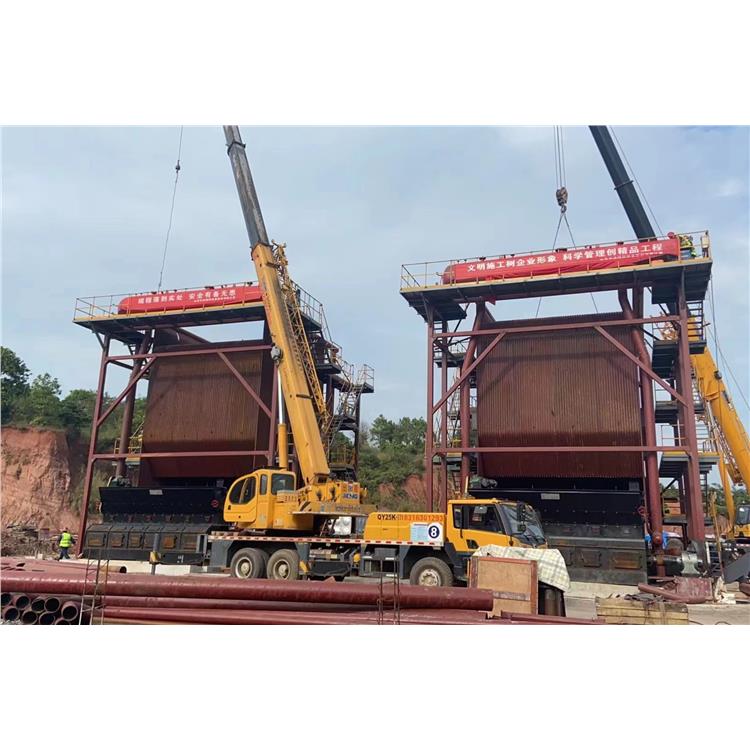


















Shandong Zhongjie Special Equipment (formerly Heze Boiler Factory Co., Ltd.) was established in 2001, located at No. 2218 Jinan Road, Economic and Technological Development Zone, Heze City. With a registered capital of 50 million yuan and total assets of 500 million yuan, the company has seven business centers: boilers, deep-freezing containers, pressure vessels, central air conditioning, engineering installation, international trade, and the Internet of Things. It has three factory sites on Jinan Road, East Yangtze Road, and Bohai Road, covering a total area of 200,000 square meters, with the main workshop spanning 83,000 square meters. It currently employs 710 staff, including 247 engineers and technicians and 82 intermediate-level technicians. In December 2016, it was recognized as a "High-Tech Enterprise" by the Science and Technology Department. In June 2021, it was identified as a "Specialized and New Enterprise in Shandong Province" by the Industry and Information Technology Department. In June 2022, it was named a "Gazelle Enterprise in Shandong Province" and in August 2022, it was recognized as a "Specialized and New Small Giant Enterprise" by the Ministry of Industry and Information Technology.
When biomass boilers exhibit abnormal operation, the following measures can be taken:
Verify fuel supply: Inspect the biomass supply system to ensure normal fuel supply. Check fuel storage containers, conveyance systems, and feeding equipment to eliminate issues of insufficient or blocked fuel supply.
Inspect the combustion system: Check the combustion system, including the ignition device, burner, and combustion chamber. Ensure the burner operates properly and the combustion within the combustion chamber is stable. Clean the burner and combustion chamber to remove carbon deposits and debris.
Inspect Smoke Emissions: Examine the smoke emission system, including chimneys and smoke purification equipment. Ensure smooth smoke emissions and normal operation of the purification equipment. Clean the chimneys and smoke purification equipment to remove blockages and accumulated dust.
Inspect Water Circulation System: Check the water circulation system, including pumps, tanks, pipes, and valves. Ensure normal water circulation, stable water pressure, and water level. Clean the pumps and pipes, and eliminate blockages and leaks.
Inspect Control System: Verify the control system, including temperature, pressure, and flow control. Ensure that control parameters are set correctly and that sensors and actuators are functioning normally. Adjust control parameters to ensure stable boiler operation.
Inspect safety devices: Check the safety devices, including pressure gauges, temperature gauges, safety valves, and alarms. Ensure that the safety devices are sensitive and reliable, and promptly trigger alarms and implement protective measures.
Seek assistance: If the above solutions do not resolve the issue, it is essential to promptly seek help from a boiler repair and maintenance professional. They can conduct a more thorough troubleshooting and repair to ensure the normal operation of the biomass boiler.
When dealing with abnormal operation of biomass boilers, safety is paramount. Always follow relevant operational procedures and safety operation protocols. Identify and address issues promptly.
A biomass organic heat carrier boiler is a boiler equipment that uses biomass as fuel to transfer heat energy through an organic heat carrier. Compared to traditional steam boilers, the biomass organic heat carrier boiler has the following performance advantages:
High thermal efficiency: The biomass organic thermal carrier boiler uses organic thermal carriers as heat transfer mediums, offering a high heat transfer efficiency. Organic thermal carriers can achieve liquid heat transfer at low temperatures, resulting in minimal heat loss and enabling a more efficient utilization of the fuel's thermal energy, thereby enhancing thermal efficiency.
Flexibility: The biomass organic heat carrier boiler is suitable for various biomass fuels, such as wood chips, straw, etc. Due to the abundance of biomass resources, different biomass fuels can be chosen according to actual conditions, enhancing the substitutability and flexibility of the fuel.
Environmental friendliness: The biomass organic heat carrier boiler produces relatively less waste gas and slag during the combustion process, with low levels of pollutants emitted. The biomass fuel itself has the characteristics of low nitrogen content, and the waste slag after combustion can be reused as organic fertilizer or biomass fuel, reducing environmental pollution.
Safety: The biomass organic thermal carrier boiler utilizes organic thermal carriers as the heat transfer medium, featuring lower working pressure, thereby reducing safety risks during the boiler's operation. Additionally, biomass fuel has a lower risk of explosion and fire during combustion compared to fossil fuels.
Renewability: Biomass organic thermal carrier boilers use biomass as fuel, which is a renewable resource that can be continuously replenished through planting and cultivation. Compared to fossil fuels, the use of biomass fuel has a smaller environmental impact, promoting sustainable development.
Several advantages come with choosing biomass boilers:
Renewable Energy: Fuel for biomass boilers comes from organic materials such as plants, animals, and microorganisms, making it a renewable energy source. Compared to traditional fossil fuels, biomass fuel has lower carbon emissions and a smaller environmental impact, helping to reduce greenhouse gas emissions and being more environmentally friendly.
Diverse fuel sources: Biomass fuel sources are varied, including wood, straw, waste crops, food scraps, and urban solid waste. This diversity in fuel sources provides flexibility and adaptability to biomass boilers, enabling the use of plant and animal waste and by-products, thereby reducing resource waste.
Environmental Friendliness: The carbon dioxide emitted during the combustion process of biomass boilers can be absorbed by plants, forming a cycle that reduces air pollution. Additionally, the emissions and ash produced by biomass boilers during combustion are relatively low, resulting in minimal environmental impact.
Energy Security: Biomass, as a local renewable energy source, can reduce dependence on imported energy and enhance energy security. In regions with scarce resources, the use of biomass boilers can provide a reliable energy supply.
Economic Efficiency: Biomass fuel is relatively cost-effective and can reduce energy costs. Furthermore, the technology and equipment for biomass boilers are continuously evolving and maturing, making them even more economically viable.
To burn biomass pellets and avoid coking issues, the following measures can be taken:
Appropriate particle size: The size of biomass particles is crucial for combustion efficiency. The particle size should be controlled within an appropriate range, typically 3-5 millimeters. Larger particles can lead to incomplete combustion, while smaller particles tend to disperse and clog easily.
Sufficient Oxygen Supply: Adequate oxygen supply is required for combustion to ensure a complete combustion reaction. Biomass boilers should ensure that the combustion chamber has ample oxygen supply, which can be achieved by adjusting the ventilation system and the operating parameters of the burners.
Appropriate Combustion Temperature: The combustion temperature of biomass pellets is also a significant factor affecting combustion efficiency. Low combustion temperatures can lead to incomplete combustion, while high temperatures are prone to causing slagging. Biomass boilers should adjust the combustion temperature to an appropriate range based on the fuel characteristics and combustion requirements.
Proper Combustion Time: The combustion time of biomass pellets must also be properly controlled. Insufficient combustion time can lead to incomplete combustion, while excessive time can cause coking. Biomass boilers should adjust the combustion time based on fuel characteristics and combustion requirements, to the appropriate range.
Regular Cleaning and Maintenance: Biomass boilers require regular cleaning and maintenance to keep the combustion chamber and flue passages clear. Regularly clearing the ash and carbon buildup from the combustion chamber, and cleaning the flue and heat exchanger, can prevent the occurrence of coking issues.
Note that there may be differences between various types of biomass fuel and biomass boilers; specific operations and adjustments should be made according to the actual circumstances. When making adjustments and
Our company places great emphasis on technological innovation and R&D, boasting 1 municipal-level enterprise technology center in Heze City. We have established testing facilities for non-destructive testing, physical and chemical testing, welding testing, hydrostatic testing, and more. We are equipped with over 600 units of various instruments and equipment, including CNC machine tools, X-ray flaw detectors, digital ultrasonic flaw detectors, mechanical property testing machines, chemical analyzers, spectrometers, tensile testing machines, plasma welding machines, and others. The key products we have developed, such as welding technology for temperature and pressure vessels, emissions reduction from biomass boilers, and waste heat recovery, have successively been included in multiple Shandong Provincial Department of Industry and Information Technology's innovative projects, Shandong key projects, and Heze City innovative and excellent projects. We have cumulatively obtained 27 authorized utility model patents, 16 authorized invention patents, participated in drafting 2 standards, 2 industry standards, and registered 15 trademarks. Our technical team, in collaboration with Professor Yajiang Li from Shandong University, has jointly developed deep cryogenic container processing technology, utilizing the international plasma arc + flux cored argon arc welding (PAW-GTAW) technology. After provincial-level scientific and technological achievement appraisal, our technology level in the deep cryogenic container manufacturing field has reached international standards. Choose ZJ Special Equipment, let's join hands to create brilliance!
WeChat Official Account

Scan to follow Official Account



















