


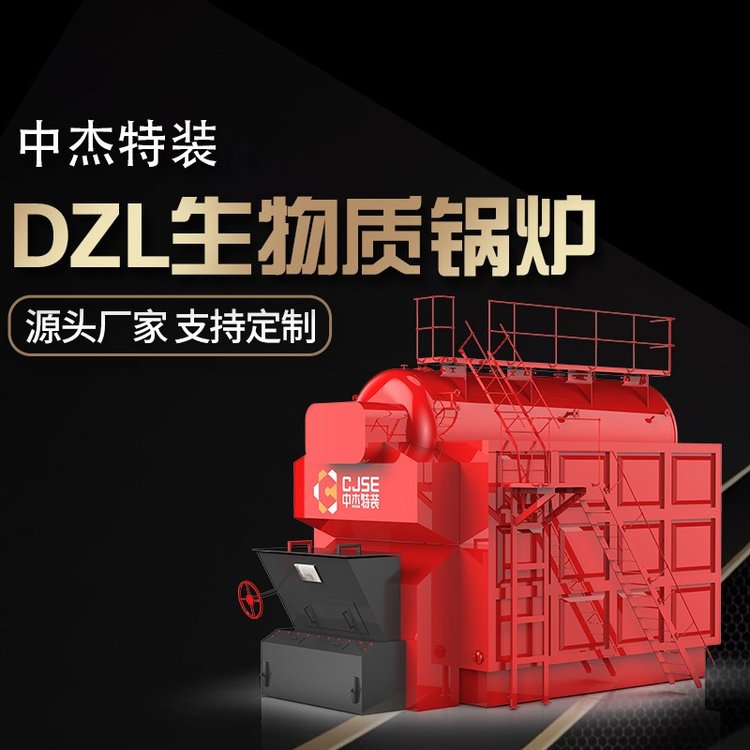

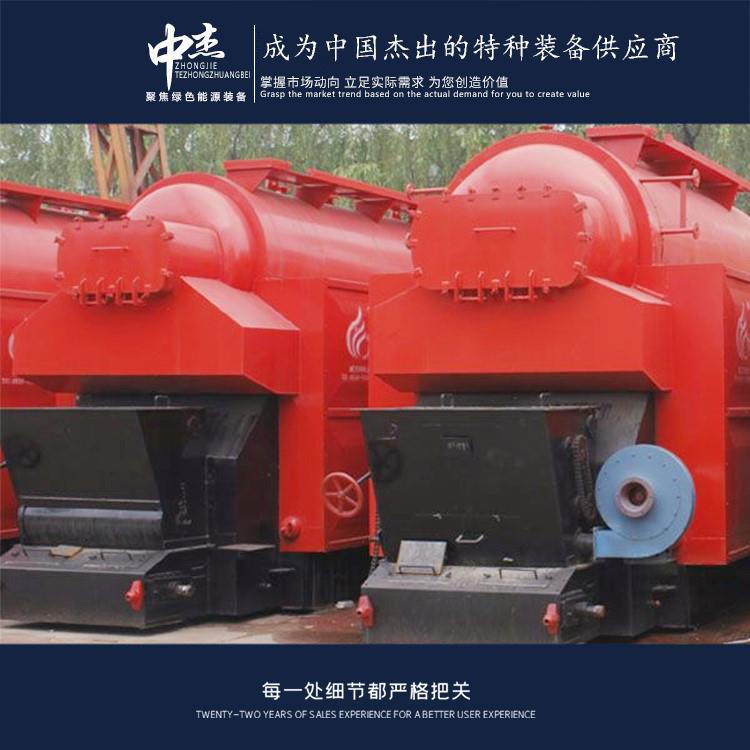
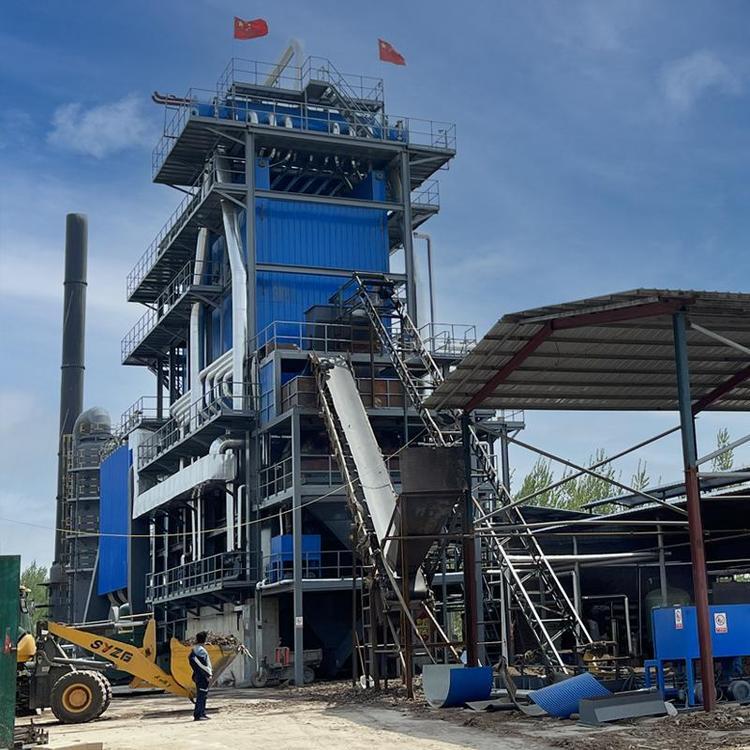


















Shandong Zhongjie Special Equipment's main products include: fuel (gas) boilers, organic heat carrier boilers, biomass boilers, waste heat boilers, and other boiler products; vacuum insulation cryogenic pressure vessels such as LNG tanks, oxygen-nitrogen-argon tanks, and CO2 tanks; pressure vessel products such as denitrification engineering equipment, heat storage and energy storage equipment, and complete chemical equipment; central air conditioning and ventilation equipment such as ground (water) source heat pumps, air source units, water-cooled screw units, and air-cooled modular units. Planned products include large-scale energy centers, LNG transport vehicles, LNG tank containers, and other green energy equipment.
When planning and arranging the bag dust collector for biomass boilers, the following aspects should be considered:
Baghouse Filter Location: The baghouse filter should be positioned near the biomass boiler flue gas outlet to effectively capture particulates in the flue gas. Additionally, the location of the baghouse filter should be convenient for operation and maintenance, ensuring ease of ash cleaning and filter bag replacement.
Arrangement of flue gas进出口: The flue gas进出口 of the bag dust collector should be connected to the flue gas pipeline of the biomass boiler to ensure smooth entry and exit of flue gas from the collector. The arrangement should consider the uniformity of flue gas flow and minimize resistance to enhance the dust removal efficiency and operational efficiency of the system.
Baghouse dust collector dimensions and capacity: Determine the dimensions and capacity of the baghouse based on the biomass boiler's flue gas flow rate and particulate load. Ensure the baghouse meets the flue gas treatment requirements and achieves the desired dust removal effect.
Filter Bag Arrangement and Selection: Filter bags are the core components of bag dust collectors. Appropriate filter bag materials and specifications should be chosen based on the characteristics of flue gas and the nature of particulate matter. The arrangement of filter bags should be reasonable to ensure that flue gas can pass through the bags evenly, capturing particulate matter to the maximum extent.
Dust removal system arrangement: Bag dust collectors require regular cleaning to maintain the cleanliness of the filter bags and dust removal efficiency. The arrangement of the dust removal system should be user-friendly and easy to maintain, ensuring the effectiveness and efficiency of the cleaning process.
Arrangement of exhaust pipes: After treatment by the bag filter, flue gas must be discharged into the atmosphere. The arrangement of the exhaust pipes should ensure the safety and compliance of flue gas emissions.
When planning and arranging biomass boiler bag dust collectors, it is recommended to collaborate with environmental engineers or equipment suppliers, design and construct based on specific conditions, to ensure the operation and environmental protection effect of the dust removal system.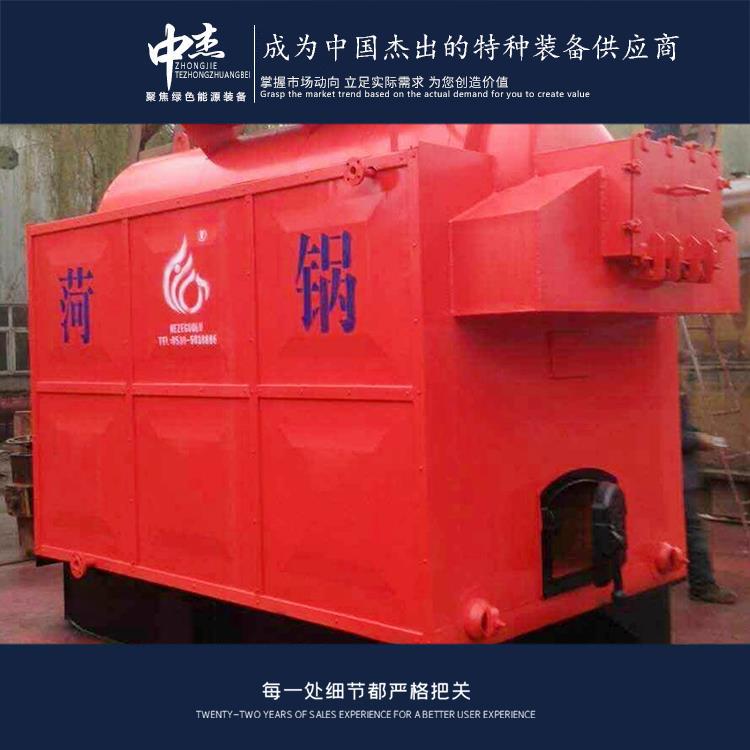
A biomass organic heat carrier boiler is a boiler equipment that uses biomass as fuel and transfers heat energy through organic heat carriers. Compared to traditional steam boilers, biomass organic heat carrier boilers have the following performance advantages:
High Heat Efficiency: The biomass organic heat carrier boiler uses organic heat carriers as the heat transfer medium, offering a high heat transfer efficiency. Organic heat carriers can achieve liquid phase heat transfer at low temperatures, resulting in minimal heat loss and enabling a more efficient utilization of fuel's thermal energy, thereby enhancing heat efficiency.
Flexibility: The biomass organic heat carrier boiler is suitable for various biomass fuels, such as sawdust, straw, etc. With abundant biomass resources, different biomass fuels can be chosen according to actual conditions, enhancing fuel substitutability and flexibility.
Environmental friendliness: The biomass organic heat carrier boiler produces relatively little waste gas and slag during the combustion process, with low emissions of pollutants. The biomass fuel itself has low nitrogen characteristics, and the waste slag after combustion can be reused as organic fertilizer or biomass fuel, reducing environmental pollution.
Safety: Biomass organic thermal fluid heaters use organic thermal fluids as heat transfer mediums, featuring lower working pressures, thus reducing safety risks during boiler operation. Additionally, biomass fuel has a lower risk of explosion and fire during combustion compared to fossil fuels.
Renewability: Biomass organic thermal carrier boilers use biomass as fuel, a resource that is renewable and can be continuously replenished through planting and cultivation. Compared to fossil fuels, the use of biomass fuel has a smaller environmental impact, promoting sustainable development.
Biomass boilers can be categorized according to different classification criteria. Here are some common ways of classification:
By type of combustion:
Direct Combustion Boilers: Directly burn biomass fuel to generate heat energy.
Gasification Boiler: Converts biomass fuel into combustible gas, which is then burned.
Pyrolysis Boiler: Converts biomass fuel through pyrolysis to produce combustible gases and solid carbon, which is then burned.
By fuel type:
Wood biomass boiler: Utilizes wood shavings, wood chips, cassava residue, and other wood-based fuels.
Crop biomass boiler: Utilizes crop waste such as straw, rice husk, wheat straw, etc., as fuel.
Industrial Waste Biomass Boilers: Utilizes industrial waste materials such as sawdust and pulp sludge as fuel.
Categorized by boiler type:
Water tube biomass boiler: The combustion chamber is equipped with water pipes for heat transfer.
Fire-tube biomass boiler: Heat is transferred through fire tubes arranged within the combustion chamber.
Hybrid biomass boiler: Combines the features of water-tube and fire-tube designs, featuring both water tubes and fire tubes.
By power scale classification:
Small biomass boiler: Typically ranges from 1-10MW in power, suitable for small buildings and rural heating.
Medium-sized biomass boiler: Power typically ranges from 10 to 50 MW, suitable for medium-sized industrial plants and large buildings.
Large biomass boiler: Power over 50MW, suitable for large industrial buildings and centralized heating.
These categorization methods merely provide a general overview of biomass boilers; in reality, there are more specific subcategories and combinations. Different types of biomass boilers may vary in application scenarios and technical characteristics.
High evaporation rates in biomass pellet boiler fuel may lead to the following issues:
Incomplete combustion: High-volatile fuel releases a large amount of steam during combustion, which lowers the combustion temperature and affects its completeness. Incomplete combustion leads to energy loss and increased emissions, reducing the boiler's thermal efficiency and environmental performance.
Poor combustion stability: Fuels with high volatility are prone to instability in the combustion process, which may result in flameout and uneven combustion. This can lead to unstable operation of the boiler and affect the stability of hot water supply.
To address issues caused by high-evaporation fraction fuel, the following measures can be taken:
Combustion System Optimization: Optimize the combustion system of biomass pellet boilers, encompassing aspects such as combustion chamber design, combustion air supply, and mixing. Enhance combustion completeness and stability through measures like increasing combustion temperature and oxygen supply.
Combustion Control: Utilizes a combustion control system that monitors and adjusts parameters such as temperature and oxygen content in real-time during the combustion process. Adjusts the supply of combustion air based on actual conditions to maintain stability and completeness of combustion.
Fuel Pretreatment: Pre-treat biomass pellets with high volatility content, such as drying and crushing. By reducing the moisture content and particle size of the fuel, the volatility content is minimized, enhancing the combustion efficiency and stability.
Burn parameter adjustment: Adjust the boiler's burn parameters, such as burn temperature and time, based on actual conditions. Through reasonable parameter adjustments, make the combustion process more suitable for the characteristics of high evaporation fuel.
Our company highly values technological innovation and R&D design. We possess 1 municipal-level enterprise technology center in Heze City, equipped with testing facilities for non-destructive testing,理化 tests, welding tests, hydrostatic tests, and more. We have over 600 various instruments and equipment, including CNC machine tools, X-ray flaw detectors, digital ultrasonic flaw detectors, mechanical property testing machines, chemical analyzers, spectrometers, tensile testing machines, plasma welding machines, and more. The key products we have developed, such as temperature and pressure vessel welding, biomass boiler emission reduction, and waste heat recovery, have successively been selected for multiple Shandong Provincial Department of Industry and Information Technology science and technology projects, key provincial projects, and Heze City innovative and excellent projects. We have accumulated 27 authorized utility model patents, 16 authorized invention patents, participated in drafting 2 standards, 2 industry standards, and registered 15 trademarks. Our technical team, in collaboration with Professor Yajiang Li from Shandong University, has developed deep cryogenic container processing technology, utilizing the international plasma arc + filler wire tungsten inert gas arc welding (PAW-GTAW) technology. After being appraised as a provincial-level scientific and technological achievement, our technology level has reached international standards in the field of deep cryogenic container manufacturing. Choose Zhongjie Special Equipment, and let's create brilliance together!
WeChat Official Account

Scan to follow Official Account



















