


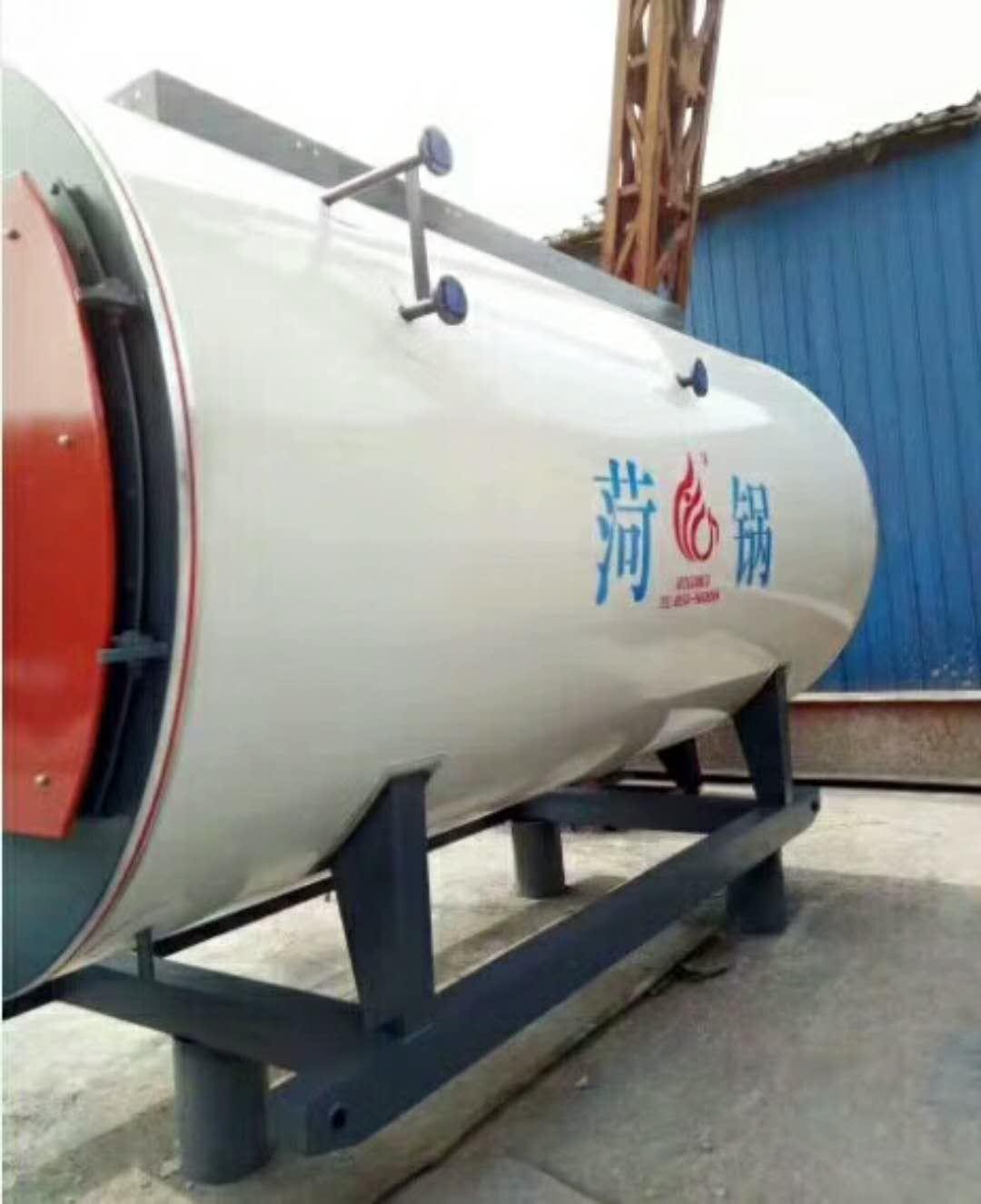

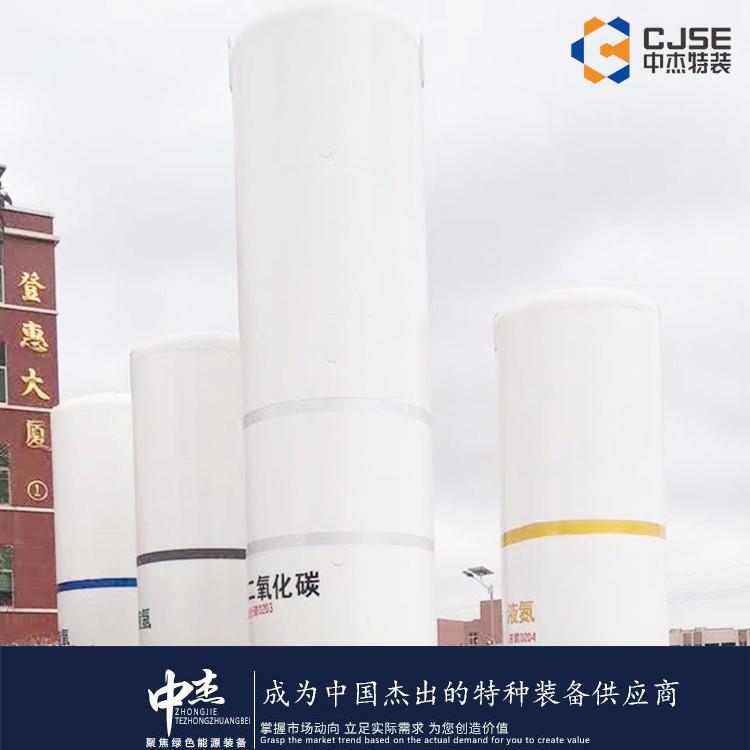
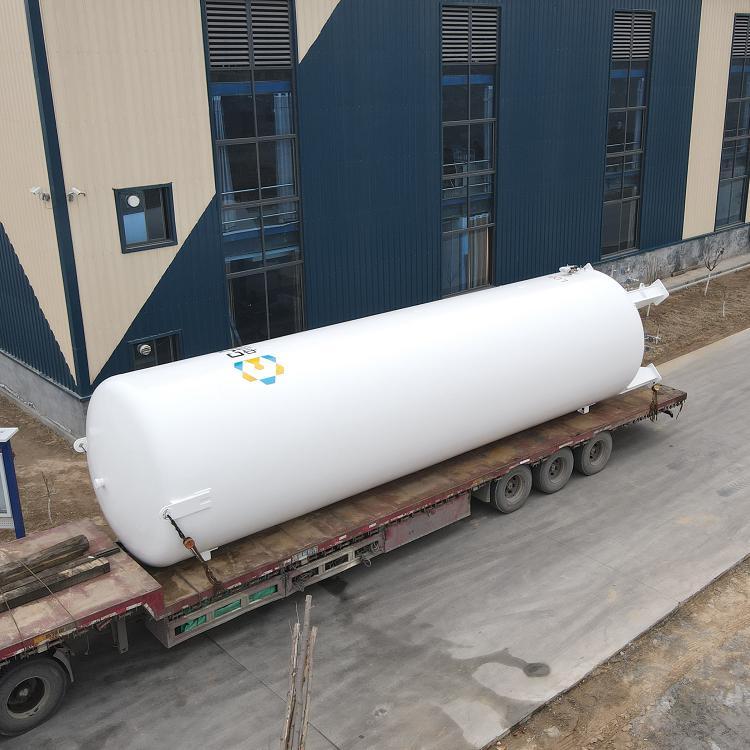


















Shandong Zhongjie Special Equipment (formerly Heze Boiler Factory Co., Ltd.) holds an A-grade boiler manufacturing license, A2-grade pressure vessel manufacturing license, A2-grade pressure vessel design license, B-grade boiler installation, and GB2/Class, GC2/Class pressure pipeline installation licenses, as well as a mechanical and electrical equipment installation contracting qualification. It is a member of the China Boiler and Water Treatment Association, the China Chemical Equipment Association, and the council member of the Shandong Equipment Manufacturing Association. The company has also passed the ISO9001 Quality Management System, ISO14001 Environmental Management System, OHSAS18001 Occupational Health and Safety Management System certifications, and the American ASME/U2 certification.
A liquid nitrogen tank is a device used for storing liquid nitrogen and is widely used in the following fields:
Frozen Food and Cold Chain Logistics: Liquid nitrogen tanks are used in the frozen food and cold chain logistics industry to freeze or refrigerate food and other perishable items, extending their shelf life and maintaining freshness. The low temperature of liquid nitrogen can quickly freeze food, preventing bacterial growth and spoilage.
Biological Sample Storage: Liquid nitrogen tanks are extensively used for freezing and preserving biological samples, cells, tissues, and more. The low temperature of liquid nitrogen effectively preserves the integrity and activity of biological materials, used in medical research, biomedical engineering, and transplantation fields.
Laboratory Research: Liquid nitrogen tanks are utilized in scientific research and laboratories to provide liquid nitrogen as a coolant and freezing medium. The low temperature of liquid nitrogen can be used for cooling laboratory equipment, material research, superconducting electronics, and low-temperature physics.
Metalworking and Welding: Liquid nitrogen tanks are used in metalworking and welding to cool and control the temperature of metals. Liquid nitrogen can rapidly cool metals, enhancing their hardness and strength, and reducing deformation and stress.
Gas Storage and Supply: Liquid nitrogen tanks are also used for storing and supplying nitrogen gas. Liquid nitrogen can be converted into gaseous nitrogen through evaporation, used in applications such as gas shielded welding, gas fire suppression systems, gas analysis, and laboratory gas supply.
In summary, liquid nitrogen tanks have extensive applications in the fields of frozen food, laboratory research, metalworking, and gas supply, providing storage and supply functions for liquid nitrogen at application sites.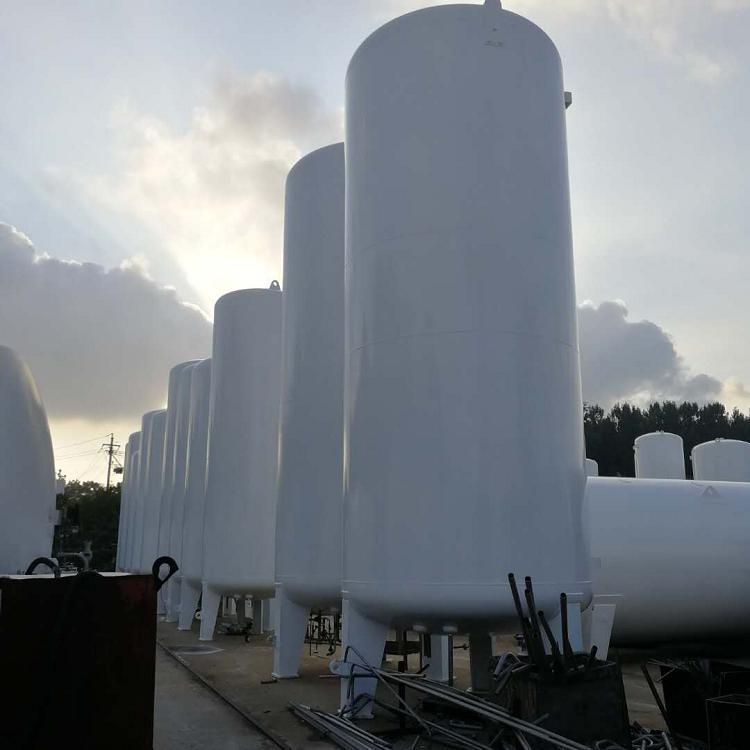
Maintenance and upkeep are crucial for ensuring the safety of low-temperature storage tanks. Here are some common maintenance measures:
Regular Inspections: Conduct regular inspections of low-temperature storage tanks, including checks on the exterior, internal structure, and anti-corrosion coatings. Look for cracks, corrosion, wear, and other issues, and identify and repair potential safety hazards promptly.
Cleaning and Deicing: Regularly clean the exterior surface and internal structure of low-temperature storage tanks to remove accumulated dirt and ice layers. Ice buildup can lead to structural damage and corrosion, while cleaning and deicing can extend the lifespan of the tank.
Level Monitoring: Regularly monitor the liquid level in low-temperature storage tanks to ensure it remains within the safe range. Excessive or insufficient levels can lead to overpressure or over-vacuum in the tank, increasing safety risks.
Leak Detection: Install a leak detection system to regularly check for leaks in low-temperature storage tanks. Leaks can lead to the release and evaporation of liquids or gases, increasing safety risks.
Corrosion Protection Measures: Implement appropriate corrosion protection measures, such as coating protection and corrosion-resistant coatings, to safeguard the metallic structure of low-temperature storage tanks from corrosion damage.
Emergency Fault Handling: Establish an emergency fault handling system to promptly address and repair issues with low-temperature storage tanks to prevent accidents and their escalation.
Training and Development of Personnel: Train and develop operators and maintenance staff to ensure they possess the relevant knowledge and skills for the correct operation and maintenance of low-temperature storage tanks.
It's important to note that maintenance should be tailored to the specific type of tank and operating conditions, adhering to relevant local laws, regulations, and standards. During the maintenance process, it's advisable to consult with engineers or guidance from relevant institutions to ensure the tank's safety and reliability.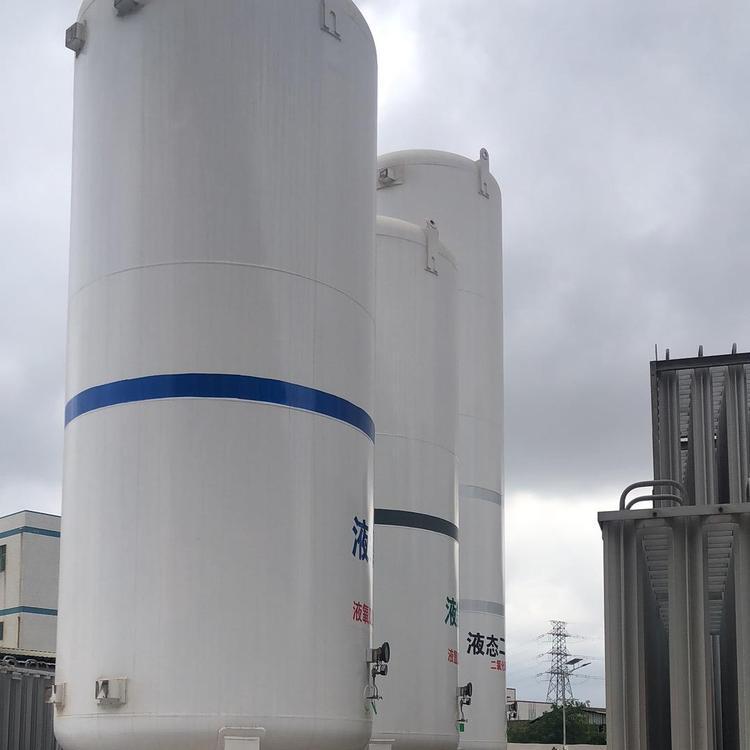
To extend the service life of liquid argon storage tanks, the following measures can be taken:
Regular inspections and maintenance: Conduct periodic visual inspections of liquid argon tanks, check valves and connections, and perform leak detection and pressure tests. Identify and repair potential issues promptly to ensure the normal operation of the tank.
Maintain the insulation layer: The insulation is crucial for the thermal preservation of liquid argon tanks. Regularly inspect the integrity and insulating performance of the insulation, repair or replace any damaged insulation material to ensure the tank's insulation effectiveness.
Control liquid argon temperature: The temperature of liquid argon should be maintained within an appropriate range to prevent damage to the storage tank from either excessively high or low temperatures. Implement suitable cooling or heating measures to ensure the stable temperature of liquid argon.
Corrosion Protection: The shell and internal structure of the liquid argon tank should be protected against corrosion and oxidation. Regularly inspect and maintain the protective coating to ensure it remains intact and undamaged.
Avoid excessive pressure and overfilling: Prevent the internal pressure of the tank from being too high or too low, as well as overfilling with liquid argon. Excessive pressure and overfilling can lead to structural rupture or damage to the tank.
Regular cleaning and draining: Regularly clean the interior of the tank to remove accumulated impurities and dirt. Regularly drain to prevent contaminants and sediments in the liquid argon from damaging the tank.
Safety Operations and Training: Ensure operators are knowledgeable and skilled in the safe handling of liquid argon tanks. Enhance safety training to improve operators' awareness and emergency response capabilities.
Manage records and documents: Establish comprehensive management records and documentation, including the usage of tanks, inspection records, and maintenance logs. Regularly review and update the management records to ensure the safe management and maintenance of the tanks.
These measures can help extend the service life of liquid argon storage tanks, but specific operations and management are required based on the type and application of the tank. When performing maintenance and operation, please follow relevant regulations and standards, and consult with experts to ensure safety and effectiveness.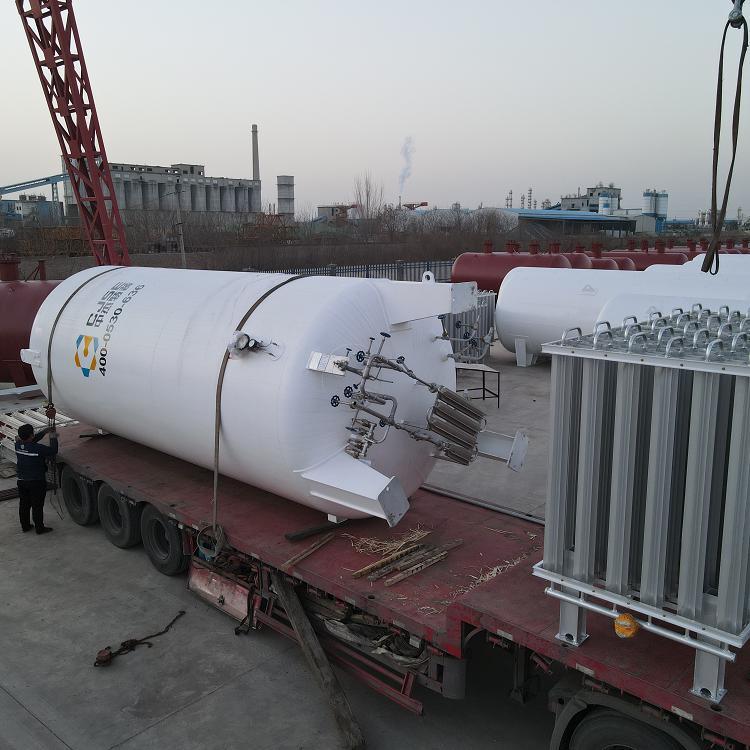
Liquid Oxygen Storage Tanks are equipment used for storing and supplying liquid oxygen. Liquid oxygen is a state of oxygen that is cooled below its boiling point, converting it into a liquid form. Liquid oxygen storage tanks are typically designed with double or multi-layer structures, filled with insulating material in the middle to minimize heat transfer and the evaporation of liquid oxygen.
Liquid Oxygen Storage Tanks Feature the Following Characteristics:
High Purity: The liquid oxygen tanks store high-purity liquid oxygen, typically exceeding 99.5% purity. This makes the liquid oxygen tanks essential in applications requiring high-purity oxygen, such as medical, aerospace, and experimental research fields.
Low Temperature: Liquid oxygen has a boiling point of -183°C, so liquid oxygen storage tanks must have excellent insulation properties to maintain the low temperature of the liquid oxygen. Tanks are typically designed with double or multi-layer structures, filled with insulating material in between to reduce heat transfer and evaporation of the liquid oxygen.
High Pressure: Liquid oxygen tanks typically need to withstand high pressure to maintain their liquid state. The design and material selection of the tank must consider the pressure requirements of liquid oxygen to ensure the tank's safety and reliability.
Flammability: Liquid oxygen is highly flammable and can support combustion. Therefore, during the design and use of liquid oxygen storage tanks, fire prevention measures must be taken to ensure there are no ignition sources nearby, and appropriate fire extinguishing equipment is provided.
High Density: Liquid oxygen has a higher density than gaseous oxygen, allowing for more oxygen to be stored in liquid oxygen tanks. This makes liquid oxygen tanks advantageous for applications requiring large volumes of oxygen supply, such as in the field of and .
The use of liquid oxygen storage tanks must strictly adhere to relevant safety regulations and operating guidelines to ensure the safe operation and usage of the tank.
Our company attaches great importance to technological innovation and R&D design, boasting 1 municipal-level enterprise technology center in Heze City. We have established testing facilities for non-destructive testing, physical and chemical testing, welding testing, hydrostatic testing, and more. We are equipped with over 600 types of equipment including CNC machine tools, X-ray flaw detectors, digital ultrasonic flaw detectors, mechanical property testing machines, chemical analyzers, spectrometers, tensile testing machines, plasma welding machines, and more. The key products and technologies we have developed, such as temperature and pressure vessel welding, biomass boiler emissions reduction, and waste heat utilization, have successively been included in multiple Shandong Provincial Department of Industry and Information Technology science and technology innovation projects, Shandong key projects, and Heze City innovation and excellence projects. We have cumulatively obtained 27 authorized utility model patents, 16 authorized invention patents, participated in drafting 2 standards, 2 industry standards, and registered 15 trademarks. Our technical team, in collaboration with Professor Yajiang Li of Shandong University, has developed deep cryogenic vessel processing technology, utilizing the international plasma arc + filled wire tungsten inert gas arc welding (PAW-GTAW) technology. The provincial-level scientific and technological achievement identification has determined that our technology level in deep cryogenic vessel manufacturing has reached an international standard. Choose Zhongjie Special Equipment, and let's create brilliance together!
WeChat Official Account

Scan to follow Official Account



















