





















Shandong Zhongjie Special Equipment (formerly Heze Boiler Factory Co., Ltd.) was established in 2001, located at No. 2218 Jinan Road, Economic and Technological Development Zone, Heze City, with a registered capital of 50 million yuan and total assets of 500 million yuan. The company has 7 business centers: boiler, deep-freeze containers, pressure vessels, central air conditioning, engineering installation, international trade, and Internet of Things. It has three manufacturing sites on Jinan Road, East Yangtze Road, and Bohai Road, covering a total area of 200,000 square meters, with the main workshop spanning 83,000 square meters. It currently employs 710 staff, including 247 engineers and technicians and 82 intermediate-level technical personnel. In December 2016, it was recognized as a "High-Tech Enterprise" by the Science and Technology Department. In June 2021, it was named a "Specialized and New Enterprise of Shandong Province" by the Ministry of Industry and Information Technology. In June 2022, it was identified as a "Deer Enterprise of Shandong Province" and in August 2022, it was recognized as a "Specialized and New Small Giant Enterprise" by the Ministry of Industry and Information Technology.
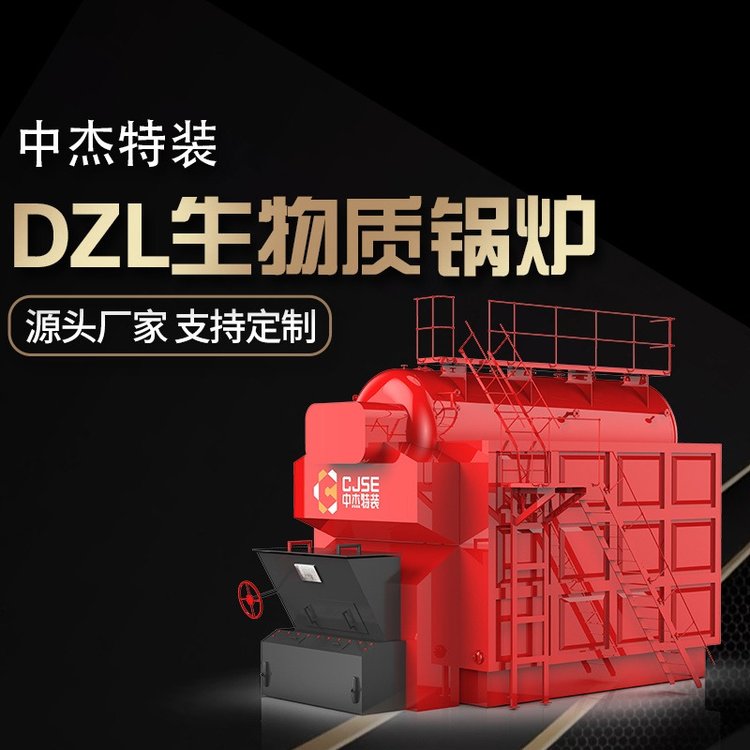
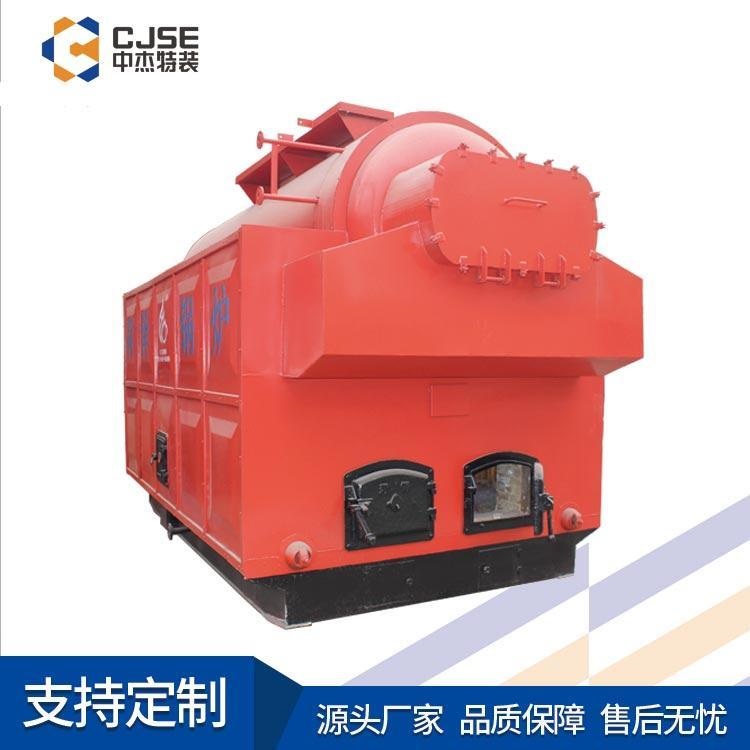
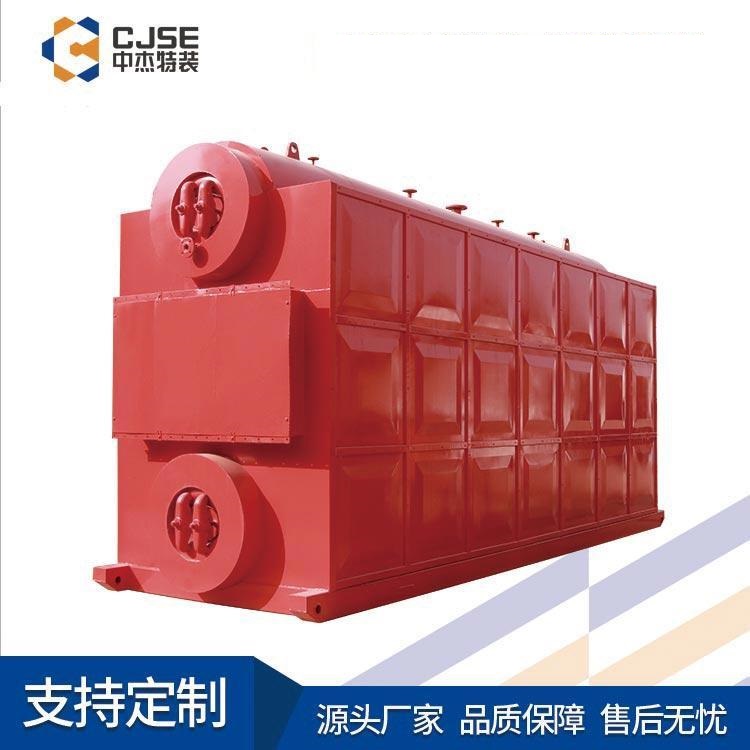
Horizontal biomass steam boilers have the following performance advantages:
Low footprint: The horizontal design of the boiler results in a lower overall height, occupying less floor space, making it suitable for use in areas with limited space.
High thermal efficiency: The horizontal biomass steam boiler utilizes advanced combustion technology and heat exchange design, maximizing the thermal energy of biomass fuel, enhancing thermal efficiency, and reducing energy consumption.
Combustion Stability: The horizontal biomass steam boiler utilizes a combustion system that ensures even and stable fuel combustion, minimizing fluctuations and instability during the combustion process.
Operation and maintenance are user-friendly: The horizontal biomass steam boiler is designed for ease of operation and maintenance, featuring manholes and inspection doors for convenient internal inspection, cleaning, and maintenance.
Environmental Protection and Energy Saving: Biomass fuel is a renewable energy source. The use of horizontal biomass steam boilers can reduce dependence on traditional fossil fuels and decrease emissions of carbon dioxide and other pollutants, offering excellent environmental protection properties.
Adaptable: The horizontal biomass steam boiler is suitable for various biomass fuels such as wood chips, straw, etc., and has strong fuel adaptability.
In summary, horizontal biomass steam boilers feature a small footprint, high thermal efficiency, stable combustion, and easy operation and maintenance.
Biomass boilers possess the following characteristics:
Fuel adaptable: Biomass boilers can utilize various biomass fuels such as wood chips, straw, etc., featuring strong fuel adaptability.
High combustion efficiency: The biomass boiler utilizes advanced combustion technology and equipment, enabling a combustion process that enhances efficiency.
Eco-friendly and Low Carbon: The carbon dioxide produced during biomass combustion can be absorbed by plants, forming a cycle that reduces the burden on the atmosphere. Additionally, emissions and pollutants during biomass combustion are relatively low, causing minimal environmental impact.
Heat Recovery Utilization: Biomass boilers transfer the heat energy generated from combustion to water or other working substances through heat exchangers, achieving heat recovery and utilization, and improving energy efficiency.
Versatility: Biomass boilers are not only used for heating but also for hot water supply and industrial heating in various applications.
The efficiency of biomass boilers is influenced by various factors, including fuel quality, the design and adjustment of combustion equipment, and the effectiveness of flue gas purification equipment. Generally, the efficiency of biomass boilers can reach over 70%, with some models even exceeding 80%. Improving efficiency can be achieved by optimizing the combustion process, enhancing the heat transfer efficiency of heat exchangers, and reducing flue gas emission losses. Moreover, proper operation and maintenance play a crucial role in enhancing efficiency.
Energy-saving methods for biomass hot water boilers mainly include the following aspects:
Fuel Selection: Choose biomass fuel in specified quantities, such as wood chips, straw, etc., ensuring the moisture content and particle size meet the boiler's requirements. Low moisture content and appropriate particle size of the fuel can enhance combustion efficiency and reduce energy waste.
Combustion Optimization: Enhance combustion efficiency by optimizing the combustion process. Adjust combustion parameters such as temperature and duration to achieve more complete combustion and reduce fuel waste.
Heat Recovery Utilization: Utilize waste heat from flue gas for heat recovery. By installing a flue gas waste heat recovery system, the excess heat in the flue gas is recovered and used for other heat demands such as heating and hot water, improving energy efficiency.
Boiler Insulation: Enhance the insulation of the boiler to minimize heat loss. Insulate the boiler's shell and pipes to reduce heat dissipation and improve the boiler's thermal efficiency.
Control System Optimization: Optimize the boiler's control system to achieve precise temperature and pressure control. Through reasonable control strategies, reduce energy waste and enhance the boiler's operational efficiency.
Regular Maintenance: Perform regular maintenance on biomass hot water boilers to ensure normal operation. Clean the combustion chamber, heat exchangers, and other components, inspect and replace worn parts, and ensure the boiler's operation.
Energy Management: Establish a scientific energy management system to monitor and analyze energy consumption, and formulate reasonable energy-saving measures. Continuously optimize the operation of boilers through energy management to achieve energy-saving objectives.
By integrating the above energy-saving methods, the energy utilization efficiency of biomass hot water boilers can be improved, reducing energy waste, and achieving the goal of energy conservation and environmental protection.
Several factors should be considered when selecting an appropriate biomass boiler:
Fuel Type: First, determine the available biomass fuel types, such as wood chips, straw, etc. Different biomass fuels have varying characteristics, including moisture content, ash content, calorific value, etc., and a boiler suitable for the fuel type must be selected.
Boiler Capacity: Determine the required steam or hot water output based on actual needs and select an appropriate boiler capacity. Over-sizing leads to energy waste, while under-sizing may not meet demand.
Combustion Efficiency: Focus on the combustion efficiency of the boiler, which is the proportion of fuel converted into heat energy. High combustion efficiency can improve energy utilization and reduce operating costs.
Equipment Quality and Reliability: Choose biomass boilers and suppliers with excellent quality and reliability to ensure long-term stable operation and ease of maintenance for the equipment.
Environmental Performance: Focus on the environmental performance of the boiler, including emission standards and reduction of pollutant emissions. The selected biomass boiler is beneficial for environmental protection and compliance with relevant regulations.
Economic Efficiency: Choose a cost-effective biomass boiler by considering the overall purchase, operation, and maintenance costs of the boiler.
Adaptability and flexibility: Select biomass boilers with high adaptability and flexibility according to actual requirements and application scenarios, ensuring compatibility with different fuel types and operational conditions.
When selecting biomass boilers, consult boiler suppliers or engineers to conduct technical assessments and economic analyses based on specific conditions, and choose the appropriate type and specification of biomass boiler.
Our company attaches great importance to technological innovation and R&D design, boasting 1 city-level enterprise technology center in Heze City. We have established testing facilities for non-destructive testing, physical and chemical testing, welding testing, hydrostatic testing, and more. We are equipped with over 600 instruments and equipment, including CNC machine tools, X-ray flaw detectors, digital ultrasonic flaw detectors, mechanical property testing machines, chemical analyzers, spectrometers, tensile testing machines, plasma welding machines, and more. The key products and technologies we have developed, such as welding for temperature-pressure vessels, biomass boiler emissions reduction, and waste heat utilization, have successively been shortlisted for multiple Shandong Provincial Department of Industry and Information Technology scientific and technological innovation projects, key projects of Shandong Province, and Heze City innovation and excellence projects, among other provincial and municipal science and technology projects. We have accumulated 27 authorized utility model patents, 16 authorized invention patents, participated in drafting 2 standards, 2 industry standards, and registered 15 trademarks. The technical team of our company, in collaboration with Professor Li Yajiang of Shandong University, has developed deep cryogenic vessel processing technology, utilizing the internationally recognized plasma arc + wire filling argon arc welding (PAW-GTAW) technology. The provincial-level scientific and technological achievement assessment has confirmed that the technology level in deep cryogenic vessel manufacturing has reached an international standard. Choose ZJ Special Equipment, let's join hands to create brilliance together!
WeChat Official Account

Scan to follow Official Account



















