


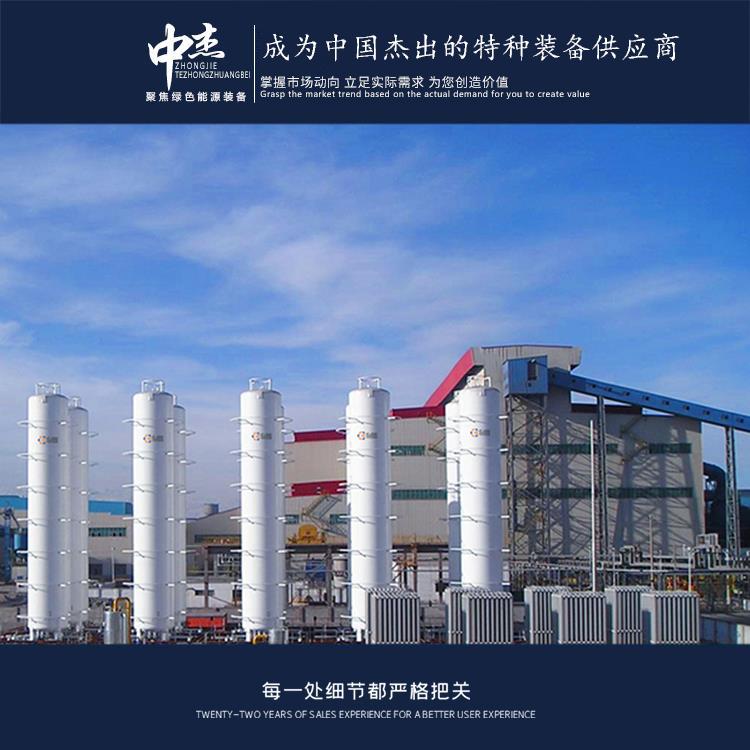

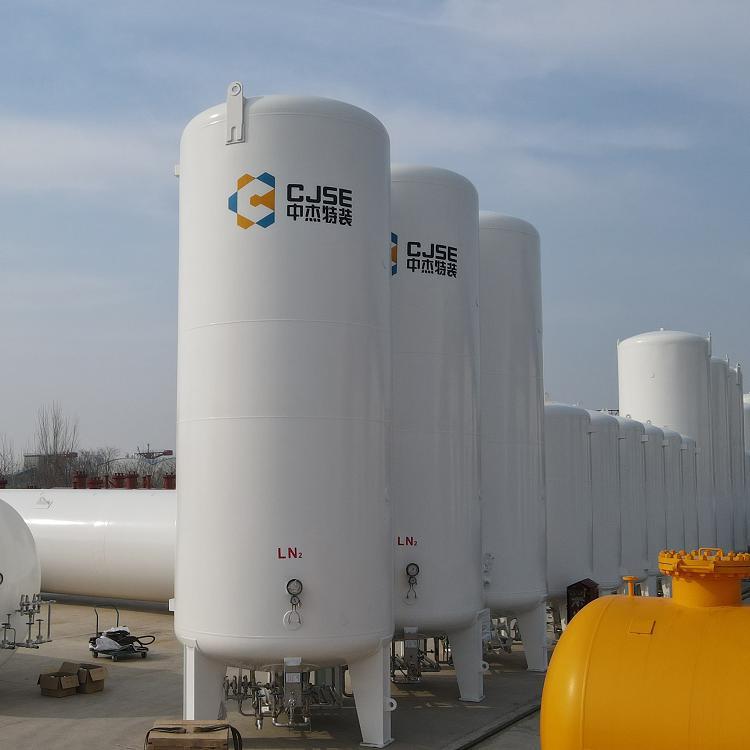
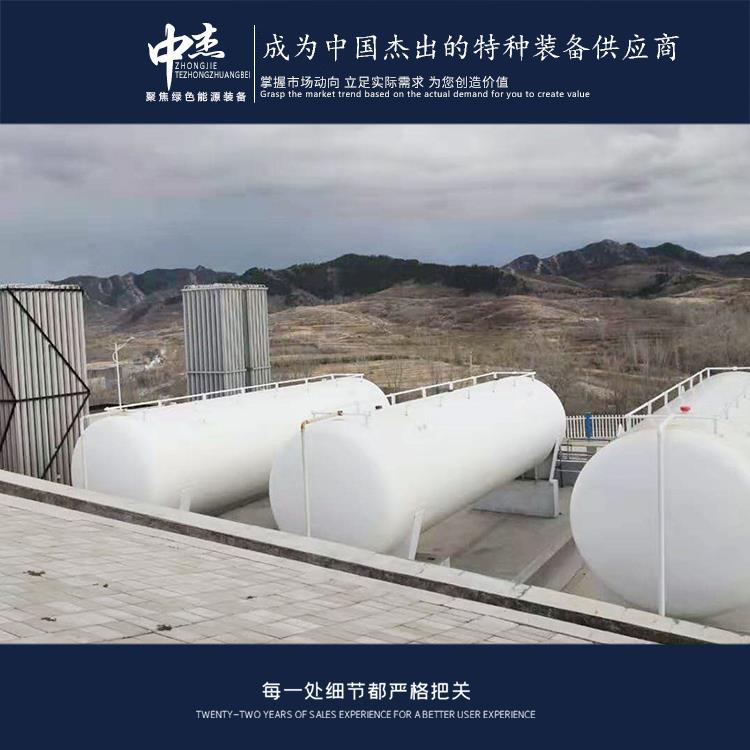


















Shandong Zhongjie Special Equipment's main products include: fuel (gas) boilers, organic heat carrier boilers, biomass boilers, waste heat recovery boilers, and other boiler products; vacuum insulation cryogenic pressure vessels such as LNG tanks, oxygen/nitrogen/argon tanks, and CO2 tanks; pressure vessel products like denitrification engineering equipment, heat storage and energy storage equipment, and complete chemical equipment sets; central air conditioning and ventilation equipment such as ground (water) source heat pumps, air source units, water-cooled screw units, and air-cooled modular units. Planned products include large-scale energy centers, LNG transport vehicles, LNG tank containers, and other green energy equipment.
In daily operation, CO2 storage tanks require protection and maintenance to ensure proper functioning and safety. Here are some common protection and maintenance methods:
- Visual Inspection: Regularly check the tank's exterior for signs of corrosion, wear, and cracks. Take prompt repair actions upon discovering any anomalies.
- Seal Integrity Check: Regularly inspect the tank's sealing performance, particularly at valves, pipe connections, and the tank itself. Ensure there are no leaks, and address any promptly.
- Temperature Control: Maintain a suitable ambient temperature around the tank and implement insulation measures to ensure the tank's internal低温 state.
- Pressure Relief Device Inspection: Regularly check the tank's pressure relief devices, such as safety valves, to ensure they are functioning correctly. Verify that the set pressure meets requirements and perform regular maintenance and replacements.
- Level Monitoring: Regularly monitor the tank's liquid level to ensure accurate measurements. Promptly investigate and address any abnormal levels.
- Regular Cleaning: Clean the tank's interior regularly to remove accumulated impurities and dirt. Exercise caution during cleaning to avoid flammable and corrosive substances.
- Regular Testing: Conduct regular pressure tests and leak inspections on the tank to ensure safety performance meets standards. The frequency and methods should comply with relevant regulations and standards.
- Storage Capacity Control: Control the tank's storage capacity to prevent exceeding the rated capacity. Overfilling can lead to excessive pressure and increased safety risks.
It should be noted that specific protection and maintenance methods may vary depending on the type of tank and its application.
If a leak in the CO2 storage tank is detected, the following procedures should be taken immediately:
Confirm the leak location: First, determine the exact location of the leak, which can be done through hearing, observation, or using gas detection equipment.
Emergency response: In case of a leak, take immediate emergency measures to ensure personnel safety. Evacuate people to a safe area and notify relevant personnel and emergency agencies.
Cut off the gas supply: As soon as possible, shut off the CO2 supply source by closing valves or cutting off power to stop the supply.
Locate the leak: In a safe environment, use gas detection equipment or visual inspection to find the leak. Apply soap water or other leak detection agents to potential leak points and observe for bubble formation.
Seal the leak: Once the leak location is identified, take temporary sealing measures, such as using tape, sealant, or other reliable sealing materials for temporary repair. Ensure that the sealing measures are secure and effective in preventing gas leakage.
Repair and maintenance: In a safe environment, perform further repairs and maintenance. Depending on the nature of the leak, it may be necessary to replace gaskets, repair or replace valves, etc. Repair and maintenance work should be carried out by qualified personnel.
Inspection and testing: After repairs and maintenance, conduct leak detection and testing to ensure that the leaks have been completely repaired and the tank's safety performance has returned to normal.
It is important to handle CO2 storage tank leak issues with caution and follow relevant safety regulations and procedures. If you do not have the necessary knowledge and skills, contact a professional for assistance.
For accessories of carbon dioxide storage tanks, such as valves, pipes, and pressure relief devices, maintenance and protection are crucial. Here are some suggestions:
Regular Inspections: Conduct regular inspections of the accessories' appearance and operational status to ensure no damage, loose parts, or leaks. Pay special attention to the sealing performance and operational flexibility of valves.
Cleaning and Maintenance: Regularly clean the accessories to remove dirt and impurities on the surface. Use appropriate cleaning agents and tools, avoiding corrosive substances.
Lubrication Maintenance: For accessories requiring lubrication, such as valve pistons and stems, perform regular lubrication maintenance. Use suitable lubricants to ensure the normal operation and sealing performance of valves.
Sealing Inspection: Regularly check the sealing performance of accessories, such as valve seals and sealing surfaces. Replace any damaged or aging sealing parts promptly.
Corrosion Protection: For accessories prone to corrosion, such as pipes and valves, take anti-corrosion measures, such as applying anti-corrosion coatings or wrapping with anti-corrosion materials.
Regular Calibration: Calibrate measuring equipment such as level sensors and pressure sensors regularly to ensure accuracy and reliability.
Regular Maintenance: Develop a regular maintenance plan based on the usage and requirements of accessories, including cleaning, lubrication, and repairs. Ensure the long-term stable operation of accessories.
Storage and Transportation Precautions: For spare parts or accessories that require replacement, pay attention to moisture-proof, shockproof, and damage-proof during storage and transportation to avoid affecting their normal use.
The above suggestions are for the maintenance and protection of carbon dioxide storage tank accessories. Specific operations should be based on the characteristics and requirements of the accessories and follow applicable guidelines.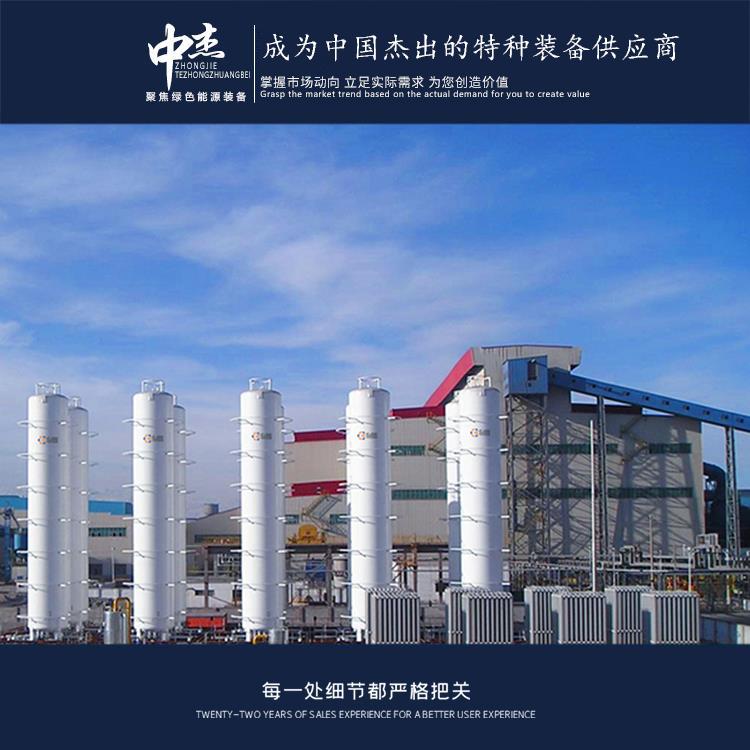
Carbon Dioxide Applications in the New Energy Sector Include:
1. Carbon Capture and Storage (CCS): This technology reduces carbon dioxide emissions by capturing CO2 from industrial sources and storing it in underground formations, preventing its release into the atmosphere. This aids in decreasing greenhouse gas emissions and mitigating climate change.
2. Carbon Utilization: CO2 can be utilized to produce valuable chemicals and fuels. For instance, through carbon catalytic conversion technology, CO2 can be transformed into fuels like ethanol, which are either combustible or used in chemical manufacturing. This carbon utilization technique helps reduce dependence on traditional fossil fuels and promotes sustainable energy development.
3. Carbon Dioxide Batteries: This is a novel battery technology that uses CO2 as the electrical material. By converting CO2 into electricity, these batteries serve as a sustainable energy storage solution, contributing to the advancement of electric vehicles and renewable energy.
4. Carbon Dioxide Photocatalysis: This technology uses solar energy to convert CO2 into useful chemicals. By employing photo-catalysts, CO2 and water can be transformed into combustible gases or organic compounds, thus realizing the resourceful utilization of CO2.
These applications aim to reduce CO2 emissions, enhance energy efficiency, and promote sustainable energy development. However, these technologies are still in development and research, requiring further technical breakthroughs and practical verification.
Our company places great emphasis on technological innovation and R&D design. We have one municipal enterprise technology center in Heze City, with testing facilities for non-destructive testing, physical and chemical testing, welding testing, hydrostatic testing, etc. We are equipped with over 600 pieces of equipment including CNC machine tools, X-ray flaw detectors, digital ultrasonic flaw detectors, mechanical property testing machines, chemical analyzers, spectrometers, tensile testing machines, plasma welding machines, and more. The key products and technologies we have developed, such as welding of temperature and pressure vessels, emission reduction of biomass boilers, and waste heat utilization, have successively been included in multiple Shandong Provincial Department of Industry and Information Technology science and technology innovation projects, key projects in Shandong Province, and Heze City innovation and excellence projects. We have accumulated a total of 27 authorized utility model patents, 16 authorized invention patents, participated in drafting 2 standards, 2 industry standards, and registered 15 trademarks. The technical team of our company, in collaboration with Professor Yajiang Li of Shandong University, has jointly developed deep cryogenic vessel processing technology, which adopts the internationally recognized plasma arc + filler wire tungsten inert gas arc welding (PAW-GTAW) technology. After provincial-level scientific and technological achievement identification, the technology level has reached international standards in the field of deep cryogenic vessel manufacturing. Choose Zhongjietech, and let's create brilliance together!
WeChat Official Account

Scan to follow Official Account



















