


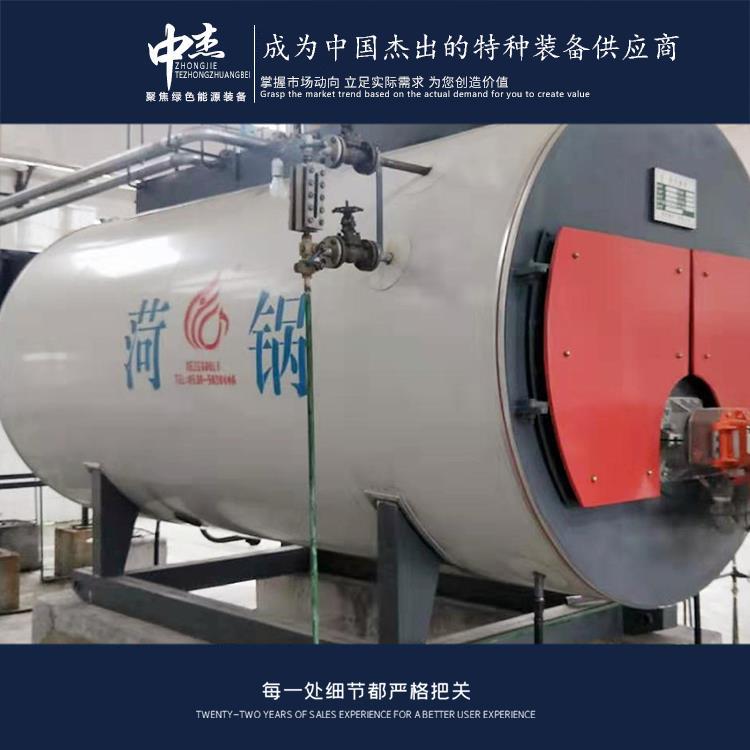

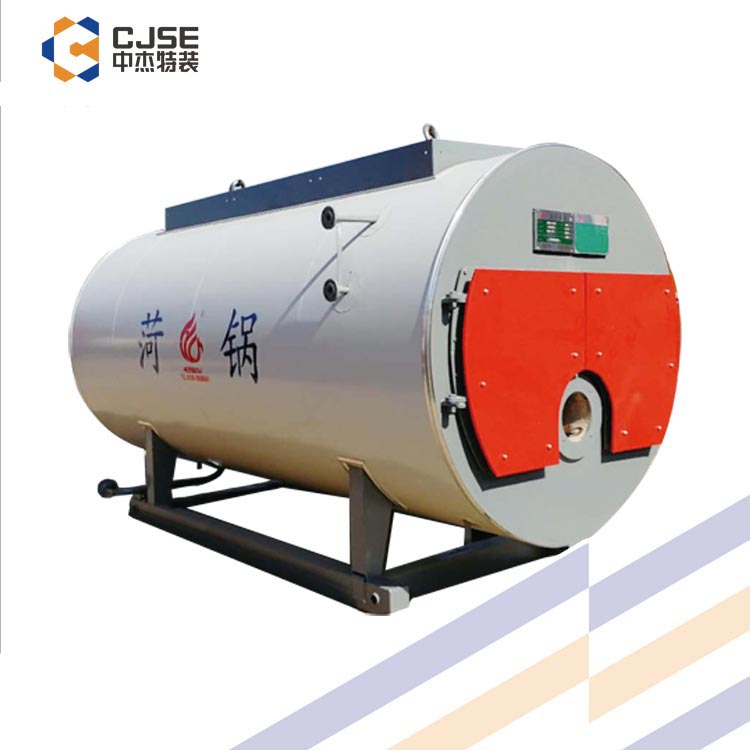
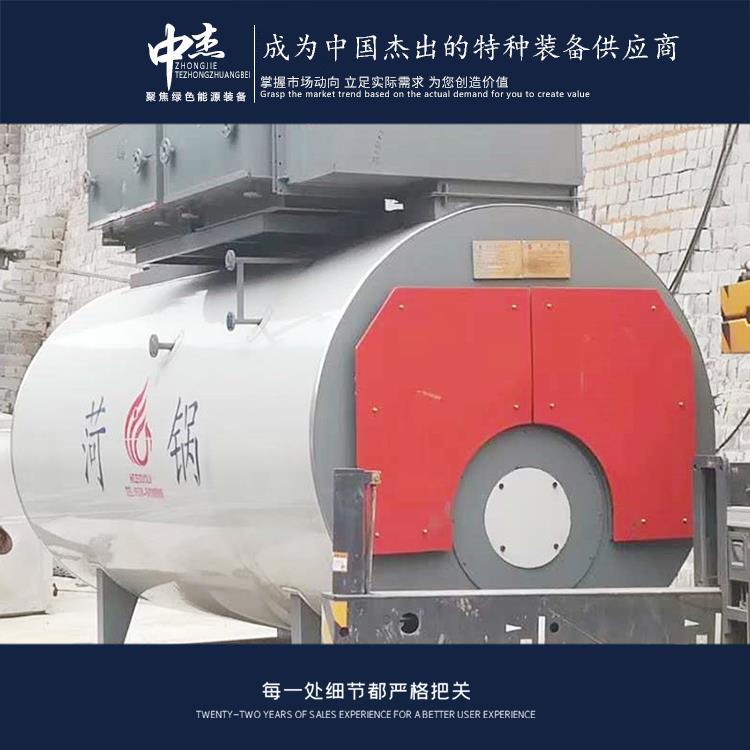


















Shandong Zhongjie Special Equipment's main products include: fuel (gas) boilers, organic heat carrier boilers, biomass boilers, waste heat boilers, and other boiler products; vacuum insulation cryogenic pressure vessels such as LNG tanks, oxygen-nitrogen-argon tanks, and CO2 tanks; pressure vessel products like denitration engineering equipment, heat storage and energy storage equipment, and complete chemical equipment; central air conditioning and ventilation equipment such as ground (water) source heat pumps, air source units, water-cooled screw units, and air-cooled modules. Planned products include large-scale thermal energy centers, LNG transport vehicles, LNG tank containers, and other green energy equipment.
A gas boiler is a heating equipment that uses gas or similar fuels. It generates heat by burning gas to heat water into steam or hot water, which is used for heating, hot water supply, or industrial production. The working principle of a gas boiler involves mixing gas with air, igniting it to produce high-temperature combustion gases. These gases then transfer heat to the water through a heat exchanger, raising the water temperature. Gas boilers are characterized by their environmental friendliness, safety, and other advantages, and are widely used in residential, commercial, and industrial fields.
The eco-friendly gas boiler offers several advantages:
- Low emissions: The exhaust from gas combustion has relatively lower emissions, containing fewer pollutants such as nitrogen oxides and particulates. Compared to coal or oil-fired boilers, gas boilers have lower emissions and cause less environmental pollution.
- High thermal efficiency: Gas combustion has a high thermal efficiency, effectively utilizing the energy of the fuel and reducing energy waste. The combustion efficiency of gas is higher than that of other traditional fuels like coal and oil, providing more heat energy.
- Clean combustion: Gas combustion does not produce ash or soot, reducing the accumulation of carbon and dirt inside the boiler and in the flue. This reduces cleaning and maintenance work for the boiler, extending its lifespan.
- Combustion stability: The combustion performance of gas is stable, minimizing flame fluctuations and explosion risks during combustion. This makes the gas boiler safer and more reliable in operation.
- Quick startup and shutdown: Gas boilers have faster and more flexible startup and shutdown processes compared to other fuels. This makes them suitable for scenarios requiring frequent startups and shutdowns, such as seasonal heating and hot water needs.
- Renewable energy integration: As a clean fuel, gas can be combined with renewable energy sources like solar hot water systems and biomass fuels. This integration can further enhance energy efficiency and environmental friendliness.
To reduce the operational costs of gas-fired boilers, consider the following aspects:
- Combustion System: Ensure the stability of the combustion system of the gas boiler. Regularly inspect and maintain the burner, clean the nozzles and combustion chamber, adjust the ratio of gas and air to improve combustion efficiency and reduce gas waste.
- Energy-Saving Control System: Install and use energy-saving control systems, such as smart thermostats and timers. These systems can automatically adjust the boiler's operating status based on actual needs, avoiding unnecessary energy waste.
- Regular Maintenance: Conduct regular maintenance on gas-fired boilers, including cleaning heat exchangers, inspecting and replacing seals, and clearing gas pipelines. Maintain the boiler's normal operating status to reduce energy loss and the occurrence of malfunctions.
- Heat Recovery: Consider installing heat recovery devices such as waste heat recovery systems or flue gas heat exchangers. These devices can utilize the excess heat from the flue gas emitted by the gas boiler to heat water or other equipment requiring heat, improving energy utilization efficiency.
- Pipe Insulation and Leak Inspection: Ensure good insulation performance of gas and hot water pipelines to reduce energy loss. Regularly check for leaks in the pipes and repair them promptly to avoid energy waste and safety hazards.
- Energy Management and Monitoring: Establish an effective energy management system to monitor and analyze the energy consumption of gas-fired boilers. Through data analysis and optimizing operating strategies, identify energy-saving potential and areas for improvement.
- Training and Awareness Enhancement: Provide employee training to strengthen awareness of operating and maintaining gas-fired boilers. Employee knowledge and skill enhancement can help in managing and operating the boilers effectively, reducing operational costs.
- By considering these factors comprehensively, you can effectively reduce the operation costs of gas-fired boilers.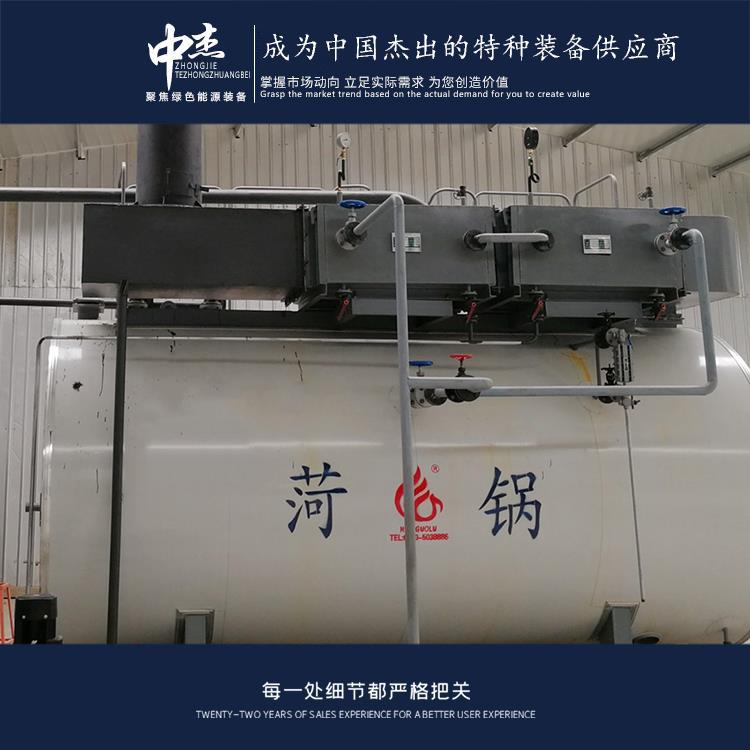
Potential operational issues with the fuel system of a thermal oil furnace include:
- Inadequate fuel quality: Using low-quality or contaminated fuel can cause problems with the fuel system. For instance, the presence of impurities, water, or excessive fuel can lead to clogs in the fuel pump, nozzle, and burner, affecting fuel supply and combustion efficiency.
- Failure to regularly clean or replace the fuel filter: The fuel filter's purpose is to filter out impurities and particles from the fuel to prevent them from entering the fuel system. If the fuel filter is not cleaned or replaced regularly, it can become clogged, affecting fuel flow and supply.
- Improper fuel pump adjustment: Proper adjustment of the fuel pump is crucial for maintaining stable fuel supply volume and pressure. Incorrect adjustment can result in either too much or too little fuel supply, leading to incomplete combustion or insufficient fuel supply, affecting the furnace's temperature and thermal efficiency.
- Clogged or worn fuel nozzles: Fuel nozzles are key components that atomize and inject fuel into the furnace. Clogs or wear on the nozzles can cause uneven or incorrect fuel喷射, impacting combustion efficiency and thermal output.
- Inadequate fuel preheating: Fuel must be preheated before entering the burner to enhance combustion. Insufficient preheating can increase fuel viscosity, affecting its flow and injection performance.
- Fuel system oil leaks: The sealing integrity of the fuel system is essential for stable fuel supply. Oil leaks in the fuel system can lead to fuel supply instability.
Zhongjie Special Equipment upholds the grand vision of "realizing employees' dreams, creating value for customers, and striving for the prosperity and strength of our motherland," and is dedicated to the development of the green energy equipment industry. We commit to society with high-quality, cost-effective products and services!
WeChat Official Account

Scan to follow Official Account



















