


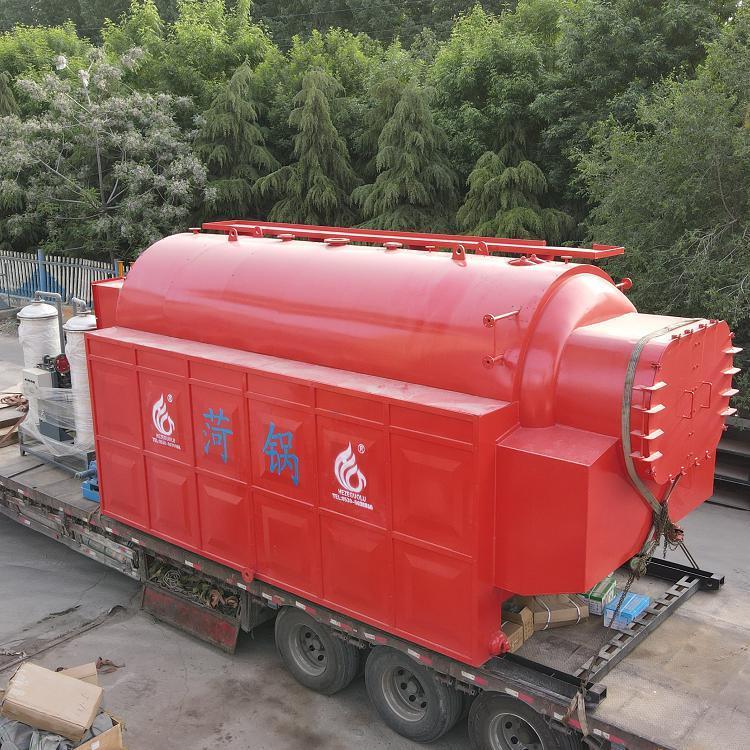

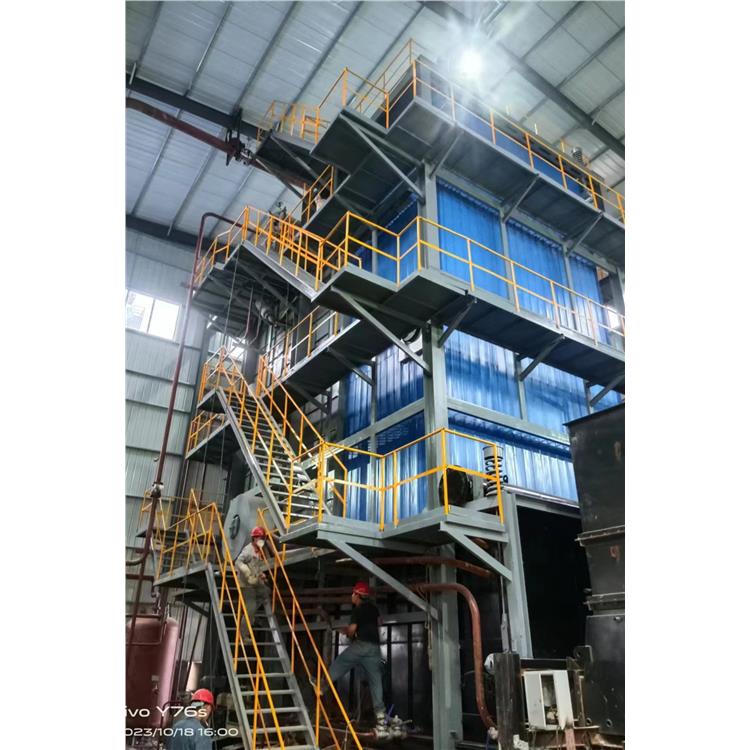
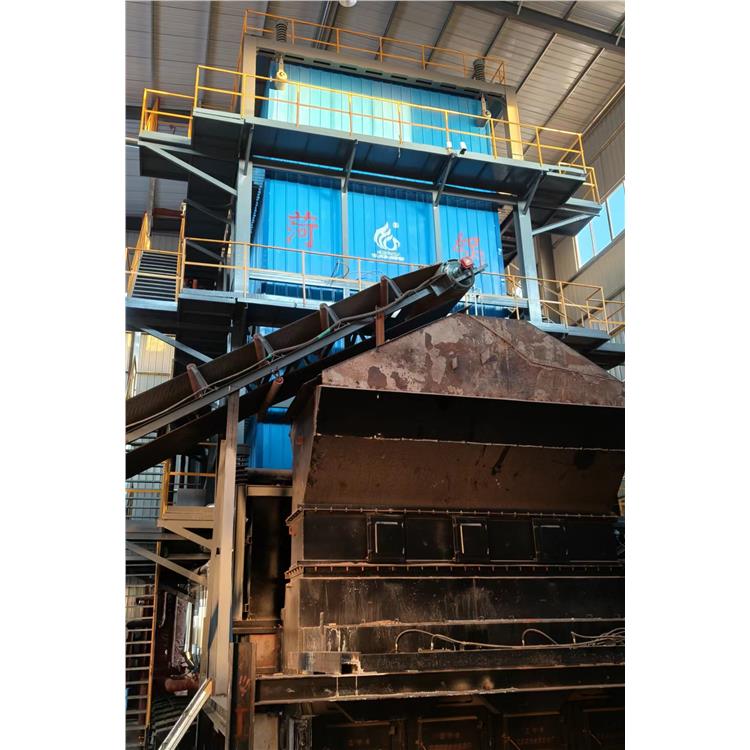


















Shandong Zhongjie Special Equipment (formerly Heze Boiler Factory Co., Ltd.) holds an A-grade boiler manufacturing license, an A2-grade pressure vessel manufacturing license, an A2-grade pressure vessel design license, a B-grade boiler installation license, and GB2/Class and GC2/Class pressure pipeline installation licenses, as well as a mechanical and electrical equipment installation contracting qualification. It is a member of the China Boiler and Water Treatment Association, the China Chemical Equipment Association, and the council unit of the Shandong Equipment Manufacturing Association. The company has also passed certifications for the ISO9001 Quality Management System, ISO14001 Environmental Management System, OHSAS18001 Occupational Health and Safety Management System, and the American ASME/U2 certification.
The DZH steam boiler is a manually-fired solid fuel boiler with the following technical features:
Burning Method: The DZH steam boiler employs a manual combustion method, where the operator manually feeds fuel and adjusts the combustion process. This method is relatively simple and offers flexible operation, suitable for small to medium-sized applications.
Multiple Fuel Compatibility: The DZH steam boiler boasts strong fuel adaptability, capable of burning solid fuels such as sawdust and straw. This feature enables the widespread application of the DZH steam boiler in various regions and under different fuel resource conditions.
Furnace Structure: The DZH steam boiler features a double-chamber furnace structure, with a partition between the combustion chambers. This design enhances the temperature and combustion efficiency of the chambers, thereby improving thermal efficiency.
Flue Gas Channels: The DZH steam boiler features a spiral flue tube design for its flue gas channels, which increases the contact area between flue gas and water, enhancing heat exchange efficiency. Additionally, a flue gas reversal chamber is incorporated within the flue gas channels, allowing the flue gas to flow repeatedly within the furnace, thereby increasing the residence time of the flue gas and improving combustion efficiency.
Safety Protection: The DZH steam boiler is equipped with various safety devices, including pressure controllers, water level controllers, and overheat protectors, to ensure safe operation.
Tightly Designed: The DZH steam boiler is compact in structure, occupying minimal space, making it suitable for installation in limited areas.
In summary, the DZH steam boiler boasts strong fuel adaptability, flexible operation, and high thermal efficiency, making it suitable for small to medium-sized solid fuel steam demand scenarios.
Biomass boilers offer the following advantages:
Renewable Energy: Biomass boilers utilize biomass fuels such as wood chips and straw, which are renewable and can be obtained through planting and regeneration cycles. They have lower carbon emissions compared to fossil fuels.
Environmental Protection and Low Carbon: The carbon dioxide emitted during biomass combustion can be absorbed by plants, forming a cycle that reduces the burden on the atmosphere. Additionally, emissions and pollutants from biomass combustion are relatively low, resulting in minimal environmental impact.
Resource-rich: Biomass fuel sources are diverse, including crop straw, forest residues, industrial by-products, etc., with relatively abundant resources and less likelihood of depletion.
High thermal efficiency: The biomass boiler's combustion technology and heat recovery system enable high conversion and utilization of thermal energy, enhancing energy efficiency.
Versatility: Biomass boilers are not only used for heating but also for hot water supply and industrial heating in various applications.
However, biomass boilers also have some drawbacks:
Fuel supply is unstable: The supply of biomass fuel is affected by factors such as seasons, regions, and crop yields, which may lead to unstable supply issues.
Particulate matter produced by combustion: A certain amount of particulate matter is generated during biomass combustion, which has an impact on air quality and requires treatment through flue gas purification equipment.
Fuel handling and storage costs: Biomass fuels require pretreatment, drying, and storage, which may increase costs and complexity.
High technical requirements: Biomass pot
During operation, biomass thermal oil heaters are prone to scaling due to the high temperature of the thermal oil and prolonged use. To prevent the formation of scale, manufacturers typically take the following measures:
Selecting the Appropriate Thermal Conductive Oil: Manufacturers choose thermal conductive oils with good thermal stability and antioxidant properties to minimize scale formation. The selection of thermal conductive oil should be reasonably matched based on actual operating conditions and usage requirements.
Control oil temperature and flow rate: Manufacturers will reasonably control the temperature and flow rate of the heat transfer oil based on its characteristics and working requirements. Excessive temperature and rapid flow rate are prone to the formation of scale, so appropriate adjustments are necessary.
Regular Cleaning and Maintenance: Manufacturers recommend users to regularly clean and maintain biomass thermal oil heaters to remove scale that has formed. Cleaning agents and equipment that can be used during the cleaning process, as well as the scale removal, will restore the normal operation of the thermal oil heater.
Install Filters and Descaling Devices: Manufacturers may install filters and descaling devices in biomass thermal oil boilers to filter out impurities and scale in the thermal oil. These devices effectively prevent scale formation and extend the service life of the thermal oil boiler.
Regular Monitoring and Analysis: Manufacturers may recommend that users regularly monitor and analyze the properties and quality of the thermal oil, to promptly identify any anomalies and take appropriate actions.
Current biomass boilers encounter the following issues in practical application:
Fuel supply instability: The supply of biomass fuel is subject to seasonal and regional limitations, leading to unstable fuel supply for biomass boilers. This may result in the inability of biomass boilers to operate continuously or necessitate frequent fuel switching, increasing operational costs and management challenges.
Low combustion efficiency: Due to the characteristics of biomass fuel and the complexity of the combustion process, the combustion efficiency of biomass boilers is relatively low. Some fuels have high volatile and ash content, which may produce excessive ash and particulate matter during combustion, reducing combustion efficiency and heat energy utilization.
NOx Emission Issue: Biomass boilers produce a significant amount of nitrogen oxides (NOx) during the combustion process, which has a certain impact on the environment. Controlling and reducing NOx emissions is a critical issue for biomass boilers.
Combustion Equipment Wear: The high ash content in biomass fuel can cause wear and clogging in the combustion process, which may shorten the lifespan of the equipment and necessitate frequent maintenance and cleaning.
Ash residue from combustion: Ash residue produced by biomass boiler combustion requires proper handling and disposal. Improper management may lead to environmental pollution and hazards.
Lack of unified technical standards and specifications: Currently, there is a lack of unified technical standards and specifications for biomass boilers.
Shandong Zhongjie Special Equipment, welcome customers to visit our factory for business discussions.
WeChat Official Account

Scan to follow Official Account



















