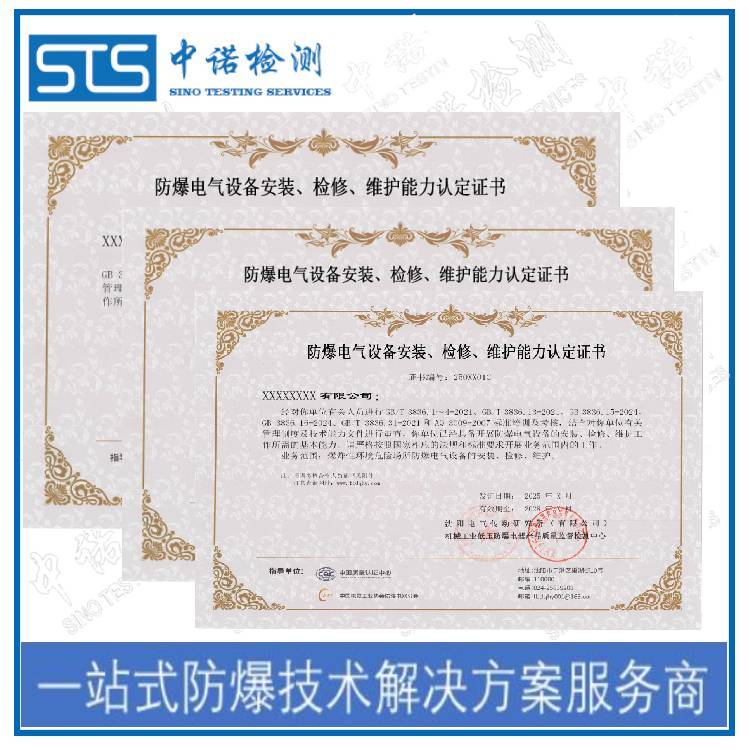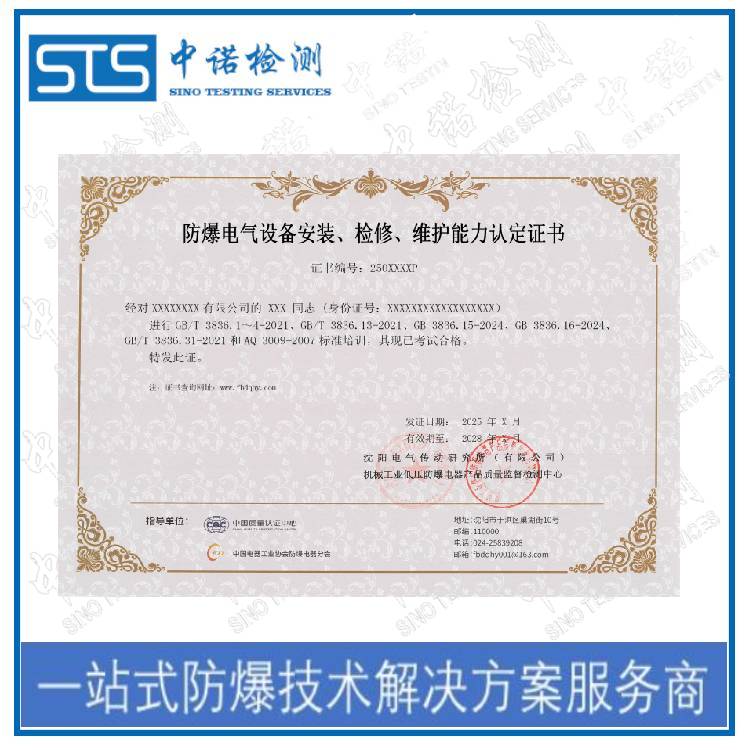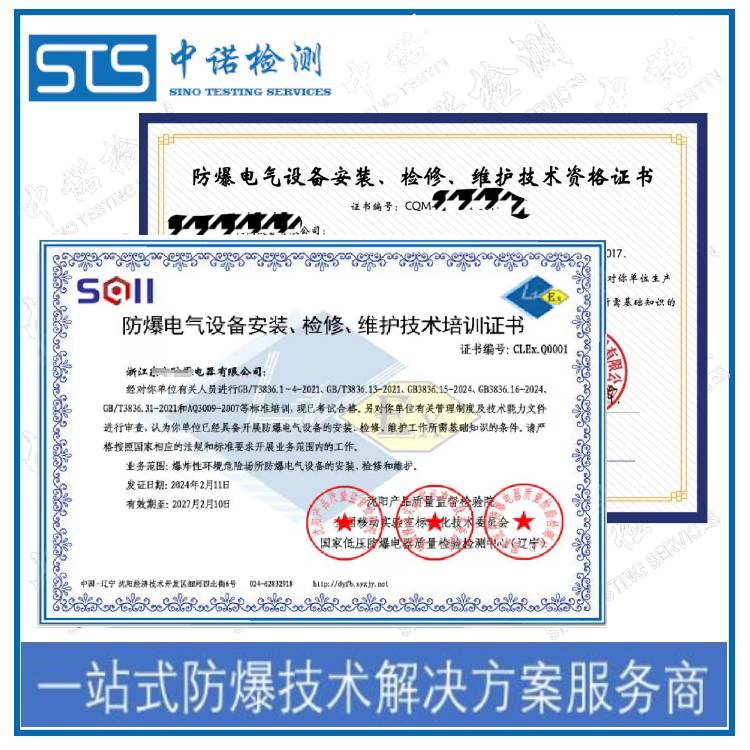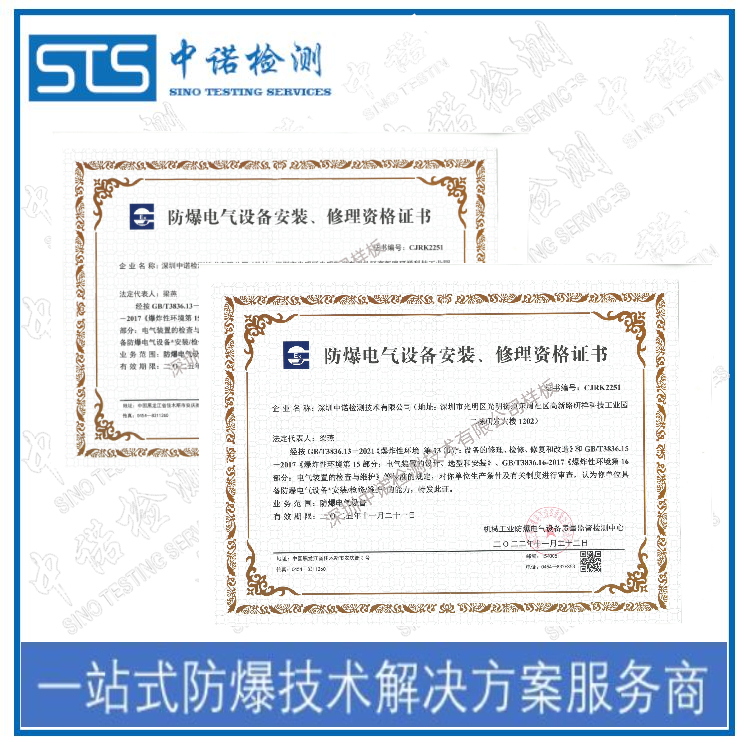







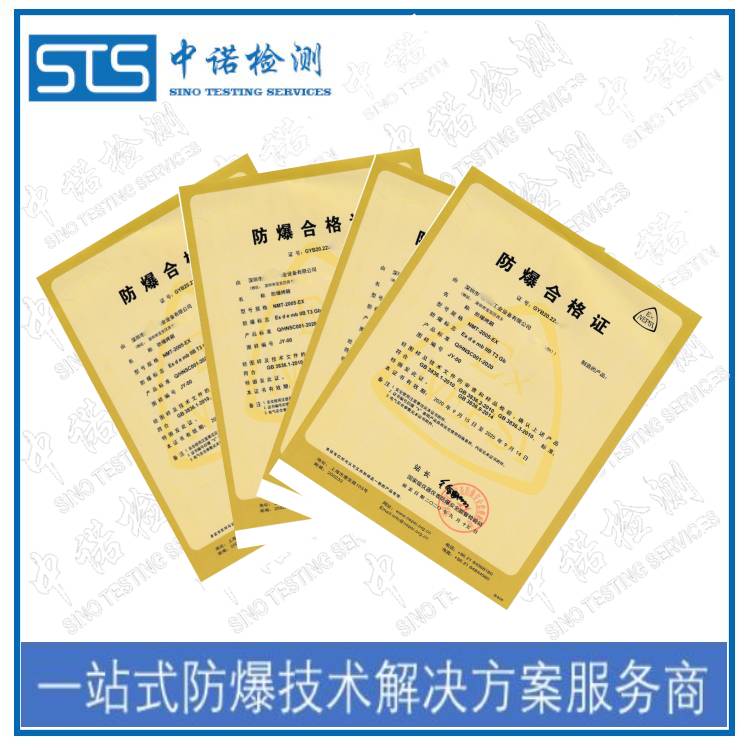
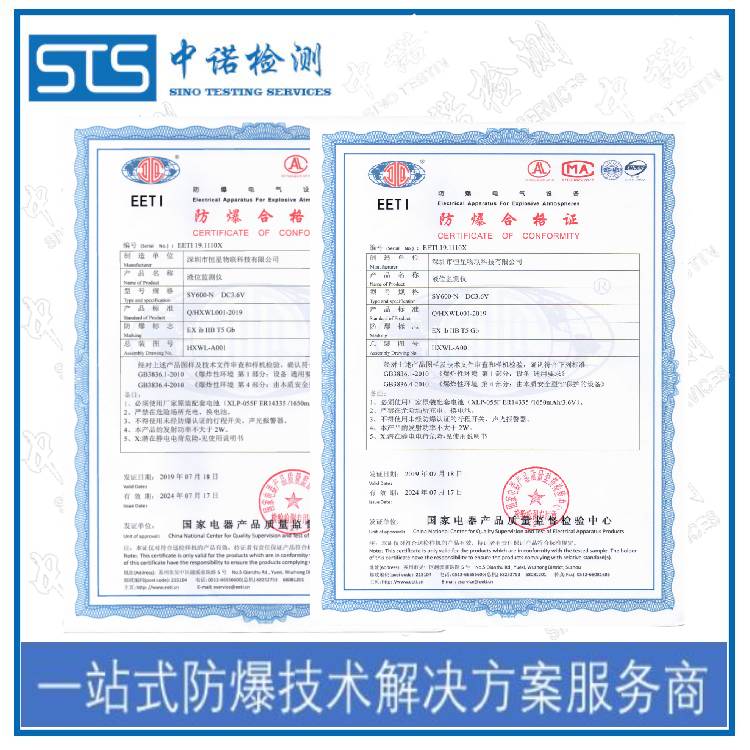
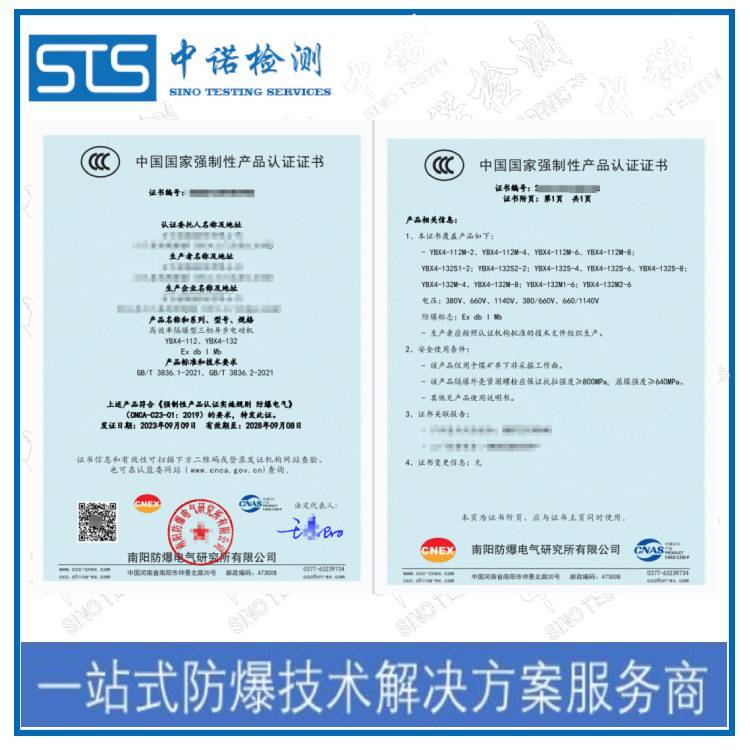
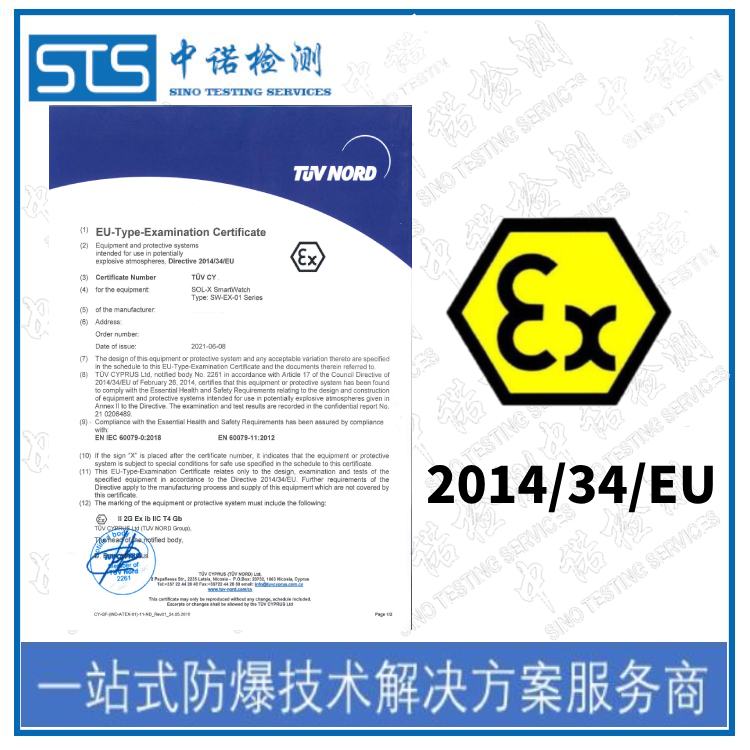
Shenzhen ZhongNuo Testing Technology Co., Ltd. is headquartered in South China and specializes in explosion-proof certification and coal mine safety certification application consulting services, offering a one-stop explosion-proof technology consulting service.
Which certifications are the ATEX and IECEx certifications from?
ATEX certification is a mandatory certification for explosion-proof products in the EU, serving as a directive for explosion-proof under the CE certification, applicable to the EU and its regions.
IECEx is the International Electrotechnical Commission's explosion-proof electrical products certification system, which is voluntary and applicable to member countries of the IECEx scheme.
Most major economic powers globally are members of the IECEx system, including China.
For IECEx and ATEX certifications, ZhongNuo Inspection summarizes the following distinctions:
(1) Application Scope: ATEX certification is applicable in the EU region, IECEx for IECEx member states.
(2) Is it mandatory? ATEX certification is mandatory, while IECEx is voluntary.
(3) Execution Standards: ATEX certification standards are IEC 60079 series, IECEx certification standards are IEC 60079 series.
(4) Explosion-proof markings, the ATEX explosion-proof markings are more complex than the IECEx certification markings. You can see this clearly by looking at the examples we have provided.
(5) Conversion issues: Currently, ATEX certification cannot be converted to other certificates outside the EU. IECEx member countries recognize IECEx certificates directly or indirectly, such as Australia and New Zealand, which directly recognize IECEx certificates. Other IECEx member countries (like China) can convert their IECEx certificates into local explosion-proof certificates.
For more information on ATEX certification and IECEx certification, feel free to send us a private message anytime!
ATEX Certification
ATEX is the European directive for "Equipment and protective systems intended for use in potentially explosive atmospheres."
The aim is to establish a single market within Europe, eliminate trade technical barriers, and ensure the free circulation of equipment intended for potential explosive hazard environments among its member states.
This directive covers equipment for both mining and non-mining operations (including mechanical and electrical equipment).
Expand the potential explosive hazard environment to include airborne dust and flammable gases, as well as flammable vapors and mist.
The basic health and safety requirements for the use of equipment in potential explosive environments are specified.
And the compliance assessment procedures that must be adopted for equipment prior to entering the European market.
The current directive is 2014/34/EU.
List of Domestic Explosion-Proof Certification Agencies:
Nanyang CNEX
2. Shanghai Coal Research Institute
3. National Electrical Product Quality Supervision and Inspection Center
4. Guangdong CQCEx National Explosion-Proof Equipment Quality Supervision and Inspection Center
5. National Coal Mine Explosion-Proof Safety Product Quality Supervision and Inspection Center
6. Jiamusi Explosion-Proof Institute
7. Tianjin PCEC
8. Shanghai NEPSI
9. Beijing Coal Research Institute CCRI, etc.
For applicants, the types of explosion-proof designs and the explosion-proof levels to choose are essentially the same across all reputable institutions. They are all nationally authorized institutions with reputable certifications, equipped with testing conditions that meet standard requirements, adhering to the same standards, and conducting the same testing. In identical conditions, the trend is to opt for institutions offering more affordable services and prices, which is also a significant reason for the increasing popularity of emerging explosion-proof companies.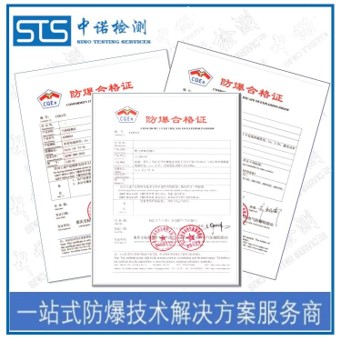
Is ATEX certification the same as explosion-proof certification? What are the differences between them?
Explosion-proof certification refers to a safety certification for equipment and products used in explosive hazard areas.
Products must implement certain measures to meet the requirements of explosion-proof certification standards; we refer to these measures as explosion-proof protective types.
Common explosion-proof protection types include intrinsic safety, flameproof, positive pressure, and increased safety, etc.
Clearly, intrinsic safety is just one type of explosion-proof protection.
Different explosion-proof protection types have different design requirements for products.
intrinsically safe design limits electrical energy, even in the event of a fault.
A type of explosion-proof protection that the generated energy is not sufficient to ignite the surrounding explosive environment.
Therefore, intrinsic safety requirements impose limitations on electrical equipment's current, voltage, capacitance, inductance, etc., and are generally suitable for low-power devices.
Additionally, specific requirements are in place for the power supply method of intrinsically safe equipment, the material of the housing, and wireless transmission.
As a long-standing third-party consulting firm specializing in explosion-proof certification.
ZheNuo Inspection has dedicated engineers specializing in intrinsically safe circuit and structural design.
We can provide technical consulting services for explosion-proof circuit design, illustration, and modifications.
We have extensive design and certification experience for explosion-proof classifications A, B, and C.
If you need certifications in this area, feel free to message us!
Explosion-proof Certification Application Consulting Services - Shenzhen ZhongNuo Inspection & Testing Technology Co., Ltd.
WeChat Official Account

Scan to follow Official Account