


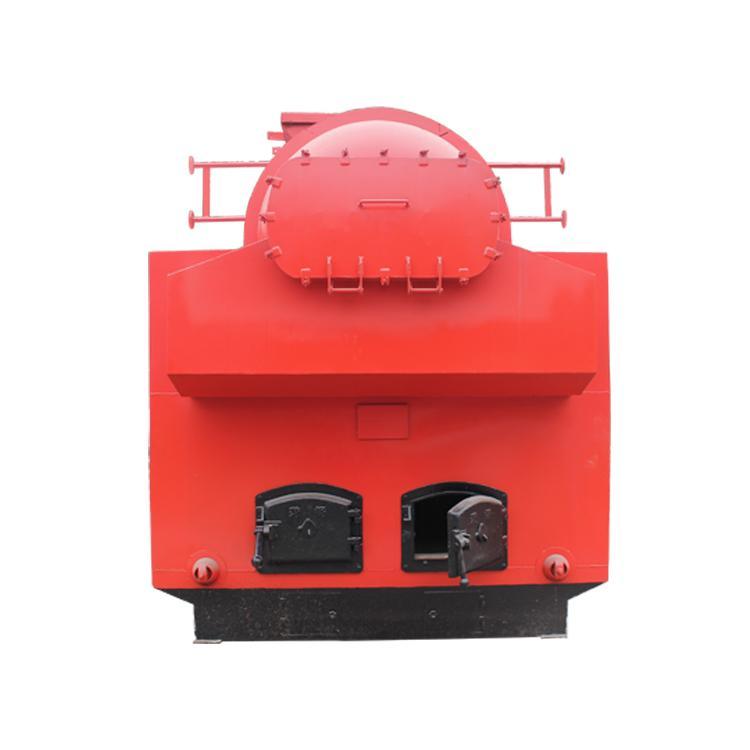

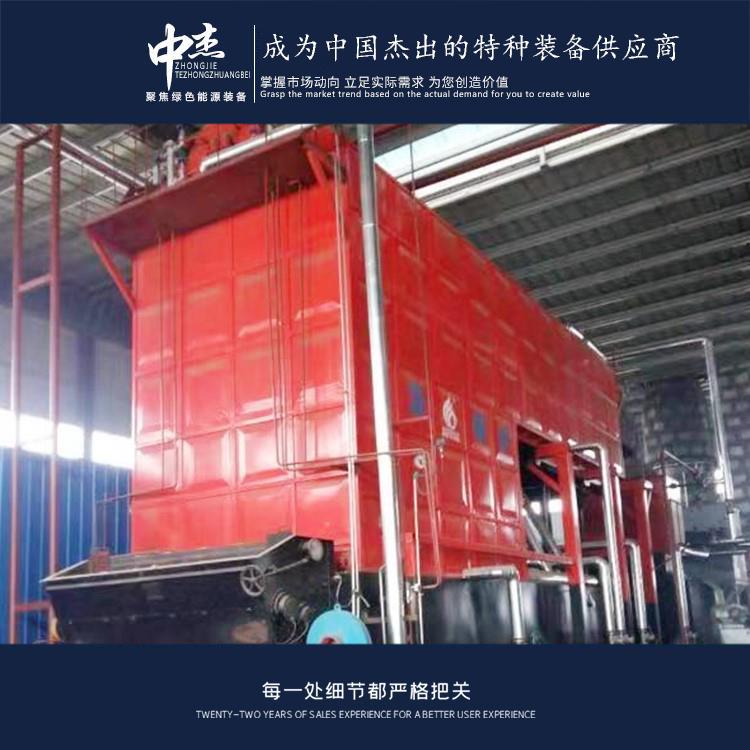
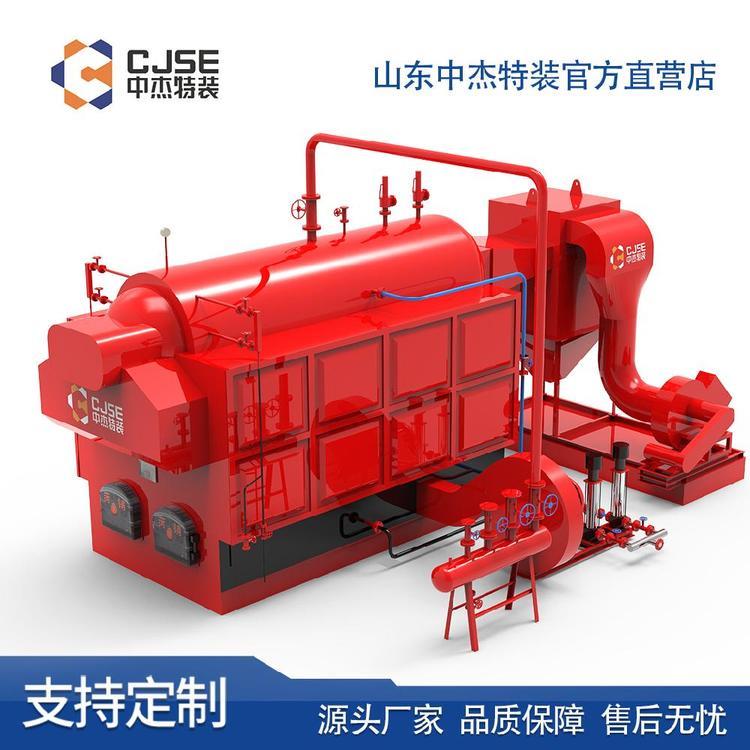


















Shandong Zhongjie Special Equipment (formerly Heze Boiler Factory Co., Ltd.) holds an A-grade boiler manufacturing license, an A2-grade pressure vessel manufacturing license, an A2-grade pressure vessel design license, a B-grade boiler installation license, and GB2/Class, GC2/Class pressure pipeline installation licenses, as well as a mechanical and electrical equipment installation contracting qualification. It is a member of the China Boiler and Water Treatment Association, the China Chemical Equipment Association, and the council member of the Shandong Equipment Manufacturing Association. The company has also passed the ISO9001 Quality Management System, ISO14001 Environmental Management System, OHSAS18001 Occupational Health and Safety Management System certifications, and the American ASME/U2 certification.
A biomass boiler bag dust collector is a commonly used flue gas purification equipment for removing particulate matter from the flue gas produced by the combustion of biomass boilers. Its operating principle is as follows:
Flue Gas Enters the Dust Collector: Flue gas from the biomass boiler combustion chamber passes through the flue into the bag dust collector.
Pre-treatment: Before entering the bag filter, flue gas may undergo pre-treatment, such as desulfurization and denitrification, to reduce corrosion and damage to the filter bags.
Filter: After the smoke enters the bag filter, it passes through the filter bag area. Inside the bag filter, there are numerous filter bags. As the smoke passes through the filter bags, particles are captured by them, and the purified smoke exits through the filter bags.
Particulate Matter Collection: Particulate matter gradually accumulates on the filter bag, forming a layer of ash. As the ash layer thickens over time, it increases the resistance to smoke flow through the filter bag. Ash cleaning operations are required.
Ash Cleaning: To maintain the normal operation of the bag dust collector, regular ash cleaning is necessary. Ash cleaning can be carried out using various methods, such as mechanical impact or pulse blowing. Ash cleaning will cause the ash layer to fall off, with particles collected in the ash hopper.
Emission: After dedusting treatment, the purified flue gas meets the emission standards and can be released into the atmosphere through the chimney.
The working principle of the bag dust collector is based on the capture and separation of particles by the filter bags, maintaining the permeability and dust removal efficiency through continuous cleaning operations. The particle capture capability of the bag dust collector can effectively purify the flue gas produced by biomass boiler combustion, protecting the environment.
Preventing malfunctions is crucial for maintaining the smooth operation of biomass hot water boilers. Here are some methods for preventive maintenance:
Regular inspections and maintenance: Perform regular checks and maintenance on biomass hot water boilers, including cleaning, lubricating, and tightening. Inspect all parts and connections of the boiler to ensure they are functioning properly and in good working condition.
Clean Combustion System: Regularly clean the combustion system, including the combustion chamber, burners, and burner nozzles. Remove ash, deposits, and dirt to maintain the unobstructed flow of the combustion system, preventing incomplete combustion and unstable flames.
Inspect Water Quality: Regularly check the water quality of the biomass hot water boiler, including water hardness, alkalinity, and impurities. Implement appropriate water treatment measures based on the water quality to prevent scale and corrosion, and protect the boiler's heat exchangers and pipes.
Clean heat exchangers: Regularly clean the heat exchangers of biomass hot water boilers to remove dirt and dust. Accumulated dirt and dust can reduce the heat transfer efficiency of the heat exchangers, affecting the boiler's thermal efficiency and operational stability.
Inspect safety valves and pressure gauges: Regularly inspect and test the safety valves and pressure gauges of the biomass hot water boiler to ensure their proper operation. The proper functioning of the safety valves and pressure gauges is crucial for ensuring the safety and stability of the boiler.
Maintain records and monitoring: Document operational parameters and fault conditions of biomass hot water boilers, and conduct monitoring and analysis. Identify and resolve issues promptly to prevent faults from occurring or escalating.
Biomass boilers promote environmental protection mainly in the following aspects:
Renewable Energy Utilization: Biomass boilers use biomass fuel, such as wood chips, straw, wheat straw, fruit shells, etc., which are renewable resources. Compared to fossil fuels, the combustion of biomass fuel releases less carbon dioxide, resulting in a smaller impact on climate change.
Reducing Greenhouse Gas Emissions: The carbon dioxide produced during the combustion process of biomass boilers can be reabsorbed through the regeneration of biomass, forming a closed loop. This helps to decrease greenhouse gas emissions, contributing positively to slowing down climate change.
Low Pollution Emissions: The combustion process of biomass boilers produces lower emissions of pollutants in the flue gas. Through reasonable combustion adjustment and auxiliary pollution control equipment such as dust collectors and nitrogen oxide control devices, further reductions in the emissions of particulates and nitrogen oxides in the flue gas can be achieved.
Recycled Waste Utilization: Biomass boilers can use waste and by-products as fuel, such as crop straw, wood processing waste, etc. This facilitates the recycling of waste, reducing issues related to waste accumulation and disposal.
Energy Efficiency Enhancement: The combustion process of biomass boilers can be improved through technologies such as heat recovery and waste heat utilization, enhancing energy utilization efficiency. This aids in reducing energy consumption and diminishing reliance on traditional energy sources.
In summary, biomass boilers, as a renewable energy utilization technology, offer advantages such as low carbon emissions, low pollution discharge, and waste recycling, which positively promote environmental protection and sustainable development.
The extinguishing process and maintenance methods for the fully automatic biomass boiler are as follows:
Extinguishing Process:
Cease fuel supply: Prior to extinguishing the biomass boiler, stop the fuel supply first to ensure the fuel supply pipeline is closed.
Turn off the burner: Switch the burner's switch or the extinguish button on the control panel to the off position to stop the burner from operating.
Allow to cool: Wait for the boiler to cool to a safe temperature, which usually takes some time. Do not operate during this period to prevent accidents.
Shut off power: After the boiler has completely cooled down, turn off the power switch of the boiler to ensure the boiler is in a power-off state.
Maintenance Instructions:
Clean the combustion chamber: Regularly clean the combustion chamber of ash and dirt produced during the combustion process. Use appropriate tools and cleaning agents to ensure the chamber remains clear and clean.
Heat Exchanger Cleaning: Regularly clean heat exchangers, particularly those on the flue side. The flue gas produced during the combustion process may contain particles and slag, which can adhere to the heat exchanger surface, affecting heat transfer efficiency. Using appropriate cleaning methods, such as mechanical cleaning or chemical cleaning, can reduce the accumulation of dirt.
Inspect and Replace Key Components: Regularly inspect and replace key components such as burners, valves, and sensors. Ensure these parts operate normally and maintain performance, to avoid malfunctions and safety hazards.
Water Treatment: Appropriate water treatment for boiler feed water to prevent impurities and sediments from settling inside the boiler. Methods such as water softening, deoxygenation, and scaling removal can be employed to maintain the cleanliness and stability of the water supply.
Please provide the Chinese content to be translated.
Zhongjie Special Equipment adheres to the great vision of "realizing employees' dreams, creating customer value, and striving for the prosperity and strength of our motherland," and is dedicated to the development of the green energy equipment industry. We commit to society with high-quality, cost-effective products and services!
WeChat Official Account

Scan to follow Official Account



















