


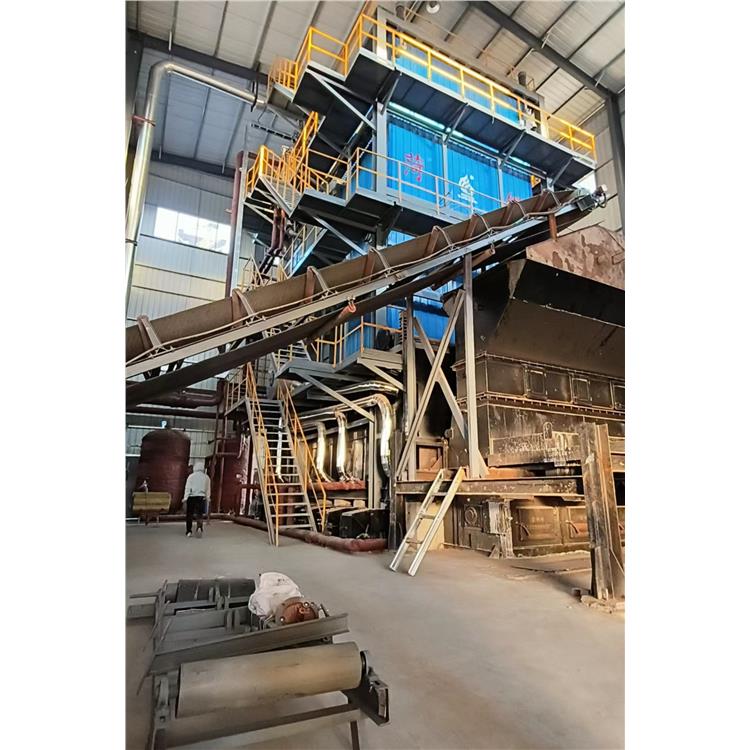

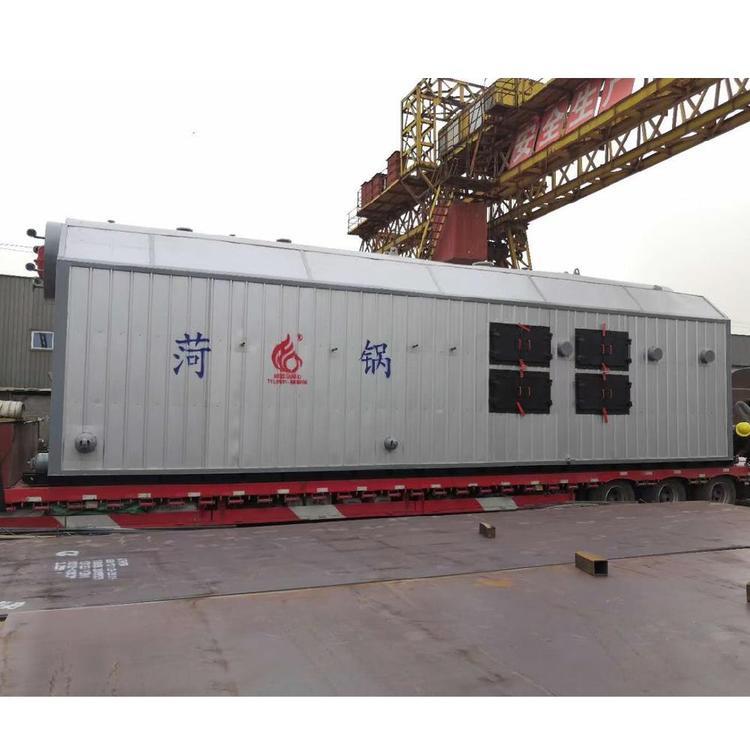
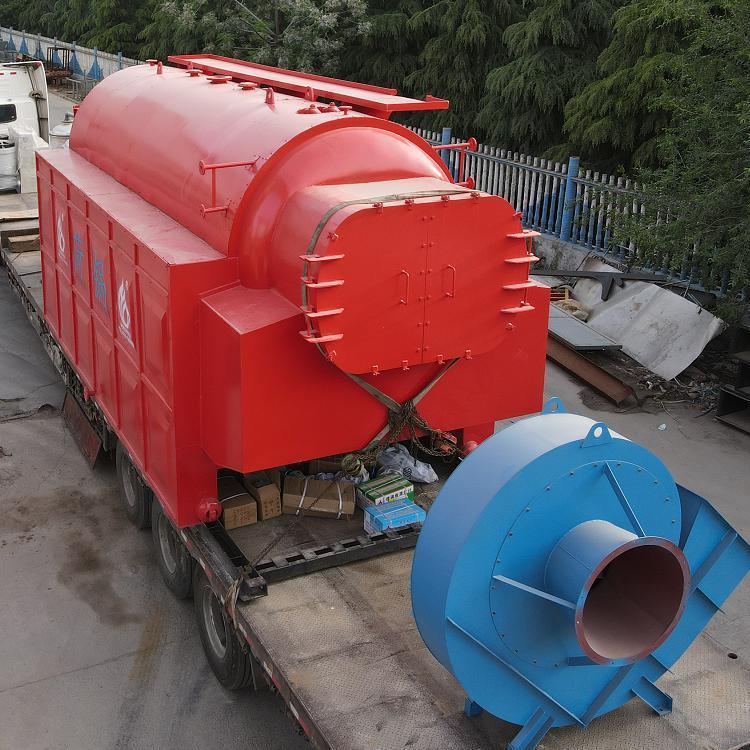


















Shandong Zhongjie Special Equipment (formerly Heze Boiler Factory Co., Ltd.) was established in 2001, located at No. 2218 Jinnan Road, Development Zone, Heze City, with a registered capital of 50 million yuan and total assets of 500 million yuan. The company has 7 business centers: boilers, deep-freeze containers, pressure vessels, central air conditioning, engineering installation, international trade, and Internet of Things. It has three factory sites on Jinnan Road, East Changjiang Road, and Bohai Road, covering a total of 200,000 square meters, with the main workshop spanning 83,000 square meters. It currently employs 710 people, including 247 engineers and technicians and 82 intermediate-level technicians. In December 2016, it was recognized as a "High-tech Enterprise" by the Science and Technology Department. In June 2021, it was identified as a "Specialized and New Enterprise in Shandong Province" by the Ministry of Industry and Information Technology. In June 2022, it was recognized as a "Gazelle Enterprise in Shandong Province" and in August 2022, it was identified as a "Specialized and New Small Giant Enterprise" by the Ministry of Industry and Information Technology.
A biomass boiler for centralized heating refers to the application of biomass boilers in the centralized heating systems of cities or large buildings. Below is an analysis of the technical features of biomass boilers for centralized heating:
Combustion Technology: The combustion technology used in biomass boilers for centralized heating, such as fluidized bed combustion and chain grate combustion, enables the combustion of biomass fuel and improves energy utilization efficiency.
Multi-fuel Adaptability: Biomass boilers for centralized heating have strong fuel adaptability, capable of accommodating various types of biomass fuels such as wood chips, straw, and waste crops, offering flexible fuel options.
Automated Control System: The automated control system equipped on biomass boilers for centralized heating can automatically regulate and control the boiler's operation, enhancing its stability and safety.
Flue Gas Purification Technology: Flue gas purification equipment, such as dust collectors, desulfurization devices, and denitrification devices, installed on biomass boilers for centralized heating, can effectively reduce emissions generated during the combustion process, protecting the environment.
Heat Recovery Utilization: Biomass boilers for centralized heating are equipped with a heat recovery system, which can use the waste heat from combustion for the heating system, improving energy utilization efficiency and reducing energy consumption.
Remote Monitoring and Management: Centralized heating biomass boilers can be monitored and controlled in real-time through a remote monitoring and management system, enhancing operational efficiency and management convenience.
Sustainable Development: Central heating biomass boilers utilize renewable biomass fuel, reducing dependence on fossil fuels, with lower carbon emissions and environmental impact, in line with sustainable development requirements.
In summary, centralized heating with biological
Several factors can influence the thermal efficiency of biomass boilers; here is an analysis of some common factors:
Fuel Quality: The quality of biomass fuel directly affects the combustion process and thermal efficiency. Characteristics such as fuel moisture, ash content, and volatile content can impact the stability and efficiency of combustion. A higher quality fuel can enhance combustion efficiency and reduce energy loss.
Combustion System: The design and operational status of the combustion system significantly impact thermal efficiency. A well-designed combustion system ensures complete combustion and utilization of fuel. Adjustments to parameters such as combustion air volume, combustion temperature, and combustion time can optimize the combustion process and enhance thermal efficiency.
Excess Air: Excess air leads to incomplete fuel combustion and energy waste. Properly controlling the air supply during the combustion process and preventing excess air from entering the furnace can improve combustion efficiency.
Temperature Control: Proper temperature control of the boiler is crucial for thermal efficiency. Reasonably controlling parameters such as water temperature and steam temperature can avoid excessive or low temperatures, thus improving thermal efficiency.
Cleaning and Maintenance: Regularly clean and maintain boiler equipment, including the ash and soot inside the furnace, to maintain the efficiency of heat exchange and reduce thermal resistance and loss.
Flue Gas Waste Heat Recovery: By utilizing waste heat recovery devices such as economical air preheaters and economizers, the residual heat in flue gas can be recovered and utilized, thereby improving the boiler's thermal efficiency.
Boiler Design and Equipment Selection: Rational boiler design and selection of equipment, such as burners, high
Possible reasons for incomplete combustion in biomass boilers may include the following aspects:
Poor fuel quality: Low-quality biomass fuel, such as excessive moisture content and uneven particle size, can affect the combustion process. Fuel with high moisture content can lead to a decrease in combustion temperature and incomplete combustion.
Insufficient air supply: Air is essential during the combustion process. If there is insufficient air supply, the fuel cannot react fully with oxygen, leading to incomplete combustion. Possible causes include blocked air intake, fan failure, etc.
Unstable combustion system: Instability in the combustion system may also lead to incomplete combustion. For instance, improper adjustment of the burner or an unreasonable design of the combustion chamber may affect the stability of the combustion process.
Insufficient combustion temperature: Low combustion temperature can lead to incomplete combustion. Possible causes include improper adjustment of the burner and unstable fuel supply.
Ash accumulation in combustion chamber: Ash buildup in the combustion chamber can affect the combustion process, obstructing the contact between fuel and oxygen, leading to incomplete combustion.
Insufficient burn time: Insufficient burn time can also lead to incomplete combustion. If fuel doesn't stay long enough in the combustion chamber, it can't be burned completely, resulting in unburned fuel residues.
Inadequate combustion chamber design: An improperly designed combustion chamber, such as one that is too large or too small, hinders the thorough mixing of fuel and oxygen, leading to incomplete combustion.
Above are some possible causes of incomplete combustion in biomass boilers, which require analysis and resolution based on specific circumstances. Regular maintenance, rational fuel selection, and optimization of the combustion system are all necessary.
To make biomass boilers adaptable to the market, consider the following aspects:
Technological Innovation: Continuously innovating in technology to enhance the combustion efficiency, heat recovery efficiency, and environmental performance of biomass boilers. For instance, the adoption of combustion systems, flue gas purification technologies, and automatic control systems improves the energy efficiency and operational convenience of the boilers.
Diverse Product Range: Develop a wide variety of biomass boiler products to meet market demands and cater to different user needs. Consider biomass boilers suitable for various scales, fuel adaptability, and application scenarios to offer a broader selection.
Reduced: Through technological improvements and production optimization, we have lowered the manufacturing costs of biomass boilers, making them more competitive. Additionally, we have optimized the fuel supply chain and transportation methods to reduce fuel costs and enhance market competitiveness.
Establish a comprehensive after-sales service system: Offer timely after-sales support, including installation and debugging, maintenance, and troubleshooting, to enhance users' trust and satisfaction in biomass boilers.
Enhance marketing and promotion: Strengthen the promotion and publicity of biomass boilers through advertising, exhibitions, technical training, and other means, to increase users' awareness and understanding of biomass boilers.
Policy Support: Actively seek government policy support and incentives to promote the adoption and application of biomass boilers, boosting market demand.
In summary, through measures such as technological innovation, product diversification, cost reduction, enhanced after-sales service, market promotion, and policy support, biomass boilers can adapt to the market, meet customer needs, and promote the sustainable development of biomass energy.
Shandong Zhongjie Special Equipment, welcome customers to visit our factory for business discussions.
WeChat Official Account

Scan to follow Official Account



















