


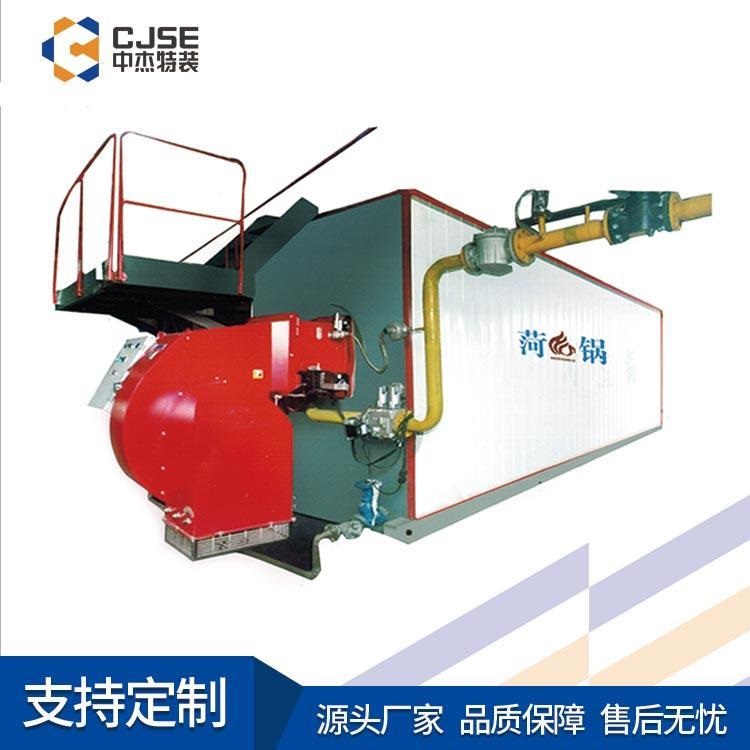

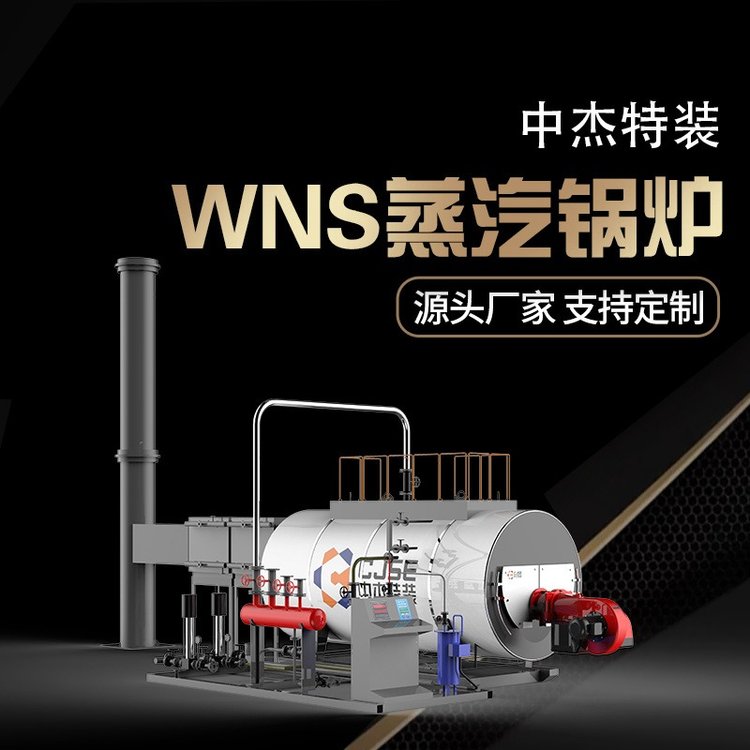
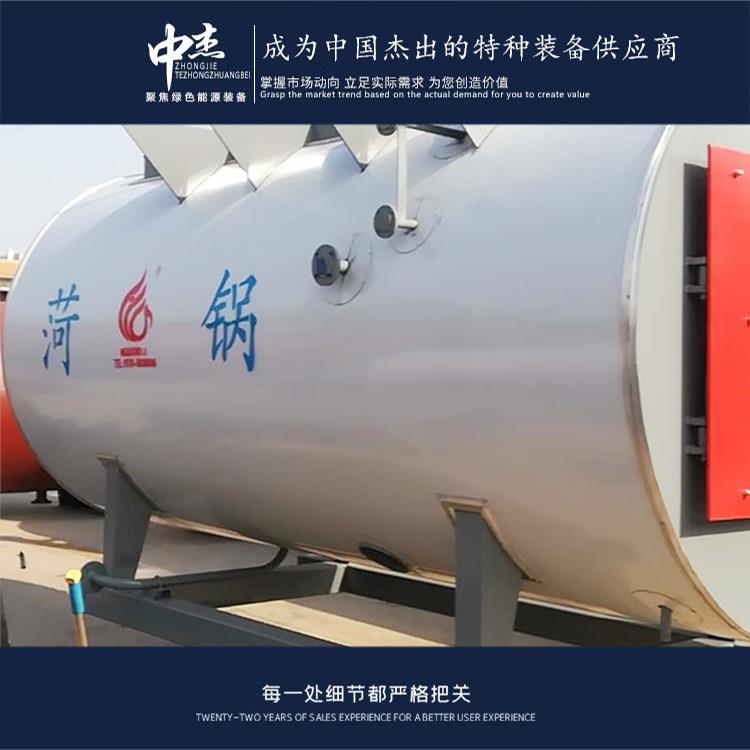


















Shandong Zhongjie Special Equipment's main products include: fuel (gas) boilers, organic heat carrier boilers, biomass boilers, waste heat recovery boilers, and other boiler products; vacuum insulation cryogenic pressure vessels such as LNG storage tanks, oxygen-nitrogen-argon storage tanks, and CO2 storage tanks; pressure vessel products such as denitrification engineering equipment, heat storage and energy storage equipment, and complete chemical equipment sets; central air conditioning and ventilation equipment such as ground (water) source heat pumps, air source units, water-cooled screw units, and air-cooled modules. Planned products include large-scale energy centers, LNG transport vehicles, LNG tank containers, and other green energy equipment.
A gas boiler is a heating equipment that uses gas or similar fuels. It generates heat by burning gas, heating water into steam or hot water for applications such as heating, hot water supply, or industrial production. The working principle of a gas boiler involves mixing gas with air, igniting it to produce high-temperature combustion gases, which then transfer heat to the water through a heat exchanger, raising the water temperature. Gas boilers offer benefits such as environmental friendliness and safety, and are widely used in residential, commercial, and industrial sectors.
In textile processing factories, common types of boilers include the following:
Steam Boilers: Steam boilers are one of the commonly used types of boilers in textile processing plants. They can produce high-temperature, high-pressure steam for processes such as heat treatment, dyeing, and boiling during textile processing. Steam boilers offer advantages such as rapid heating, high efficiency, and good stability.
Hot Water Boilers: Hot water boilers are suitable for low-temperature textile processing processes like washing and drying. They provide a stable supply of hot water with high temperature control accuracy and low energy consumption.
Hot Air Furnaces: Hot air furnaces are used for drying processes in textile processing. They transfer heat energy to textiles through the hot air produced by combustion, achieving quick drying. Hot air furnaces have the advantages of fast heating and high thermal efficiency.
When selecting the appropriate boiler type for a textile processing plant, consider the following factors:
Processing Requirements: Determine the required heat medium (steam, hot water, hot air) and parameters such as working temperature and pressure based on the specific processing requirements of the textile processing plant.
Energy Costs and Efficiency: Consider the energy consumption and efficiency of different boiler types, selecting one that meets processing needs and has high energy utilization efficiency.
Environmental Requirements: Pay attention to the emission standards and environmental performance of the boilers, choosing the appropriate type based on environmental considerations.
Maintenance
Yes, thermal oil boilers typically feature some self-protection functions to ensure safe operation and extend their lifespan. Here are some common self-protection features: Overheat Protection: Thermal oil boilers are equipped with overheat protection devices that automatically shut off the burner's gas supply when the thermal oil temperature exceeds the set safe range, preventing overheating and avoiding equipment damage and safety accidents. Overpressure Protection: The boilers also come with overpressure protection devices that automatically shut off the burner's gas supply when the thermal oil pressure exceeds the set safe range, preventing explosions or leaks in the thermal oil system. Burner Automatic Control: The burners of thermal oil boilers are usually equipped with automatic control systems that can adjust the gas supply and combustion effect based on set operating parameters, maintaining a stable combustion state and avoiding incomplete or excessive combustion. Temperature Control and Adjustment: Thermal oil boilers are generally equipped with temperature control and adjustment devices that can automatically regulate the circulation and heating of thermal oil based on the set working temperature, maintaining a stable working temperature and avoiding overheating or underheating. Water Level Protection: For some thermal oil boilers, particularly water tube boilers, water level protection devices are also installed to monitor the water and thermal oil levels, and when levels are abnormal, the protection device automatically shuts off the burner's gas supply to prevent dry burning and thermal oil leakage. It's important to note that while thermal oil boilers have self-protection functions, they still require regular inspections and maintenance to ensure the normal operation and reliability of these protection devices. Additionally, operators need to understand and master the working principles and operation methods of these self-protection functions to ensure safe operation.
The temperature control methods for gas boilers typically include:
- Manual Adjustment: The temperature of a gas boiler is controlled by manually operating valves or regulators. Adjust the valve opening or regulator settings as needed to achieve the desired temperature.
- Automatic Adjustment: Gas boilers can be equipped with an automatic control system that uses sensors and controllers for automatic temperature regulation. Sensors detect the boiler's temperature and send signals to the controller, which then automatically adjusts the gas supply and burner status within a set temperature range to maintain the desired temperature.
- Proportional Control: The temperature regulation of gas boilers can also be done using proportional control. Adjust the valve or regulator opening to proportionally regulate based on temperature changes, maintaining a certain proportional relationship between the gas supply and the burner's operational status.
- PID Control: PID control is a commonly used temperature regulation method. The PID controller adjusts the gas supply and burner status based on temperature deviations, rates of change, and integral values to achieve temperature control.
Note that different gas boilers may use different temperature control methods, and the specific method and operation should be determined according to the boiler model and control system. When adjusting the temperature, follow safety operating procedures to ensure the boiler operates normally and maintains safety.
Zhongjie Special Equipment adheres to the great vision of "realizing employees' dreams, creating customer value, and striving for the prosperity and strength of our motherland," devoting itself to the development of the green energy equipment industry, and dedicating high-quality, cost-effective products and services to society!
WeChat Official Account

Scan to follow Official Account



















