


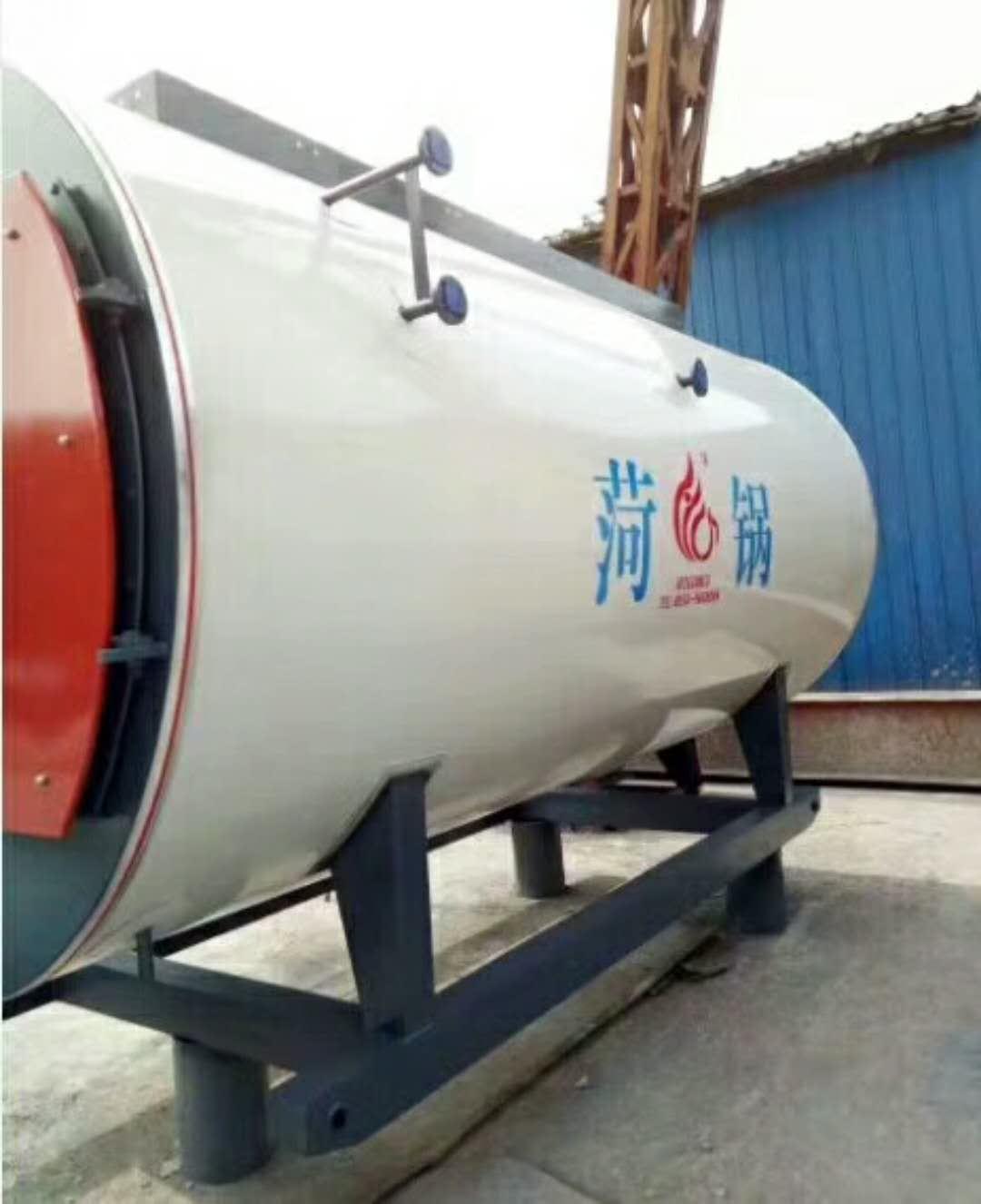

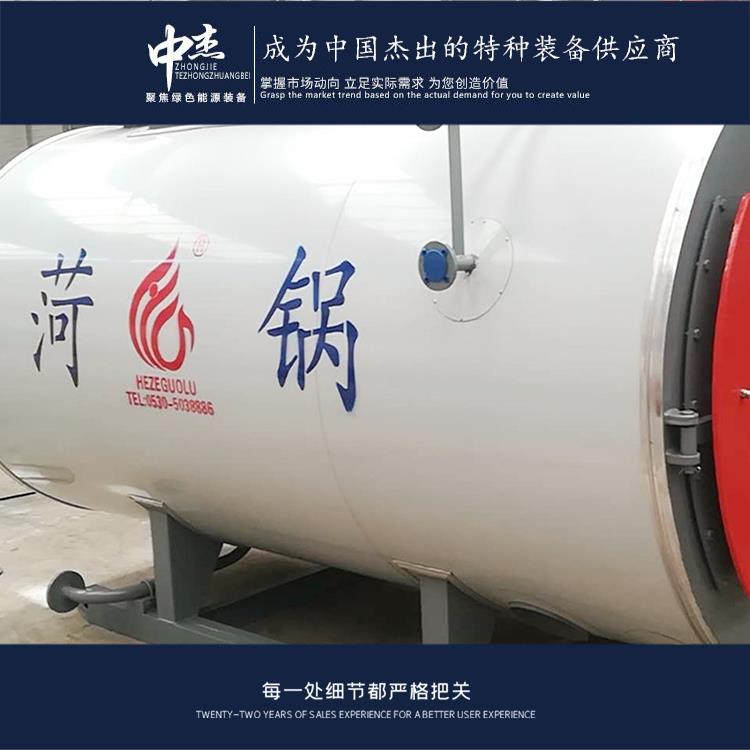


















Shandong Zhongjie Special Equipment (formerly Heze Boiler Factory Co., Ltd.) holds an A-grade boiler manufacturing license, A2-grade pressure vessel manufacturing license, A2-grade pressure vessel design license, B-grade boiler installation license, and GB2/Class, GC2/Class pressure pipeline installation license, as well as equipment and machinery installation contracting qualifications. It is a member of the China Boiler and Water Treatment Association, the China Chemical Equipment Association, and the council member of the Shandong Equipment Manufacturing Association. The company has also passed the ISO9001 Quality Management System, ISO14001 Environmental Management System, OHSAS18001 Occupational Health and Safety Management System certifications, and the American ASME/U2 certification.
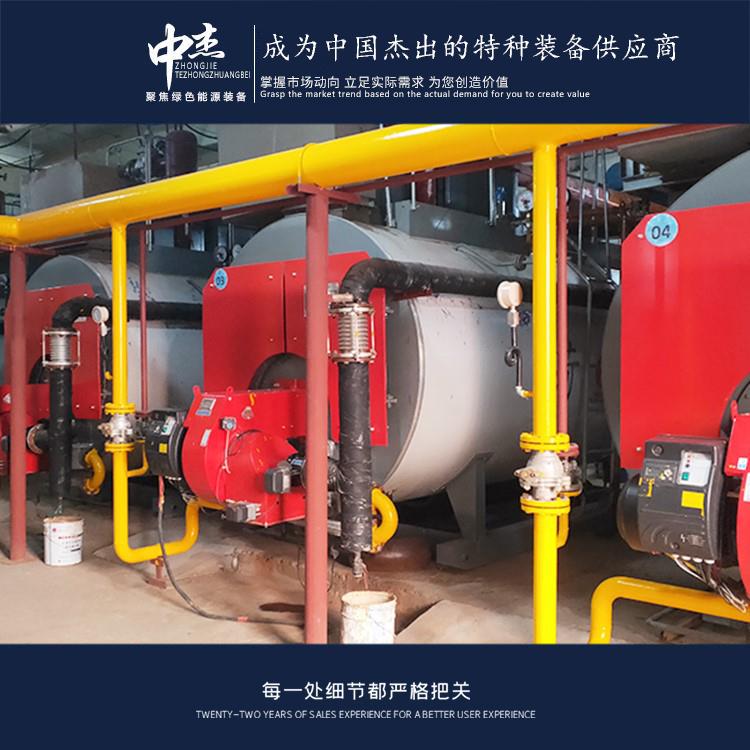
Clean and environmental-friendly gas boilers offer several advantages:
Low emissions: The exhaust emissions from gas combustion are relatively low, with less pollution such as nitrogen oxides and particulates. Compared to coal-fired or oil-fired boilers, gas boilers have lower emissions levels, causing less environmental pollution.
High thermal efficiency: Gas combustion has a higher thermal efficiency, enabling full utilization of fuel energy and reducing energy waste. Compared to other traditional fuels like coal and oil, gas combustion is more efficient, providing more heat energy.
Clean combustion: Gas combustion does not produce ash or soot, reducing carbon and dirt accumulation inside the boiler and in the flue. This reduces cleaning and maintenance work for the boiler, extending its lifespan.
Combustion stability: The combustion performance of gas is stable, with no significant flame fluctuations or explosion risks during combustion. This makes gas boilers safer and more reliable in operation.
Rapid start and stop: Compared to other fuels, gas boilers have faster and more flexible start-up and shutdown processes. This makes them suitable for scenarios requiring frequent start and stop, such as seasonal heating and hot water needs.
Renewable energy integration: As a clean fuel, gas can be combined with renewable energy sources, such as solar hot water systems and biomass fuels. This integration can further enhance energy utilization efficiency and environmental friendliness.
The flow rate standard of thermal oil in the oil pipes of a thermal oil furnace usually varies according to specific applications and equipment requirements, without a fixed, uniform value. Generally speaking, the flow rate of thermal oil within the pipes should be maintained within a reasonable range to ensure proper equipment operation and heat transfer efficiency. Excessive flow rates of thermal oil can lead to the following issues: increased system pressure loss and pump power consumption, increased frictional loss in the pipes leading to energy loss, and increased system noise and vibration. On the other hand, insufficient flow rates of thermal oil can cause: inadequate heat transfer, affecting the equipment's thermal efficiency; extended residence time in the pipes, which can lead to oxidation and thermal decomposition, affecting the lifespan of the thermal oil; and the formation of scale in the pipes, increasing resistance and affecting fluid flow. Therefore, when designing and operating a thermal oil furnace system, it is necessary to consider specific equipment parameters, the properties of the thermal oil, and pipeline layout, among other factors, to determine an appropriate flow rate. Typically, the flow rate should be within the range of 0.5-2.0 m/s, but the exact figures should be adjusted and optimized based on actual conditions. In practice, flow rate control can be achieved by monitoring and adjusting the pump flow rate and pipe resistance to meet the equipment's heat energy needs and operational requirements.
The gas steam boiler's annual gas consumption for one ton capacity depends on various factors, including the boiler's efficiency, load conditions, and operating hours. Generally, it can be estimated using the following formula: Gas Consumption (m) = Boiler Thermal Efficiency × Boiler Rated Thermal Power × Operating Hours. Here, the boiler thermal efficiency refers to the boiler's energy utilization efficiency, usually expressed as a percentage; the boiler rated thermal power is the boiler's rated thermal output, typically in kilowatts (kW); and operating hours are the boiler's operating time, usually measured in hours. It's important to note that the boiler's thermal efficiency and rated thermal power can be determined based on the specific model and parameters of the boiler, while the operating hours need to be estimated based on actual usage. Therefore, to accurately calculate the annual gas consumption of a one-ton gas steam boiler, it is recommended to refer to the technical specifications and operating records of the boiler, or consult the boiler manufacturer or engineer for advice.
The purpose of deoxygenation in industrial boiler make-up water is to reduce oxygen corrosion and bubble formation within the boiler, ensuring the safety and proper operation of the boiler and piping system. The main methods of deoxygenation include:
1. Mechanical Deoxygenation: Removes oxygen from water using physical methods. Common mechanical deoxygenation equipment includes deaerators and degassers. Deaerators remove oxygen by atomizing water into a film, utilizing the difference in solubility between gases. Degassers, on the other hand, remove oxygen by atomizing water into tiny droplets, also taking advantage of the solubility difference.
2. Thermal Deoxygenation: Removes oxygen from water by heating the water body, as the solubility of oxygen decreases with increasing temperature. Common thermal deoxygenation equipment includes deaerators and deaeration pots. Deaeration pots release oxygen from water by heating it to the saturation temperature. Deaerators heat water to reduce its solubility, thus removing oxygen.
3. Chemical Deoxygenation: Removes oxygen from water by adding chemicals that react with it, thus eliminating oxygen. Common chemical deoxygenating agents include salts, reducers, etc. Chemical deoxygenation is often used in high-pressure boiler systems and can effectively remove oxygen from water.
The choice and method of deoxygenation depend on the specific boiler system and water quality. In practice, a combination of deoxygenation methods is often used to achieve the desired deoxygenation effect. The selection and operation of deoxygenation equipment must be assessed and adjusted based on actual conditions to ensure the safety and proper operation of the boiler system.
Our company highly values technological innovation and R&D design. We have one municipal-level enterprise technology center in Heze City, equipped with testing facilities such as non-destructive testing, physical and chemical testing, welding testing, and hydrostatic testing. We have over 600 types of equipment, including CNC machine tools, X-ray flaw detectors, digital ultrasonic flaw detectors, mechanical property testing machines, chemical analyzers, spectrometers, tensile testing machines, and plasma welding machines. Our key products like temperature and pressure vessels for welding, biomass boiler emissions reduction, and waste heat utilization have been selected for multiple Shandong Provincial Department of Industry and Information Technology science and technology innovation projects, Shandong key projects, and Heze City innovation and excellence projects. We have accumulated 27 authorized utility models, 16 authorized inventions, participated in drafting 2 standards, 2 industry standards, and registered 15 trademarks. Our technical team, in collaboration with Professor Yajiang Li from Shandong University, has developed deep cryogenic vessel processing technology using the internationally recognized plasma arc + filler wire tungsten inert gas (PAW-GTAW) welding technique. The provincial-level scientific and technological achievement assessment has confirmed that our technology level in deep cryogenic vessel manufacturing has reached international standards.
Choose JETTA for your custom needs, let's join hands to create brilliance together!
WeChat Official Account

Scan to follow Official Account



















