


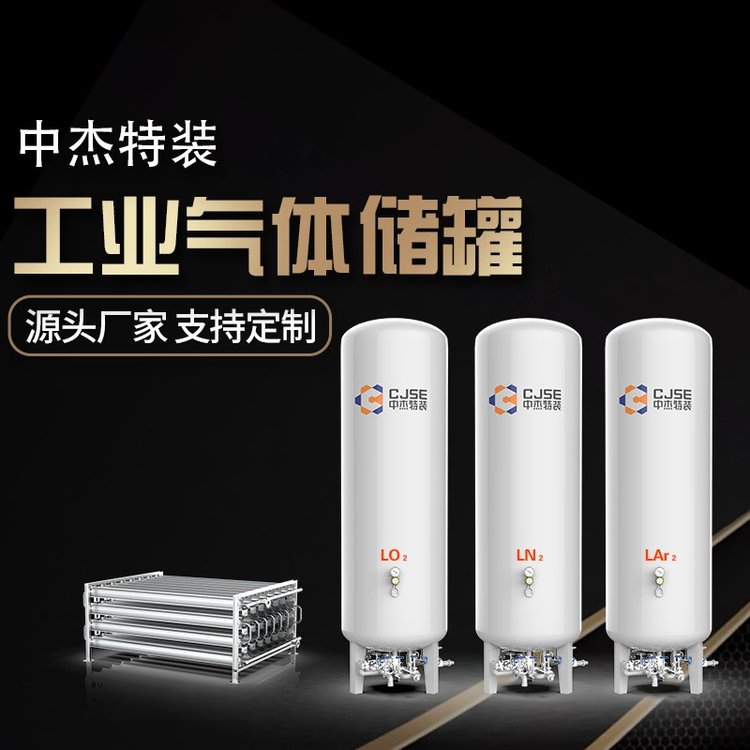

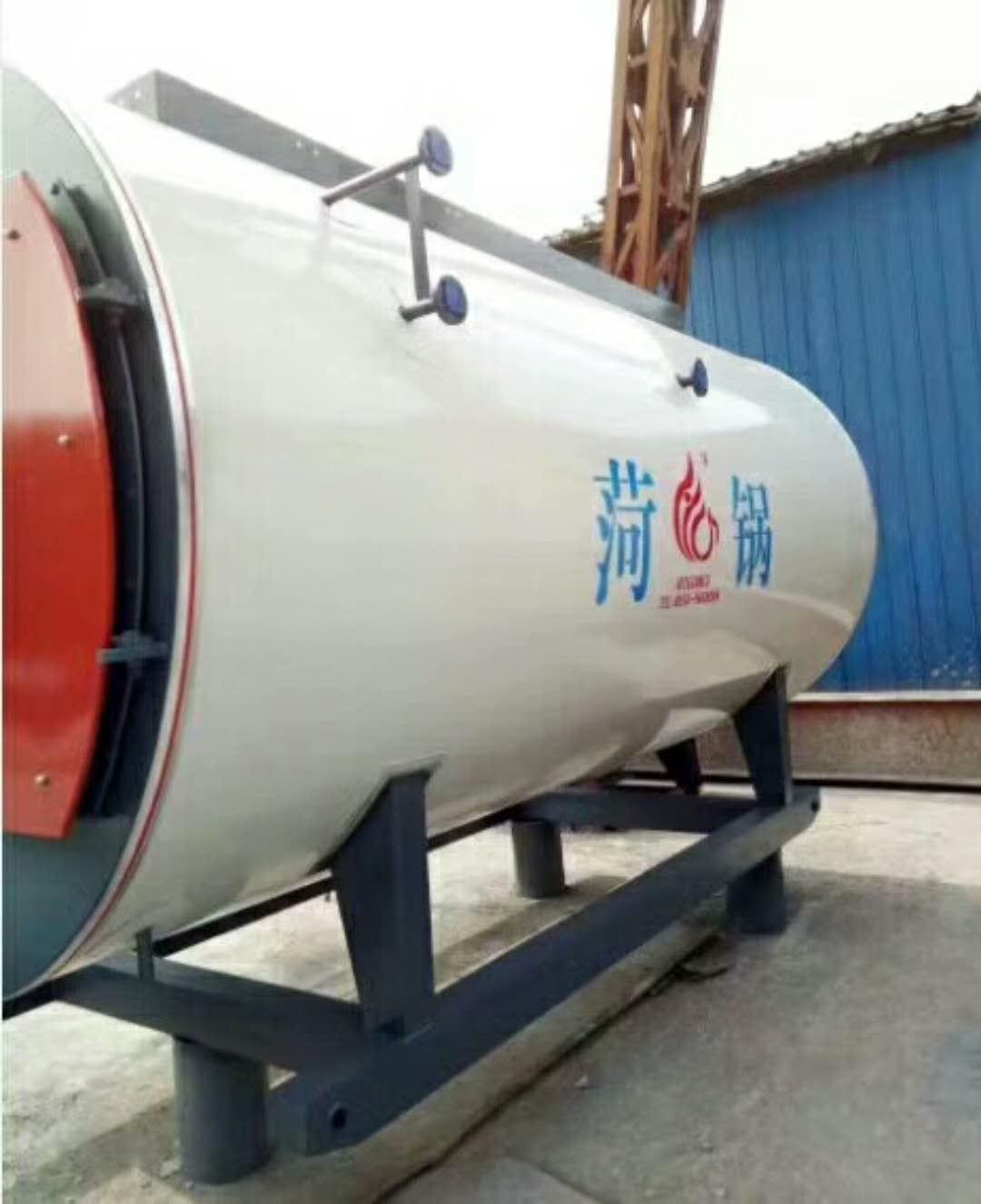
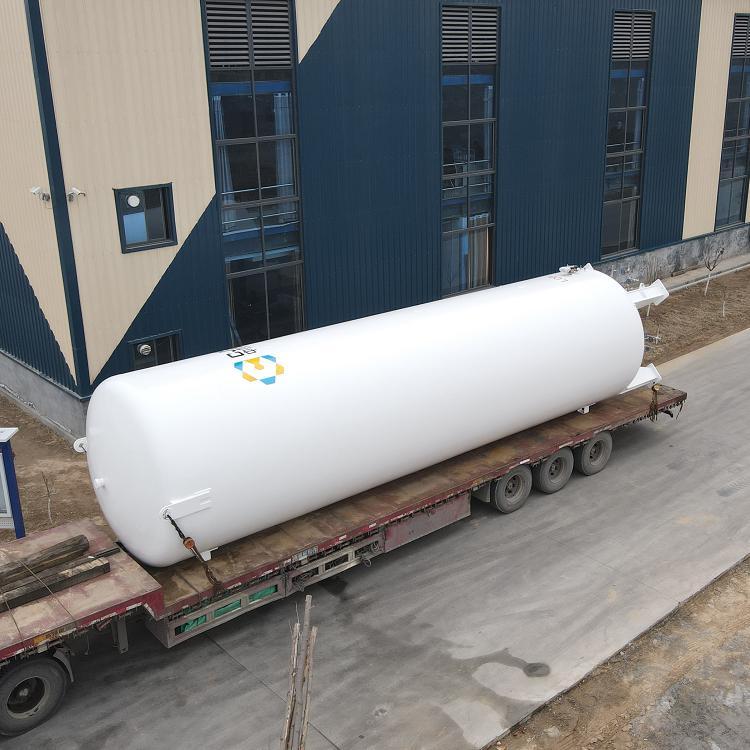


















Shandong Zhongjie Special Equipment specializes in products such as fuel (gas) boilers, organic heat carrier boilers, biomass boilers, waste heat recovery boilers, and other boiler products; vacuum insulation cryogenic pressure vessels including LNG storage tanks, oxygen/nitrogen/argon storage tanks, CO2 storage tanks, etc.; pressure vessel products such as denitrification engineering equipment, heat storage and energy storage equipment, and complete chemical equipment; central air conditioning and ventilation equipment like ground (water) source heat pumps, air source units, water-cooled screw units, and air-cooled modular units. Planned products include large-scale energy centers, LNG transport vehicles, LNG tank containers, and other green energy equipment.
Consider the following aspects to distinguish the quality of liquid nitrogen tanks:
Material: Liquid nitrogen tanks are typically made of high-strength, corrosion-resistant materials such as stainless steel or aluminum alloy. These materials offer excellent corrosion resistance and mechanical strength, ensuring the tank's long-term stable operation.
Sealability: The liquid nitrogen storage tank should have excellent sealing performance, effectively preventing any leakage of liquid nitrogen. The tank's valves, pipeline connections, and other areas should be designed rationally to ensure reliable sealing.
Insulation: Liquid nitrogen tanks should possess excellent insulation properties to minimize evaporation loss. The insulation layer of the tank should use materials such as polyethylene foam to reduce heat conduction and evaporation loss.
Safety: Liquid nitrogen tanks should possess excellent safety features, including equipped with safety valves, pressure gauges, and other safety equipment, as well as featuring fire and explosion prevention functions. The design and manufacturing of the tank should comply with relevant safety standards and regulations.
Service Life: Liquid nitrogen tanks generally have a long service life, capable of withstanding long-term use and transportation. The manufacturer and reputation of the tank are also significant factors in assessing the service life.
Price and After-Sales Service: The price of liquid nitrogen tanks should be reasonable, with excellent after-sales service. Choosing manufacturers or suppliers with a good reputation and reliable after-sales service ensures the quality of the products and technical support.
Considering these factors, the quality of liquid nitrogen tanks can be discerned. When selecting a liquid nitrogen tank, it's recommended to choose one that meets the actual requirements and usage environment to ensure safe and reliable storage.
Liquid nitrogen storage tanks are widely used in meat freezing. Here are several main applications of liquid nitrogen storage tanks in meat freezing:
Quick Freezing: Liquid nitrogen tanks can provide low temperatures to rapidly freeze meat to the desired temperature. Due to the low-temperature properties of liquid nitrogen, the temperature of the meat can be quickly reduced in a short period, effectively preserving the quality and texture of the meat.
Cryogenic Storage: Liquid nitrogen tanks are suitable for long-term freezing storage of meat products. Placing meat in a liquid nitrogen tank maintains it at low temperatures, preventing the growth of bacteria and microorganisms, thereby extending the shelf life of the meat.
Chilled Transportation: Liquid nitrogen tanks are suitable for the frozen transportation of meat products. Placing meat in a liquid nitrogen tank maintains its low temperature, ensuring the quality and freshness of the meat during transportation.
Chilled Processing: Liquid nitrogen tanks can be used for meat chilling. By exposing meat to liquid nitrogen, the surface can be quickly frozen, forming a frozen layer, thereby preserving the meat's moisture and nutritional content.
Chilled Processing: Liquid nitrogen tanks are suitable for meat freezing processing. Placing meat in liquid nitrogen makes it harder and crisper, facilitating cutting, slicing, and processing.
Note that when using liquid nitrogen tanks for meat freezing, it is essential to follow the relevant safety operating procedures and guidelines. Ensure that operators have the necessary safety awareness and operational skills to prevent accidental incidents. In addition, consult the food safety authority for further advice.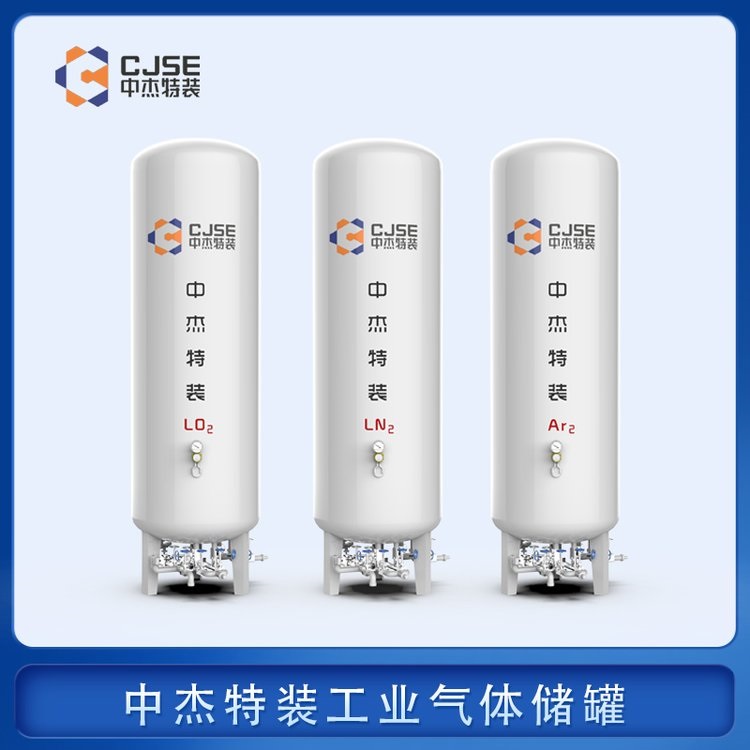
The liquid oxygen tank possesses the following characteristics:
High Purity: The liquid oxygen storage tank contains high-purity liquid oxygen, typically exceeding 99.5% purity. This makes the liquid oxygen storage tank crucial in applications requiring high-purity oxygen, such as medical, aerospace, and research fields.
Low Temperature: Since the boiling point of liquid oxygen is -183°C, the liquid oxygen storage tank must have excellent insulation properties to maintain the low temperature of the liquid oxygen. The tank is typically designed with double or multi-layer construction, filled with insulating material in between to reduce heat transfer and the evaporation of liquid oxygen.
High Pressure: Liquid oxygen tanks typically need to withstand high pressure to maintain their liquid state. The design and material selection of the tank must consider the pressure requirements of liquid oxygen to ensure the tank's safety and reliability.
Flammability: Liquid oxygen is highly flammable and supports combustion. Therefore, fire prevention measures must be implemented in the design and use of liquid oxygen storage tanks to ensure no ignition sources are present around the tank and that appropriate fire extinguishing equipment is available.
High Density: Liquid oxygen has a higher density, allowing for more oxygen storage in liquid oxygen tanks compared to gas oxygen. This gives liquid oxygen tanks an advantage in applications requiring large volumes of oxygen supply, such as in the field.
Corrosiveness: Liquid oxygen possesses some degree of corrosiveness.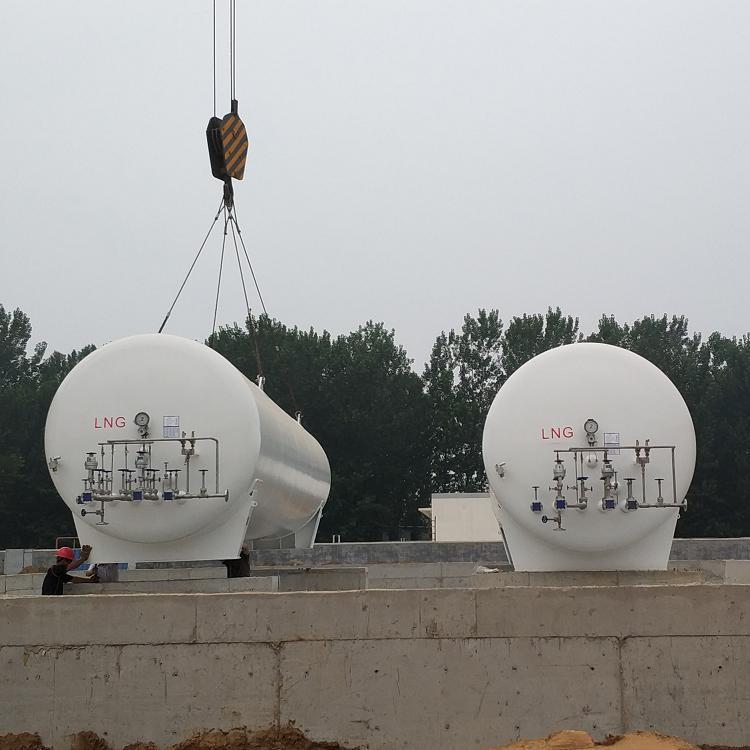
Liquid Oxygen Low-Temperature Storage Tanks are primarily used for storing and supplying liquid oxygen. Their application methods can vary depending on specific requirements and scenarios. Here are some common applications of liquid oxygen low-temperature storage tanks:
Applications: Liquid oxygen low-temperature storage tanks are widely used in the field for cryogenic preservation of biological samples, cells, tissues, and vaccines. Institutions such as biopharmaceutical research organizations and biobanks utilize liquid oxygen low-temperature storage tanks to store and protect these biological materials.
Experimental Research: Liquid Oxygen Low-Temperature Storage Tanks are used to provide low-temperature environments in scientific research and laboratories, for freezing preservation and experimental purposes. These tanks play a crucial role in experimental research across various fields such as physics, chemistry, biology, and materials science.
Industrial Applications: Liquid Oxygen Low-Temperature Storage Tanks are used in the industrial sector for providing low-temperature cooling, serving processes such as metalworking, welding, and heat treatment. These tanks can provide low temperatures, enabling metals to achieve the required hardness and toughness during processing.
Food Industry: Liquid Oxygen Low-Temperature Storage Tanks are used in the food industry for freezing and refrigerating foods such as frozen meats, frozen fruits, and frozen seafood. The low temperature of liquid oxygen can quickly freeze foods, preserving their freshness and quality.
Liquid oxygen low-temperature storage tanks are used in the field for storing and supplying liquid oxygen as fuel. As a high-energy fuel, liquid oxygen is widely used in the propulsion systems of engines and vessels.
During the operation of liquid oxygen low-temperature storage tanks, strict adherence to relevant safety regulations and operational guidelines is required to ensure the safe operation and use of the tanks. Liquid oxygen is highly flammable, so fire prevention measures must be taken when using liquid oxygen low-temperature storage tanks, and it must be ensured that there are no ignition sources nearby.
Our company attaches great importance to technological innovation and R&D design. We have one municipal-level enterprise technology center in Heze City, equipped with testing facilities for non-destructive testing, physical and chemical tests, welding tests, hydrostatic tests, etc. We possess over 600 various instruments and equipment, including CNC machine tools, X-ray flaw detectors, digital ultrasonic flaw detectors, mechanical property test machines, chemical analyzers, spectrometers, tensile test machines, plasma welding machines, and more. The key products and technologies we have developed, such as welding for temperature and pressure vessels, biomass boiler emission reduction, and waste heat utilization, have successively been shortlisted for multiple Shandong Provincial Department of Industry and Information Technology science and technology projects, Shandong Provincial key projects, and Heze City innovative and excellent projects. We have累计 obtained 27 authorized utility models, 16 authorized inventions, participated in drafting 2 standards, 2 industry standards, and registered 15 trademarks. Our technical team, in collaboration with Professor Li Yajiang of Shandong University, has developed deep cryogenic container processing technology using the internationally recognized plasma arc + wire filling tungsten inert gas arc welding (PAW-GTAW) technique, which has been appraised as reaching an international level in the field of deep cryogenic container manufacturing by the provincial science and technology achievement evaluation authority. Choose Zhongjie Special Equipment, and let's join hands to create brilliance!
WeChat Official Account

Scan to follow Official Account



















