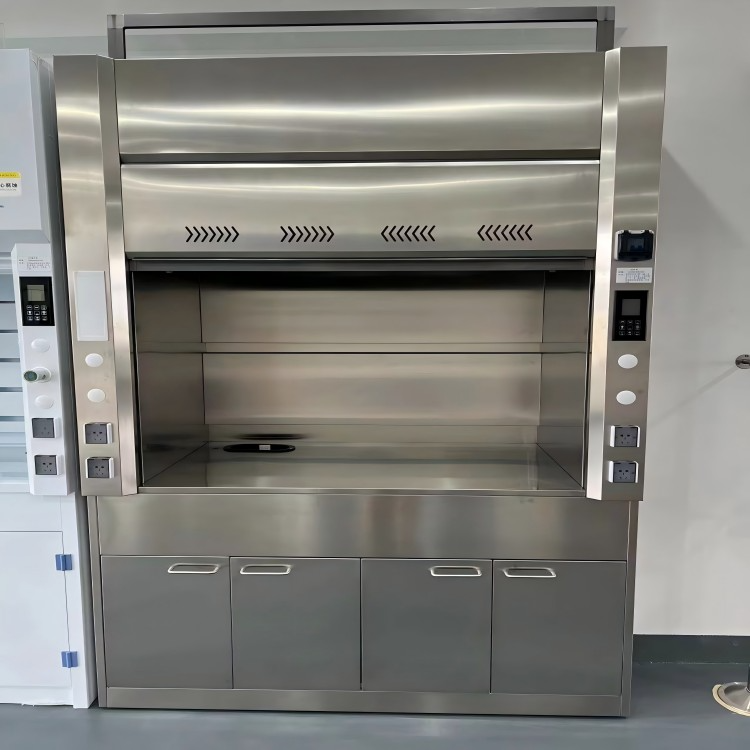








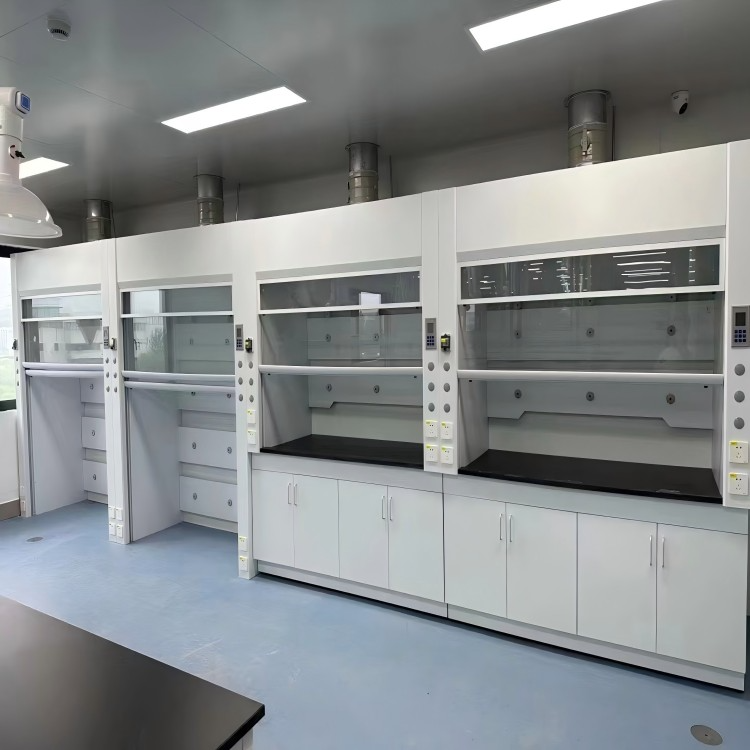
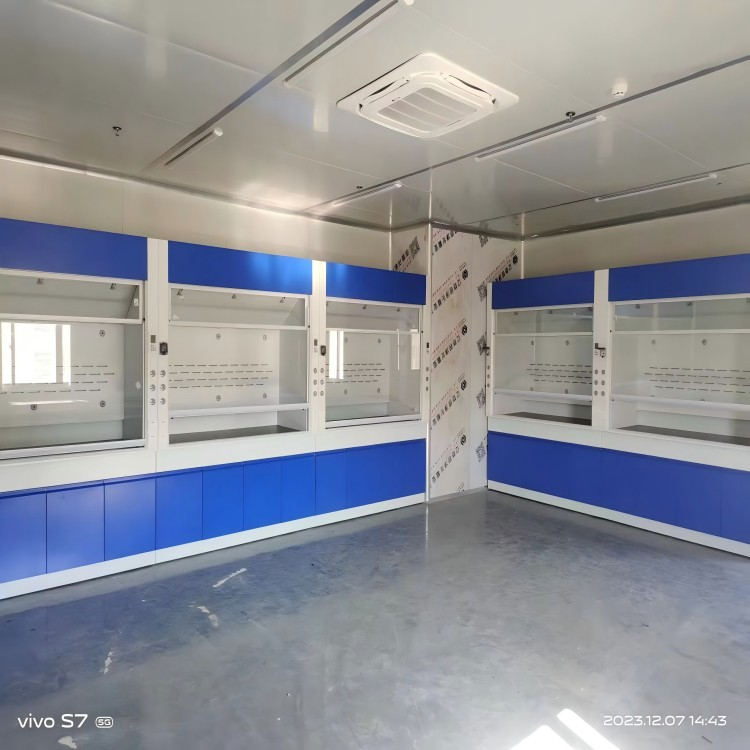
All-steel ventilation cabinet:
1. Cabinet: Made from 1.0mm thick Shanghai Baosteel hot-dipped galvanized steel plate, coated with epoxy resin electrostatic powder paint on an automatic production line, high-temperature cured, acid and alkali corrosion-resistant, suitable for chemical laboratories. It features sturdy and heavy-duty construction.
2. Drainage plate (lining sideboard): Made of 5mm thick High-Density Polyethylene (HDPE) board.
3. Top Surface: Made of 12.7mm thick core chemical board, reinforced to 25.4mm at the front edge.
4. Glass Sliding Door: Equipped with synchronous wheels, synchronous belts, and synchronous shafts for smooth and effortless operation. The door can stop at any position without gears, ensuring it doesn't tilt. The window features PVC profiles and 5mm tempered clear glass. The counterweight system includes a rear sliding track and noise-reducing sealing felt strip.
5. With LCD control panel operation control.
6. Includes 4 10A single 5-hole outlets.
7. Lighting mode is instant-on LED triple-protection lamp.
Fume hoods, also known as smoke cabinets or ventilation cabinets, are large equipment used in laboratories, particularly chemical labs. Their purpose is to minimize contact between the experimenter and harmful gases. Full isolation requires the use of a glove box. Fume hoods serve as the primary barrier to protect personnel from the hazards of toxic chemical fumes. They can act as crucial safety backup equipment, effectively expelling harmful gases during chemical experiment failures, the generation of chemical fumes, dust, and toxic gases, thereby safeguarding both staff and the laboratory environment.
Operation of Fume Hoods
First, stand or sit in front of the cabinet, then lower the glass door as much as possible. Your hand can extend through the door to the cabinet for the experiment. Since the exhaust fan draws air inward through the open door, harmful gases should not溢出 in large quantities under normal circumstances. Caution: When two or more fume hoods share one fan, the fan's on/off should be controlled by only one operator to avoid operational errors or mishaps. When in use, the fume hoods should receive a 10-minute supplementary air supply every two hours.
Cautionary Notes for Using Fume Hoods
❖
The indoor air temperature is between -5℃ and +40℃, with a 24-hour average not exceeding +25℃.
❖
In the laboratory, ventilation should be maintained regularly even when the fume hood is not in use, which is beneficial to the health of the experimenters.
❖
When more than two fume hoods are using the same exhaust fan, to prevent operational errors or misuse, the "on" and "off" controls of the fan should be handled by a single operator; if another fume hood is temporarily not in use or needs to be shut down, use the airflow control valve to seal the vent; avoid repeatedly turning the fan "on" and "off" simultaneously, as this not only damages the fan's lifespan but also affects the experimental results.
❖
When in use, avoid interference from crosswinds caused by personnel movement that may affect the fume hood.
❖
The fume hood should be topped up with 10 minutes of fresh air (i.e., opened for ventilation) every 2 hours. For use exceeding 5 hours, the windows should be left open to prevent negative pressure indoors.