







Offer SIL Certification, SIL Grading, and other consulting services - Shenzhen Zhongnuo Testing Technology Co., Ltd.
Safety Integrity Level, abbreviated as SIL, is differentiated by the probability of dangerous failure occurring per hour.
There are four SIL levels specified in the international IEC standards, with SIL 4 indicating a high level of integrity and SIL 1 representing a low level. For each safety integrity level, design specifications that can reduce design errors are stipulated.
The safety levels required in the production process are assessed and determined by specialized process engineering companies. Generally, for processes with high safety requirements, the required safety level is SIL3.
The standard for SIL Safety Integrity Level certification primarily includes:
1. IEC61508—sets basic safety requirements for both the operational and fault prediction capabilities of conventional systems. These requirements encompass general safety management systems, specific product design, and the design of processes that meet safety requirements, aiming to avoid both systematic design failures and random hardware failures.
2. IEC61511 - A functional safety standard specifically for safety instrumented systems in the process industry, which is a domain standard released by the International Electrotechnical Commission (IEC) following the foundational functional safety standard IEC61508. In China, the coordinating standard for IEC61511 is GB/T 21109.
3. ISO 13849-1 – Comprehensive safety assessment from components to systems. The standard also provides designers with more quantifiable methods for design implementation.
4. IEC 62061 – Standard in the electrical system field.
5. IEC61326-3-2—Additional requirements for the immunity levels of safety-related equipment, including low-probability end conditions that may occur at the site.
6. ISO 26262 - Primarily focused on specific electrical devices, electronic equipment, and programmable electronic devices within the automotive industry, specifically designed for automotive applications, with the aim of enhancing the functional safety of automotive electronics and electrical products.
SIL Functional Safety Certification is one of the crucial certifications for modern enterprises. In the modern industrial production characterized by mechanization, while instruments and machinery enhance production efficiency, uncontrollable variables and factors are inevitably present due to complex production processes and the precision of equipment. For instance, equipment failures, instrument shorts, and system malfunctions can lead to explosions, fires, and toxic gas leaks, posing severe threats to people's safety, property, and the environment, and even catastrophic consequences.
How can we minimize or keep this series of disasters and consequences within an acceptable range?
Therefore, the SIL certification came into being.
In fact, equipment failures occur at various stages of the product lifecycle, with varying probabilities. SIL certification involves intervening from the outset of product design, managing the entire lifecycle of the product according to specific standards and mature regulations, thereby minimizing the likelihood of failures. This approach aims to control risks.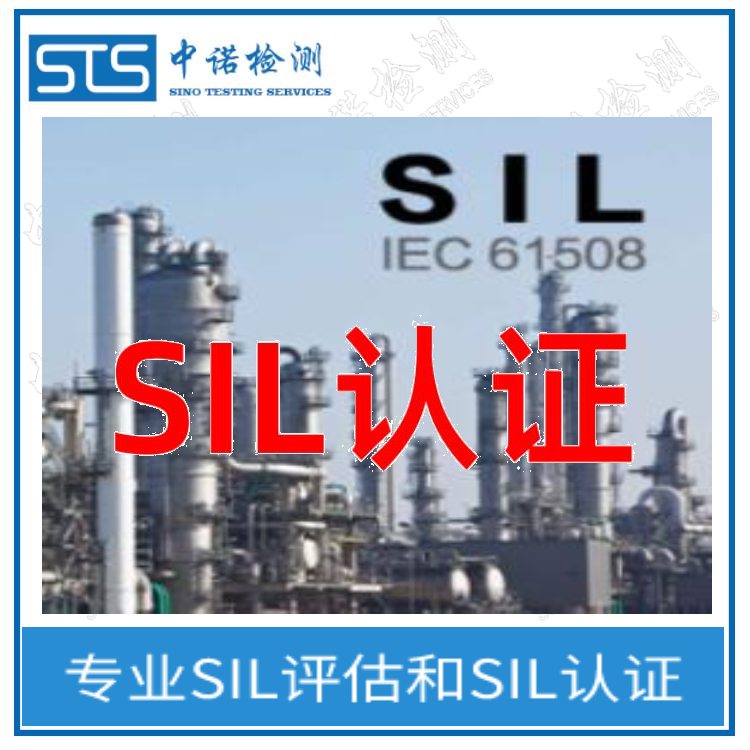
SIL 2 and SIL 3 certifications are two different levels. According to international certification standards, the SIL 3 level is higher than the SIL 2 level. Specifically, this is manifested as:
A SIL1-rated actuator should have a failure probability of ≤10^-6 to <10^-5 per hour of continuous operation.
SIL2 is ≥10^-7 to <10^-6. SIL3 is ≥10^-8 to <10^-7.
Of course, the product requirements for SIL3 level are much higher than those for SIL2.
Most products currently meet requirements with SIL2 or SIL3 certification levels.
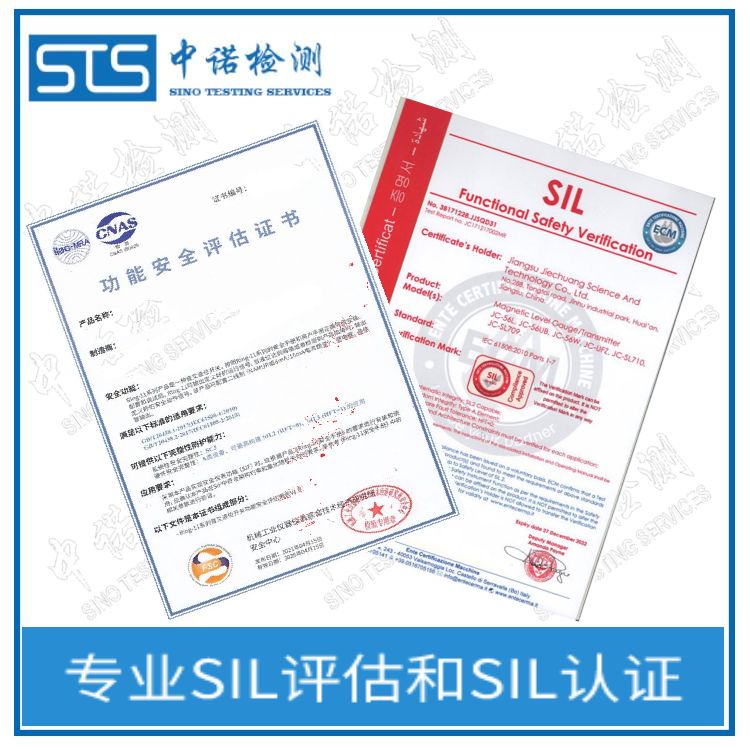
SIL certification is a third-party assessment, verification, and certification process based on standards such as IEC 61508 (GB/T 20438), IEC 61511 (GB/T 21109), IEC 61513, IEC 13849-1, IEC 62061, and IEC 61800-5-2, which evaluate and confirm the Safety Integrity Level (SIL) or Performance Level (PL) of safety equipment. Functional safety certification primarily involves document management (FSM) assessments for the development process of safety equipment, hardware reliability calculations and evaluations, software evaluations, environmental testing, and EMC electromagnetic compatibility testing. SIL certification is divided into four levels: SIL1, SIL2, SIL3, and SIL4, encompassing both product and system levels, with SIL4 having the highest requirements.
WeChat Official Account

Scan to follow Official Account