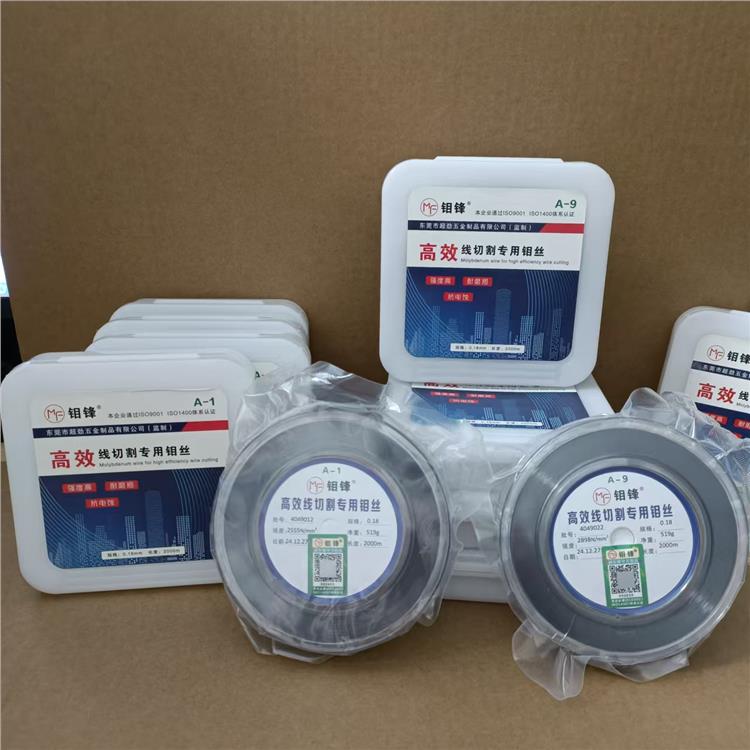









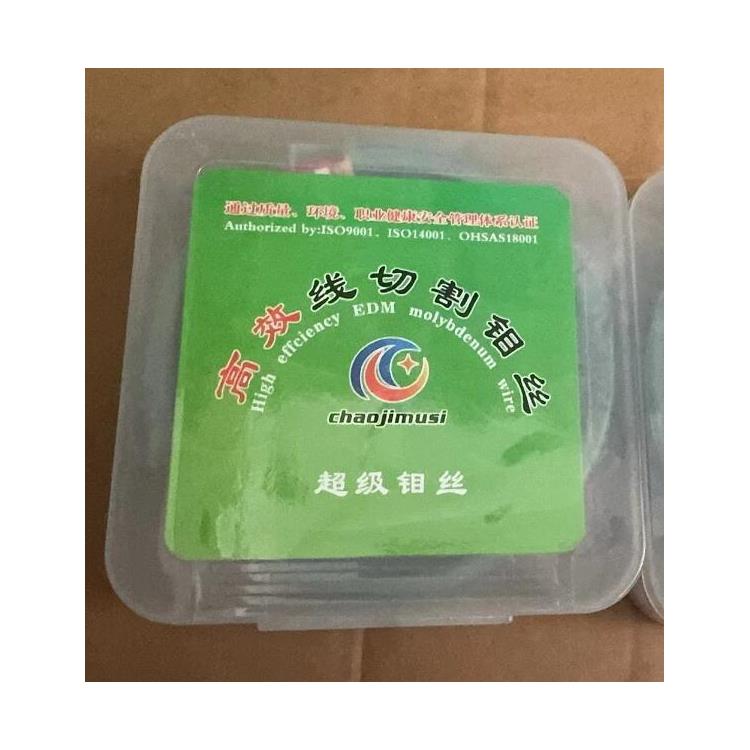
Molybdenum wire is primarily used in high-temperature thermal fields for molybdenum furnaces and tube sockets. It is a refined form of molybdenum rod, available in white molybdenum wire, black molybdenum wire, coated molybdenum wire, wire-cutting molybdenum wire, and more. Molybdenum wire is commonly used as material for heating high-temperature furnaces and as heating wire meshes for supports.
During wire cutting operations, the wire must possess various beneficial characteristics. Under high temperatures and heavy loads, the coating should exhibit high interlayer adhesion strength. Molybdenum, due to its properties, is widely regarded as a material for metal thermal spraying technology. It is widely used in thermal spraying on surfaces of automotive parts such as piston rings, synchronizing rings, and transmissions.
The diameter of molybdenum wire directly affects processing accuracy and efficiency. Smaller diameter molybdenum wire can be cut in finer routes, suitable for precision processing, but it has lower strength and is prone to breakage. Larger diameter molybdenum wire can withstand high loads, ideal for high-strength processing tasks, but may compromise some precision. Therefore, when selecting the diameter of molybdenum wire, it's necessary to decide based on specific processing requirements.
As the molybdenum wire cuts into the workpiece, due to the narrow cutting gap, emulsion penetration is difficult, and the electric erosion in the gap (carbon black and metal particles) is not easily removed, which worsens the processing conditions. This leads to secondary and tertiary discharge processing within the gap, causing the gap to widen and become poorly seated. This results in the formation of arc discharges from the pulses, leading to wire breakage.
Electrical characteristics of wire-cutting molybdenum wire:
Modern wire-cutting power supplies place strict demands on the electrical wire. They must withstand high cutting currents of over 700 amperes in peak or over 45 amperes in average, with efficient energy transfer to provide the pulse current needed to achieve high surface finish (above 0.2Ra). This depends on the wire's resistance or conductivity. Copper is one of the materials with high conductivity, used as a benchmark for other materials. The conductivity of copper is rated in IACS (Annealed Copper Standard), while brass has a conductivity of 20%.
Molybdenum wire gets slightly damaged with each workpiece discharge, but the extent of damage is minimal. Therefore, after replacing the molybdenum wire, it's best to use low-energy machining parameters for cutting (to minimize damage) until the wire turns white. Then, switch to cutting with a normal high current. Before replacing the molybdenum wire for cutting, allow it to dry for 5-10 minutes to release its original internal stress.
WeChat Official Account

Scan to follow Official Account