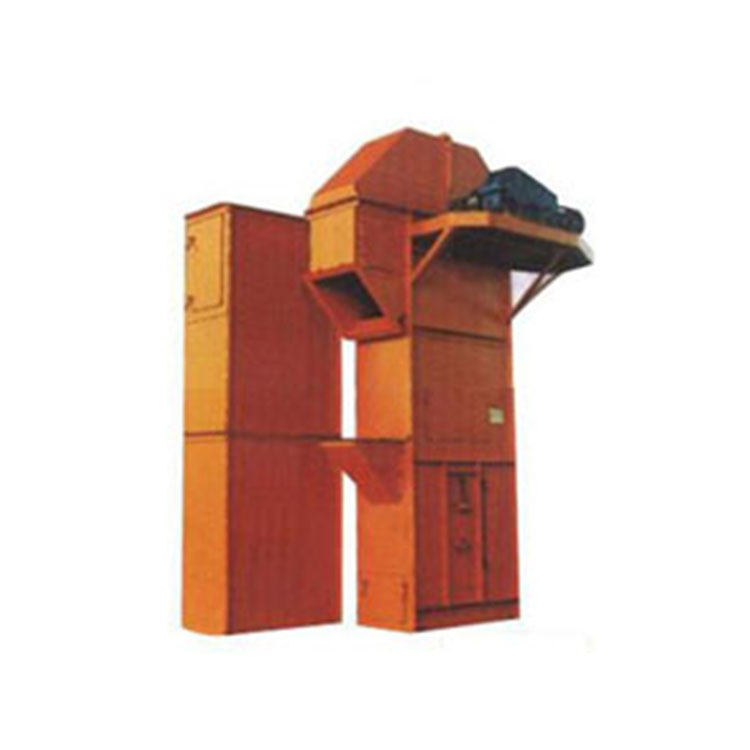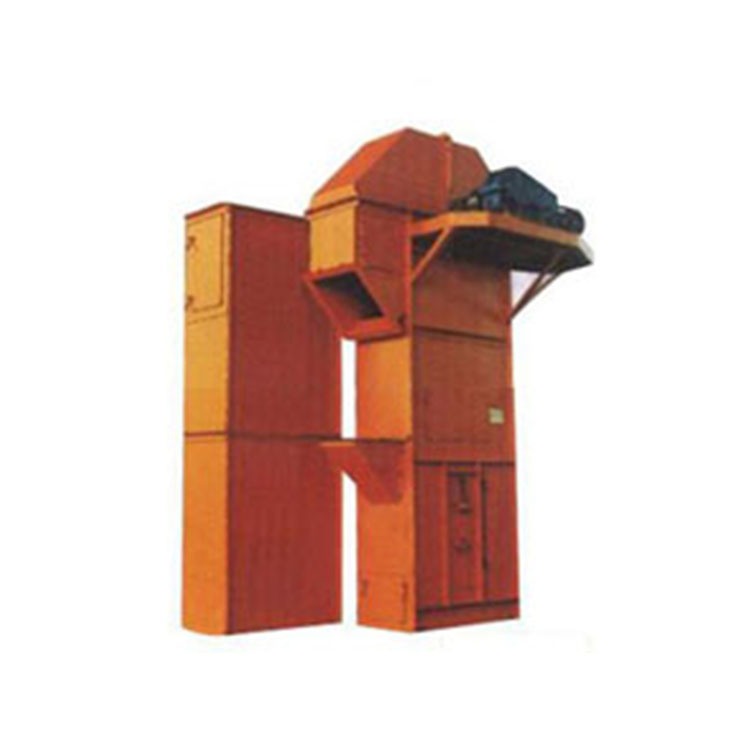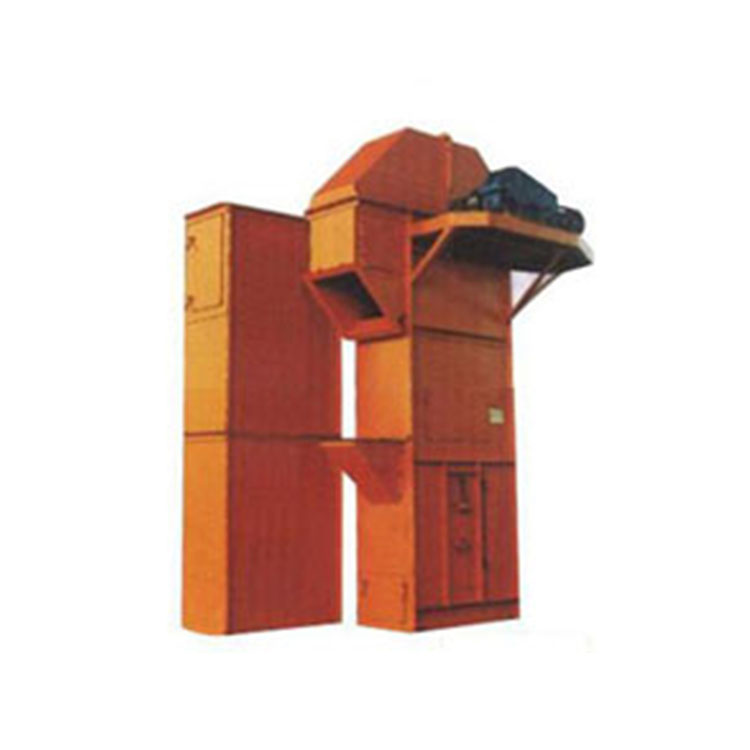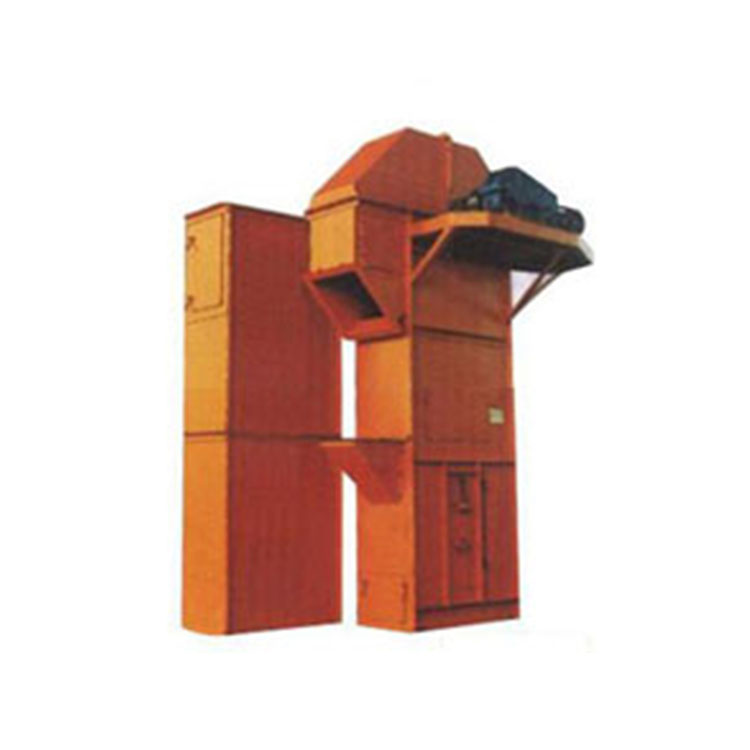

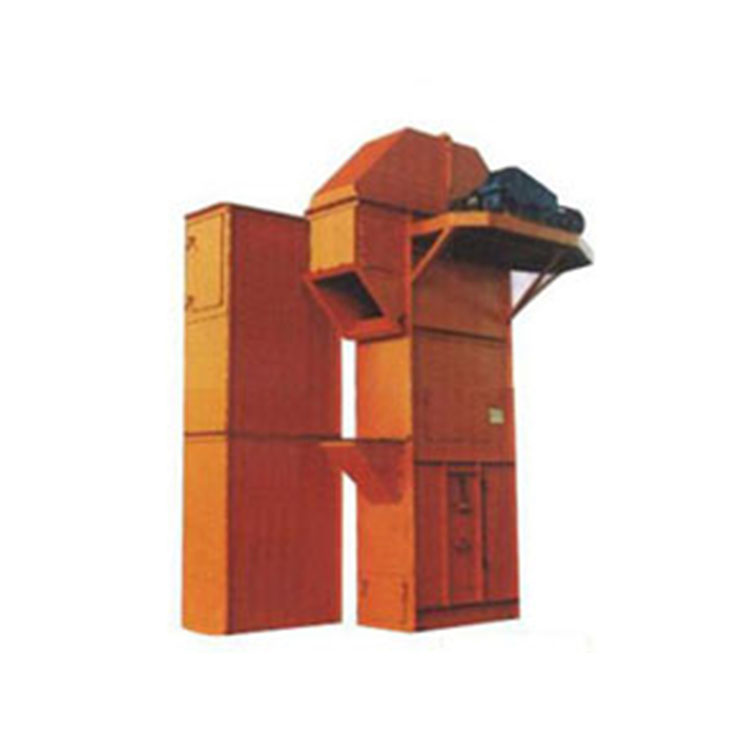
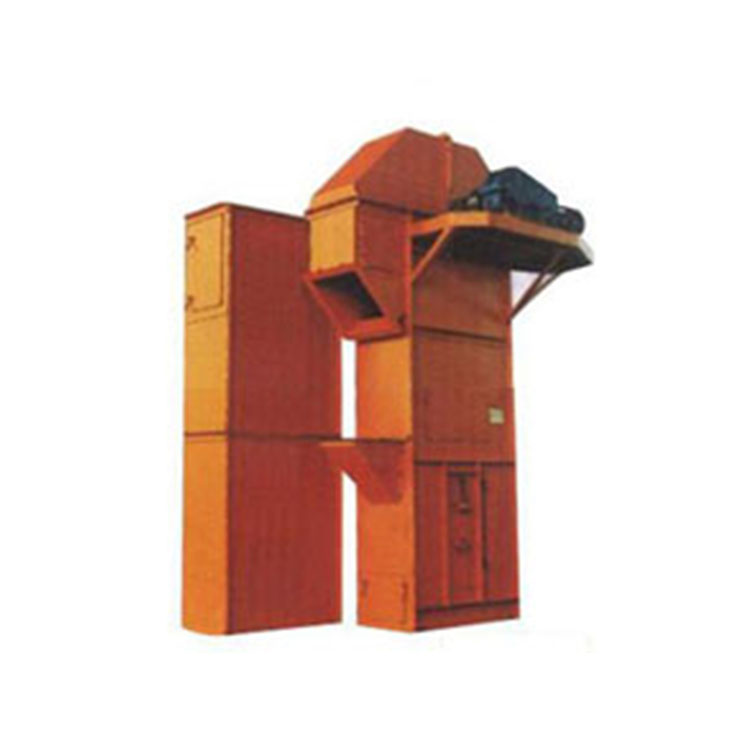
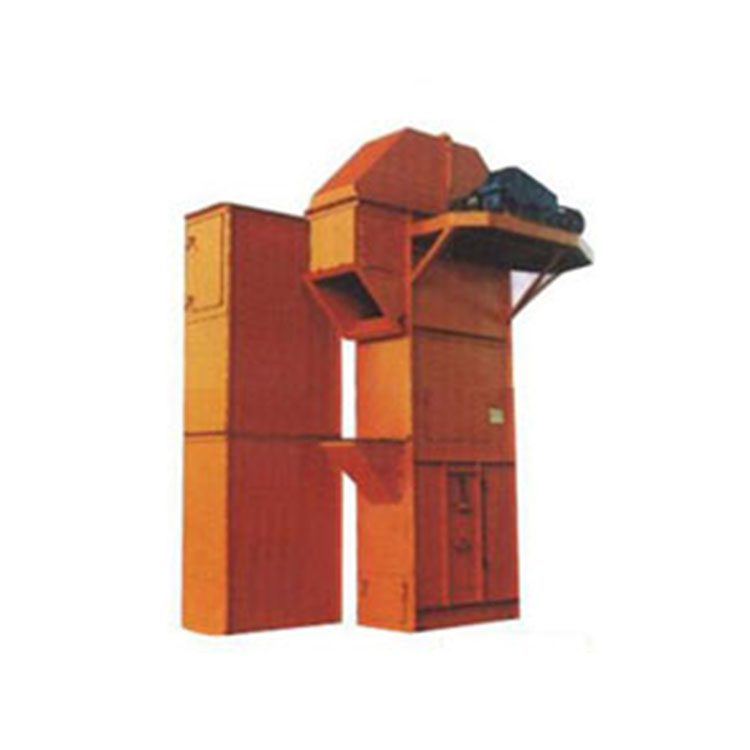


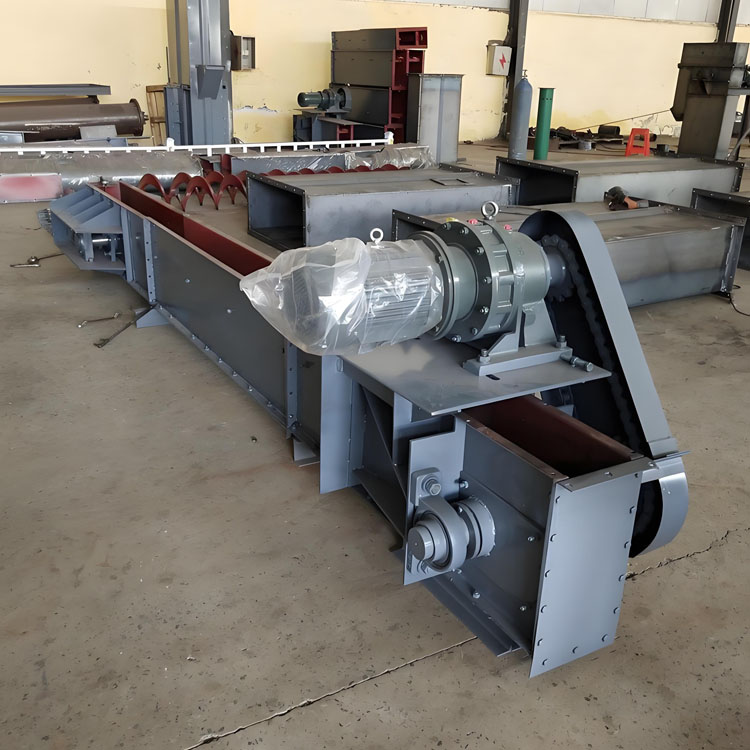
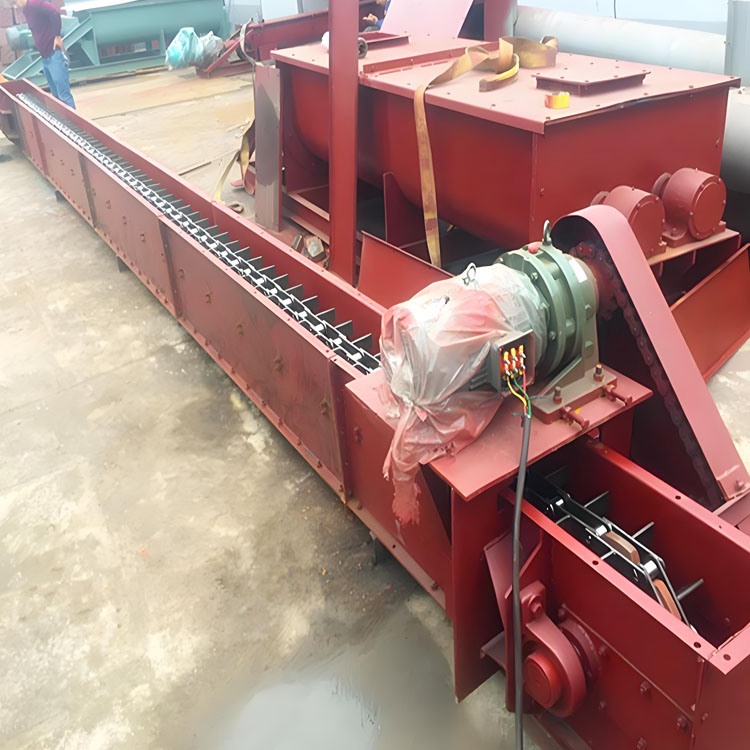

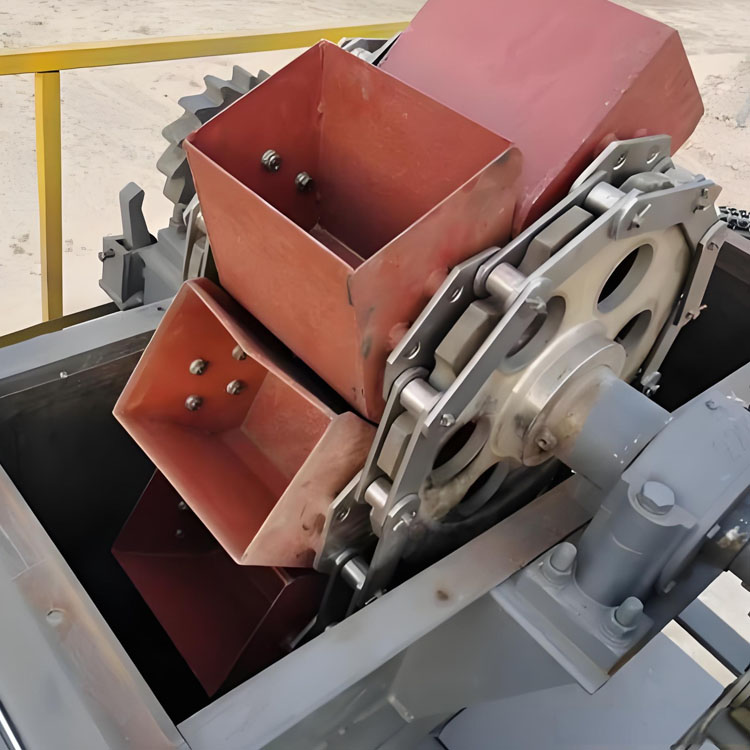
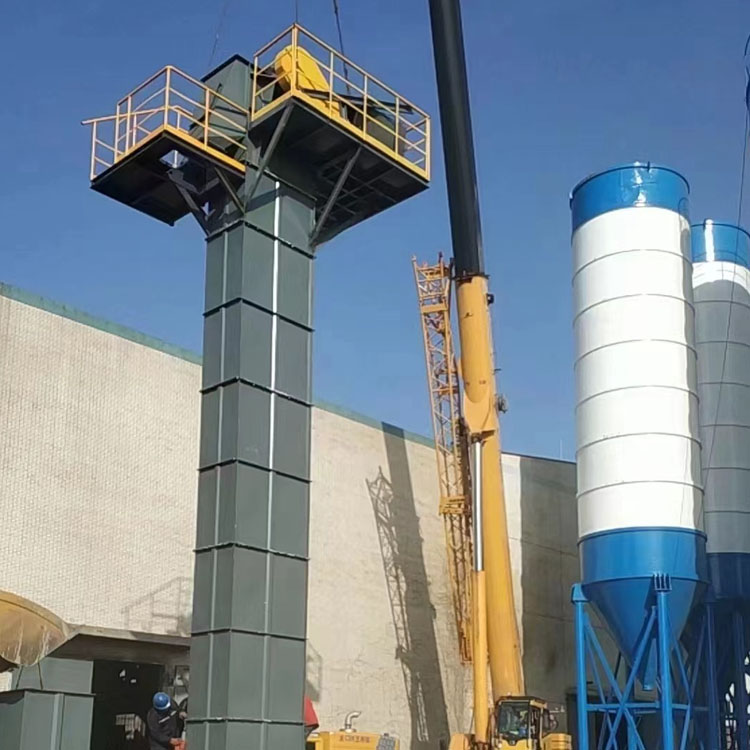





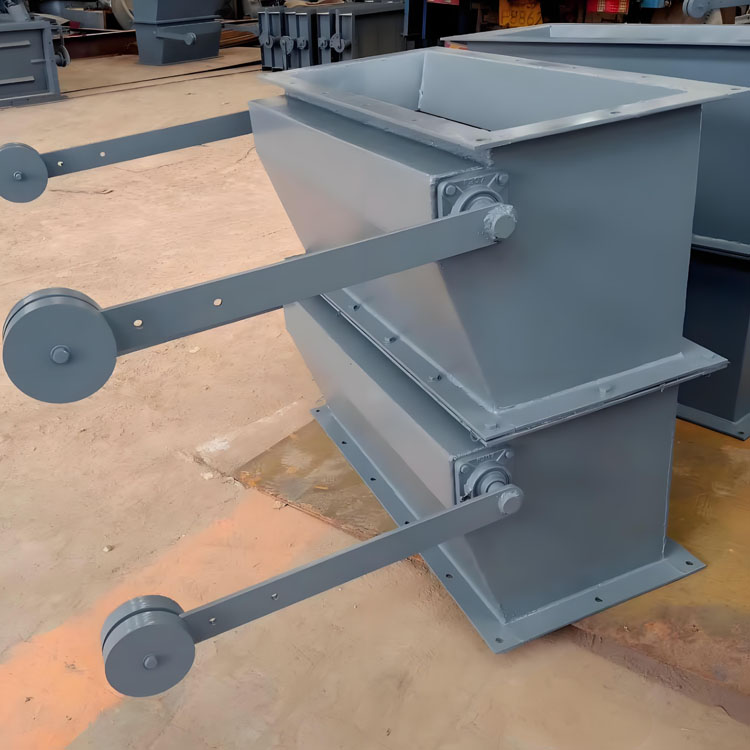
Key Features of HL Type Chain Bucket Elevator:
Smooth operation and high conveying efficiency.
2. Variety of hopper styles available, choose the preferred one.
3. Highly adaptable, easy to install and maintain, and long-lasting.
4. Compact in size, high in speed, ensuring rapid and even conveying.
HL Type Chain Bucket Elevator Working Principle:
The HL-type bucket elevator consists of the moving part (buckets and traction chains), the upper section with drive sprockets, the lower section with tensioning wheels, the intermediate casing, the drive unit, and the reverse braking device. The buckets of this elevator are arranged in an intermittent manner, utilizing the "excavation method" for loading and the "centrifugal discharge method" for unloading. The traction mechanism of this elevator is composed of two circular chains. Our HL-type ring chain centrifugal bucket elevator is made up of the moving part (buckets and traction chains), the upper section with drive sprockets, the lower section with tensioning wheels, the intermediate casing, the drive unit, and the reverse braking device. The buckets of this elevator are arranged in an intermittent manner, utilizing the "excavation method" for loading and the "centrifugal discharge method" for unloading. The traction mechanism of this elevator is composed of two circular chains.
HL Type Chain Bucket Centrifugal Elevator Mechanism and Assembly Method:
1. Divided into two types based on hopper shape: S method - featuring a deep round-bottomed hopper; Q method - featuring a shallow round-bottomed hopper
2. Divided into two types based on the form of the upper discharge port: X1 Method - discharge port with inclined flange; X2 Method - discharge port with horizontal flange
3. The feeding ports are divided into two types based on the lower section segment shape: J1 Method – the inclined surface of the feeding port forms a 45-degree angle with the horizontal plane; J2 Method – the inclined surface of the feeding port forms a 60-degree angle with the horizontal plane.
4. Four types are divided according to the position of the inspection door on the side of the middle housing: K1 Method -- the side of the middle housing features a lower left inspection door; K2 Method -- the side of the middle housing features a lower right inspection door; K3 Method -- the side of the middle housing features an upper left inspection door; K4 Method -- the side of the middle housing features an upper right inspection door.
5. The positions of the inspection doors on the intermediate shell ends are divided into two types: Z1 Method -- intermediate shell ends with a lower inspection door; Z2 Method -- intermediate shell ends with an upper inspection door.
6. Divided into two types according to the relative position of the transmission device on the hoist: Left-mounted – transmission device on the left; Right-mounted – transmission device on the right.