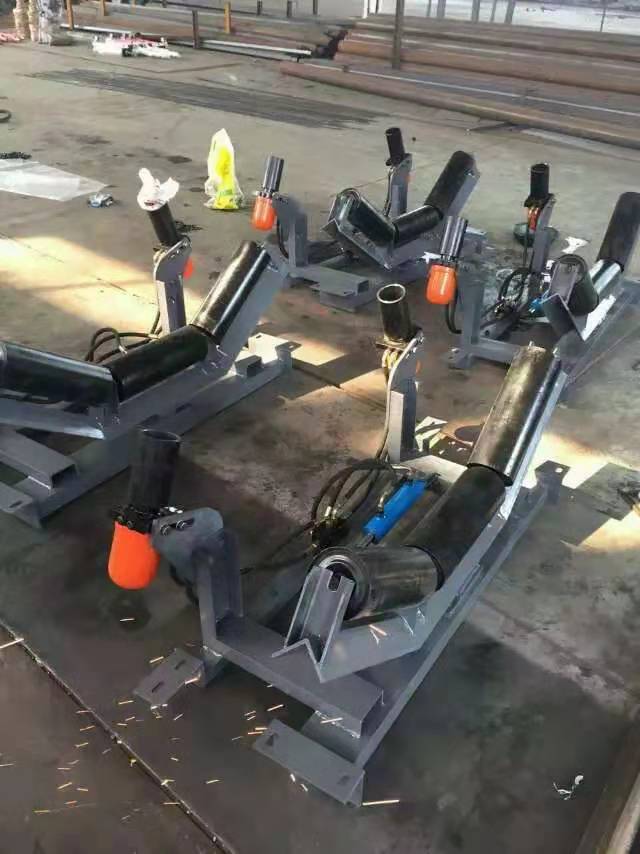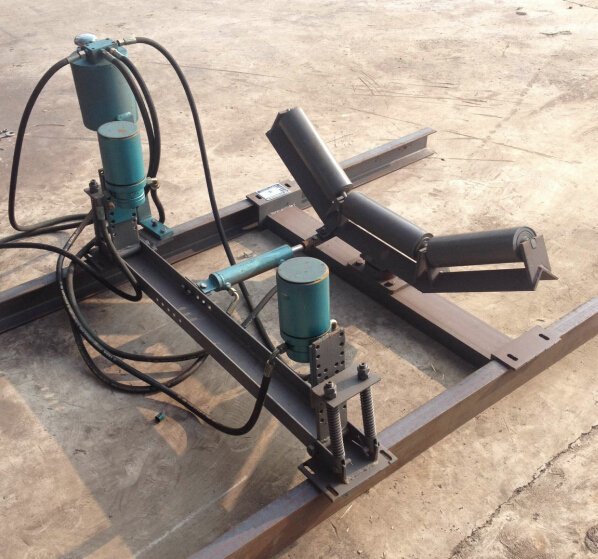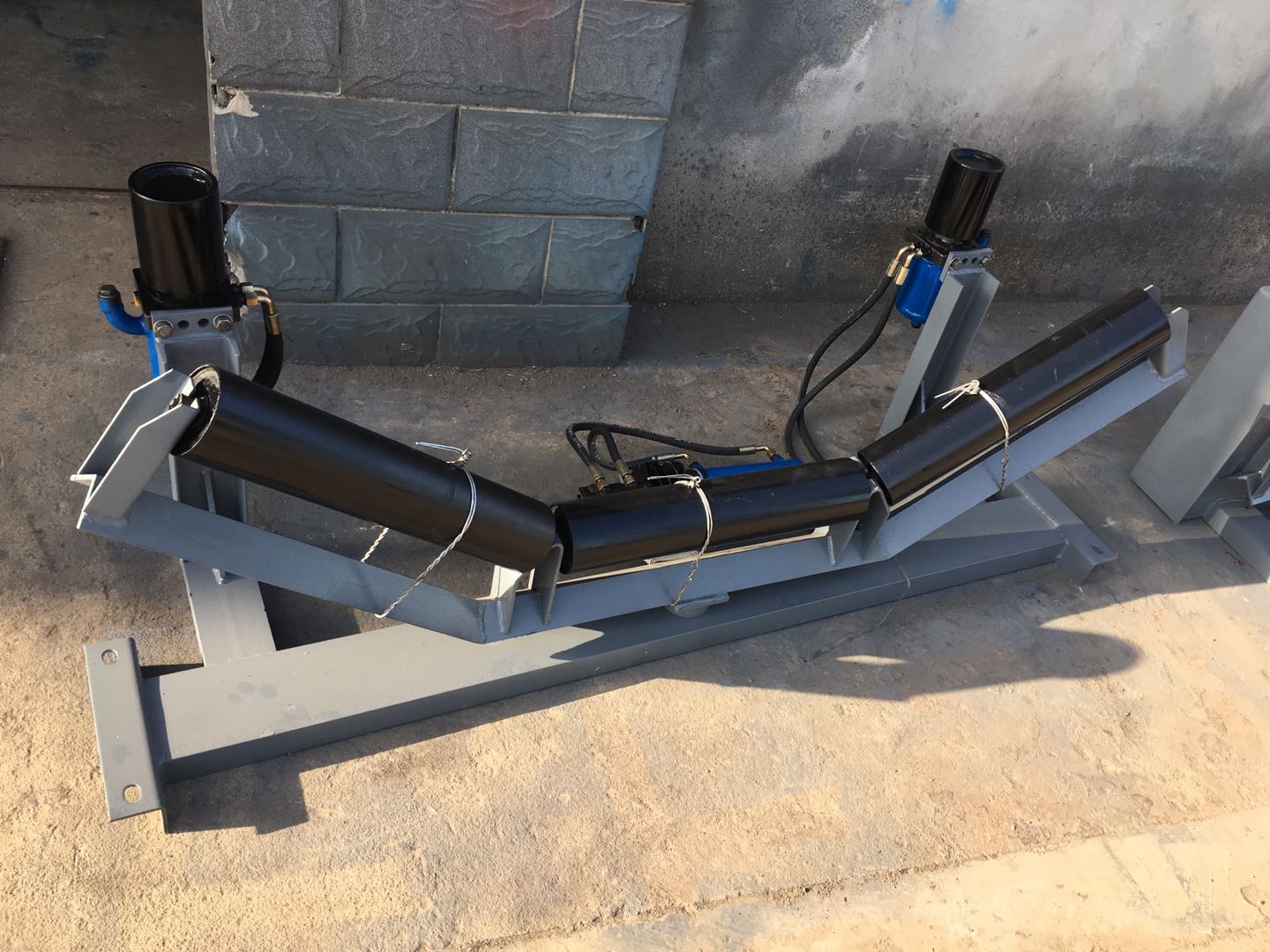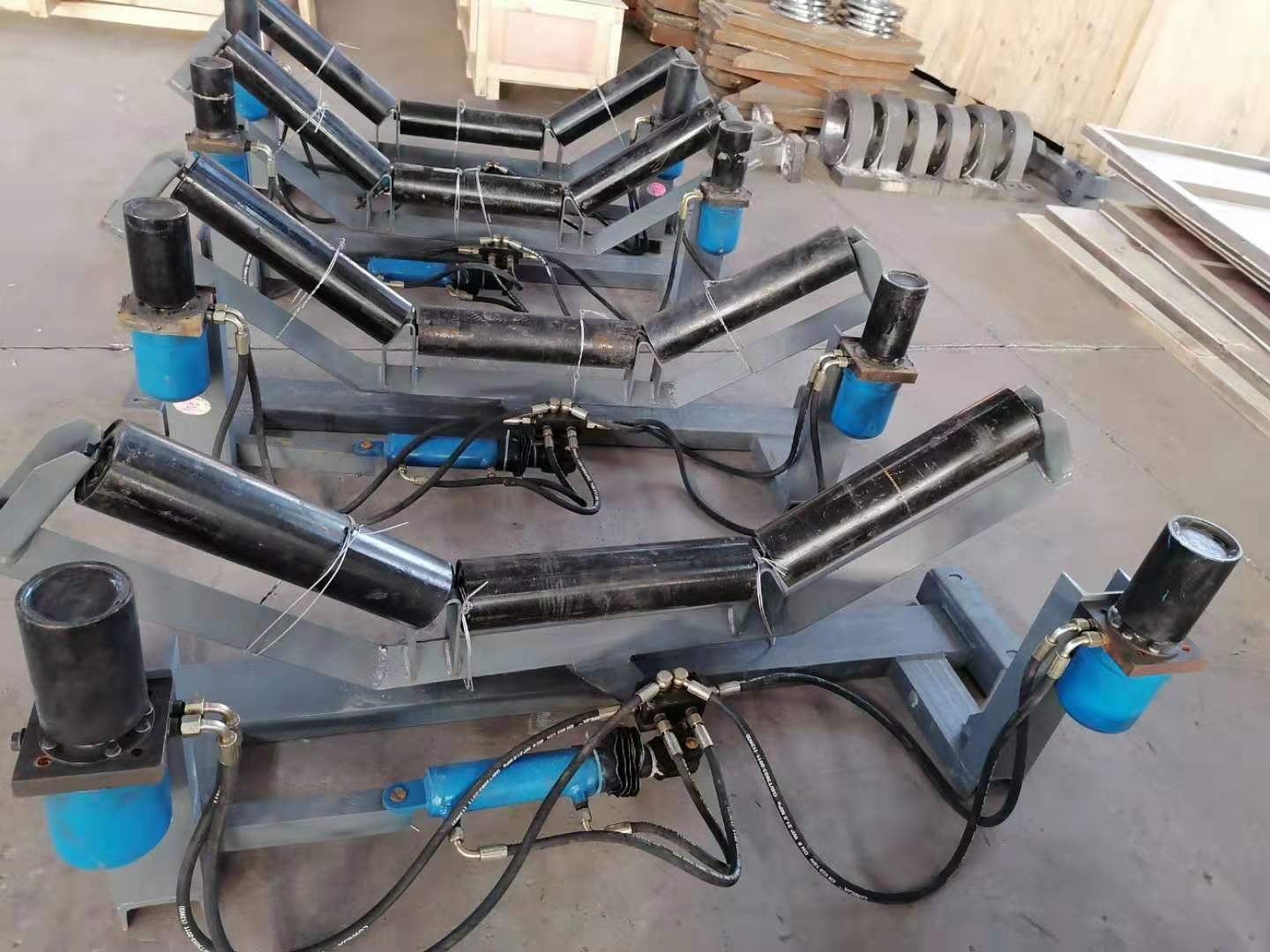









Hydraulic Runout Corrector, Automatic Belt Runout Corrector, Auto-Traction Down Corrector
The primary causes of conveyor belt misalignment
1.1 Equipment itself
1) The equipment's frame rigidity is poor, which easily deforms under heavy loads, causing the conveyor belt to deviate.
2) The flatness issue with the conveyor belt joints, as the belt constantly runs off to the side with greater tension, causing the conveyor belt to drift.
3) The quality of the conveyor belt itself. If there are quality issues with the conveyor belt, it may experience vibrations or other problems during transportation, leading to the belt running off course.
4) Unevenness in the surface finish of the drum or uneven belt joints can lead to uneven stress distribution on both sides of the conveyor belt, causing the belt to run off track.
5) If there is a significant error in the parallelism between the cylindrical axes in the drum section, it can also cause the conveyor belt to deviate.
These issues require enhancing the strength of the purchased racks and the stability of their installation to eliminate misalignment.
Additionally, there may be issues with the conveyor belt running off-center or partially. Such problems are generally complex and require a specific analysis for each case, with targeted solutions for different issues.
Jining AnyuanResolve your belt misalignment issues, bringing your belt back on track.
Fully Automatic Passive Hydraulic Alignment Corrector, characterized by:
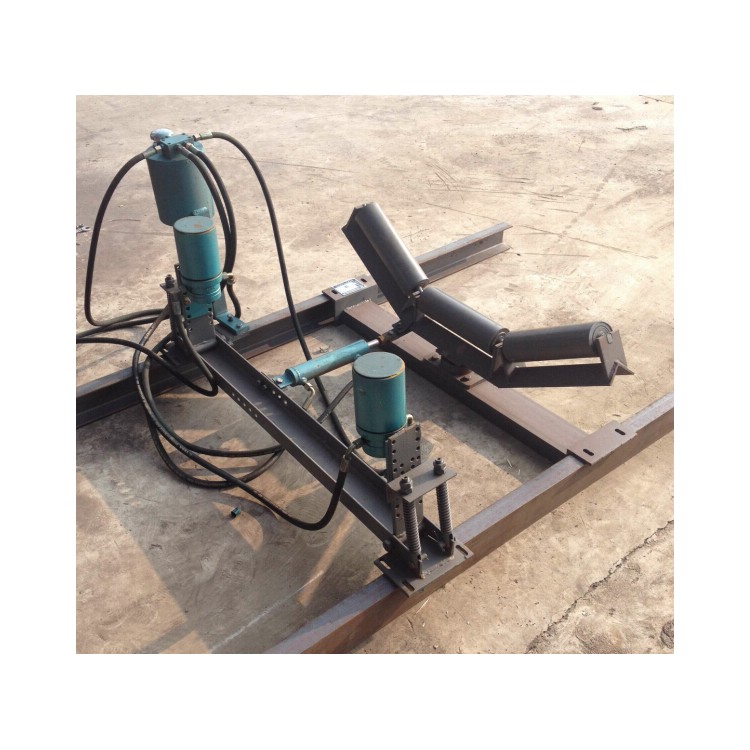
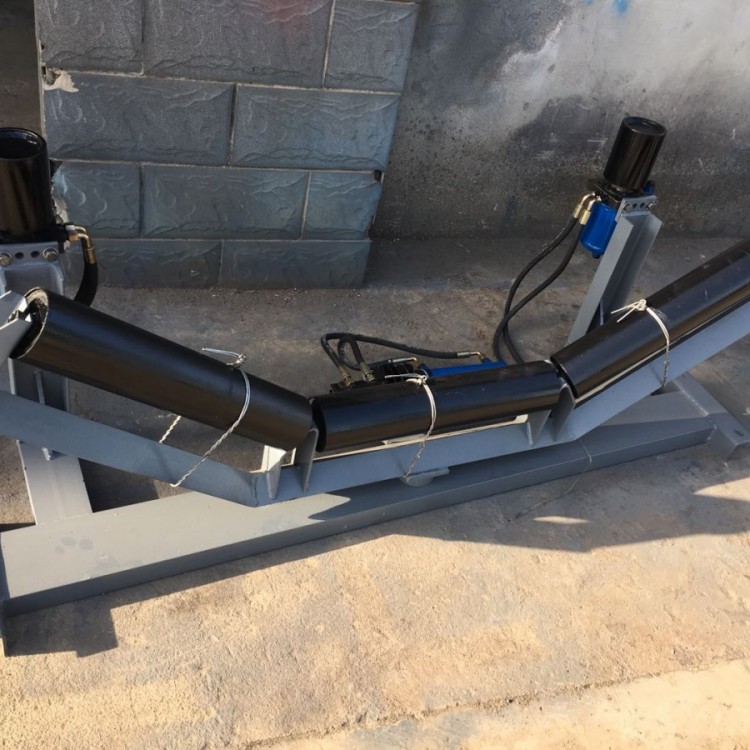
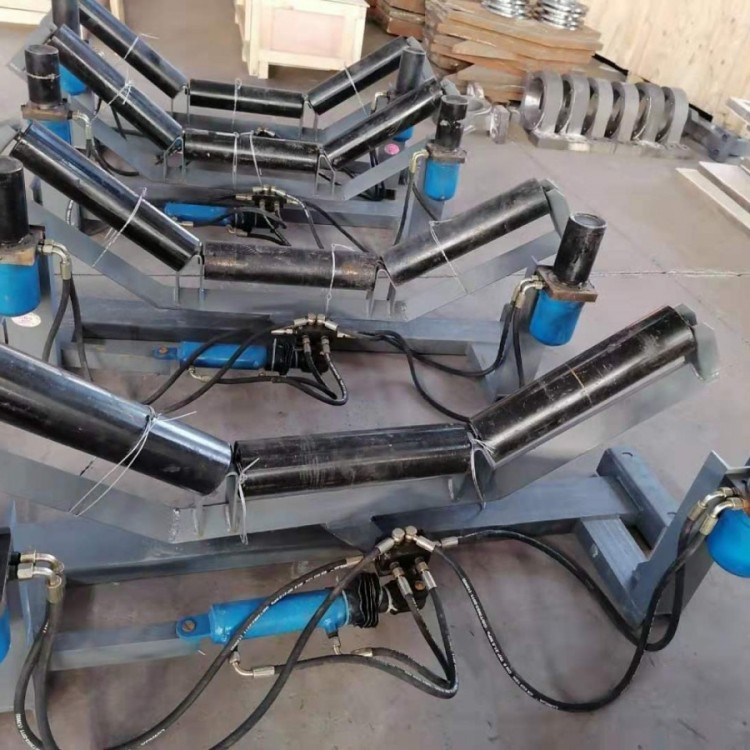
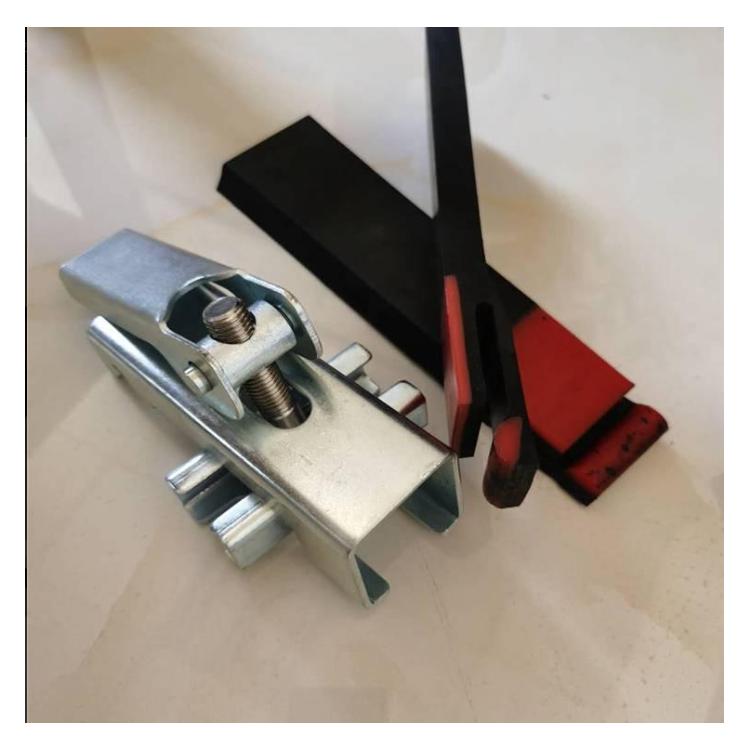
It includes an upper core carrier (1), a lower core carrier (2), a core adjusting sleeve (3), a drive wheel inspection unit (4), an oil tank body and valve block (5), a bias adjustment cylinder (6), an oil tank bracket (7), a drive wheel inspection unit bracket (8), a belt conveyor frame (9), and a channel seat (10). The oil tank bracket (7), drive wheel inspection unit bracket (8), belt conveyor frame (9), and channel seat (10) are fixedly connected to each other. The core adjusting sleeve (3) is mounted on the channel seat (10), the upper core carrier (1) and the lower core carrier (2) are mounted on the core adjusting sleeve (3), the drive wheel inspection unit (4) is mounted on the drive wheel inspection unit bracket (8), the oil tank body and valve block (5) are mounted on the drive wheel inspection unit bracket (8) or the belt conveyor frame (9), and the bias adjustment cylinder (6) is mounted on the oil tank bracket (7).
Features of the Passive Hydraulic Offset Corrector:
The hydraulic fully automatic belt alignment device features both upper and lower strip-type drum rollers for alignment purposes. Integrates hydraulic alignment functionality, hence it possesses Calibration speed.
Automatically detect and correct deviations at this moment, ensuring the belt runs in a reasonable state at all times, thereby mitigating issues such as improper installation, malfunctioning operation, material impact, load changes, and uneven elongation rates between belt cross-sections.
The hydraulic automatic belt alignment device generates power through frictional rotation based on the centering theory, thus it requires no power supply, operates automatically for adjustment and correction. It features simple structure, reliable performance, and easy installation. With a fully enclosed design, it can function normally under any harsh environmental conditions.