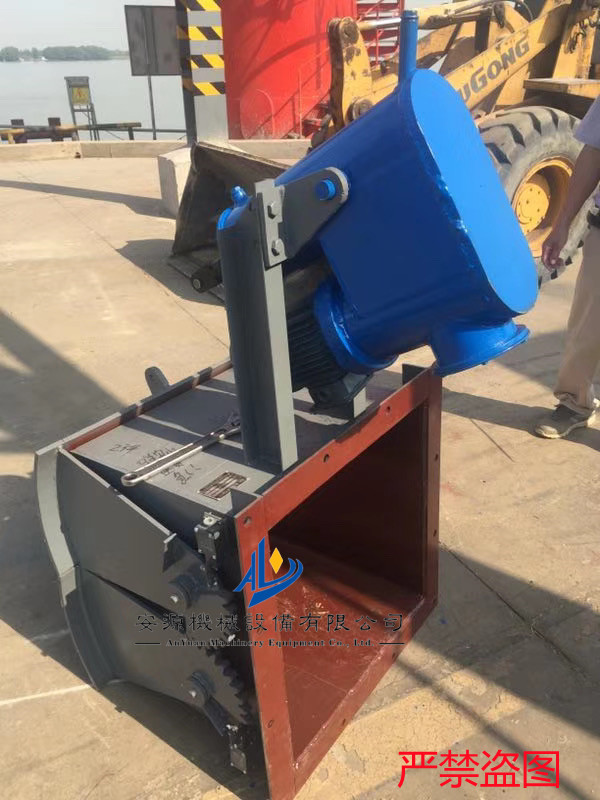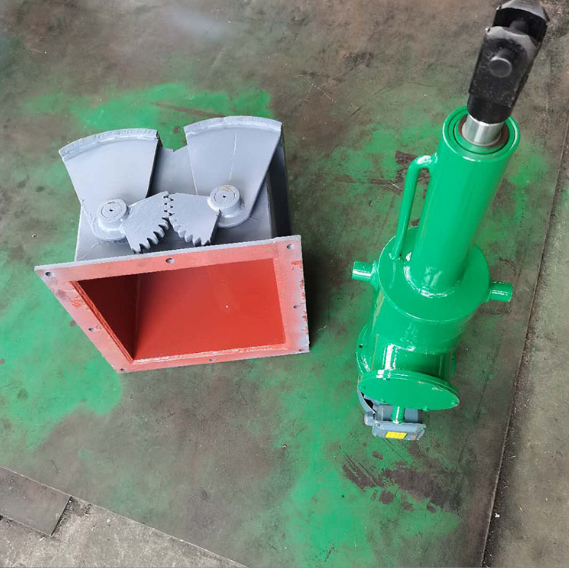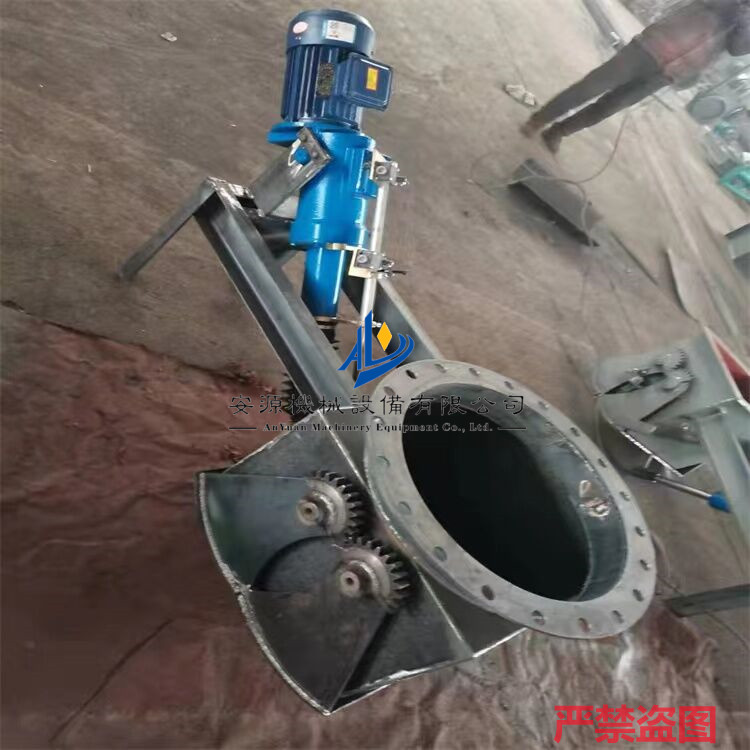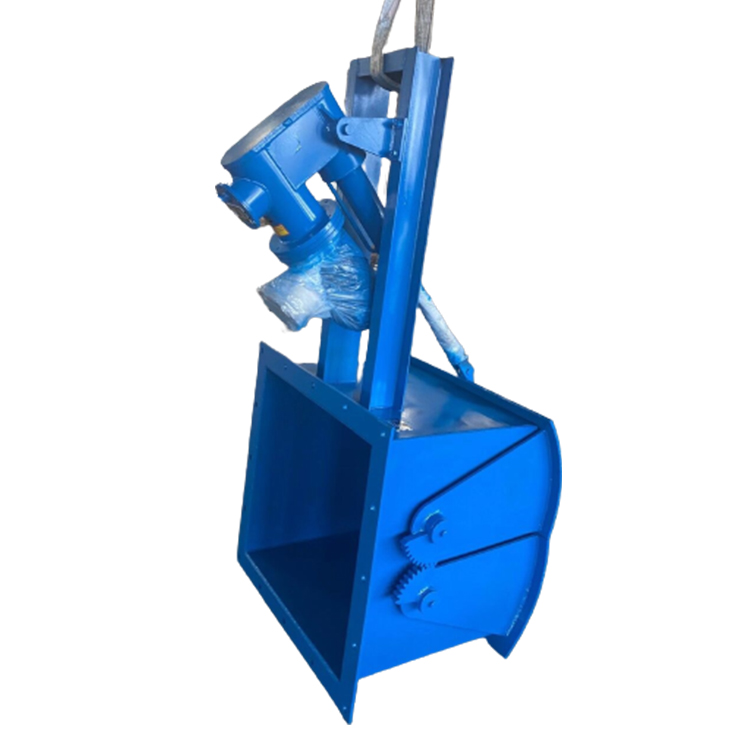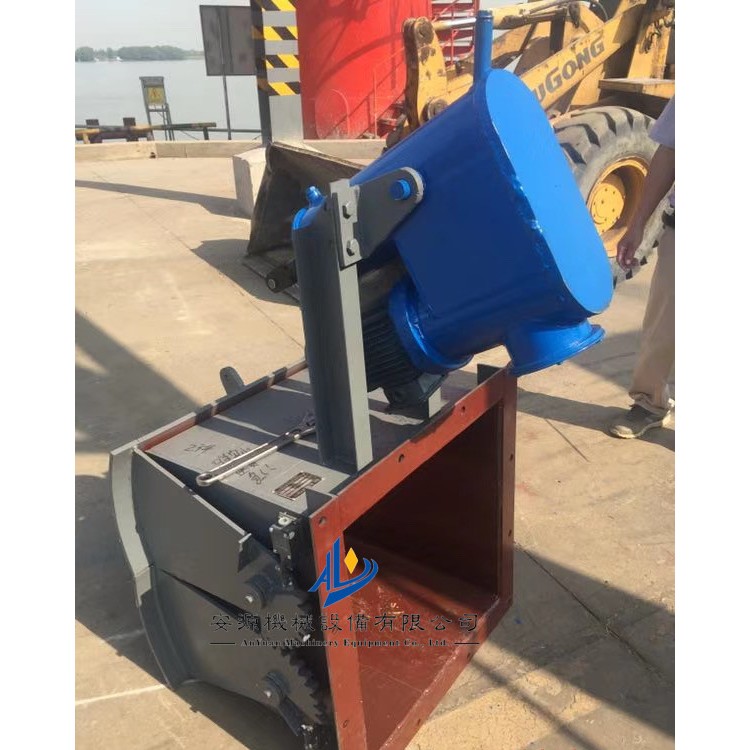


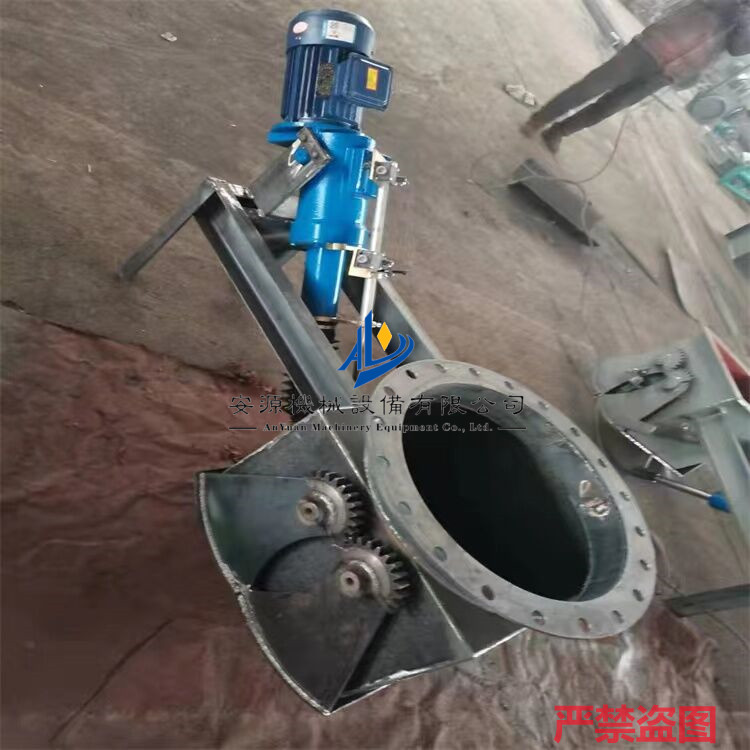
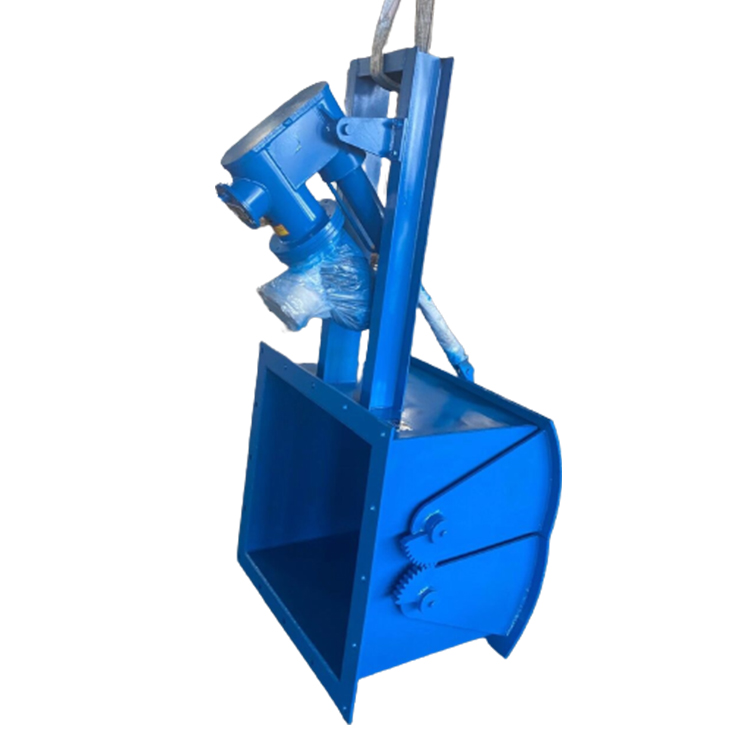







Electromagnetic (Electrohydraulic) Sluice Gate, Dock Discharging and Loading Jaw Valve, DEZ-500 Electrohydraulic Swing Gate
Pillow gate valves are suitable for bulk density≤2.5t/m3A variety of ore, coal, coke, slag, and chemical products, etc., in bulk form, widely used for bottom discharge in storage facilities for industries such as building materials, metallurgy, chemicals, and glass.
Structural Features:
Pleated gate is made of carbon steel welded into shape, structure Operates flexibly and reliably with no jamming issues. Equipped with different transmission devices, it can meet various operational requirements. The electric jaw gate features an electric push rod with an overload protection device, preventing motor burnout. It can be remotely controlled or programmed, and the reciprocating stroke can be Adjustable positioning with self-locking. Electro-hydraulic jaw gates utilize electro-hydraulic push rods, featuring full hydraulic transmission, allowing for stepless adjustment of both thrust and pull force. Pneumatic jaw gates use pneumatic push rods, which can be remotely controlled or locally operated through component assembly.SEFFor manual,DEFFor electricYEFFor electro-hydraulic operation,QEFPneumatic.
Performance Parameters:
Applicable Temperature(℃) | Stacking Densityt/m3) | Applicable Medium | ||||||||||
≤300 | ≤2.5 | Crystalline solids, coal, coke, slag, chemical products, and various ores | ||||||||||
Working Principle:
The gate valve consists of components such as the main body, sector gate plate, shaft, gears, sealing pairs, and actuator. A handwheel or actuator moves the lever, causing the gears to rotate the sector gate plate around the shaft, opening the two sector gate plates to the sides, allowing the material to fall. Once the receiving device is fully loaded, the actuator drives the lever again to reset the sector gate plate, closing off the falling material.
Instructions for Use:
l Please note the medium flow direction marked on the gate body during installation. When connecting the flanges, it is necessary to add a sealing gasket and then tighten the bolts evenly.
l Ensure you identify the correct direction of the butterfly valve switch during operation, and connect the actuator properly.
l Please regularly apply lubricant to all transmission parts during operation.