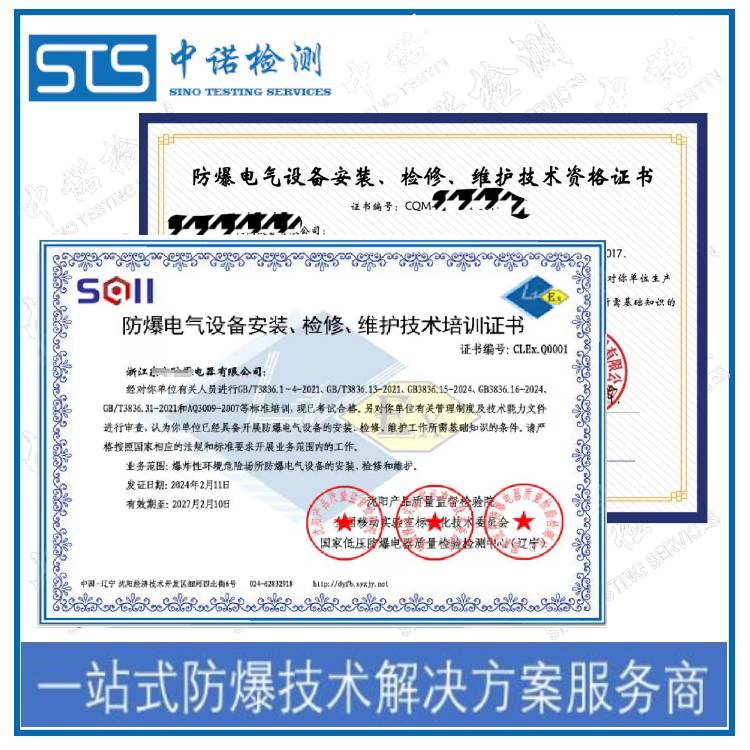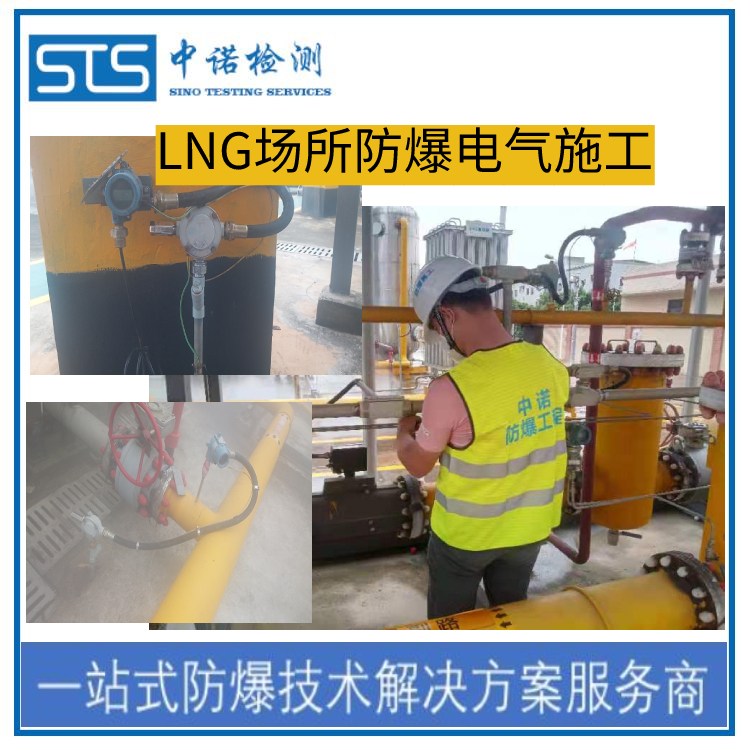

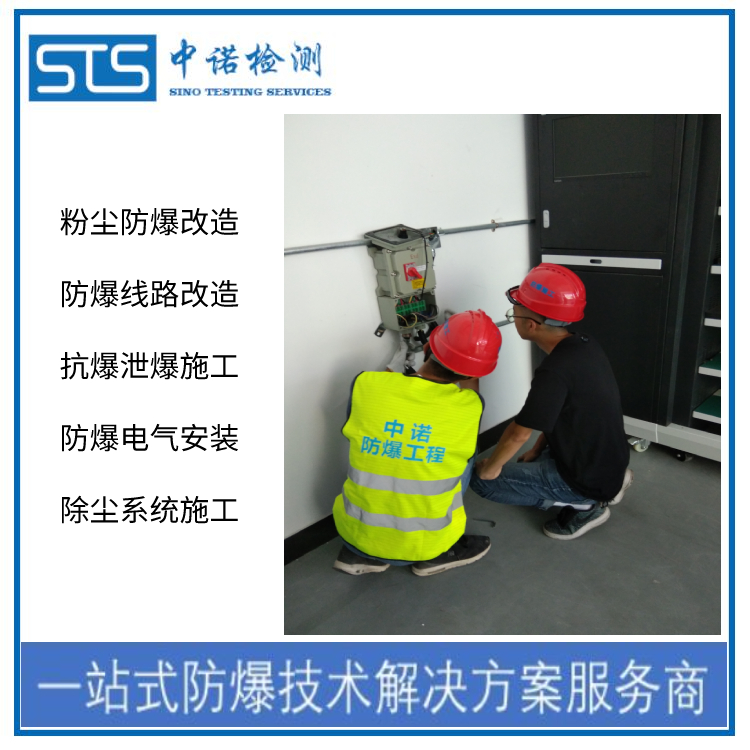
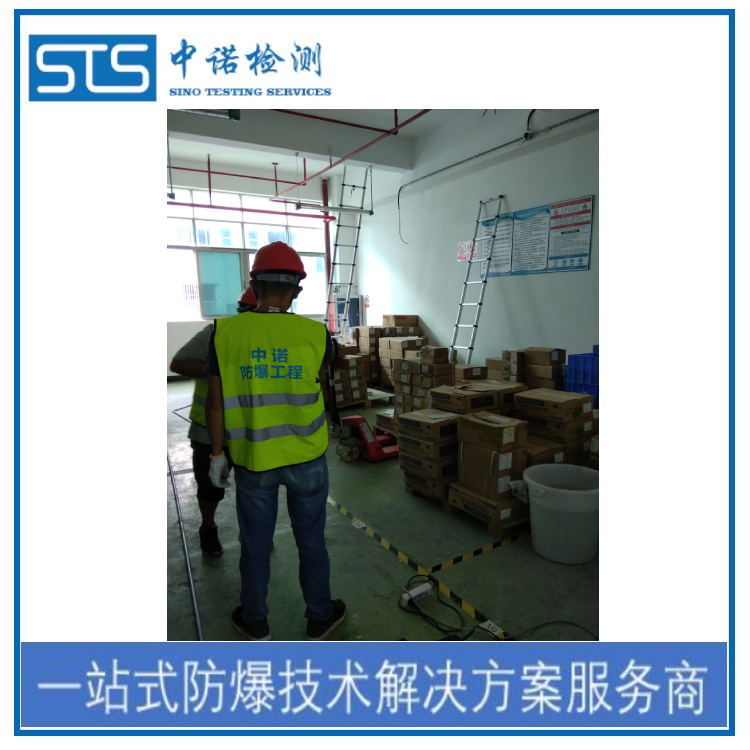



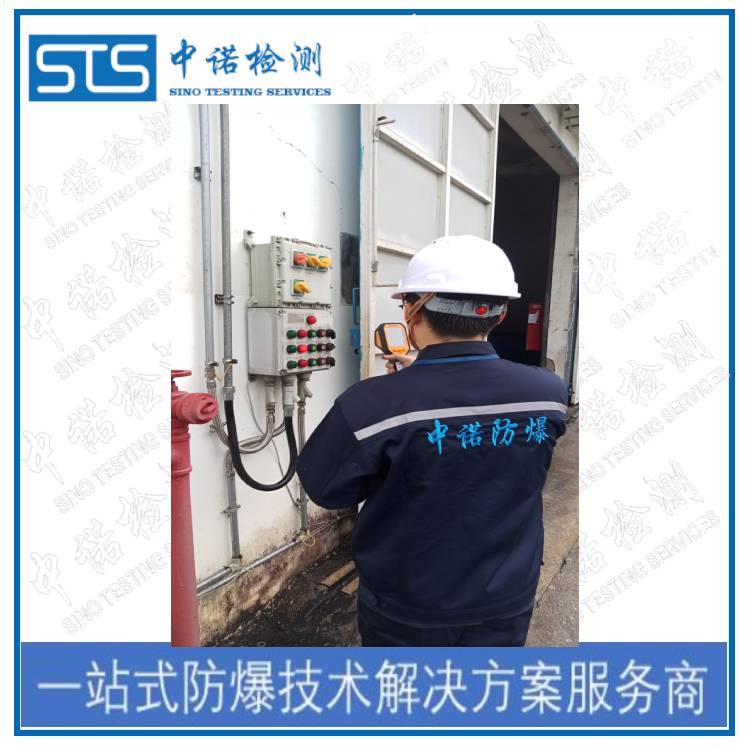
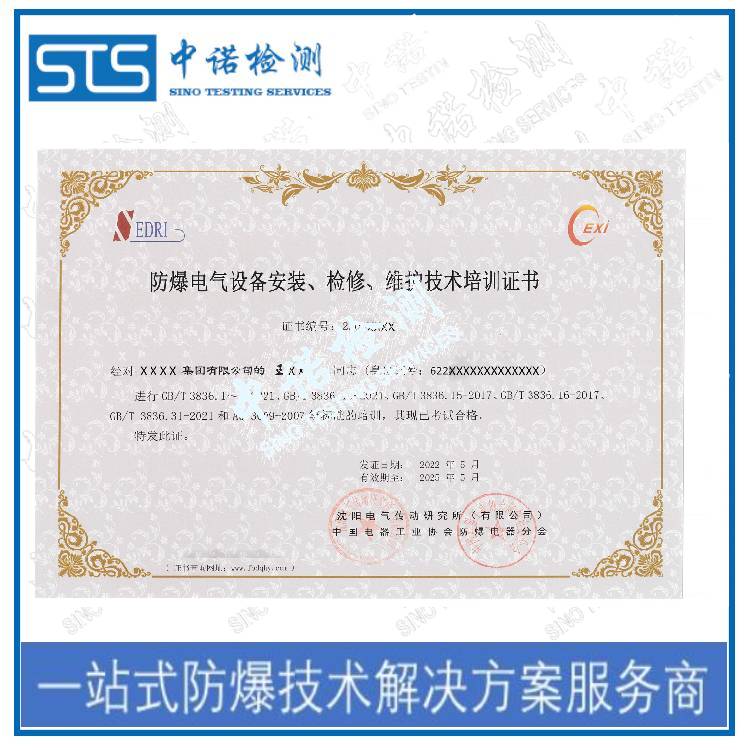







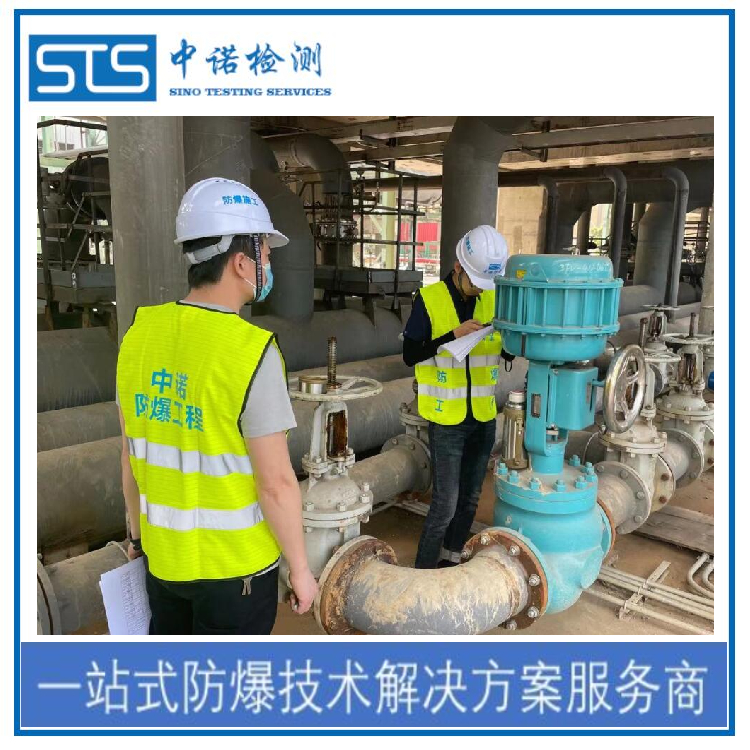
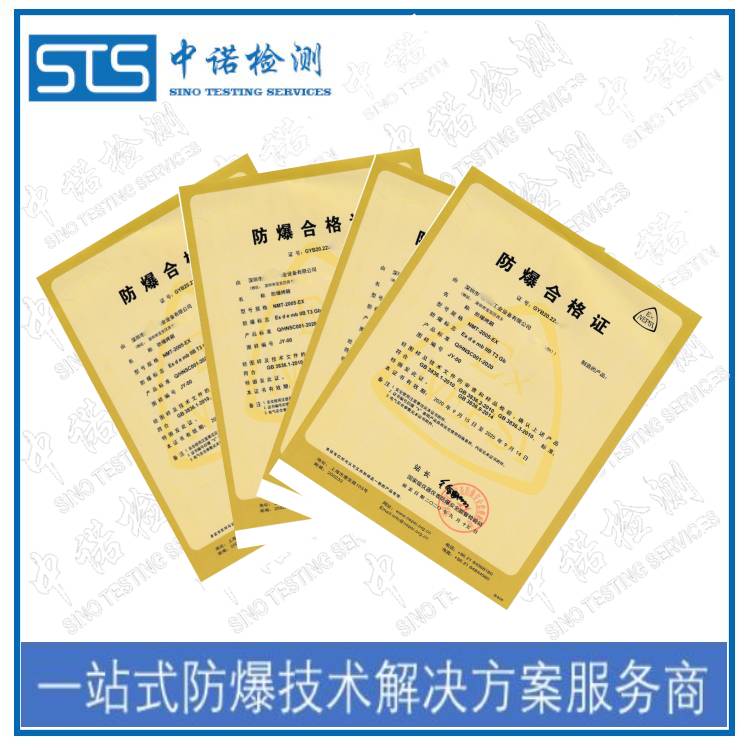

Shenzhen Zhongnuo Testing Technology Co., Ltd. is based in South China and offers a range of explosion-proof technology consulting services, including on-site construction, safety inspections, modifications, project acceptance, and explosion-proof installation. We are well-versed in explosion-proof construction standards and have a team of experienced contractors with a wealth of practical experience. We've served major corporations such as China National Petroleum Corporation, LG, Huanlan Environment, BOE, and Sinovac, receiving consistent positive feedback and trust from our clients!
Based on the basic requirements of GB 15577 "Safety Code for Dust Explosion Prevention," in防爆construction and modification in explosive dust environments, the following five major explosion-proof measures can be primarily adopted (shared by Shenzhen ZhongNuo Testing Technology Co., Ltd.).
Anti-knock
1. Definition: A containment explosion suppression technology that can withstand the high pressure of an explosion occurring within a sealed enclosure containing combustible dust and gaseous oxidizers or air, thus preventing the enclosure from being destroyed.
2. Objective: By enhancing container wall thickness and improving material, external damage is minimized even in the event of a dust explosion.
3. Basic Requirements:
When producing and handling powders that can cause explosions, if there is no explosion suppression device and no pressure relief measures, all process equipment should be designed to be explosion-proof and capable of withstanding the overpressure from internal explosions without bursting.
(2) The connection parts between various process equipment (such as pipes, flanges, etc.) should have the same strength as the equipment itself. For connections between high-strength and low-strength equipment, explosion-proof devices should be installed.
(3) Equipment for explosion-proof pressure and impact resistance should comply with the relevant requirements of GB/T 24626.
Explosion Relief
1. Definition: A controlled explosion technology that, during an explosion within the containment, allows the high temperature, high-pressure combustion products, and unburned materials to be released through pre-set weak points on the containment to a safe direction before the explosion pressure reaches the containment's limit strength, thus preventing the containment from being destroyed.
2. Purpose: To reduce explosion damage by setting up explosion relief devices.
3. Methods: Two explosion relief methods available – flaming and non-flaming.
4. Basic Requirements:
When the strength of the process equipment is insufficient to withstand the overpressure generated by internal dust explosion under actual operating conditions, explosion relief ports should be installed. The relief ports should be directed towards a safe direction, and the size of the relief ports should comply with the requirements of GB/T 15605.
(2) Equipment with dust explosion hazards installed indoors should be vented to a safe outdoor direction through pressure relief ducts. These ducts should be as short and straight as possible, with a cross-sectional area not less than that of the relief port, and their strength should be no less than the strength of the container of the protected equipment.
(3) Equipment inside the room that cannot vent explosions to the outside through a pressure relief duct should be equipped with flameless venting caps.
(4) Process equipment with inline piping should be designed to withstand at least 0.1 MPa of internal overpressure.
Section 3: Explosion Suppression
1. Definition: In the initial stage of an explosion, extinguish the flames and suppress (prevent) the development of dust explosion through physical and chemical actions.
2. Objective: To pre-detect and extinguish fires, as well as suppress explosions, through the installation of an explosion suppression device.
3. Basic Requirements:
Process equipment with a risk of dust explosion should be protected with explosion suppression devices.
(2) If a monitored explosion suppression device is used, it should comply with the requirements of GB/T 18154.
(3) Design and application of the explosion suppression system should comply with the requirements of GB/T 25445.
Four, explosion-proof
1. Definition: Technology that prevents the propagation of an explosion through physical and chemical actions after the explosion occurs.
2. Purpose: To prevent the spread of flame through pipes or other conduits
3. Basic Requirements:
(3) Equipment and facilities with dust explosion hazards, interconnected by pipelines, should ideally be equipped with explosion-proof devices on the pipelines.
(2) Equipment and facilities with a dust explosion hazard, interconnected through pipelines, should ideally be equipped with explosion-proof devices. The shutdown direction should align with the propagation direction of the explosion.
Five: Inertizing
For processes such as crushing, grinding, drying of powders, and pneumatic conveying through pipelines in sealed containers, inert gases like nitrogen, carbon dioxide, halogenated hydrocarbons, argon, helium, and steam, or inert dusts such as fire extinguishing powder, chemical dry powder, and mineral rock powder are introduced. This is to dilute combustible components and reduce the oxygen content in the environment.
Basic knowledge for explosion-proof electrical installation includes the following points:
Division and classification of explosive substances, grouping, and classification of explosive hazard areas, as well as delineation of regional scope.
Explosive gases should be classified based on their Maximum Experimental Safe Gap (MESG) or Minimum Ignition Current Ratio (MICR), and grouped by their ignition temperature. Combustible dusts, categorized by their conductivity, can be divided into conductive and non-conductive types, and grouped by their low ignition temperature. Hazardous areas with explosive risks are divided into two categories: gas explosion hazardous areas and dust explosion hazardous areas. These areas are further classified into three zones—Zone 0, Zone 1, and Zone 2—based on the frequency and duration of the presence of explosive gas environments. Hazardous areas with combustible dust/air mixtures are categorized into three zones—Zone 20, Zone 21, and Zone 22—based on the frequency and duration of the mixture's presence and the thickness of the dust layer.
2. Selection of explosion-proof electrical equipment for hazardous explosive areas.
The selection principle for explosion-proof electrical equipment is safety and reliability, economic and reasonable. It should be selected based on the grade of the explosive hazardous area and the category, level, and group of explosive hazardous substances. Refer to the specific selection table in standard AQ3009-2007.
III. Installation of electrical lines and explosion-proof electrical equipment in hazardous explosive areas.
Installation methods for electrical wiring in explosive gas environments can be divided into cable wiring and conduit wiring methods. Electrical wiring should be laid in areas with lower explosion hazards or at a greater distance from the source of release, avoiding locations prone to mechanical damage, vibration, corrosion, dust accumulation, and those with dangerous temperatures. When avoidance is not possible, preventive measures should be taken. The low-voltage cables or insulated conductors used must have a rated voltage higher than the working voltage of the circuit and not less than 500V. Insulated conductors must be installed within conduits. For more details, please attend training courses on explosion-proof electrical installation, maintenance, and repair.
IV. Inspection and Maintenance of Explosion-Proof Electrical Equipment in Hazardous Areas.
To minimize the ignition hazard of electrical equipment in hazardous areas, initial inspections should be conducted before the equipment is put into operation and during the handover and acceptance of the project. To ensure that the electrical equipment remains in good condition and can be used in hazardous areas for a long time, continuous supervision and regular inspections should be conducted. The initial and regular inspections should be entrusted to safety production testing and inspection institutions with explosion-proof qualifications.
Inspections and maintenance of explosion-proof electrical equipment should be conducted by qualified personnel meeting specified criteria. These individuals must undergo training covering subjects such as explosion-proof types, installation practices, relevant regulations and procedures, as well as the general principles of hazardous area classification. They should also receive appropriate continuing education or regular training and possess relevant experience and trained qualifications. Continuous supervision and periodic inspections should be conducted. Maintenance requirements should include reasonable corrective actions and equipment replacement measures.
Protection of explosive circuitry should comply with the following regulations (shared by Shenzhen ZhongNuo Testing Technology Co., Ltd.)
In the single-phase network within Zone 1, both phase and neutral lines should be equipped with short-circuit protection, and appropriate switches should be used to simultaneously disconnect both the phase and neutral lines.
(2) For 3kV-10kV cable lines, it is advisable to install zero-sequence current protection, and the protective devices in Zones 1 and 21 should be set to trip.
Basic Requirements for Explosion-Proof Electrical Installation in Explosive Areas (Shared by Shenzhen Zhongnuo Testing Technology Co., Ltd.)
1. Oil-immersed equipment should be used under conditions of no vibration, no tilt, and fixed installation.
2. When using non-explosion-proof equipment for mechanical transmission as partition walls, the following regulations should be observed:
The room for installing electrical equipment should be separated from the explosive hazard area by a solid wall made of non-combustible material.
(2) The transmission shaft should be sealed at the wall partition with stuffing box seal or an equivalent sealing method.
(3) The exit of the electrical equipment room should lead to an environment free from explosive hazards.
(4) When the room housing the equipment must be connected to an explosive atmosphere, maintain a positive pressure relative to the explosive atmosphere.
3. Electrical circuits and equipment in explosive environments, excluding inherently safe circuits, should be equipped with overcurrent, short-circuit, and grounding protection. Electrical equipment that cannot be overloaded need not be fitted with overcurrent protection. Motors in explosive environments should be equipped with phase failure protection in addition to the necessary protection as required by current standards. If the automatic shutdown of electrical equipment could pose a greater risk than the ignition hazard, an alarm system should be used in place of the automatic shutdown device.
4. In emergency situations, appropriate measures should be taken at a suitable location or position outside the hazardous area to disconnect the power to the equipment. Continuous operating equipment should not be included in the emergency shutdown circuit and should be installed on a separate circuit to prevent the occurrence of additional hazards.
5. The design of transformer stations, sub-stations, and control rooms shall comply with the following regulations:
Transformer stations, sub-stations (including switch rooms, hereinafter referred to as such), and control rooms should be located outside of explosive atmosphere environments. When it is a positive pressure room, they can be arranged in Zones 1 and 2.
(2) For explosive gas environments where the gas is denser than air, the equipment floor of the transformer stations, sub-stations, and control rooms located in the additional zone 2 of the explosion hazard area should be elevated 0.6 meters above the external ground level.
Explosion-proof electrical modifications for hazardous areas and on-site explosion-proof construction consulting services - Shenzhen Zhongnuo Testing Technology Co., Ltd.
WeChat Official Account

Scan to follow Official Account